What’s Happening at Waterloo?

By Allegra Mitchell, CWF Biologist


Waterloo Village in Byram Township, Sussex County is more than a tourist attraction and local gem, it is also home to the largest cross-road amphibian migration in New Jersey. Each spring, frogs, toads, and salamanders stir from their hibernation to make their way to their breeding sites. Some of these sites, like the one at Waterloo, are vernal pools – small, temporary bodies of water that appear in early spring as snow melts and rain and groundwater gathers, and disappear throughout the summer as they evaporate. The ephemeral nature of these pools can’t support fish, which would prey on amphibian eggs and larvae. Vernal pools therefore provide some protection for amphibian offspring, with many species such as wood frogs and spotted and Jefferson salamanders – both of which are listed as New Jersey species of Special Concern – relying exclusively on these vernal pools for breeding.


The greatest challenge for amphibians breeding at Waterloo Historic Village is crossing Waterloo Road. Living in the most densely population state takes a toll on many species of wildlife in the form of habitat loss, degradation, and fragmentation. Each year, many amphibians become victim to vehicular collision as they move from their hibernation sites across Waterloo Road to the vernal pool in which they reproduce. Amphibians may be disproportionately affected by vehicle-caused road mortalities compared to other wildlife because of their tendency to migrate en masse to breeding sites. These annual road mortalities can have devastating effects on amphibian population sizes, especially for the local at-risk salamander populations. In fact, as little as about 10% annual risk of road mortality in spotted salamanders can lead to the local extinction of an entire population.


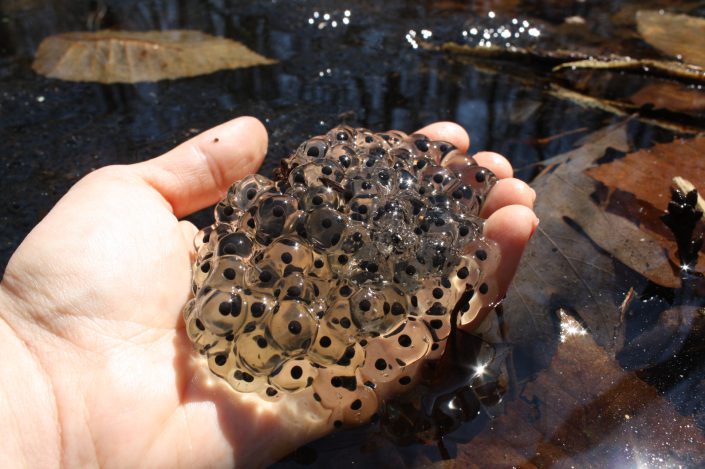
Wood Frog eggs. Photo courtesy of MacKenzie Hall.

To address this problem, the Conserve Wildlife Foundation of New Jersey (CWF) and the New Jersey Endangered and Nongame Species Program (ENSP) organized amphibian rescue efforts. Since 2002, dedicated volunteers have assisted frogs, toads, and salamanders across Waterloo Road during the busiest migration nights. This aid has proven effective in reducing amphibian road mortalities, but it is not a permanent solution to the problem. Efforts are underway to construct under-road tunnels to help guide amphibians safely across Waterloo Road. These tunnels will provide safe passage for these critters throughout the breeding season, including on their migration back into the woods where they will hibernate. Since this return migration is more sporadic and less weather-dependent than migration to the vernal pool, it is much harder to protect amphibians as they make their way back to the forest.


This year, CWF scientists have begun the initial phases of research to understand current amphibian population sizes and the impact of vehicle traffic on these animals at Waterloo. Scientists and volunteers have been out 7 days a week since amphibian migrations began in late February to tally daily roadkill on Waterloo Road. This study will be used to evaluate changes to frog, toad, and salamander populations as the under-road amphibian tunnels are installed. CWF scientists have also conducted egg mass counts in the vernal pool at Waterloo Village to estimate the current population sizes of the different amphibian species in the area. Having this knowledge will allow CWF to improve on future projects to minimize road-related human-wildlife conflicts.


Spotted Salamander egg mass. Photo courtesy of MacKenzie Hall.

Along with improving conditions for amphibians in this location, CWF’s work at Waterloo Village will serve as an example of New Jersey statewide initiatives to reconnect wildlife habitat as a part of the Connecting Habitat Across New Jersey (CHANJ) program. The goal of CHANJ is to make our state landscapes more permeable to wildlife movement so that all of New Jersey’s residents – human and wildlife – will have the space they need to thrive.


In an effort to bring people and wildlife together in a positive way at Waterloo Village, CWF scientists are leading educational walks for the public and local schools. Through hands-on interaction, local residents can learn about and appreciate the remarkable wildlife right in their own back yards and what they can do to support conservation efforts.


All New Jerseyans can help wildlife this season by planting native plants for their gardens, building bat boxes where bats can roost, and, of course, by keeping an eye out on the roads, especially on warm, rainy nights when amphibians might be migrating.


LEARN MORE


Allegra Mitchell is a biologist for Conserve Wildlife Foundation of New Jersey.


NJ’s Osprey Population Continues Upward Trend

Results from the 2016 nesting season show very positive results. Statewide census planned for this year.

by Ben Wurst, Habitat Program Manager

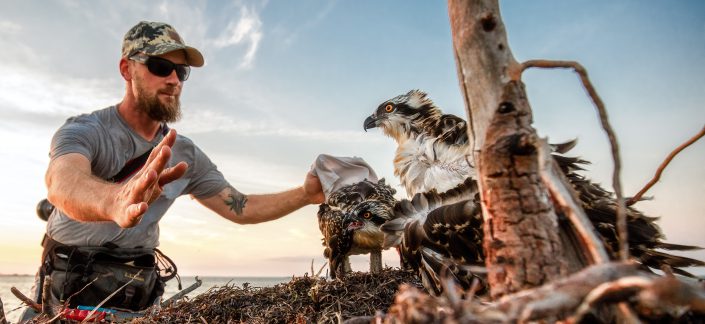
Ben Wurst prepares to band two young ospreys. Photo by Northside Jim

New Jersey’s ospreys continue to defy my expectations. Since being tasked with coordinating the NJ Fish & Wildlife’s Osprey Project, I have witnessed the population grow from around 400 nesting pairs to an estimated 600. That’s a 30% increase in the overall state population. In addition, the productivity rate (a measure of the health for the population) has remained at level consistent with an increasing population. The results from last year were positive throughout almost all major nesting colonies that were surveyed. I’ve never been more amazed by the shear resiliency and adaptability of a species.

Continue reading “NJ’s Osprey Population Continues Upward Trend”

2016: A Good Year For NJ Bald Eagles

216 Young Produced from 150 active nests.

Larissa Smith & Ben Wurst: Conserve Wildlife Foundation of NJ

The Conserve Wildlife Foundation of NJ in partnership with the NJ Endangered and Nongame Species Program has released the 2016 NJ Bald Eagle Project Report and the new and improved Eagle Tracking Maps. In 2016, 172 eagle nests were monitored during the nesting season. Of these nests 150 were active (with eggs) and 22 were territorial or housekeeping pairs. A record high of 216 young were fledged. The success of the NJ Eagle Project is due to the dedicated Eagle Project Volunteers who monitor and help to protect nests throughout NJ. Continue reading “2016: A Good Year For NJ Bald Eagles”

Princeton Seventh-Graders Protect Bats through Hands-on Research Project

Students partner with nonprofit Conserve Wildlife Foundation to design better bat houses

By Stephanie Feigin

Although bats have a reputation of being dangerous and scary, these flying mammals are something to be coveted, and the students at Princeton Day School know why. Seventh grade students Albert Ming, Arjun Sen, Martin Sen, Dodge Martinson, Kai Shah, and Samuel Tang teamed up with Conserve Wildlife Foundation to design a better construction plan for bat houses. The students hope to promote better conditions for bats living in Central Jersey.

Bats are in the midst of tragic declines as a consequence of habitat loss and a devastating fungal disease known as White-nose Syndrome. CWF works to preserve bats, which basically provide a free pest removal service. A single bat can consume up to 3,000 mosquito-sized insects in one night! Their value to agriculture is estimated at $53 billion annually in the United States alone. Not to mention they provide mosquito and biting insect control, which are not only a nuisance but also have disease spreading potential.

Many bats in New Jersey have come to depend on manmade bat houses, structures specifically designed and placed for the needs of the bats, and the Princeton Day School students stepped up to help.

First, the students researched the best, most economical type of wood to use for construction. Next, they used an infrared thermometer to see how well heat is absorbed and retained by the different wood types after they were painted and stained using three different colors.

Keeping the inside of a bat house within the right temperature range is vital to the survival of bats, especially the vulnerable young pups. If a bat house becomes too hot (above 95 degrees) or too cold (below 65 degrees), the health of the bats is threatened. Bats move their pups from house to house in search of the right temperatures.

The students used the results of their temperature experiment and high and low temperature readings for Central Jersey over the past three years to design a plan for a bat condo unit that would satisfy bats temperature requirements during their entire six month roosting period.

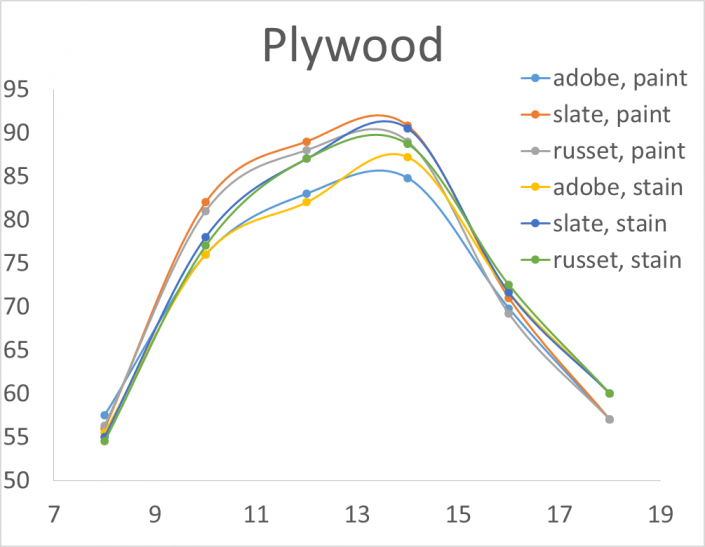
The x – axis is the number of hours passed during the day and the y- axis represents degrees Fahrenheit.
This graph displays the research for the best type of wood (cedar, pine or plywood) to use for constructing bat houses, along with different kinds of paint (adobe, slate or russet) to determine which combination could retain the most heat for the bat colonies. Heat retention was measured over a long period of time while exposed to the sun.
The research revealed that the bat houses are most successful if they are painted or stained and weather resistant wood like cedar would last much longer than softer wood like pine or plywood. When cedar wood was used the temperature changed the most as the air temperature changed and the least when sunset came. When plywood was used the temperature changed the least as the air temperature changed and the most when sunset came. When pine wood was used the temperature changed moderately as the air temperature and moderately when sunset came.
The conclusion made was that there are differences among wood and paint combinations. Adobe paint on plywood has the smallest average temperature change even though the difference is not statistically significant and adobe paint on cedar had the smallest temperature change between 4 and 6 degrees. They chose adobe paint on cedar or plywood as they are also the most cost effective.

With the results of their research and experiments, the students made informed decisions to design the bat boxes. The final product was three bat houses built using plywood. They painted one of the houses in a black slate color to provide maximum heat during the colder months, and painted a second house in an adobe beige color to provide air conditioning during the hot summer months. Lastly, they chose a russet color to for the moderate months.

CWF Wildlife ecologist Stephanie Feign who worked with the students on the project was happy to see how passionate these kids were to learn and be hands-on. “Their passion and enthusiasm were inspiring. Projects like these not only benefit wildlife, but also benefit surrounding communities and provide experiential learning for students.”

New Jersey is home to nine different species of bats, two of which are listed as endangered or threatened. Six species that do not migrate south for the winter remain in New Jersey to hibernate in a cave or another safe place. When they awake from hibernation in April, the females search for roosting spots to bear and raise their young pups. With so few intact forests in New Jersey, bats are struggling to find places to safely roost.

That is why projects like this one with Princeton Day School are essential for preserving bats. Not only did the projects help bats, but it also helped the students by requiring them to use problem solving and critical thinking skills to protect a creature that they came to value. Wildlife, which kids become excited and passionate about, is a valuable educational tool.

The team is currently working with Princeton Day School facilities to erect the bat condo unit on campus. Hopefully, by next spring, the school will be home to many new, very comfortable bats.


LEARN MORE:


Stephanie Feigin is a Wildlife Ecologist for Conserve Wildlife Foundation.

Tiger Salamander Season

Volunteers Survey For This Rare and Elusive NJ Salamander.

by: Larissa Smith, CWF Wildlife Biologist

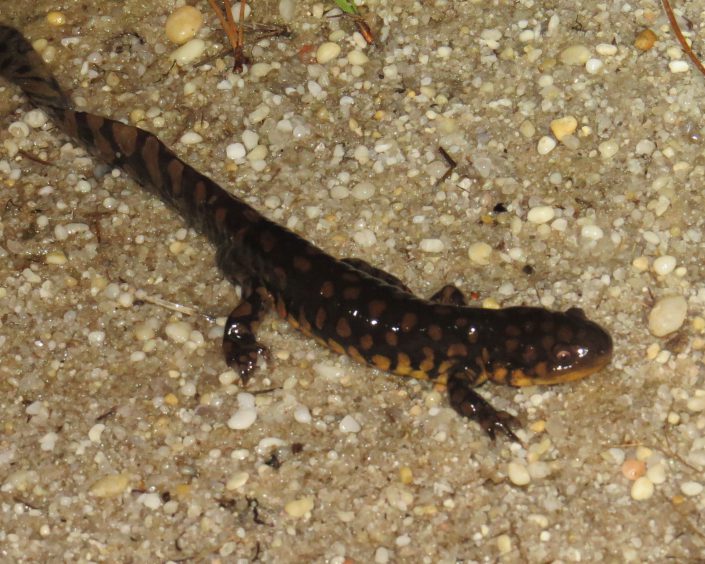
Adult Tiger Salamander @ M. Tribulski

On a cold December evening I met up with ENSP biologists and dedicated Tiger Salamander project volunteers to survey for Eastern Tiger Salamanders. The group had been out surveying all day in Atlantic County without spotting any tiger salamanders and were cold but still raring to go. The pool we surveyed has been a successful tiger salamander breeding pool, within a complex of enhanced vernal pools. We weren’t disappointed as we quickly found adult salamanders in the pool and egg masses.

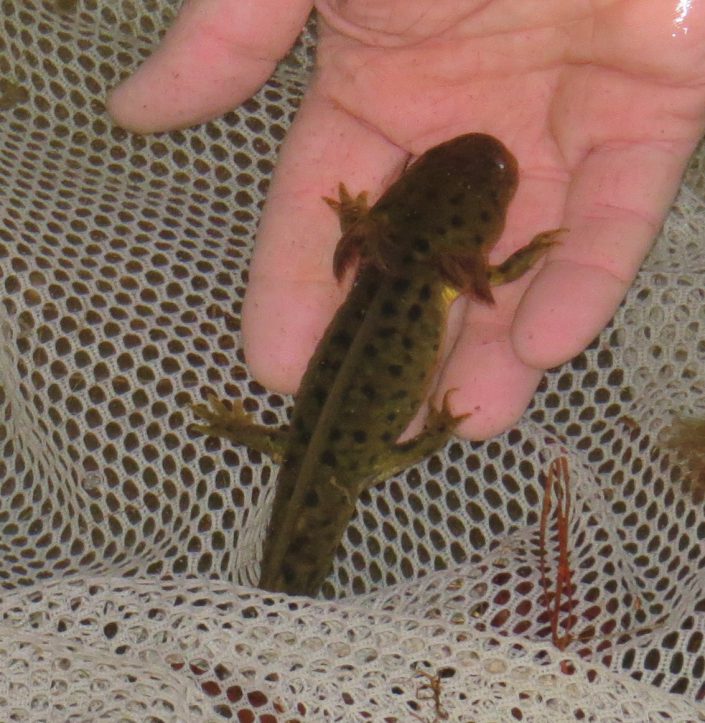
Another great find was a neotenic (gilled adult).  This was a larvae, most likely, from last season that didn’t metamorphose and still had external gills. It had not yet left the pool, whereas most larvae metamorphose and leave the pools in June to July of their hatching year.

Neotenic adult @ M. Tribulski
Surveying for TS@ M. Tribulski

We surveyed a second pool in the complex, but found no sign of adults or egg masses. We found fish in the pool, which is an indicator that there won’t be salamanders since the fish eat the eggs and larvae.

New Tiger Salamander breeding pools have been found by the TS volunteers, in Cape May and Cumberland Counties. It is encouraging to know that these salamanders continue to live and breed in New Jersey and that gives me hope for the future of all NJ wildlife.


Learn More


In season for giving, donor helps wildlife supporters double their gifts

DONATIONS TO BENEFIT CWF WILDLIFE EDUCATION PROGRAMS

By Emily Hofmann

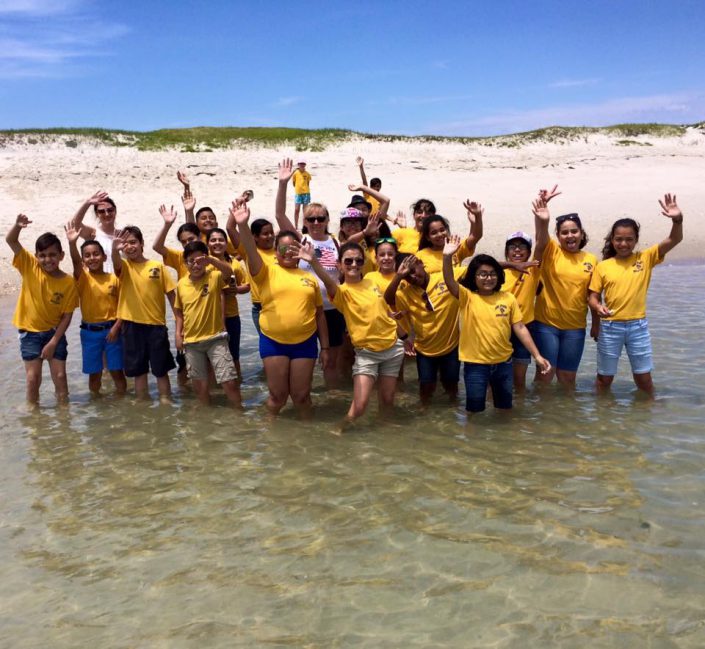
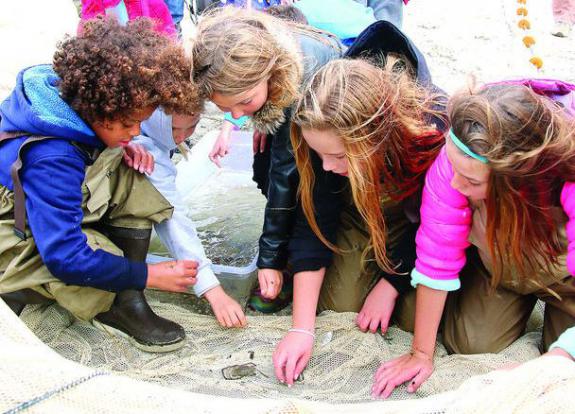
Newark 5th-graders enjoy a day at the beach exploring nature as part of CWF’s WILDCHILD Program for underserved youth.

Connecting kids with the natural world around them does wonders for their health and self-esteem, builds leadership skills, and often fosters a love of science at a very young age.

And nothing awakens that environmental awareness like wildlife!

Conserve Wildlife Foundation’s exciting hands-on programs – classroom presentations, field trips, live wildlife, and webcam lessons – teach children about the state’s rare wildlife and the need to protect it. And while some schools can cover the costs of these lessons, far too many can’t afford programs and field trips.
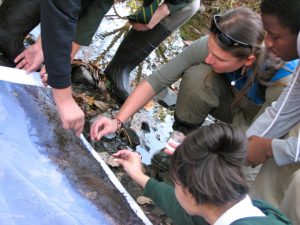
Through December 31, all donations to Conserve Wildlife Foundation to support our education and outreach to under-served schools will be generously matched by the Merrill G. & Emita E. Hastings Foundation. This will greatly strengthen CWF’s ability to provide equitable opportunities for children in at-risk areas to become environmental stewards.

Thanks to that generosity, a donation of $25 will be worth $50, and a donation of $100 will be worth $200.

Learning about the eagles, ospreys, bats, peregrine falcons, butterflies, and other animals that might share their neighborhood engages kids with their environment,” says Liz Silvernail, CWF Director of Development. “Our education helps open children’s eyes to the wonders of wildlife and nature, regardless of whether their school can pay for our programming.”

This holiday season, CWF encourages supporters to give the gift with an enduring legacy for the next generation of scientists!


LEARN MORE:


Emily Hofmann is a Project Coordinator and Education Assistant for Conserve Wildlife Foundation.

Duke Farms’ Tanya Sulikowski Honored for her Conservation Education

By Mara Cige

Tanya Sulikowski, 2016 Education Award Winner

We had the pleasure of interviewing our 2016 Women & Wildlife Education honoree, Tanya Sulikowski, and are pleased to share some excerpts below.

As a Program Manager at Duke Farms, 2016 Women & Wildlife Education Award Winner Tanya Sulikowski works tirelessly to connect New Jersey’s people and wildlife. A champion in environmental education, she hosts hands-on creative projects that include bird banding and monitoring, as well as rain gardens and barrels just to name a few. However, Ms. Sulikowski considers her creation of the Teen Action and Leadership Opportunities for Nature program to be her greatest professional achievement because it inspires urban students to make lifestyle changes that incorporate their newly discovered love of nature. Her reach has extended statewide through her various roles within the Alliance for NJ Environmental Educators, where she currently serves as Vice President. Continue reading “Duke Farms’ Tanya Sulikowski Honored for her Conservation Education”

Barnegat Bay Partnership’s Martha Maxwell-Doyle Honored for her Inspiration in Coastal Restoration and Management

By Mara Cige

OLYMPUS DIGITAL CAMERA
Martha Maxwell-Doyle, 2016 Inspiration Award Winner

We had the pleasure of interviewing our 2016 Women & Wildlife Inspiration honoree, Martha Maxwell-Doyle, and are pleased to share some excerpts below.

Currently working at the Barnegat Bay Partnership as a project coordinator for estuary protection and restoration, Ms. Maxwell-Doyle’s years of experience at multiple national estuary programs has made it second nature for her to implement conservation and management plans. Her professional and personal partnerships help advance the ability to survey, restore, and monitor coastal communities such as the Barnegat Bay shorelines. Continue reading “Barnegat Bay Partnership’s Martha Maxwell-Doyle Honored for her Inspiration in Coastal Restoration and Management”

Wildlife returns to the industrial Newark Bay waterfront

by David Wheeler

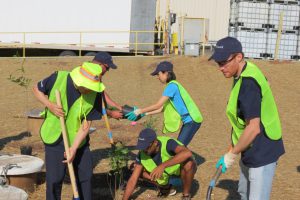
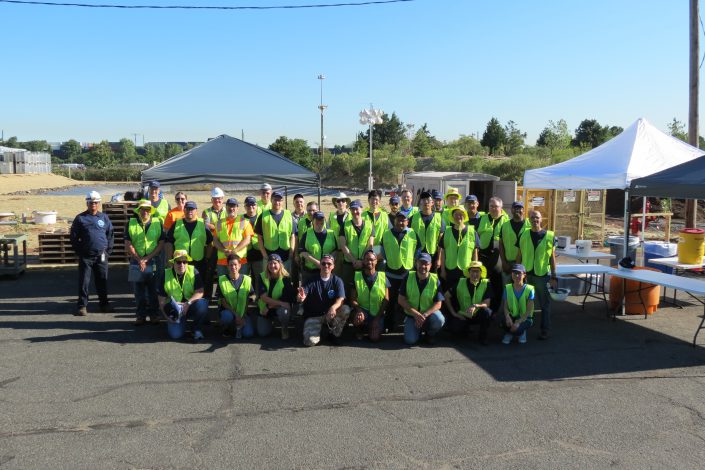
Under the sweltering September sun, our team discovers the earth at our fingertips. We ready the manure, topsoil, and mulch, wield the pickax and trowel, and labor the wheelbarrow through the trees and up the slope of a tidal berm.

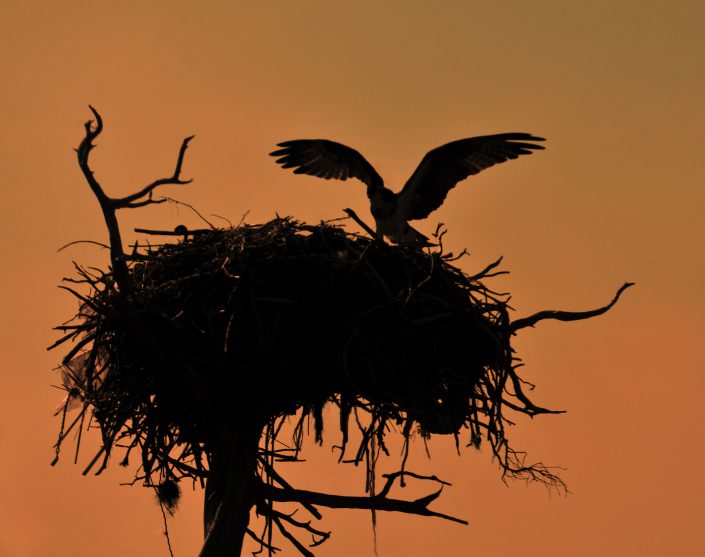
osprey-silouette-by-blaine


We plant 250 native shrubs and 580 native herbaceous plugs. We hammer in nest boxes, install pollinator houses, construct mounds of brush for local and migrating wildlife, and create nesting habitat for northern diamondback terrapin, an at-risk turtle species.

We lose ourselves in nature for the day.

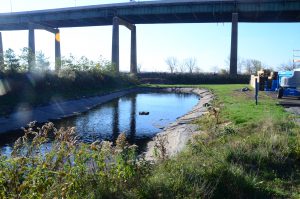
A migrating butterfly flits past leisurely and I look up from the soil to wipe my brow. Suddenly I remember exactly where this newly vibrant natural ecosystem is. Nearly overhead, I can watch never-ending streams of commuters and tractor trailers motor past over one of the busiest bridges in the nation – the Newark Bay Bridge. Just across the bay, I can see heavy industry. Out beyond the fence, more industry – ancient, tireless, modern progress marching forward.

firmenich-volunteers-by-blainefirmenich-by-blaine

Yet on this morning, and those that follow, we now have ecological progress here as well, in a place that was written off entirely not so long ago. The Newark Bay region has suffered a century and a half of environmental degradation at the hands of industry and unbridled development.

This active industrial site is home to Firmenich Inc., one of the largest manufactures of fragrances in the world. We have transformed the land today to invite wildlife partners to help balance the scales of the region’s damaged ecology.

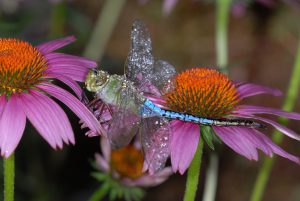
dragonfly-1-by-blaine
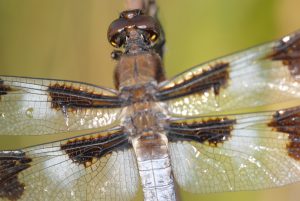
Green Darner dew laden on Echinacea.

These partners are vital to our environment, to our health, to the world around us. They are the butterflies and bees, the wasps and beetles, the flies and moths that make up an army of pollinators that in coordinated effort provide humanity with the lungs of our planet. Without these pollinators, native plants could not sink carbon dioxide and impart oxygen to our surroundings, every minute of every day. Without these pollinators, the bread baskets of the world would wither away, no longer filled with grains, fruits, and vegetables.

The natural partnerships don’t stop with the pollinators born forth from meadow creation. These partners extend to migrating songbirds and mighty raptors, small mammals and diamondback terrapins.

“If we give nature an inch, it’s going to take a yard. Give it a chance and nature will return,” says biologist Blaine Rothauser, who is directing the restoration for GZA Environmental. “Wildlife just needs an opportunity.”

heron-by-blaine
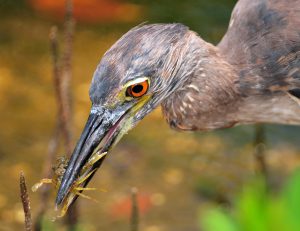
Immature night heron with crab.

Nature’s inspiring return builds upon decades of ecological recovery in the region. Thanks to President Nixon’s Clean Water Act of 1973, the water began to get cleaner. Improving the water quality reanimated the food chain from the bottom up – phyto- and zooplankton, invertebrates and crustaceans reappeared. In turn, a fishery was reborn, which ushered in the return of herons, ibis, osprey, turtles, and even harbor seals – seen sunning on the banks of tidal shores in winter!

Yet much of the land around the water’s edge is still wanting.

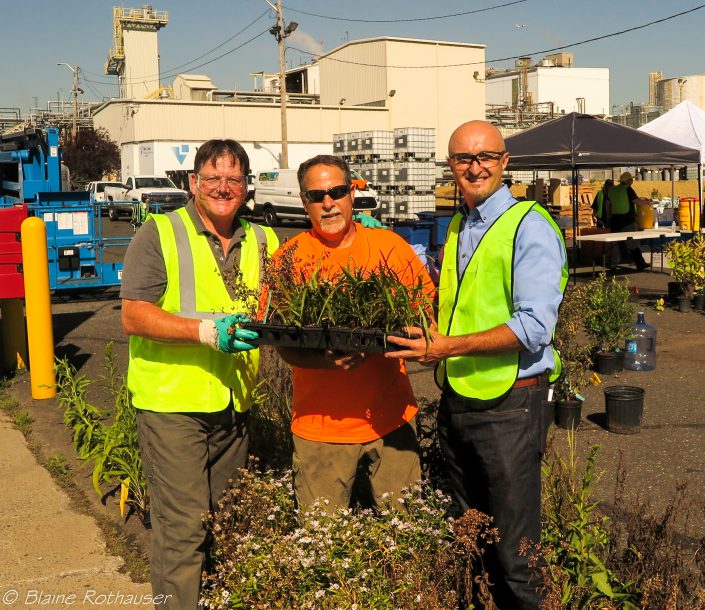
“The restoration site is an important buffer habitat to a large portion of undeveloped tidal bay directly adjacent to the Firmenich complex,” says Rothauser. “Today we have 60 people planting a native community of shrubs, trees and plants on a formerly sterile lawn and an unnaturalized earthen berm. It is vital work that makes a real difference.”

blaine-with-plants

The team has also created opportunities for rare species to nest. Above our heads, an osprey platform has been installed, empowering this magnificent fish-eating raptor to continue its recovery along Newark Bay and many other New Jersey waterways, industrial and remote alike.

A barn owl box offers one of our most mysterious nighttime predators the opportunity to set up shop in a beneficial area – where there is no shortage of rabbits and field mice to help control.

barn-owl-by-blaine
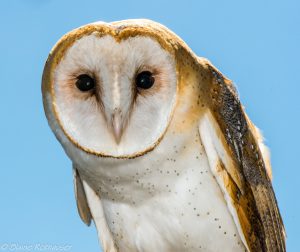
Close up of a barn owl.

Across the pond, a purple martin condominium-like house offers the ample space necessary for these communal swallows to reside, a home base where they can feast on flying insects.

With the first phase of the project almost complete, the second phase will seek to transform the site’s holding ponds into ecologically productive floating wetlands, bringing herons and egrets and other wading birds.

Ultimately, this project is envisioned as one that can be replicated just about anywhere along Newark Bay – or any industrial waterfront for that matter. All it takes is the willingness to look at a site’s land from a different perspective – and in so doing, to understand that the ecological benefits of bringing back many wildlife species aren’t negated by losing economic tradeoffs.

Instead they can mean parallel economic benefits. Natural pest control. Fewer landscaping and pesticide costs. Increased employee morale and productivity, with a newfound opportunity to recharge body and mind with a rejuvenating break outside, enjoying natural beauty and the engagement of your senses.

killdeer-by-blainedragonfly-2-by-blainekestral-by-blaine

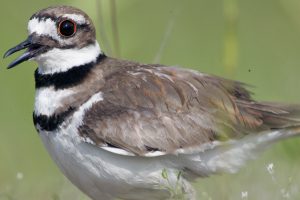
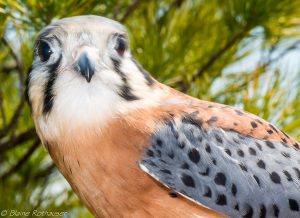
Images above from left to right – Killdeer, 12 Spotted Skipper, and American Kestrel.

New Jersey has long served as a primary engine for America’s industry and commerce – and in return has often been derided as the “Which exit?” land of nothing but turnpike and smokestacks. The Meadowlands just to the north of here bore the brunt of that reputation, yet in recent decades has made a mind-blowing ecological recovery to become a wildlife – and ecotourism – destination.

The waters flow south from the Meadowlands along the Hackensack and Passaic Rivers, and they come together in the Newark Bay. Now, that next wave of wildlife recovery and habitat restoration has arrived just downstream – along the Newark Bay waterfront.

For wildlife, it’s where the action is.

firmenich-group-pic-by-blaine

David Wheeler is the executive director of Conserve Wildlife Foundation and author of the book, Wild New Jersey: Nature Adventures in the Garden State.


All photos courtesy of Blaine Rothauser.


Giving Absecon’s ospreys a boost

Volunteers brave rain and high water to benefit ospreys!

by Ben Wurst, Habitat Program Manager


Volunteers work on a flooded saltmash to remove an osprey nesting platform in Atlantic City.
Volunteers work on a flooded saltmarsh to remove an osprey nesting platform in Atlantic City.

I’ve been surveying osprey colony on Absecon Bay since 2008, after I moved to the local area. It’s been an area with a small but slowly growing colony. In 2008 there were a total of 11 active nests. This year there were 23 active nests. Productivity has been good with an average of 1.72 young/active (known-outcome) nest over the past nine years (more than double what’s needed to sustain the population). Many of the nests in this area were installed in 2005 for mitigation for nests that were removed when the ACUA installed large wind turbines off Route 30. But, some platforms that were placed near the turbines, have been slowly abandoned by ospreys. This year only one nest was occupied there and it did not produce any young.  Continue reading “Giving Absecon’s ospreys a boost”