Reef dedication, seining to help celebrate Veterans Day on Delaware Bay

Oyster reef to be dedicated to New Jersey Veterans at second annual event

By Emily Hofmann, Project Coordinator

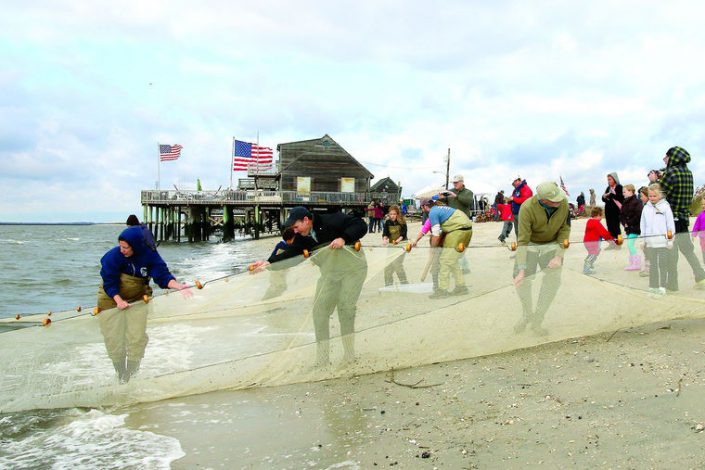
a-seine-net-about-75-feet-long-is-dredged-in-the-bay-and-brought-up-on-the-beach-to-collect-the-species-for-study
A seine net about 75 feet long is dredged in the bay and brought up on the beach to collect the species for study. Photo courtesy of Middle Township Gazette.

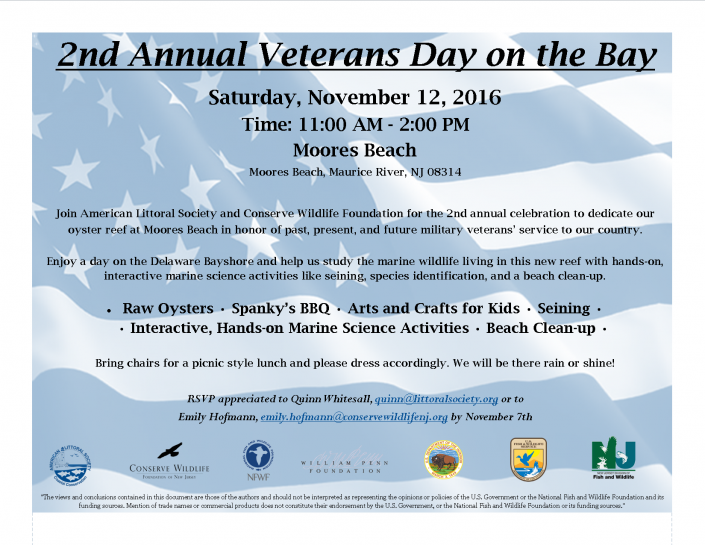
You and your family are “whelk-come” to join American Littoral Society and Conserve Wildlife Foundation and for our 2nd Annual Veterans Day on the Bay on Saturday, November 12 from 11:00 AM -2:00 PM at Moores Beach on the Delaware Bayshore! In April, we held our 2nd Annual Shell-A-Bration where proud volunteers braved the elements and helped build an oyster reef at Moores Beach.

2ndannualveteransdayflyer_v1

The 1st Annual Veterans Day on the Bay was held on November 11, 2015 at South Reeds Beach. The oyster reef was dedicated to all veterans and highlighted veteran involvement in the effort to restore New Jersey’s Delaware Bayshore. Event attendees honored their own military veterans by inscribing that special person’s name on a shell and placing that shell on “Veterans Reef.”


This year we’d like to continue to show our appreciation and mark the progress we’ve made by dedicating another reef to a specific military branch.


Please join us for the 2nd Annual Veterans Day on the Bay, which will feature:

  • Raw oysters and fare from Spanky’s BBQ
  • Beach Clean-up
  • Seining and marine wildlife study
  • Arts and crafts for children
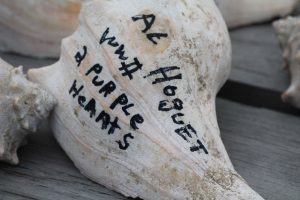
davidbensonshells1
Photo courtesy of David Benson.

Help us study the wildlife living in this new reef with hands-on, interactive marine science activities like seining and species identification!


The highlight of the event will be the dedication of Moores Beach oyster reef in honor of our military veterans. Attendees are invited to honor their own military veterans by inscribing that special person’s name on a shell and placing that shell on the reef.


This family fun day and volunteer event will be held from 11:00 AM – 2:00 PM; with the reef dedication ceremony taking place at 12:30 PM. Veterans Day on the Bay is rain or shine. The celebration will be a picnic-style event, so please bring blankets and chairs.


Join us at Moores Beach, at the end of Moores Beach Road (which intersects with NJ Route 47 near Delmont United Methodist Church) Maurice River, New Jersey, 08314.


RSVP appreciated to Quinn Whitesall, quinn@littoralsociety.org or Emily Hofmann, emily.hofmann@conservewildlifenj.org by November 7.


LEARN MORE:


Emily Hofmann is a Project Coordinator with Conserve Wildlife Foundation.


Native Plants Transform Space into Rich Pollinator Habitat

By Kendall Miller, Project Coordinator


This fall, Conserve Wildlife Foundation partnered with Firmenich and GZA Environmental to provide pollinator plants to build an entirely new butterfly and rain garden on the Waldorf School campus in Princeton.


Firmenich volunteers stationed the plants around the garden and planted them on their annual global volunteer day. Plants include aromatic lavender, bright black-eyed susans and echinacea, shrubs like winterberry holly and spice bush, and trees such as common hackberry and sweet bay magnolia. These plants are all native to the local environment and provide essential nectar sources for pollinators.


waldorf-1waldorf-2

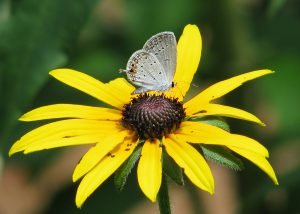
From left to right, bee on lavender photo from Andrew Wilkinson through Flickr Creative Commons and eastern blue-tail visiting black-eyed susan Vicki Deloach through Flickr Creative Commons.


The space for the new garden was a previously fallow section of the school’s one acre garden. It was overgrown and somewhat sprawling until the project came about. Facilities manager Kevin Jones and gardening teacher Suzanne Cunningham both prepared the space for its transformation into a rich habitat of native plants.

waldorf-3

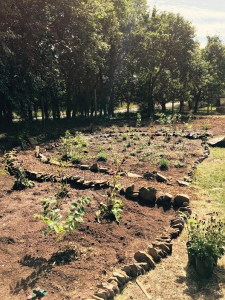
Left. After planting, an unused and fallow area of the school’s garden is now home to several different types of native plants.


“Pollinators are in decline, which is very unfortunate since we rely on them as irreplaceable contributors to our health, our food, our environment, and our economy,” said David Wheeler, CWF Executive Director. “We are so thrilled to partner on this exciting and vital habitat project, particularly where the youngest generation can experience the beauty and vitality of nature first-hand.”


The native plants were provided by D&R Greenway Land Trust and Bountiful Gardens.  CWF is working to expand native pollinator habitat across the state with leading corporate sustainability partners such as Firmenich and Atlantic City Electric.


The Waldorf School of Princeton has built three butterfly gardens, which serve to create a safe environment for local pollinators, such as monarch and swallowtail butterflies, honeybees, and hummingbirds. To this end, a honeybee colony has made it’s home in one of their trees and has grown to host over 2,000 wild honeybees! The school has been honored by the National Wildlife Federation as a Certified Wildlife Habitat, as well The Bronze Award from Eco-Schools USA program. They are certified from Monarch Watch as a Monarch Waystation.


The Waldorf School of Princeton is founded on principles of sustainability, environmental stewardship, and community cooperation. The school’s major green initiatives reflect the needs of their beautiful campus and the ability of their students to participate in the greening process. The Waldorf School of Princeton has the area’s oldest school garden, over 30 years old, which houses crops, herbs, flowers, and fruit trees.


LEARN MORE


Kendall Miller is a Project Coordinator with Conserve Wildlife Foundation.


Volunteers and biologists add the next oyster reef to Dyers Cove

Team works through threat of downpour to strengthen Delaware Bay’s resiliency and ecology

By Emily Hofmann, Project Coordinator


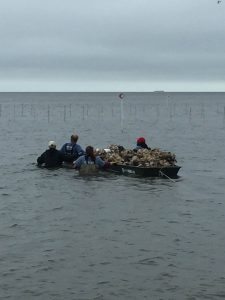
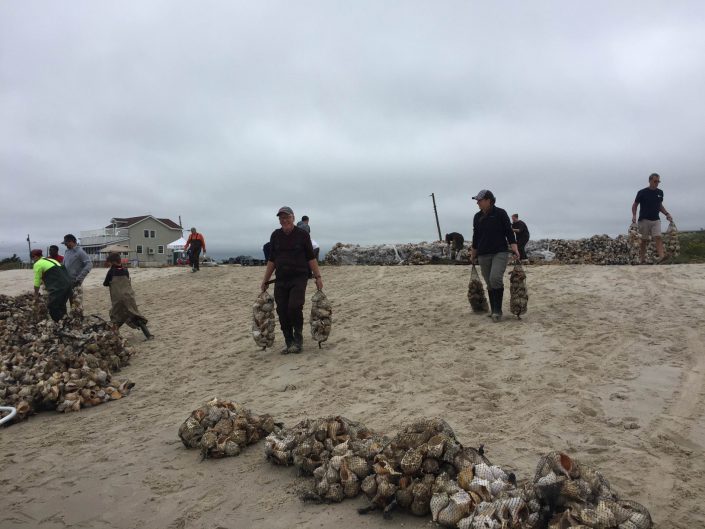
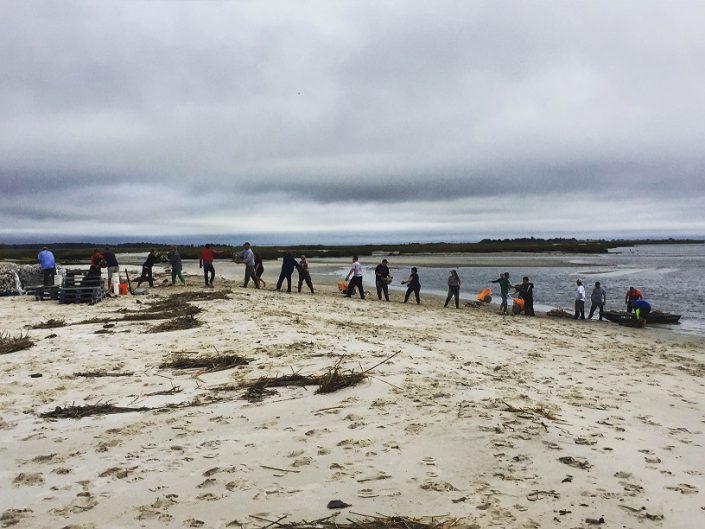
Although the weather was on the brink of being rainy and bleak, that did not stop a team of dedicated biologists and volunteers from building an oyster reef on the Delaware Bayshore this past Saturday. Committed volunteers and young people braved the weather to work alongside American Littoral Society and Conserve Wildlife Foundation to build a near-shore oyster reef at Dyers Cove, at the end of Dyers Creek Road in Newport, Cumberland County, New Jersey.
 

oyster-reef-2

This reef – like the one at South Reeds Beach – was built to protect restoration work done after Hurricane Sandy and provide habitat. Constructed to prevent sand loss from wind-driven waves and create calmer water for spawning horseshoe crabs, this is the third of five such reefs that have been built by the Littoral Society and CWF. The conservation organizations will continue to monitor whether the reef breakwaters help reduce beach erosion and create calmer water for spawning horseshoe crabs.


Due to the heavy rain over the course of the week, the conditions were not ideal. Low-tide never went below waist deep, so it was hard to construct the reef accordingly. But that did not stop the team!oyster-reef-build_5


“Every oyster reef we’ve built so far on the Delaware Bay incorporated a different restoration strategy. We have had to adapt new strategies with what has worked best in the past and with what will realistically work based on site conditions. By blending the successes from the previous reefs with innovative approaches, we have been able to construct three reefs to date,” said Capt. Al Modjeski, Habitat Restoration Program Director for the American Littoral Society.


The bayshore beaches need restoration and improved resiliency so that horseshoe crabs have proper breeding grounds. Crab eggs feed migratory shorebirds, like the Red Knot, which stops in New Jersey each spring on its long journey from South America to the Arctic Circle. The Red Knot and other shorebirds help bring $11 million in tourist dollars to New Jersey’s Delaware Bayshore region each year.


“New Jersey’s Delaware Bayshore hosts an annual wildlife spectacle of global significance – the time-honored migration of Red Knots to reach the eggs of these ancient horseshoe crabs,” said David Wheeler, Conserve Wildlife Foundation of New Jersey Executive Director. “Volunteer projects like this help connect the people of New Jersey with these endangered shorebirds and the largest population of horseshoe crabs in the world.”


“Originally, this event was a bare-bones volunteer effort of placing shell bags off the Dyers Cove eastern beach,” said Capt. Al. “But thanks to a donation from Betancourt, Van Hemmen, Greco & Kenyon, we will have a ‘shell-a-bration’ that celebrates the ecology and community of the Delaware Bayshore.”
oyster-reef

In 2015, over 130 volunteers and veterans built an oyster reef at South Reeds Beach in the first annual Shell-a-Bration. That same year, Veterans Day on the Bay dedicated the reef to all veterans and highlighted veteran involvement in the effort to restore New Jersey’s Delaware Bayshore. The second annual Shell-a-Bration, held in April 2016, saw a handful of dedicated volunteers brave a blizzard to build a reef at Moore’s Beach. The third annual Shell-Bration will be held this coming Spring 2017.


“There are many strategies to defend our Delaware Bayshore, but one of the best and most productive are these oyster reefs,” stated Dr. Larry Niles, a biologist with the American Littoral Society and Conserve Wildlife Foundation of New Jersey. “They not only replicate a lost but important habitat on Delaware Bay – reefs once covered much of the bayshore – but they provide just enough protection to make a difference in how long our beaches persist against the unrelenting forces of nature. In a way, we are fighting nature with nature.”
oyster-reef-4

The projects are being funded by National Fish and Wildlife Foundation (NFWF) through their Hurricane Sandy Coastal Resiliency Grants Program, and are being developed in partnership with U.S. Fish and Wildlife Service and New Jersey Division of Fish and Wildlife.


Emily Hofmann is a project coordinator for Conserve Wildlife Foundation


LEARN MORE
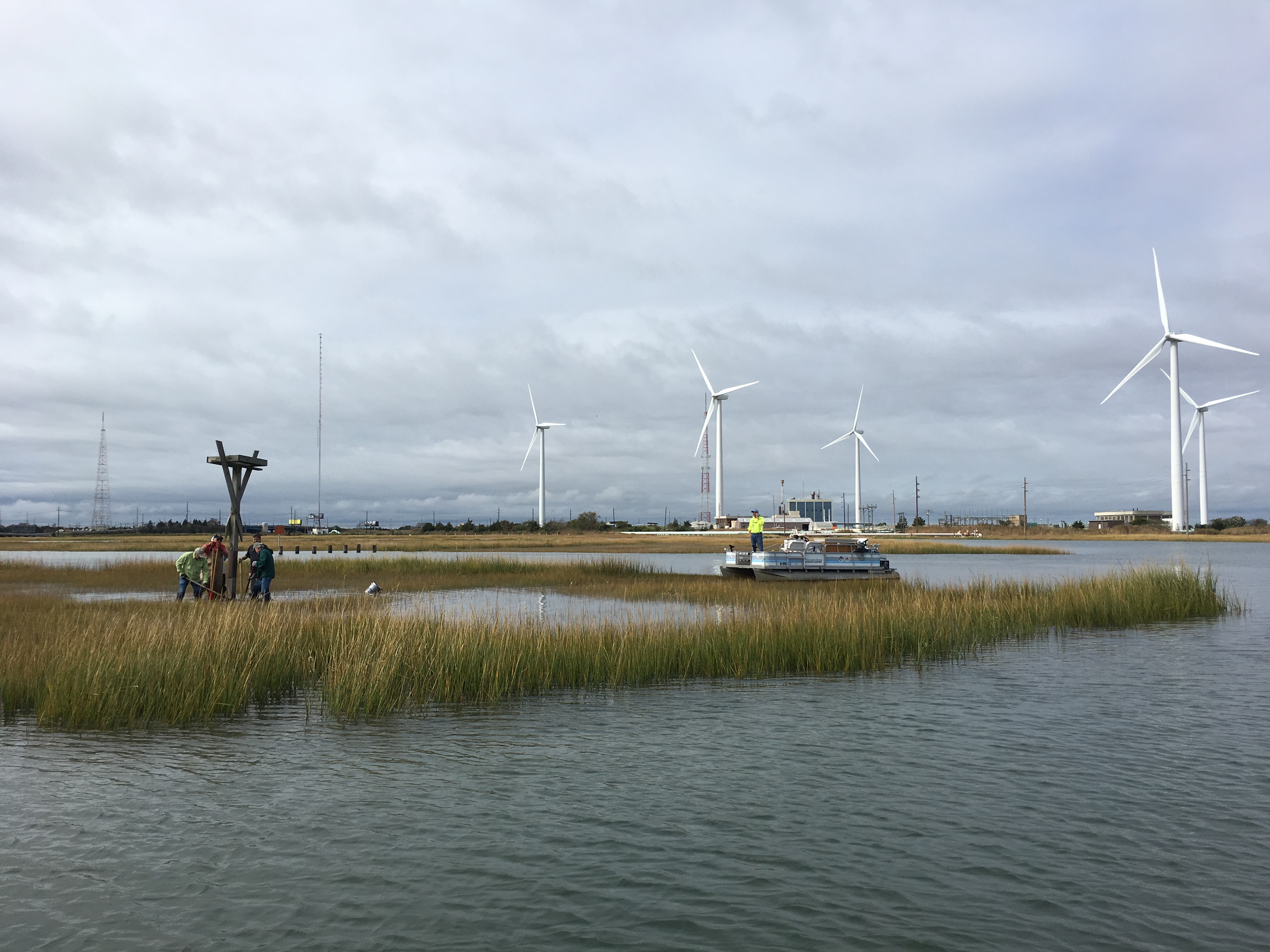


Time to Get Muddy!

Volunteers needed to help maintain and repair osprey nests

by Ben Wurst, Habitat Program Manager

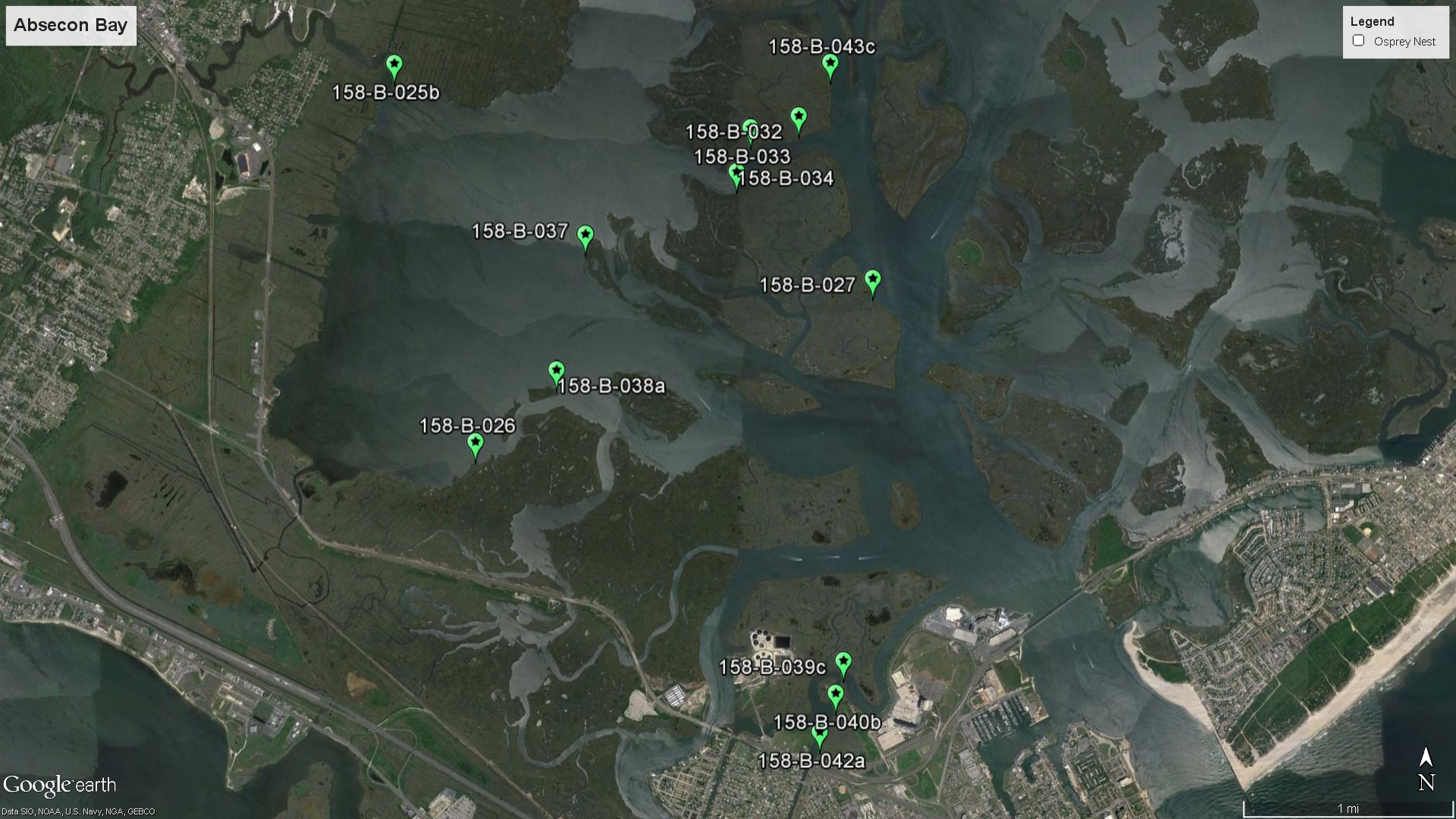
Map of nests that are in need of repairs in Absecon, NJ.

We have an obligation to care for and protect our wildlife, and for me, that’s what drew me into my current position. Osprey nesting platforms have been a focus of my work over the past 10+ years. They are designed specifically for ospreys and if built properly, can withstand the impacts of severe weather, including coastal flooding, high winds, and storm surge. For ospreys these platforms protect their nests from predators and flood tides, but over time the extreme salt marsh environment takes its toll on them. With the added weight of the large, perennial stick nests it can shorten the life span of a properly built platform drastically. Over the years I’ve seen older nests topple, from the weight of the nesting material and aging hardware, during the middle of the nesting season during severe storms. This is hard to prevent at every nest, during every storm, which we know are becoming more and more frequent, but we are adapting and in turn, helping our ospreys become more resilient (and productive) in the end.

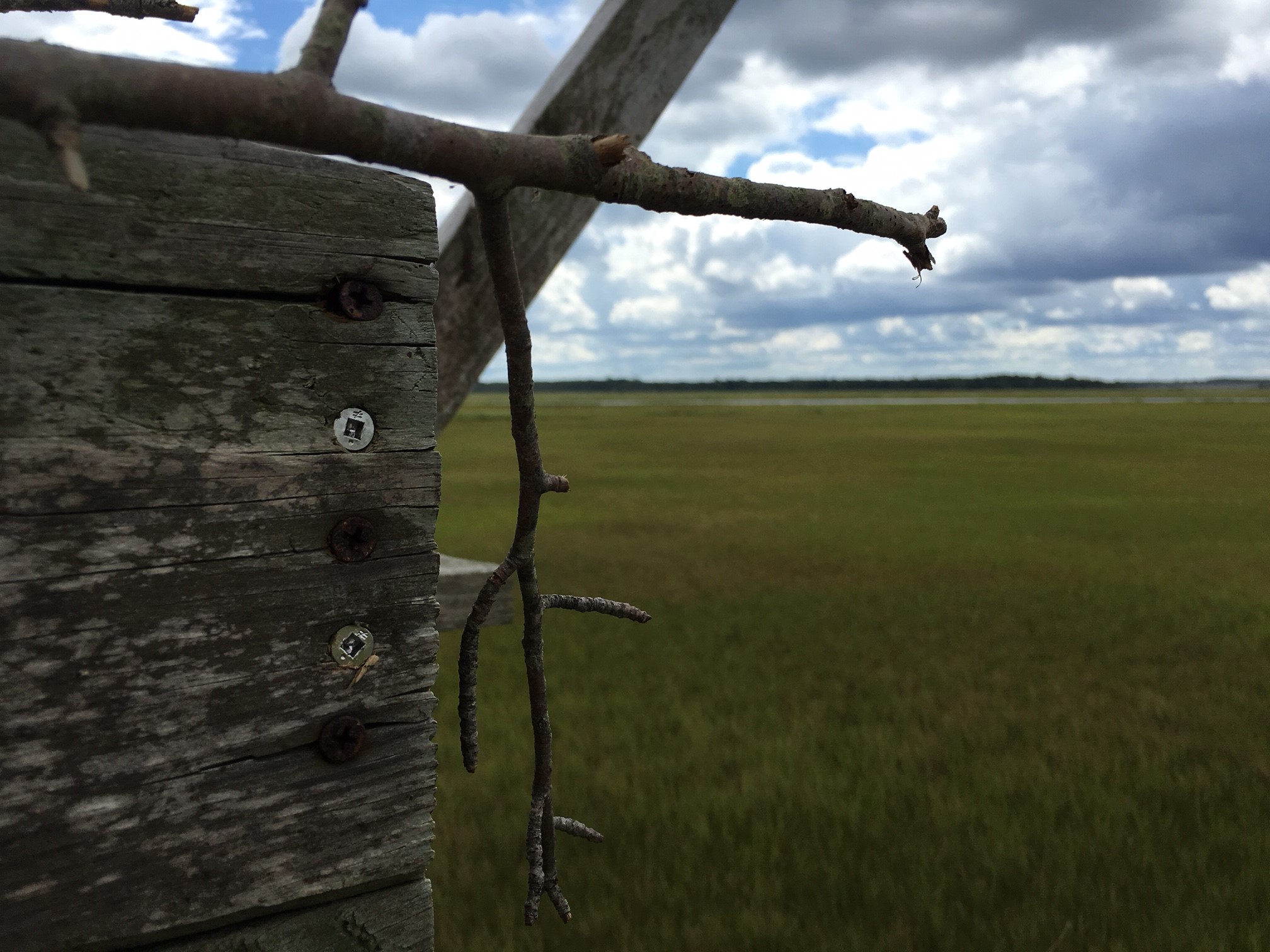
New stainless screws are installed in an existing osprey nest to help prevent future catastrophe.

In the past we (myself and other volunteers who survey ospreys and help maintain platforms) used to visit a nest only once a year, during nesting surveys in late June and early July. At that time we would note the condition of the platform and if repairs were needed, schedule those for the seven month long non-breeding season. Those who have volunteered to help and worked with me, know the task at hand. Most tasks include using hand tools to construct nest platforms and perches and to install them. I always say the hardest part is getting the platform to the saltmarsh where they will be installed.

To help engage and inspire others to help care for our growing osprey population, we are looking for volunteers who live within the watersheds were we are planning to conduct repairs of osprey platforms. Tasks vary by watershed but most are to add new (stainless) screws to existing platforms, install predator guards/perches, clean off excess nesting material, and do any other repairs to platforms (including moving and replacing some). We are hopeful to meet some local baymen and fishermen who are looking to help keep the nesting population stable as it has been over the past 10 years.

The work will occur in mid-late October and will be carried out through these watersheds:

  • Barnegat Bay (Point Pleasant south to LEHT)
  • Great Bay – All nests here need new hardware and one nest needs to be replaced.
  • Absecon Bay – In this area we have four platforms to replace. Three will be moved and one new one installed. Four other nests need critical repairs.
  • Sea Isle – several nests here need predator guards and a couple need minor repairs.
  • Wildwood/Cape May – After the strong storms in late June hit this area, many nests need new platform (tops) and others need to be cleaned off.

If you are interested in being notified when these platform construction and repairs occur, please email me. Let me know what you are interested in helping with and if you have a boat (and a ladder!) that can be used.

New Jersey’s Hidden Coast – The Final Episode

NEW JERSEY’S HIDDEN COAST – EPISODE 6

by Emily Hofmann, Assistant Communications Manager


“Our work on the bayshore is not just about wildlife, it’s about people, and how keeping nature strong keeps us all strong in the face of disasters like hurricanes.”


We want to ensure that New Jersey’s Hidden Coast remains a vital part of our livelihood for generations to come.


This is the final episode to our video series, “New Jersey’s Hidden Coast.” Catch a glimpse of the Bay, the horseshoe crab at the center of the bay’s system, and the incredible relationship between horseshoe crabs and migratory birds, like the red knot. We reveal the real value of horseshoe crabs, the challenges to the ecosystem, and the potential for thriving regional economy along the bayshore. We will show Hurricane Sandy as a catalyst for decisive action and the work being done to rebuild the area for both people and wildlife.


Catch up on the previous episodes, here on our blog or on YouTube. Explore the use of “living shorelines” instead of bulkheads and the importance of marshes to the marine ecosystem. Discover the on-the-ground, grassroots efforts of the community to build oyster reeds alongside veterans. And examine the future of the Bay and the work that needs to be done to preserve our conservation successes year after year.


Discover Delaware Bay:


Calling all Osprey Watchers!

Filling in the gaps

by Ben Wurst, Habitat Program Manager

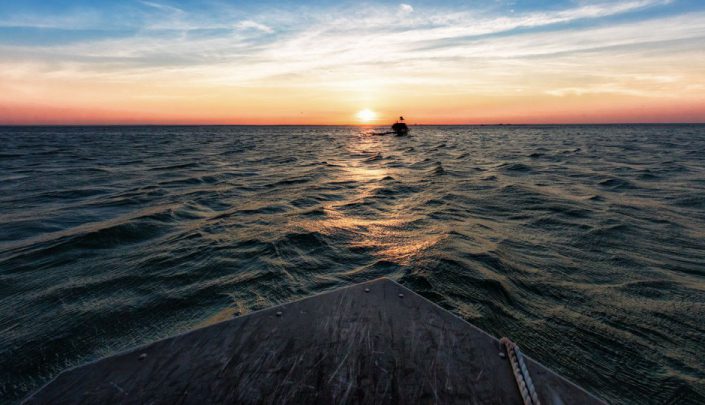
Approaching a natural nest inside Barnegat Inlet. Photo by Northside Jim.

Each year, while conducting osprey surveys by boat, our volunteer banders and biologists try to reach the majority of known osprey nests in the most densely populated colonies in New Jersey. The data that is collected (active nest, # of young) help to determine the overall health of the population. Since 2013, we have surveyed more than we have ever have, after releasing all of the known locations of osprey nests in New Jersey. All osprey nests can be viewed on our partners website, www.osprey-watch.org, which is run by the Center for Conservation Biology. It has helped us reach 80% of the known population. Publishing and mapping all the known nests was an attempt to engage citizen scientists (by them going out to observe ospreys) and save critical funding (for more endangered species of wildlife) while collecting data to monitor and manage our ospreys. So far it has proved to be an amazing tool for the future management of ospreys, who nest in very close proximity to humans. Continue reading “Calling all Osprey Watchers!”

Project RedBand Alumni Update!

Osprey 44/C re-sighted at Island Beach State Park!

by Ben Wurst, Habitat Program Manager

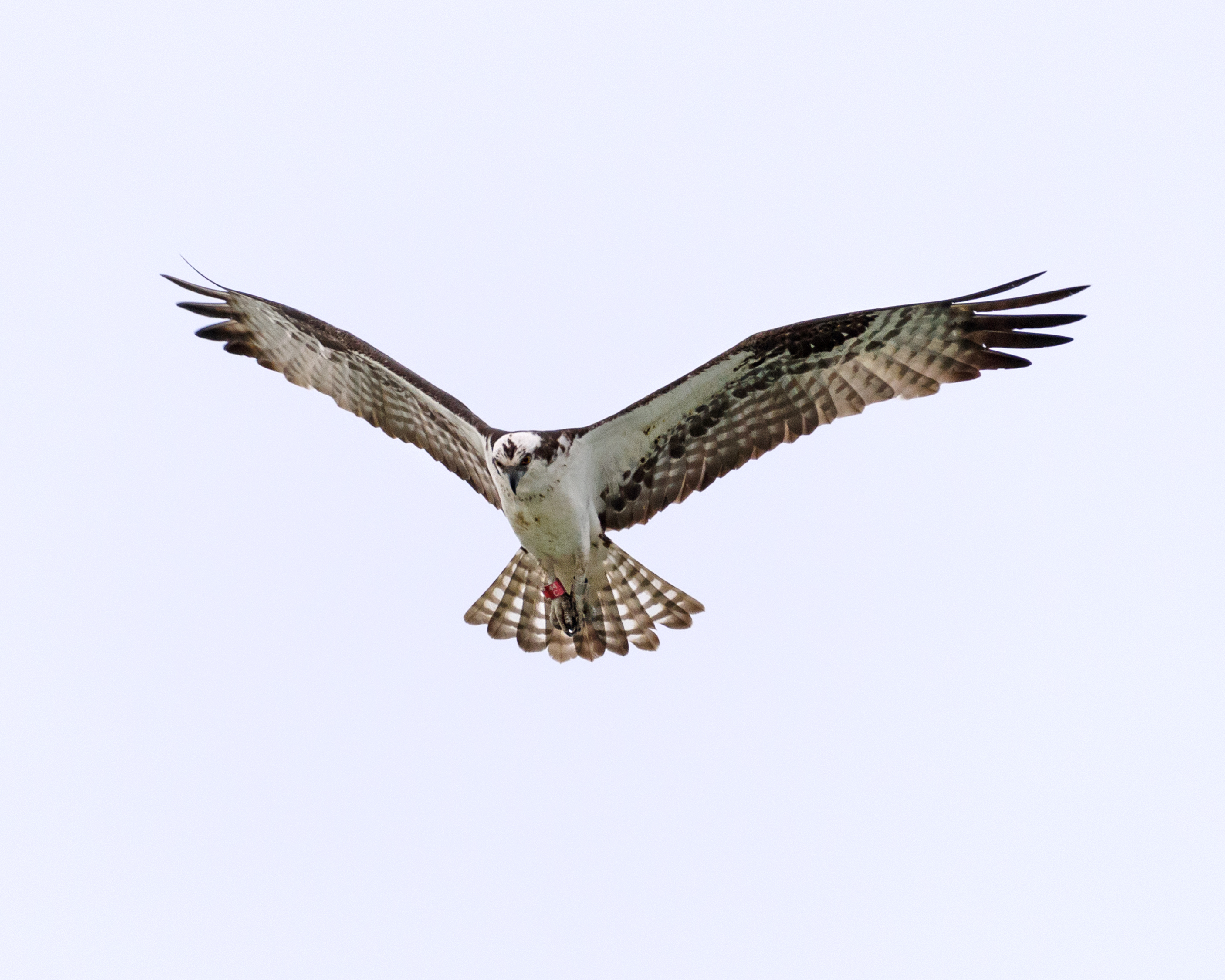
Project RedBand Osprey 44/C was re-sighted by Shayna Marchese on Island Beach State Park on July 3, 2016.

Really exciting news. For the first time this year, a (live and well) red banded osprey was re-sighted! 44/C was banded as a nestling on July 12, 2014 and photographed by Shayna Marchese on July 3, 2016 at Island Beach State Park. Young ospreys spend two years on their wintering grounds before returning to their natal areas. This is the first year that 44/C has returned to New Jersey. 44/C appears to be a male, and males have a higher level of site fidelity than females do, so they are more likely to return to the same area that they originated from. We aren’t surprised that one of our first red banded birds to be re-sighted in New Jersey was at Island Beach State Park, just outside Sedge Island Wildlife Management Area. For anyone who is not familiar with Sedge, it is the state’s most densely populated osprey colony in New Jersey. Around 30 pairs of ospreys nest at Sedge which is less than 3 square miles. Continue reading “Project RedBand Alumni Update!”

Conserve Wildlife Foundation of New Jersey “2015 Annual Report” Released

CWF Releases its Second Annual Report Using a Story Map Format:

2015 Annual Report


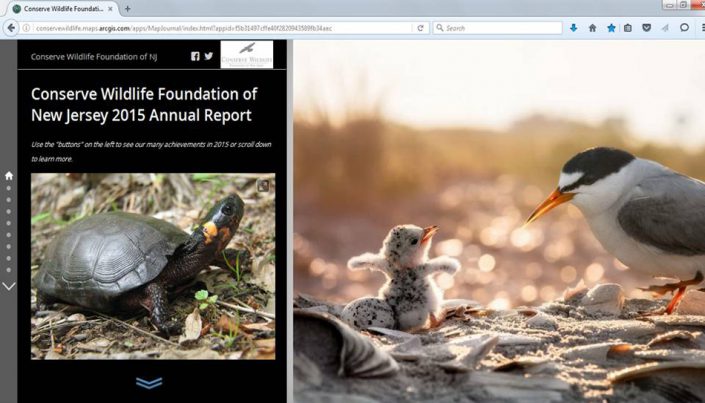
Technology has proven to be vital to Conserve Wildlife Foundation’s work protecting rare wildlife species over the years. Our biologists depend greatly on modern technologies to band, track, and share online the journeys of wildlife. Our webcams broadcast the most intimate behaviors of nesting birds and bats across the web. And we seek out ever-evolving communications technologies to spread the word about the inspiring stories of wildlife, from social media and infographs to e-books and Story Maps. These technologies offer newfound abilities to share complex data on multiple levels, while still incorporating the awe-inspiring photography and videos that bring wildlife’s stories to life.

Conserve Wildlife Foundation of New Jersey is excited to offer our 2015 Annual Report in a unique format that utilizes one of those technologies – Story Maps. In the past year, we have explored the lives of seals, eagles, and freshwater mussels with Story Maps – and the annual report allows all of our projects to be highlighted in this interactive format as well.

2015 Conserve Wildlife Foundation Annual Report.

Visit the multiple pages within this Story Map to learn about Conserve Wildlife Foundation’s many projects and partnerships in 2015, and the imperiled wildlife species in need of our help. Find examples of the innovative and dedicated leadership of our biologists and volunteers. And take an online journey across the state to learn how our projects made a difference in all corners of New Jersey in 2015 – a great year for wildlife in the Garden State!


A Tribute to Elmer Clegg, Eagle Project Volunteer

Loyal Eagle Project Volunteer Contributes to Conservation for over Two Decades

by Dr. Larry Niles, LJ Niles Associates LLC

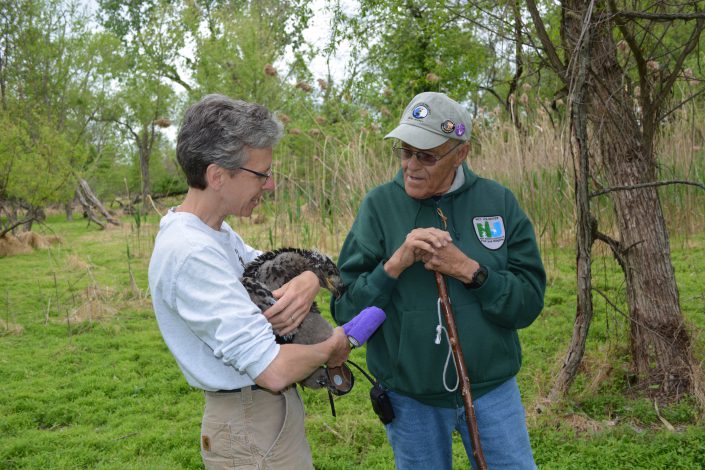
Dr. Erica Miller and Elmer Clegg.

In the early days of the Bald Eagle project, when we really didn’t know whether the species could be restored back to New Jersey, there were a few people that offered their help without reservation to help the birds. Elmer Clegg and his wife Bunny were two and among the most dedicated. Elmer died May 20th at 79 years old. He was a loyal eagle volunteer for more than two decades.


To understand Elmer and Bunny’s contribution its important to remember the circumstances in which the eagles found themselves. The historic population of eagles, about 22 in 1950 but probably much higher in history, had been whittled down to just one unproductive pair by 1981. Biologists at the newly formed Endangered Species Program, including me, worked hard to restore the Delaware Bayshore population with new projects, like hacking young birds into the wild. By the early 2000’s, we had new nests but in places that had not known eagles for decades. In many places they were unwelcome because they thwarted sprawl development or short sighted resource use. They had to be defended, but then we couldn’t afford staff.

Dr. Erica Miller and Elmer and Bunny Clegg.

Into that breach stood Elmer and Bunny and others like them, John and Sheryl Healy and Red and Mary Jane Horner. They were stalwart defenders of wildlife that brooked no insult to the birds by watching the nest throughout the nesting period until the young birds fledged. It was rewarding but difficult work trying to persuade farmers, businessmen, irate suburbanites and many others that the eagles deserved to be where they were. A few times our conservation officers had to step in, or DEP had to drop the regulatory hammer, but mostly it was the calm persuasion of people, like Elmer, who’s true love for these birds spoke convincingly to those against the bird.


Elmer helped me understand that the future of wildlife doesn’t lie in the agencies or their staff, but in the hearts of people who care for wildlife. People like Elmer deserve to return to this earth as the species they loved so much.


Dr. Larry Niles has led conservation efforts for over 30 years.

Thank You, Shorebird Stewards!

CWF’s Shorebird Stewards Protect Delaware Bay Shorebirds and Educate the Public

by Larissa Smith, wildlife biologist

Shorebirds at Reed's Beach @ Bob Bocci
Shorebirds at Reed’s Beach Photo by Bob Bocci

This shorebird season, twenty-one stewards helped to patrol the closed shorebird beaches in Cape May and Cumberland Counties. Stewards not only make sure that no one is entering the closed areas but also educate beach goers about the shorebirds and horseshoe crabs.

Thank you to all Shorebird Stewards!

Steward Bob Bocci at Fortescue @M. Tribulski
Steward Bob Bocci at Fortescue Photo by M. Tribulski
Stewards Dan & Cheryl Alexander at Cook's Beach
Stewards Dan & Cheryl Alexander at Cook’s Beach

Learn More:


Larissa Smith is the volunteer manager/wildlife biologist for Conserve Wildlife Foundation of New Jersey.