We are honored to have Diane Cook as a guest blogger, over the next few months. Diane will be discussing Duke Farms eagle cam and how she uses it in her classroom. Diane is a K-2 Technology Literacy teacher at both Copper Hill and Robert Hunter Elementary schools. She has been an avid and enthusiastic eagle cam viewer since 2008 and now she is the official nest monitor for the Duke Farms nest. As the monitor Diane records important data into the Eagle Project database, Nest Story. Diane also uses the eagle cam in her classroom and was the winner of a contest held by Duke Farms and CWF in 2015, to choose the best bald eagle lesson plan.
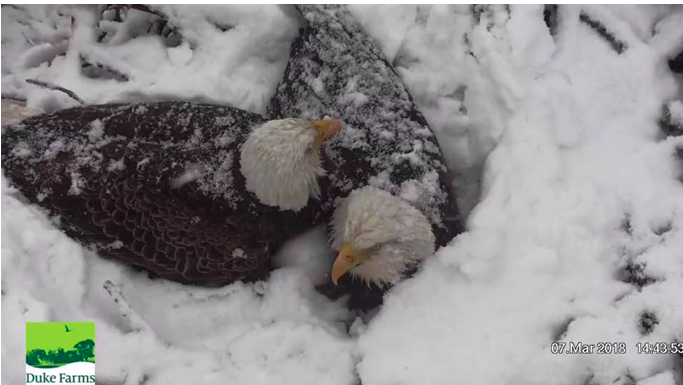
Diane was home from school during yesterday’s snowstorm and able to document the eagles during the storm.
March 7, 2108, Diane Cook’s blog
Thankfully the live cam was back up and running by the time school started on Monday following the first Nor’easter to hit our part of NJ. Was glad to be able to tell the students all was well, and that they could see for themselves! The good news was soon replaced by worry with yet another Nor’easter predicted for today. The day began slowly. Yes, it was snowing, but lightly. Things didn’t look too bad.
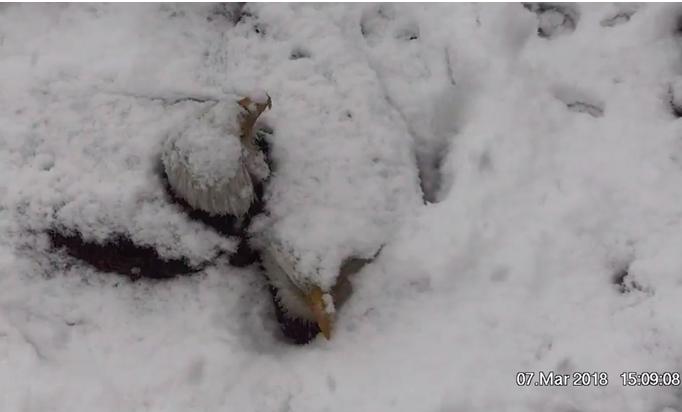
Within minutes, the snow really picked up in intensity. The storm hit quickly and the snow fell fast and heavy. Within minutes snow had covered the ground.
There was an exchange at some point on the nest. Mom won the rights to incubation. Then something I’ve never seen before happened. BOTH eagles stayed on the nest through the storm. They laid side by side.
Thanks to Charles T. Barreca who mans the camera at Duke Farms for the awesome close up view. As the camera moved, the eagles looked up at the noise.
They would shake off the snow, but remained on the nest together.
More snow fell. Still the eagles sat.
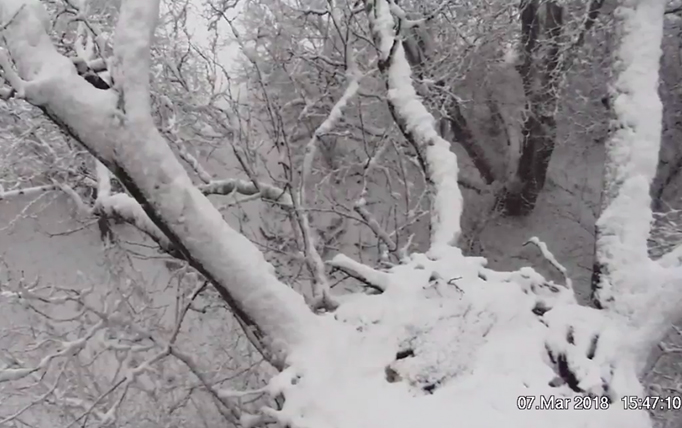
Finally the male flew off the nest, but stayed on a nearby branch.
No matter how much snow fell, these dedicated parents remain with their eggs and incubation continues.
Statewide Census Documents over 650 nesting pairs in New Jersey
by Ben Wurst, Habitat Program Manager
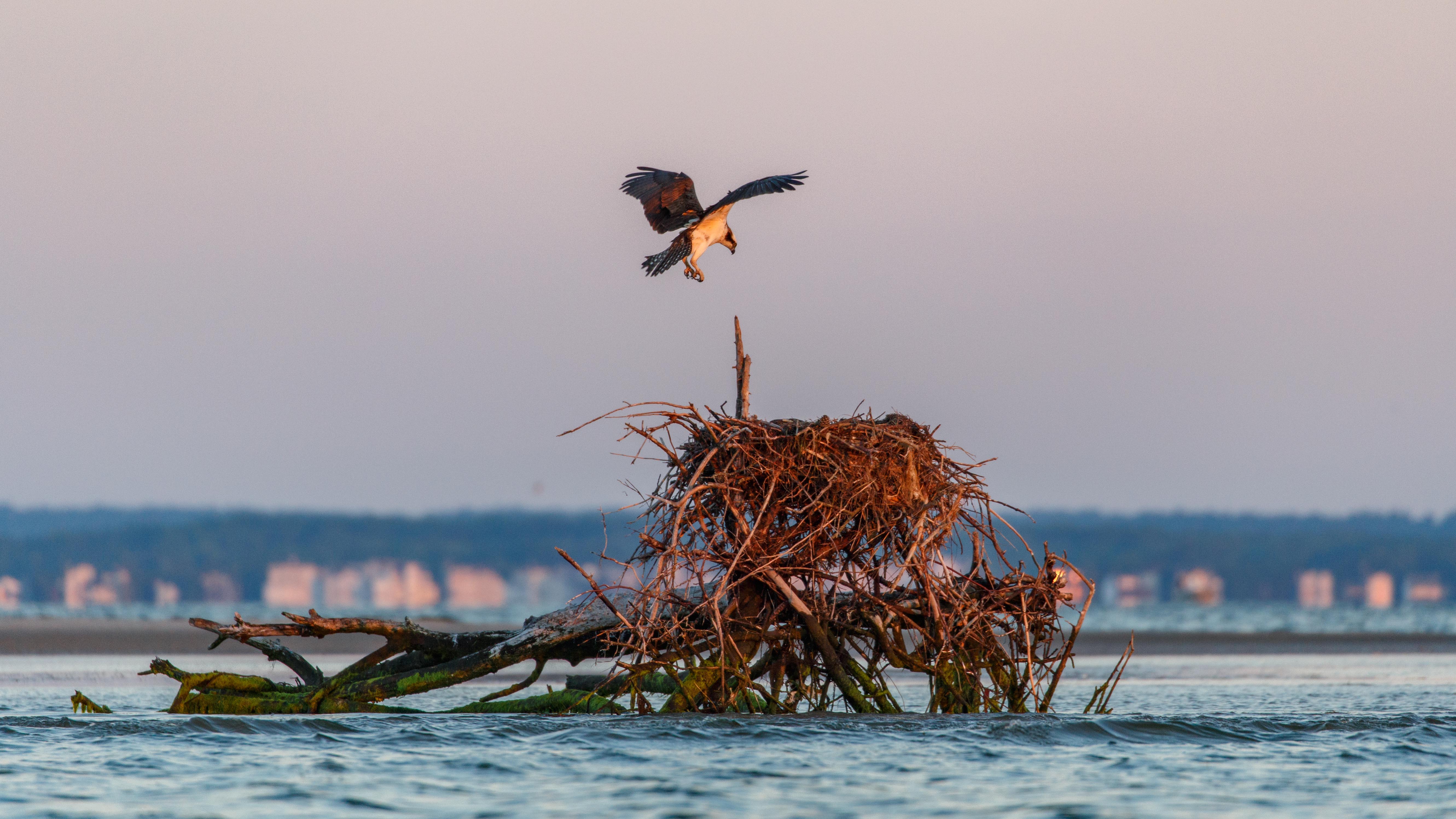
An osprey prepares to land on a natural nest. Barnegat Bay, NJ.
Since we began to work more closely with ospreys in 2006, we have documented the population grow beyond the historic population estimate of 350-450 nesting pairs (Henny 1977) to a new historic milestone. In 2017, a total of 668 active nests were recorded during a statewide census of nesting ospreys, which is well above the post-DDT milestone of 500 nesting pairs, and show that the population continues to grow. This is the second census conducted without the use of manned aircraft since 2009 after all known osprey nests were released and mapped online in 2013. Despite the lack of aircraft, we’re still able to obtain an accurate representation of the size and health of the statewide population, while reducing the overall project cost. Continue reading “Osprey Numbers Surge Above Post-DDT Milestone”
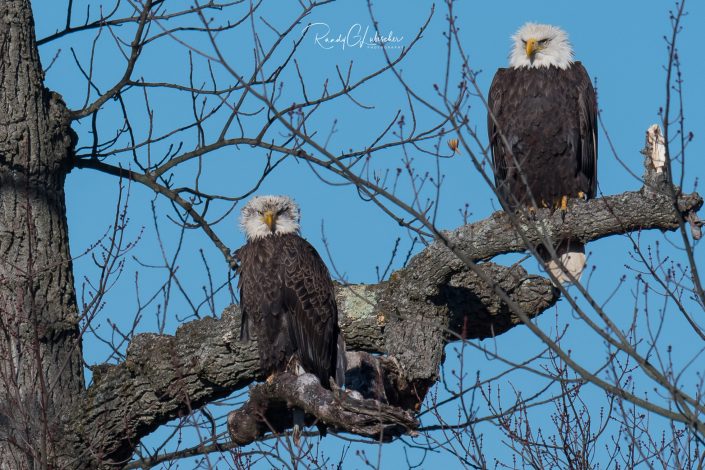
CWF will be at the festival on February 3rd. There are presentations, walks, viewing sites and exhibitors. It’s a great way to learn about NJ’s eagles and other raptors.
Boy Scout Dylan Green gives osprey nesting platform a needed upgrade
by Ben Wurst, Habitat Program Manager
Dylan and his father John pose for a quick portrait in front of one of the new platforms.
This past Sunday we assisted Dylan Green, along with his family and fellow Troop 65 scouts to install three new osprey nesting platforms. The project was done by Dylan as part of his Eagle Scout Service Project. He self funded the project using his own money to purchase the supplies needed to construct the platforms and built the platforms together with his fellow Boy Scouts. The platforms were used to replace two platforms that were in bad condition. The third was installed in a location where a platform used to be located. The osprey population at Cheesequake State Park is small, but it is good habitat for ospreys. Continue reading “Photos from the Field: Cheesequake Osprey Platform Replacement”
NJ Osprey Project Volunteers Wayne Russell, Matt Tribulski and John King repair an osprey platform.
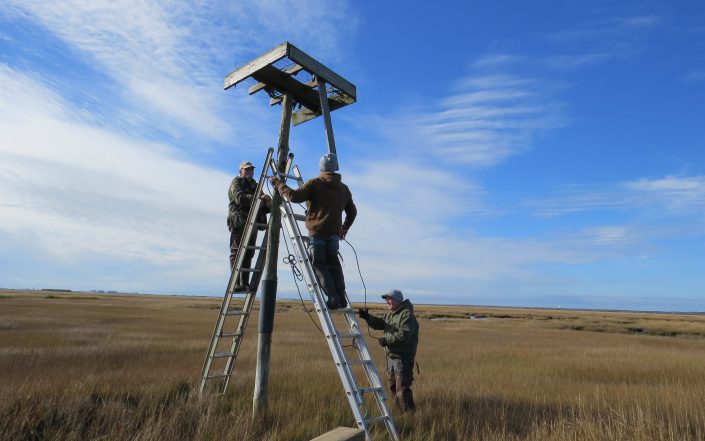
New Jersey ospreys have headed for warmer climates until their return in the spring. NJ osprey project volunteers are busy repairing and cleaning out nests, adding predator guards and perches in preparation for the nesting season. It’s an endless job as there are 100’s of nesting platforms throughout the state and maintenance is always needed. These repairs keep the nests as safe as possible for the nesting ospreys.
A new pollinator habitat is created in Middle Township
By: Larissa Smith; CWF Wildlife Biologist
The Middle Township Environmental Commission in cooperation with the Conserve Wildlife Foundation of NJ worked to create a pollinator habitat at a recreation site in the township which is located in Cape May County. Commission members had been working to obtain permission to plant a pollinator garden on a township site. The Ockie Wisting Recreation Complex was just officially opened in the end of October. This recreation site will have playing fields, a playground and a wooded trail that leads to a lake and fishing pier.
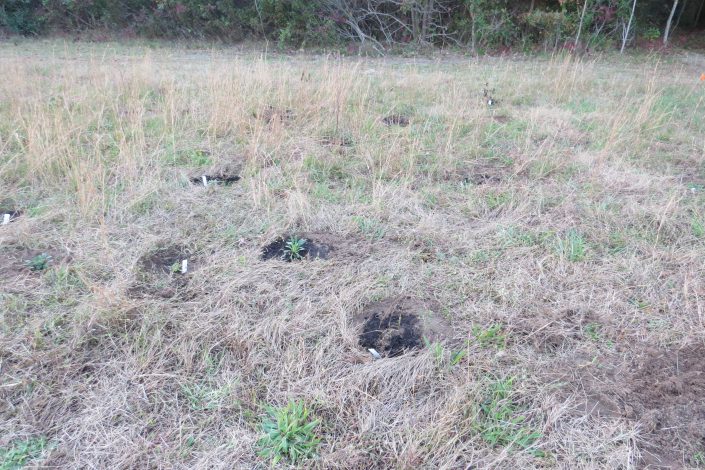
With funding from Atlantic City Electric volunteers with the Middle Township Environmental Commission and Conserve Wildlife Foundation of NJ planted 138 native perennials . While it doesn’t look like much right now, come next spring and summer there will be plants for bees, butterflies and birds to use for food and habitat. Not only will this pollinator meadow be great for wildlife, it won’t have to be mowed. The Environmental Commission will be in charge of maintenance and plans another work day in the spring to remove any non-native plants and trees in the area. We also plan to use this site as a demonstration garden for others interested in planting for pollinators.
Ockie Wisting Pollinator Habitat: List of Plantings – Fall 2017
Preservation of declining habitat is key to survival of high marsh wildlife
by Ben Wurst, Habitat Program Manager
Litter, debris and trash dumped at NJDOT Mitigation site on Absecon Bay.
As the sea rises, high areas on the coastal salt marsh will decline or disappear. These areas are higher in elevation and usually consist of more sandy soil. The sandy soil attracts nesting female diamondback terrapins, like many roadsides throughout New Jersey. As we harden shorelines to hold back floodwaters, terrapins will face more dangerous treks to find suitable nesting habitat, unless these high marsh areas are enhanced and elevations raised. For the past five years we have been surveying Route 30 (Whitehorse Pike) during summer months for the occurance of terrapins on the highway. Adult female terrapins enter the roadway while seeking these sandy areas above the high tide line. Most, if not all, do not survive crossing Route 30. Continue reading “Volunteers help clean up critical habitat along Absecon Bay”
As Vice President for the Garden Club of New Jersey, 2017 Women & Wildlife Service Award Honoree Jeannie Geremia has followed her passion for protecting pollinators by leading, inspiring, and educating others on the importance of pollination and wildlife habitat gardens for the past decade. She works to engage others in gardening for pollinators, as well as ensuring funding to support these efforts.
One of Ms. Geremia’s most notable accomplishments is her leadership in the designation of the Black Swallowtail Butterfly as the New Jersey State Butterfly. She spoke to many members of the New Jersey State Legislature, and recruited legislators with her enthusiasm and vast knowledge on the species. Her action earned her recognition from both the New Jersey Senate and the General Assembly. Continue reading “DEDICATED VOLUNTEER JEANNIE GEREMIA HONORED FOR HER SERVICE”
I would like to take the time to share a noteworthy event from last week, as well as highlight a CWF volunteer who deserves recognition for his dedication to wildlife. CWF received a call last Friday from a concerned citizen about an osprey chick that had fallen from its nest in Avalon. Osprey chicks are extremely vulnerable to summer storms, and are often blown right from their nests in strong winds. The storm that pushed through the area Thursday night had likely blown this chick out of its nest onto the marsh below. This particular nest had just been surveyed on July 6 and had contained three young chicks.
osprey chick down on marsh after severe storms
Often when staff members are not available to respond to calls like this, we rely on our volunteers to represent us. In this case, when CWF volunteer John King got the call, he hooked up his boat and immediately headed out to assess the situation in hopes of making a rescue. When he arrived on the scene, John realized that there were actually three osprey chicks on the ground below the nest; however, two of them were unfortunately already deceased. The parents were also sitting on the ground with the one surviving chick when he arrived. John picked up the chick and examined it for injuries. When he determined it was in good condition, he carried it up a ladder and placed it back into the nest as the parents circled and screamed above him. As he left the site, the parents immediately returned to the nest to check on their chick.
Osprey chick returned to the safety of it’s nest
Even though John was only able to save one of the three chicks, this was still a success story that would not have been possible without the help of a devoted volunteer. The concerned citizens who had called in the emergency watched the whole rescue from across the lagoon and reported back the following day that the chick was sitting up in the nest looking healthy. CWF also greatly appreciates citizens who care enough to observe wildlife responsibly and report wildlife emergencies when necessary.
Adult returns to nesting platform after chick is safely returned to nest.
John King has been volunteering for CWF for many years and has worked on several projects including the Calling Amphibian Project, NJ Tiger Salamander project and the NJ eagle project. He has been very involved with the NJ osprey project, headed by CWF’s Ben Wurst, assisting with osprey surveys during the breeding season and helping to construct and erect nest platforms over the winter. In addition to CWF, John also volunteers with many other conservation organizations and is always happy to lend a hand. Although he is retired, his volunteer work is practically a full time job. I sincerely admire John’s continued enthusiasm and his dedication to wildlife, and I believe the world would be a better place if there were more people like him.
Conserve Wildlife Foundation of NJ thanks you, John!