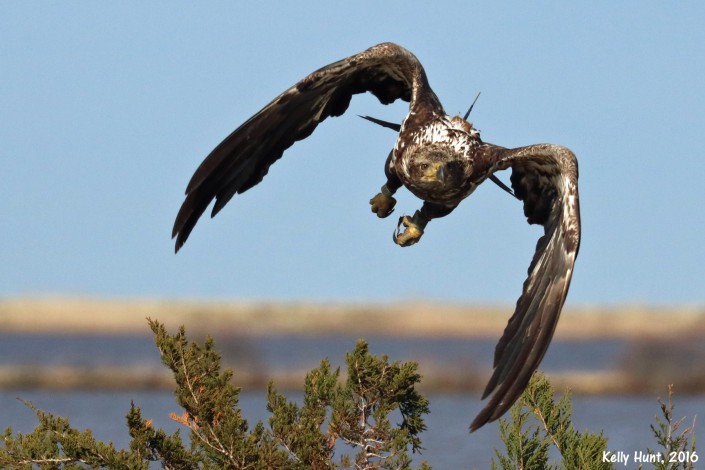
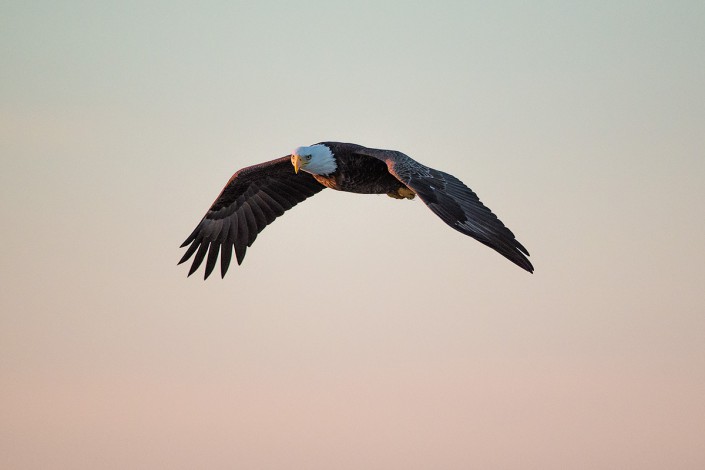
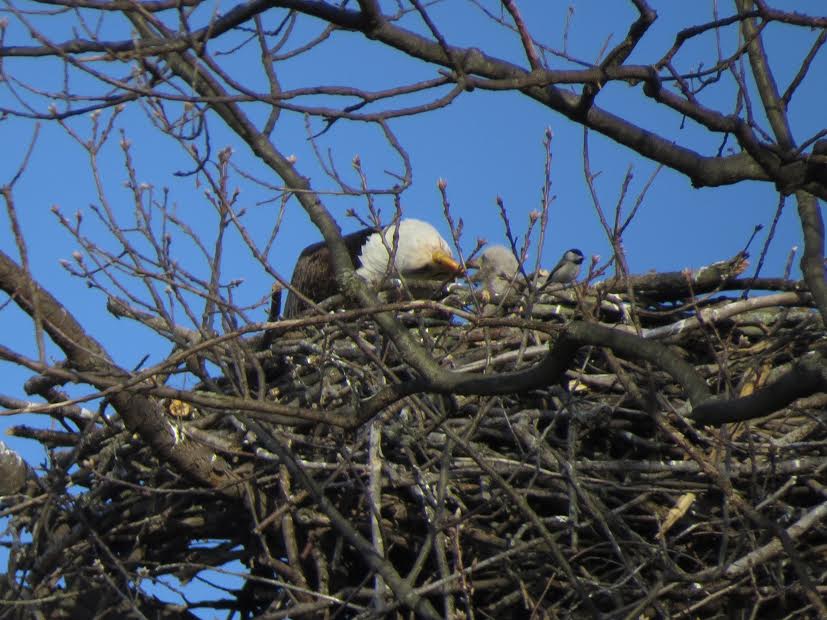
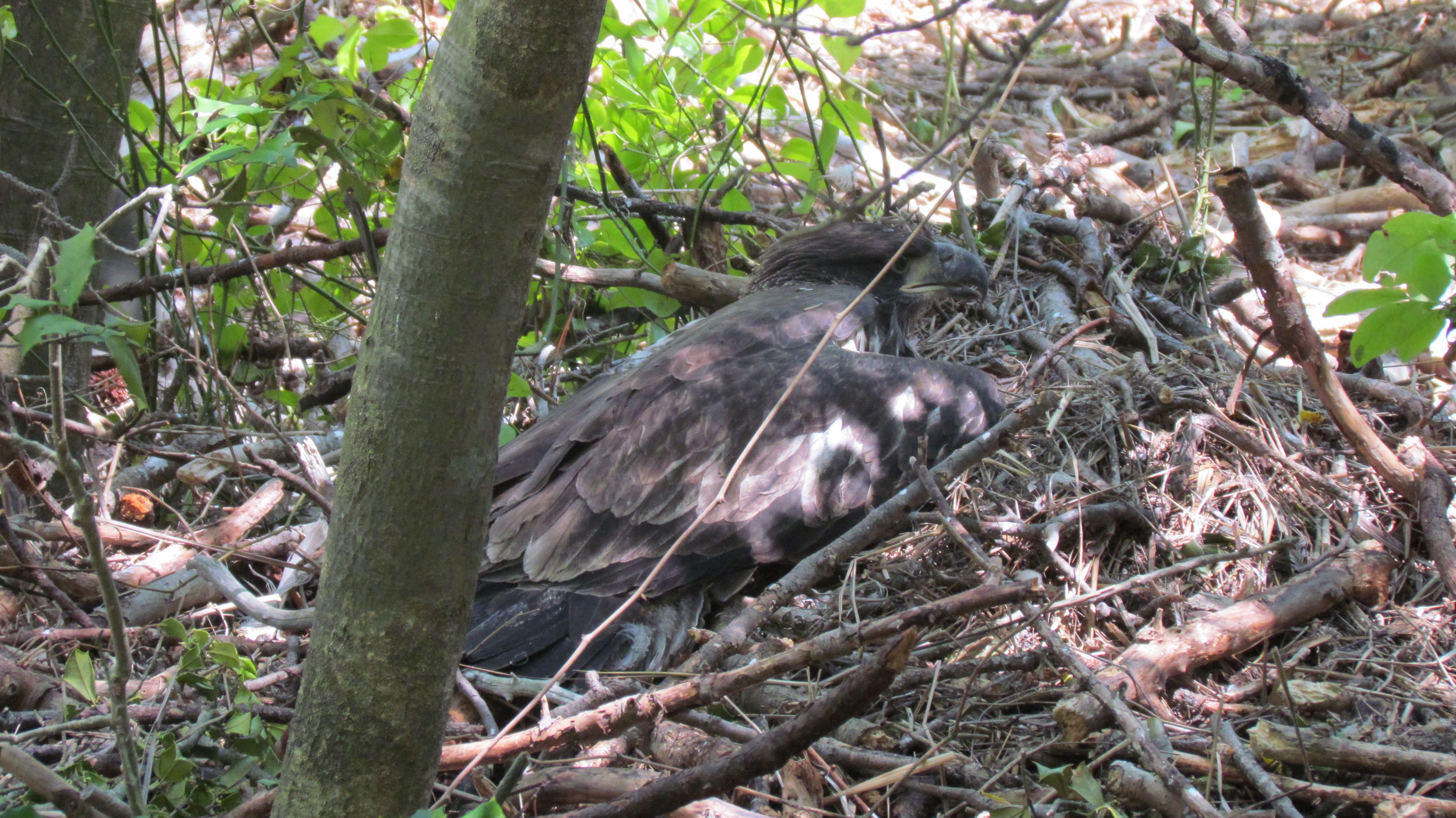
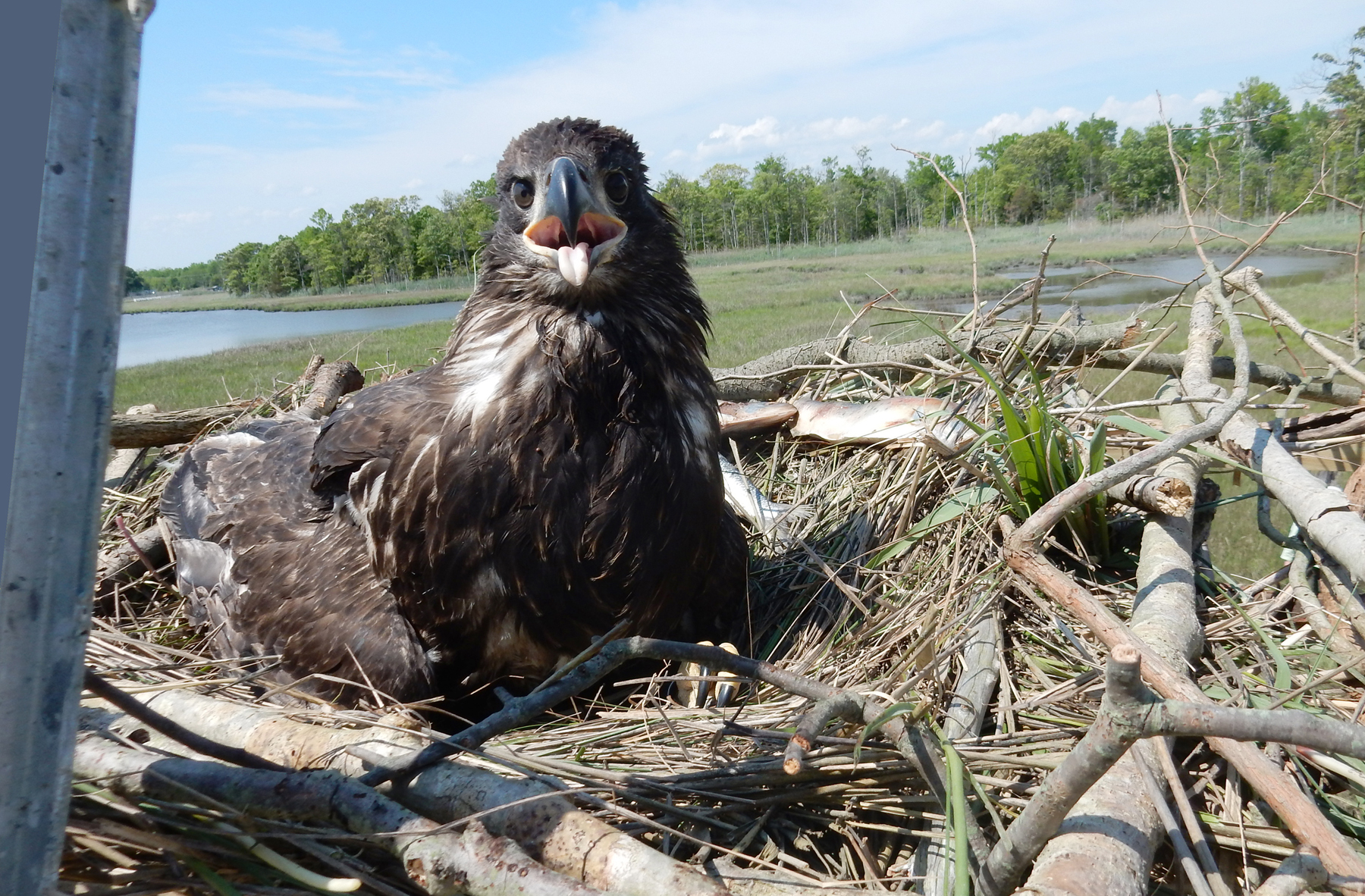
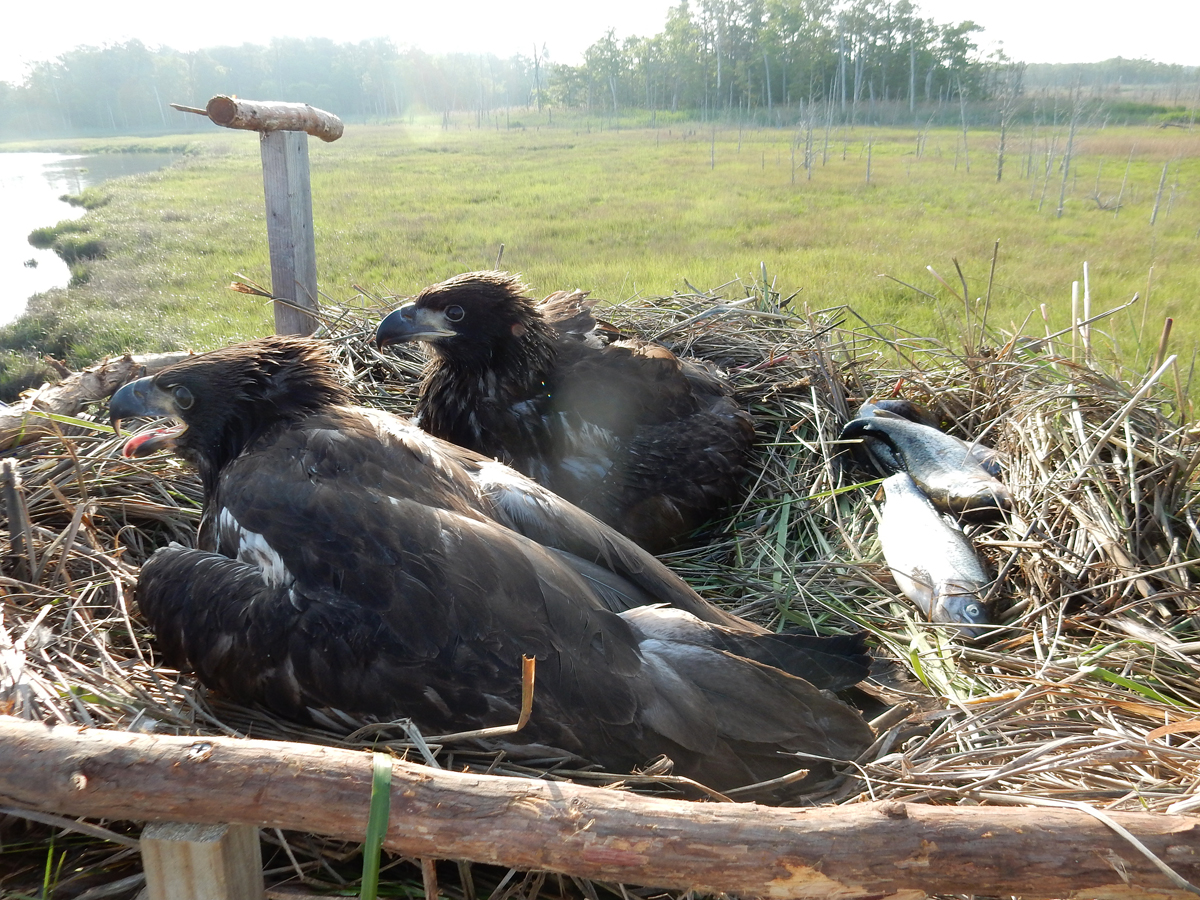
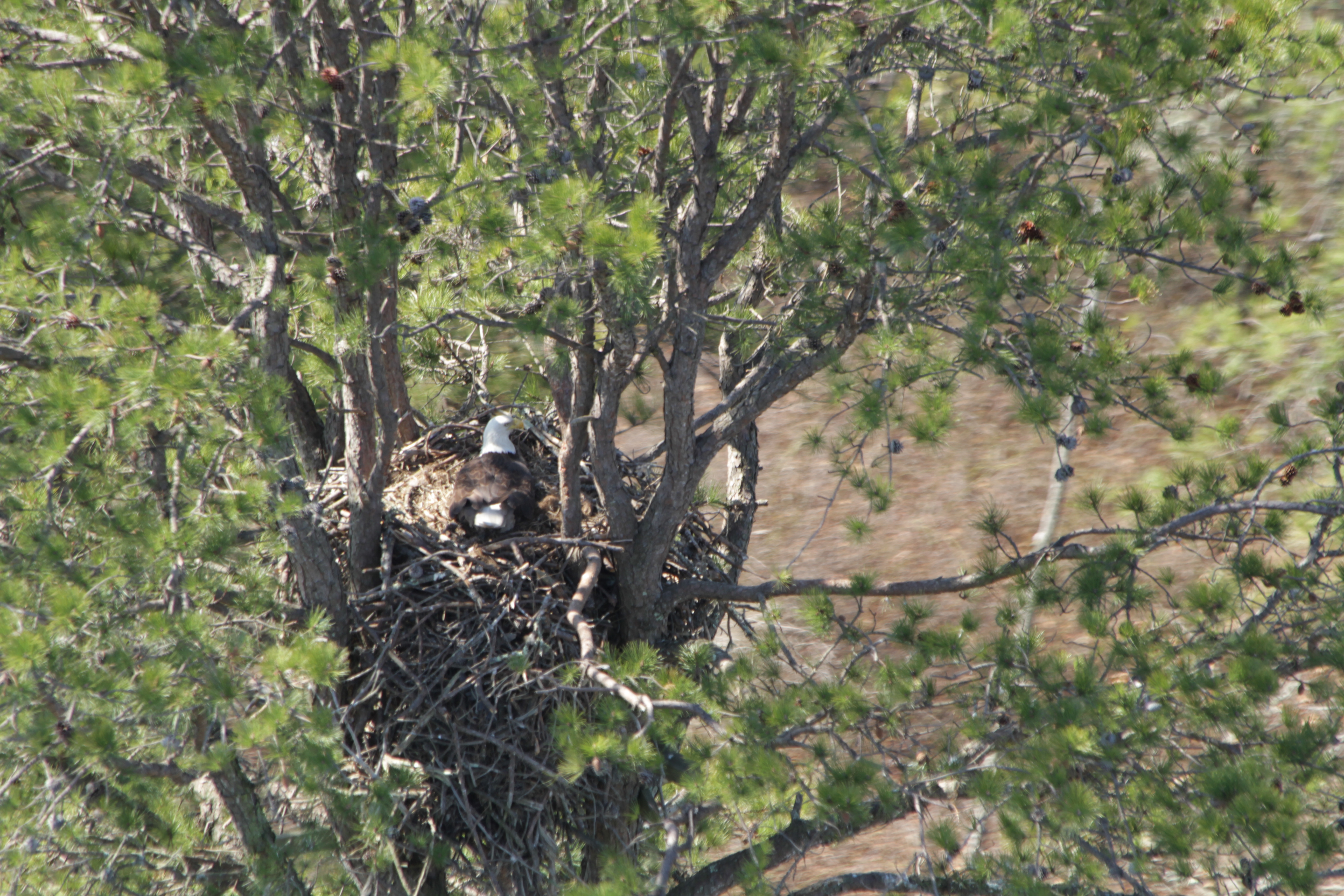
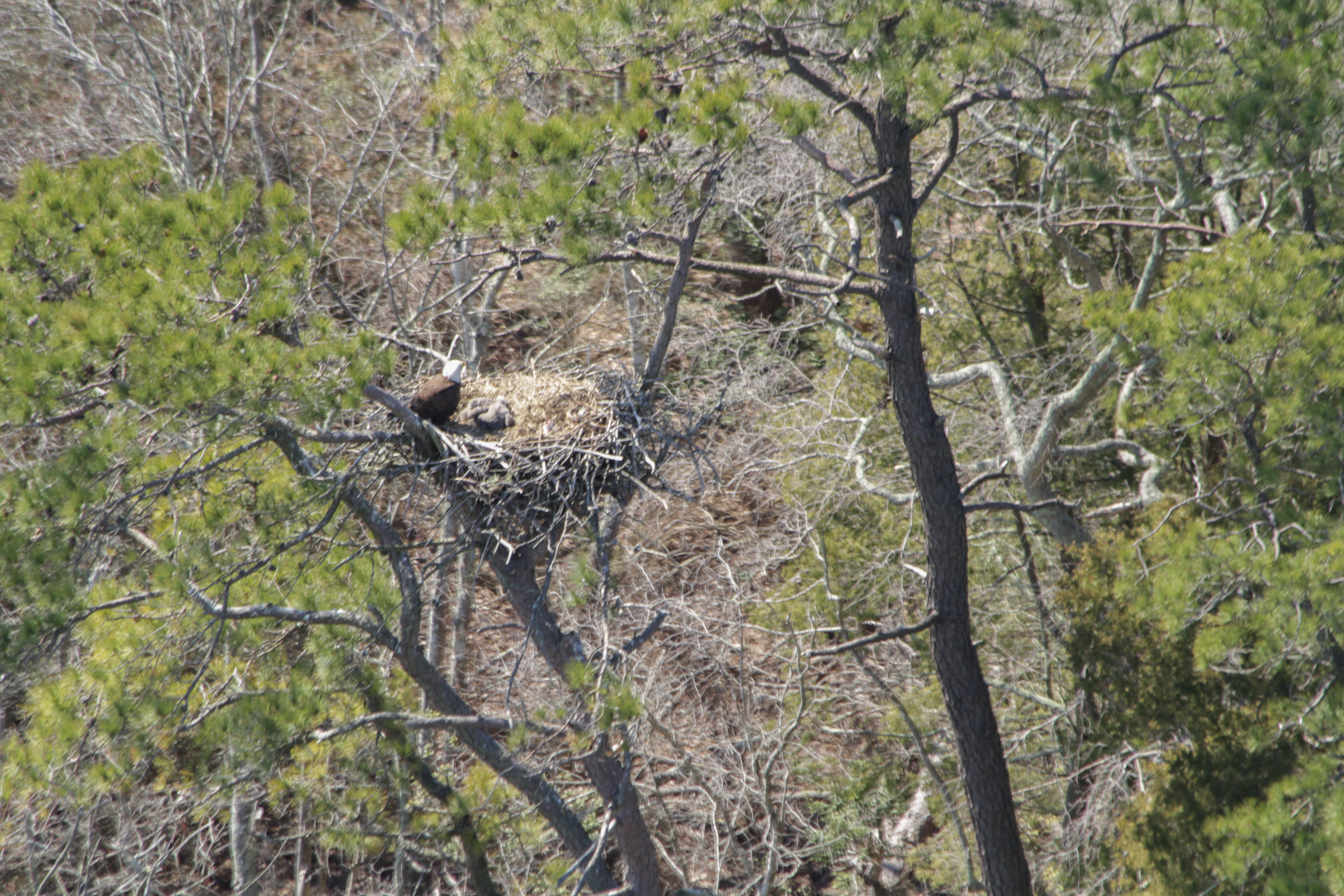
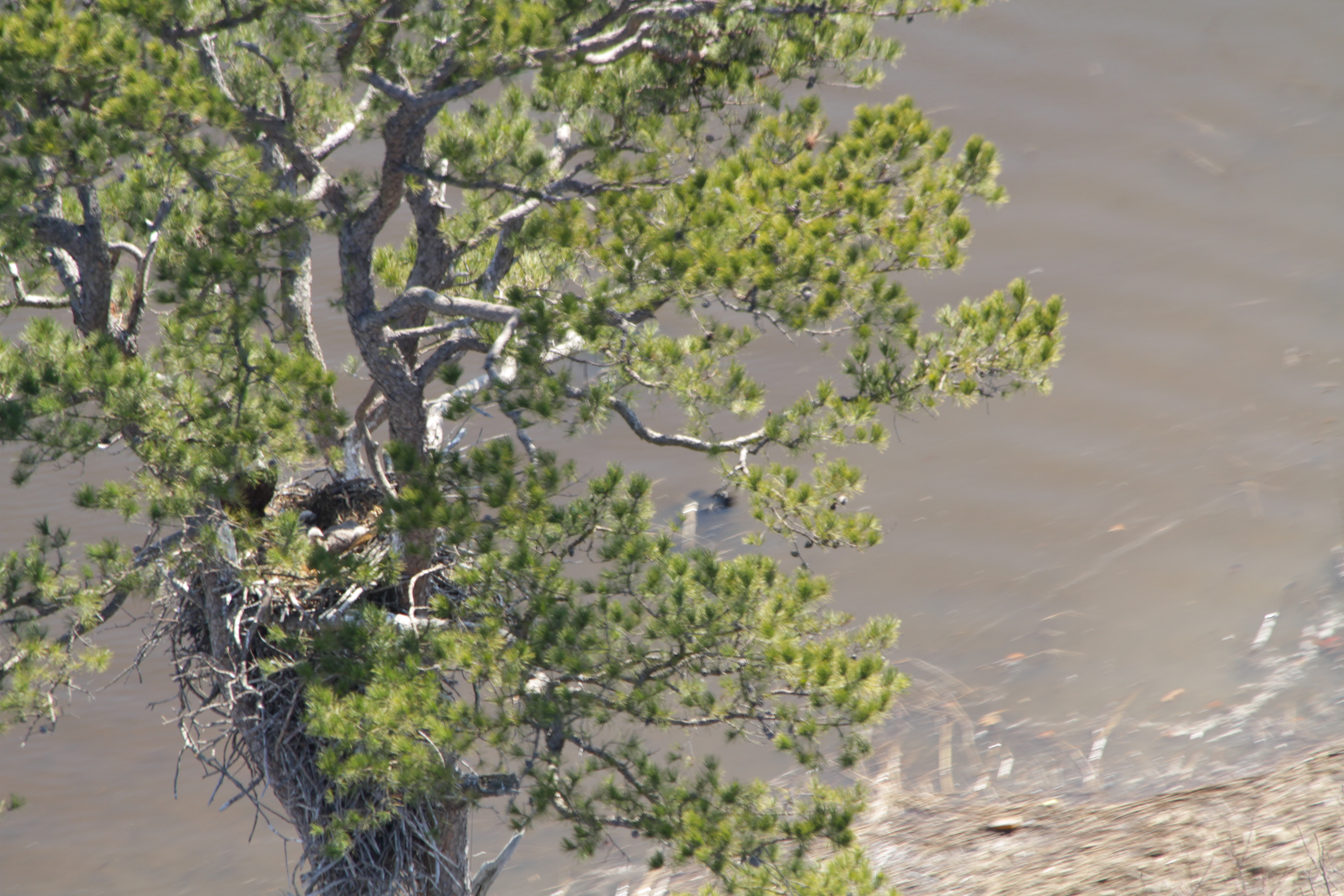
So far this Eagle Nesting season 82 young eagles have been reported to have fledged (taken their first flight). Juvenile eagles will spend the next few weeks in the nest area strengthening their flying and hunting skills. The first year morality rate for first year eagles is high due to their inexperience. We wish all the NJ fledglings safe travels, and look forward to some returning to NJ to nest in the future.
recent fledgling from Swimming River nest 6/26/16@Randy Lubischer
CONGRATULATIONS, KAYLEIGH YOUNG AND HOWIE WILLIAMS!
by Lindsay McNamara, Communications Manager
Earlier in 2016, Conserve Wildlife Foundation launched the “For the Love of Wildlife” Photo Contest. Our photography contest was meant to showcase the love for and need to protect the endangered and threatened wildlife that call New Jersey home. We encouraged youth and adult photographers across the Garden State to submit photographs in the following categories:
New Jersey’s Rarest Residents: Endangered, Threatened, and Special Concern Wildlife Species Only
The Garden State: New Jersey Landscapes
Experiencing Nature: People Enjoying the Outdoors
Wild New Jersey: All Animals in the Garden State
We were blown away by the amount of submissions we received! Over 1,470 entries were counted! New Jersey wildlife photographers, CWF board members and staff poured over the entries to choose our winners. Today, we are thrilled to announce both second place winners.
Youth Photographer: Kayleigh Young
Cresskill, New Jersey
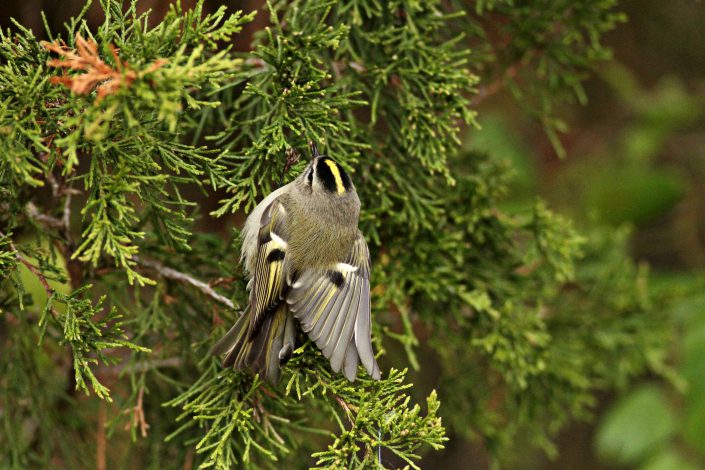
Golden-crowned kinglet
Golden-crowned kinglet, youth second place winner Kayleigh Young.
Kayleigh was happy to share more about her image with us! She said, “after placing third in CWF’s 2015 Species on the Edge 2.0 Multimedia Contest, I was invited to join a birding trip on which I took this picture. I’ve always loved photographing wildlife, because I absolutely love nature, hiking, and the outdoors. I don’t think I can choose a single favorite species because I truly do love all animals; if I had to, I would say a fox maybe.”
Howie Williams: Adult Photographer
Oceanville, New Jersey
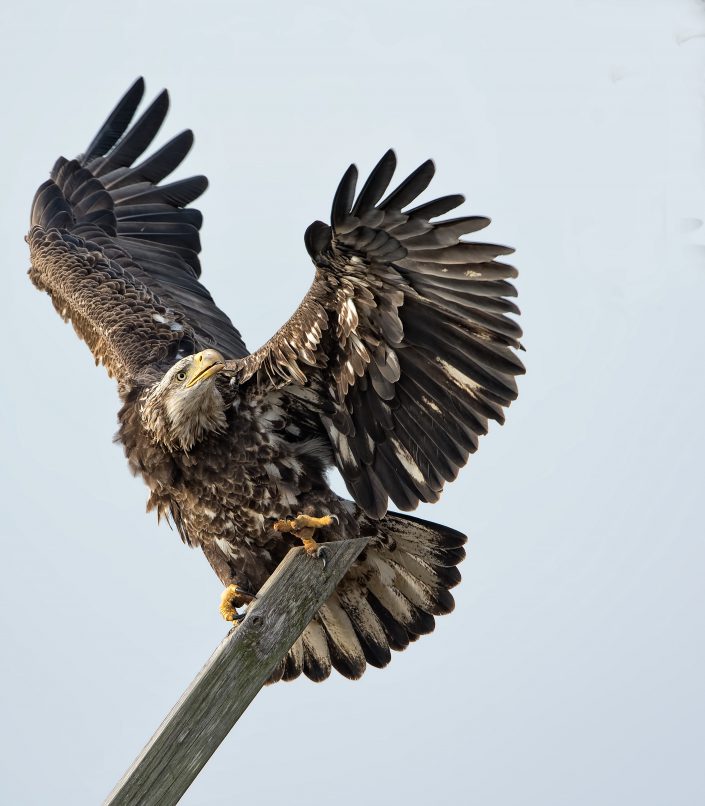
Mobbed Eagle
Mobbed eagle, adult second place winner Howie Williams.
Howie Williams has been photographing nature, especially raptors, for over 8 years. Peregrine falcons are his favorite bird (because of their raw speed), followed by ospreys, and eagles are a close third. Howie was hooked on photography after watching an osprey family at Edwin B. Forsythe National Wildlife Refuge (NWR) several years ago. He watched the chicks grow from when they were two weeks old to their first flight!
Howie frequents Forsythe NWR, which is where his winning photograph was taken. A juvenile eagle was sitting on an osprey nest platform. Howie heard a screech and a yell, looked up and saw another juvenile eagle fly in and land on the platform too. He took the above photograph at that moment! Howie couldn’t get both eagles in the frame. In the original shot, you can see just the talons from the other eagle, but he cropped them out for the image he submitted for our contest.
Howie is retired and spends five days a week photographing raptors. He often posts his photographs in the “visitor post” section of our Facebook page. Howie told CWF, “what’s the point of taking pictures without sharing them with people? Where’s the fun in that?”
Stay tuned as we announce the second place winners of the “For the Love of Wildlife” Photo Contest over the next few days!
Lindsay McNamara is the Communications Manager for Conserve Wildlife Foundation of New Jersey.
Loyal Eagle Project Volunteer Contributes to Conservation for over Two Decades
by Dr. Larry Niles, LJ Niles Associates LLC
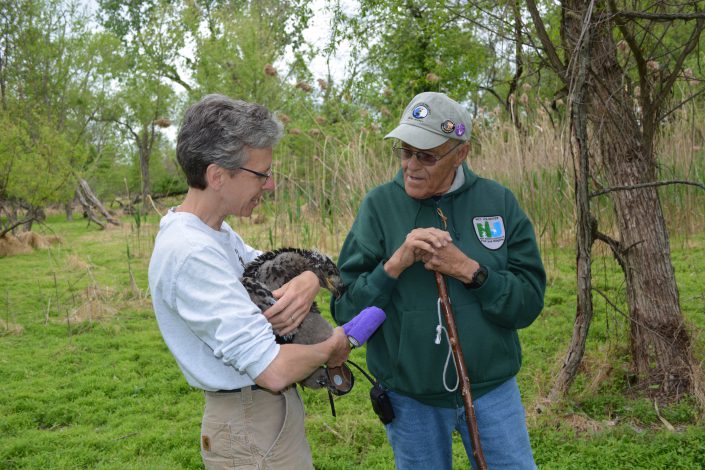
Dr. Erica Miller and Elmer Clegg.
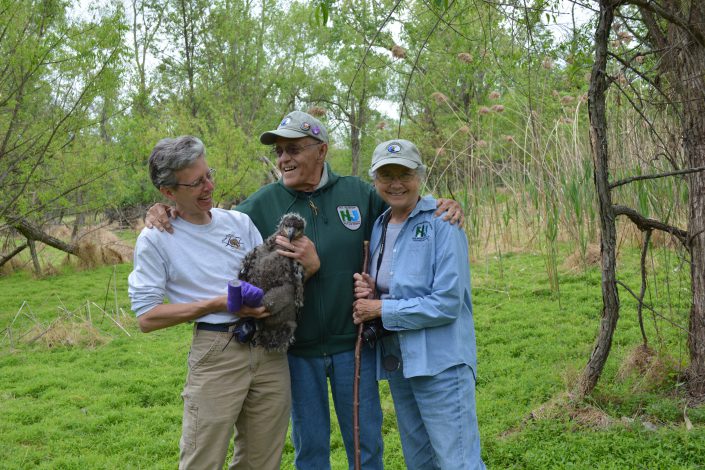
In the early days of the Bald Eagle project, when we really didn’t know whether the species could be restored back to New Jersey, there were a few people that offered their help without reservation to help the birds. Elmer Clegg and his wife Bunny were two and among the most dedicated. Elmer died May 20th at 79 years old. He was a loyal eagle volunteer for more than two decades.
To understand Elmer and Bunny’s contribution its important to remember the circumstances in which the eagles found themselves. The historic population of eagles, about 22 in 1950 but probably much higher in history, had been whittled down to just one unproductive pair by 1981. Biologists at the newly formed Endangered Species Program, including me, worked hard to restore the Delaware Bayshore population with new projects, like hacking young birds into the wild. By the early 2000’s, we had new nests but in places that had not known eagles for decades. In many places they were unwelcome because they thwarted sprawl development or short sighted resource use. They had to be defended, but then we couldn’t afford staff.
Dr. Erica Miller and Elmer and Bunny Clegg.
Into that breach stood Elmer and Bunny and others like them, John and Sheryl Healy and Red and Mary Jane Horner. They were stalwart defenders of wildlife that brooked no insult to the birds by watching the nest throughout the nesting period until the young birds fledged. It was rewarding but difficult work trying to persuade farmers, businessmen, irate suburbanites and many others that the eagles deserved to be where they were. A few times our conservation officers had to step in, or DEP had to drop the regulatory hammer, but mostly it was the calm persuasion of people, like Elmer, who’s true love for these birds spoke convincingly to those against the bird.
Elmer helped me understand that the future of wildlife doesn’t lie in the agencies or their staff, but in the hearts of people who care for wildlife. People like Elmer deserve to return to this earth as the species they loved so much.
Dr. Larry Niles has led conservation efforts for over 30 years.
Tracking Young Bald Eagle “Nacote” throughout the Garden State
by Larissa Smith, wildlife biologist
Nacote 4/8/2016 Photo by Kelly Hunt
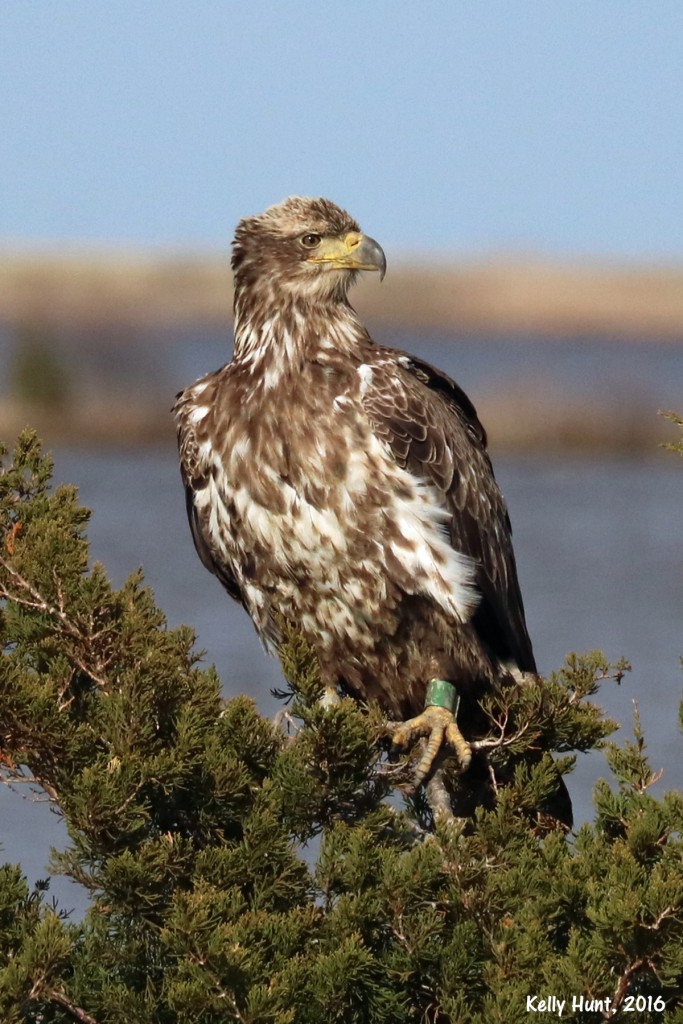
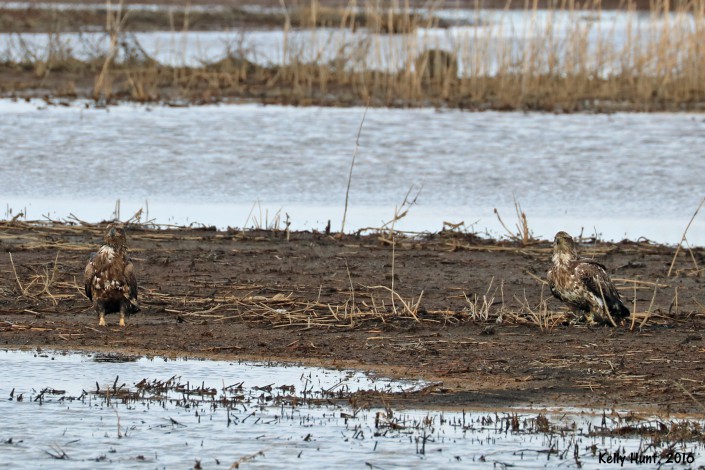
On April 8th, Kelly Hunt was photographing four bald eagles at Forsythe National Wildlife Refuge (NWR), two adult birds and two immature birds. When she got home and looked at the photos she realized that one of the young birds was banded and had a transmitter. It was “Nacote” back in his home area. “Nacote” was banded and outfitted with a transmitter on May 6, 2014 at the Galloway nest. Since then we have been trackinghis movements on the CWF website. These photos give a great look at what the plumage of a bald eagle going into its third year looks like. You’ll also notice that the eyes and bill haven’t yet turned yellow.
Updated Story Map Showcases Bald Eagle Nest Locations from 1985-2015
by Brian Henderson, GIS Specialist
Photo by Northside Jim
Our story map The Return of Bald Eagles in New Jersey has been updated based on the 2015 Bald Eagle Project Report. The story map shows the locations of every eagle nest known to be active (meaning they laid eggs) in New Jersey since 1985 — the year when there was only a single nest in the entire state. The map presents an animated depiction of where eagles have nested each year, so you can track the bald eagle’s triumphant return to the Garden State! Viewing the animation shows you how eagle nests spread from a single point in Cumberland County across all of New Jersey through the years.
The story mapalso highlights a number of Feature Nests which include more detailed information about the projects underway at specific nests, such as the Duke Farm nest which has been featured on our EagleCam since 2008.
The number of nesting pairs of bald eagles has steadily increased each year. This trend continued in 2015 with a record 150 active pairs, which was a slight increase over 146 such pairs recorded in 2014. In 2015, there were 122 nests that successfully fledged at least one young compared to 115 successful nests in 2014 and the 199 total young fledged in 2015 was only slightly less than the record 201 young fledged in 2014.
New Jersey Banded Bird and Mate Raise Three Chicks in Pennsylvania
By: Larissa Smith, Wildlife Biologist
We have been following the story of “Jersey Girl,” a New Jersey banded bird, who nests in Montgomery County, Pennsylvania. This was her fourth season at this nesting location. In 2014, the pair lost two chicks due to a severe winter storm, so it was good news when nest observer Linda Oughton reported that the pair raised and fledged three chicks during the 2015 season. Two weeks after the chicks fledged, the nest collapsed due to wind and rain. So, we will have to wait and see if they rebuild in the same nest tree or move to a new location next season.
Linda sent some photos from the 2015 nesting season.
Notice the small intruder in front of the nest Photo: L. OughtonLinda reports that she has seen fish, squirrels, Canada geese, rabbits, turtle, chickens, and a ground hog brought to the nest. Photo: L. OughtonPhoto: L. Oughton
On Saturday the 23rd, I received a call from Eagle Project volunteers Donna and Heiki Poolake. One of the nests that they monitor in Natural Lands Trust’s Glades Wildlife Refuge in Cumberland County had partially fallen and Heiki found all three chicks on the ground, thankfully alive. ENSP Principal Biologist Kathy Clark met them out at the nest site and determined that all three looked uninjured but were weak from lack of food and water. The two smallest were especially docile so the decision was made to take them to Tri-State Bird Rescue & Research in Delaware for a check up and to get needed fluids and food. The largest and strongest bird was given water and fish, and set on a leaning tree (off the ground) in the hope that it would hop up on branches where the adults, still watching from above, would continue to feed it.
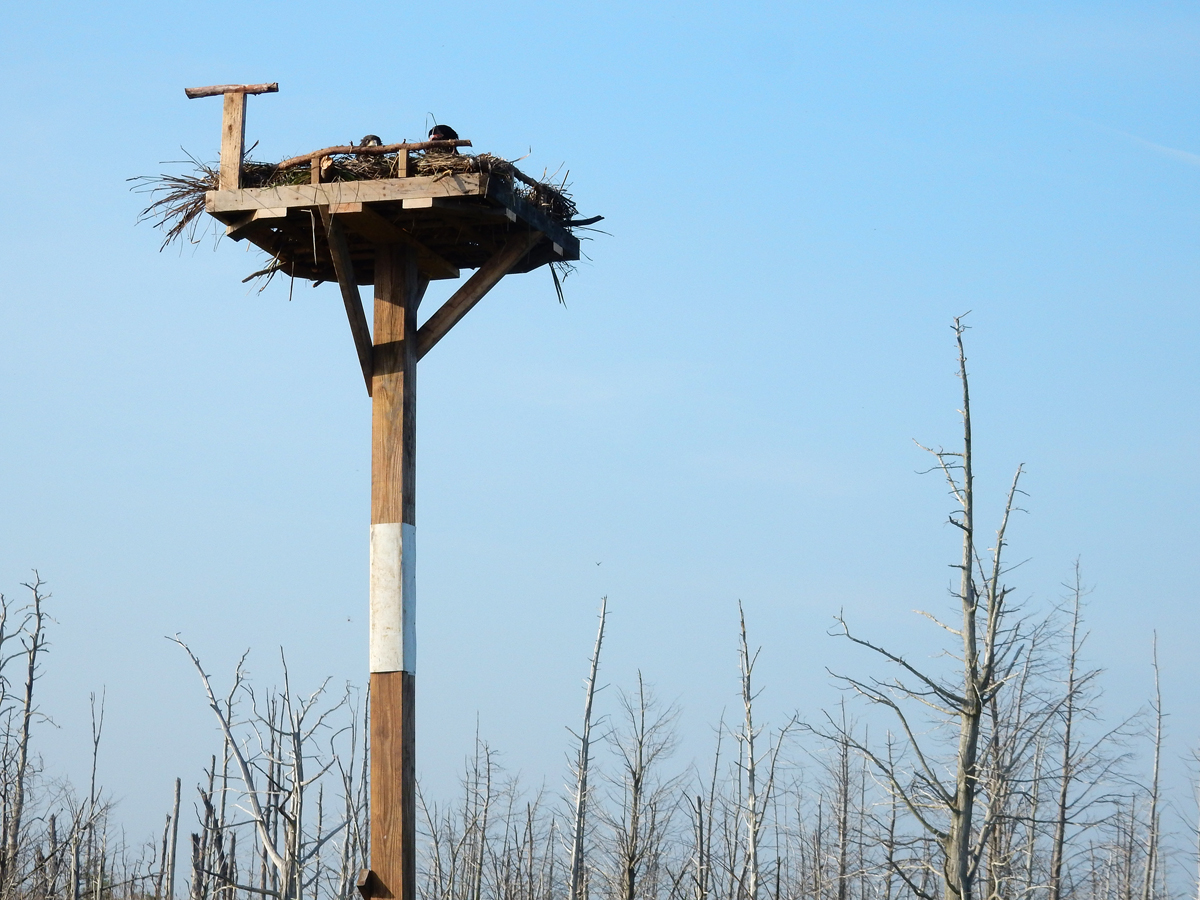
The next day we pulled together a crew to install a nest platform for the remaining eaglet. We carried the pre-built nest platform (designed for ospreys) into the marsh, installed it and built a nest of branches and grass, and added perches to make it more roomy for an eagle. We found the eaglet back on the ground, sitting on the remains of the fallen nest. We caught the bird again, banded and took measurements that confirmed this was a female about 9 weeks of age. She gladly ate pieces of fish offered to her as well as some more water. We placed her up in her new “nest,” along with several fish, and she looked quite happy to be off the ground and back up in a nest.
Chick in fallen nest on ground @ Heiki PoolakeRe-nested eagle nestling in platform nest Photo by: K. Clark
In the meantime, the two eaglets at Tri-State were deemed healthy and ready to return to their parents. The challenge was how to return these two without disturbing their sibling now living in a nest platform built for smaller ospreys. The solution: a second nest platform. This second one was improved by CWF’s Ben Wurst by enlarging the size and adding branches as railings for perching. For a second time, a work crew assembled to use the early morning tide, and we boated the new platform out to within 200 yards of the first. The platform went up, a stick-and-grass nest quickly built, and the eaglets were brought out.
The eaglets, a 9 week old male and a 7.5 week old female, were kept covered until they got settled. When the chicks were uncovered, one of the adults started calling and flew in and perched on a snag within viewing distance. We quickly left and monitored them from a distance. One adult was perched near the platform with one eaglet, and before we left had flown in and perched near the new platform. Kathy went out the next day and reported that all three chicks were fine and using the perches and branches.
Re-nested eaglets in second platform Photo by: K. ClarkEagle nestlings in new nest Photo by: K. Clark
We’d like to thank the following people for their help: Dr. Erica Miller (NJDFW); Todd Vasquez (NJDFW Law Enforcement); Eagle Project volunteers Donna & Heiki Poolake and Matt Tribulski; Steve Eisenhauer (Natural Lands Trust) and local landowners, the Watermans.
A Look at the Pilesgrove Eagles Nest Over Time (2009-2015)
By:Larissa Smith, Wildlife Biologist and Volunteer Manager
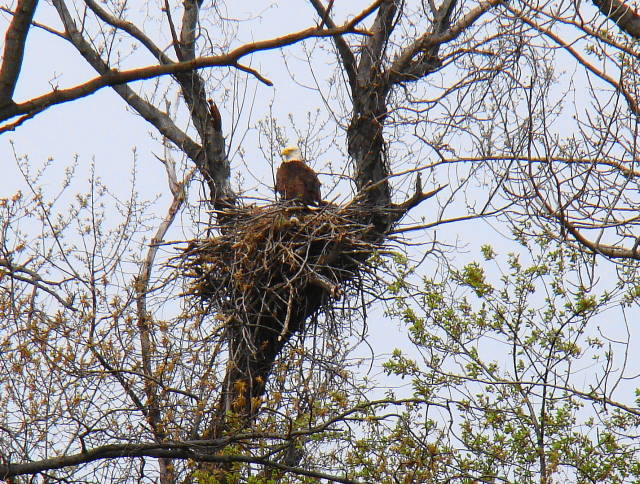
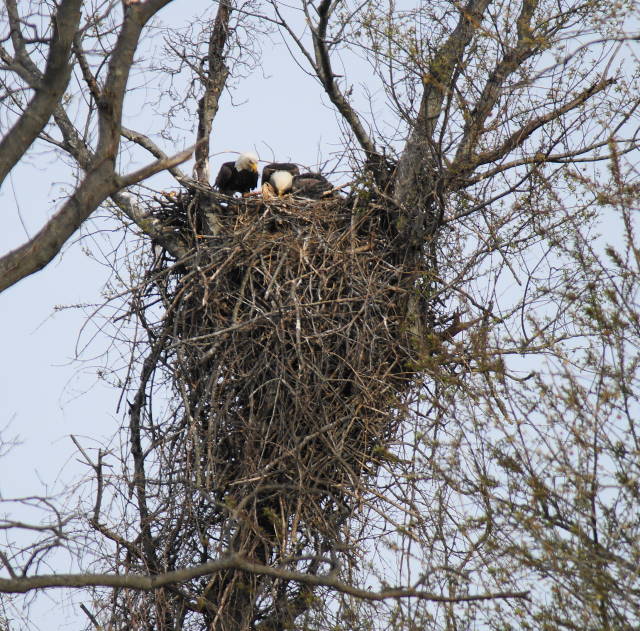
New Jersey Bald Eagle Project Volunteers Jeffrey and Cathy White have been monitoring the Pilesgrove eagle nest since the pair’s first nesting season in 2009. The pair has successfully raised and fledged 9 young for the past six years. This season the pair has two chicks which are currently six weeks old. Jeffrey took a photo of the nest on April 19, 2015. He then went back through his photos and found one that he taken on the same date April 19, 2009 in their first nesting season. This comparison really shows just how large eagle nests can get after years of use.
Back in June of 2014, I wrote a blog when Conserve Wildlife Foundation was contacted by Linda Oughton regarding a New Jersey banded bird nesting in Montgomery County, Pennsylvania. The female referred to as “Jersey Girl” recently made the news in The Reporter.
One correction, the article states that B/64 is from Northern New Jersey, she was actually banded in southern New Jersey, Cumberland County in 2004.
The Pennsylvania pair started incubating on February 14th, 2015 and hatching occurred the weekend of March 21st, 2015. It has been confirmed that the pair has two chicks this season.
I met with pilot John Whimberg and we flew south to Woodbine to pick up Kathy. From there we proceeded south towards the Delaware Bay. We were searching for existing nests to determine if they are active or not and if they had young. Most of these nests were not accessible to the Bald Eagle Project volunteers who watch nests during the nesting season. Here is a summary of what we found:
13 nests checked (searched for an additional 3 nests around Heislerville).
We documented 3 chicks in 1 nest, and 2 chicks in 3 nests. (chick ages in the 3 to 4 week range).
Six nests had adults sitting close (on eggs or possibly hatchlings).
Three nests already failed.
Kathy believes that the failure rate may be a bit higher this year because of the extreme cold weather we had in February, which is when most birds are incubating or have hatchlings. Overall the eagle population has done quite well in recent years, so if there is any reduction in productivity it should not affect the long term trend in the growth of their population.
One of the most amazing things that anyone flying above the ground in New Jersey can see is how much forested land we still have. Many bald eagles nest very close to people and near water. Preserving this habitat is essential to the long term sustainability of the bald eagle population in New Jersey.
We are lucky to have in-kind support from the NJ Forest Fire Servicewho donated their time and equipment for us to complete this important survey. We thank them for their support of the Bald Eagle Project!
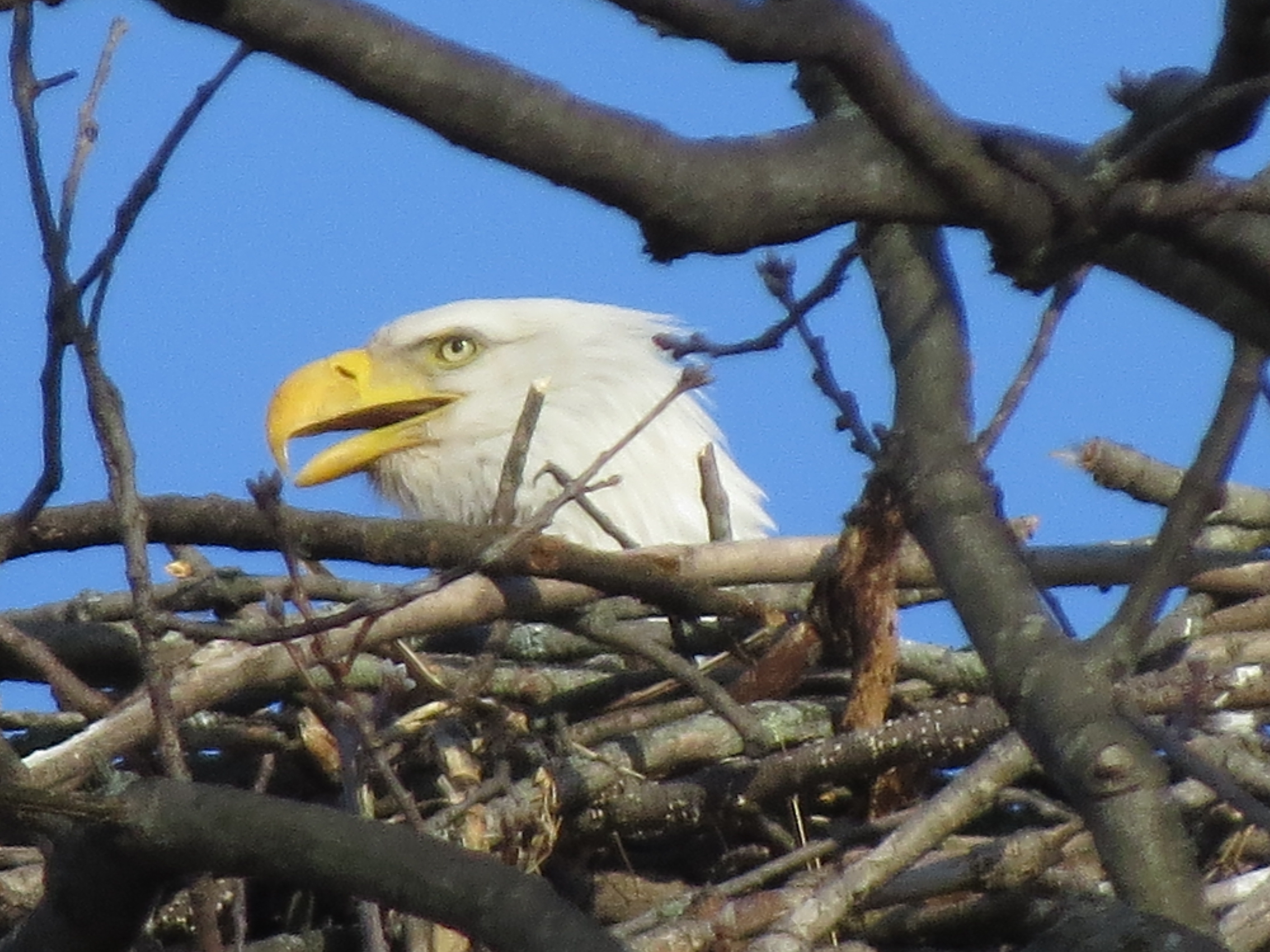
A bird sitting tight means that it is still incubating.Two young can be seen in this nest!How many young can you spot in this nest?