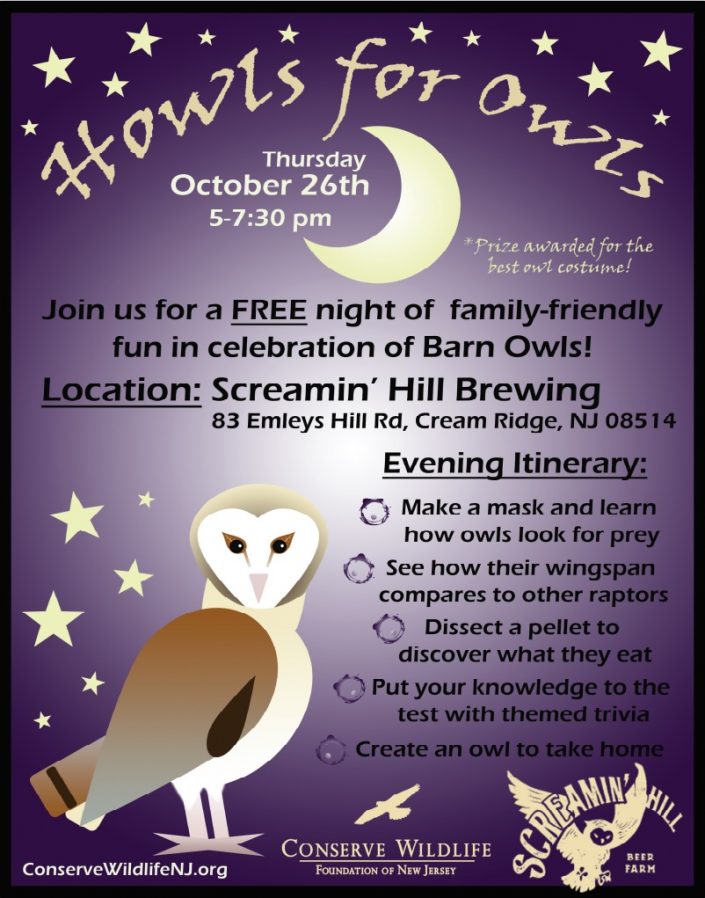
CWF’s “Howls for Owls” event at Screamin’ Hill Brewery in Cream Ridge, New Jersey was certainly among our most fun fall activities. Owl enthusiasts flocked to this 170-acre farm for an evening of family-friendly activities in celebration of barn owls. Children and adults alike enjoyed dissecting owl pellets, creating owl masks, making adorable pinecone owls, and participating in three rounds of owl-themed trivia. Many attendees even came dressed in owl costumes!
Activities were designed to be fun and to teach attendees about owl adaptations. Owl pellet dissection was one of the most popular things to do. Children and their parents often worked together to extract all the bones found within a pellet and figure out what the owl had consumed.
Kids also made special owl masks with tubes around the eyes to mimic the oblong shape of an owl’s eye. Owl eyes are fixed in place and shaped more like a doorknob or tube than a sphere. When the mask is on, kids discover that they can only see in front of them and must rotate their heads around to look from side to side- just like an owl. Because owls cannot move their eyes, they are adapted to turn their head about 270 degrees around!
“Howls for Owls” had activities for everyone! Crafts, trivia, owl pellet dissection, and other activities kept visitors busy.
Etiquette tells us that we shouldn’t have a favorite child. I sometimes wonder if the same rules apply to biologists with regard to our study species. If so, my manners fall woefully short, at least where reptiles are concerned.
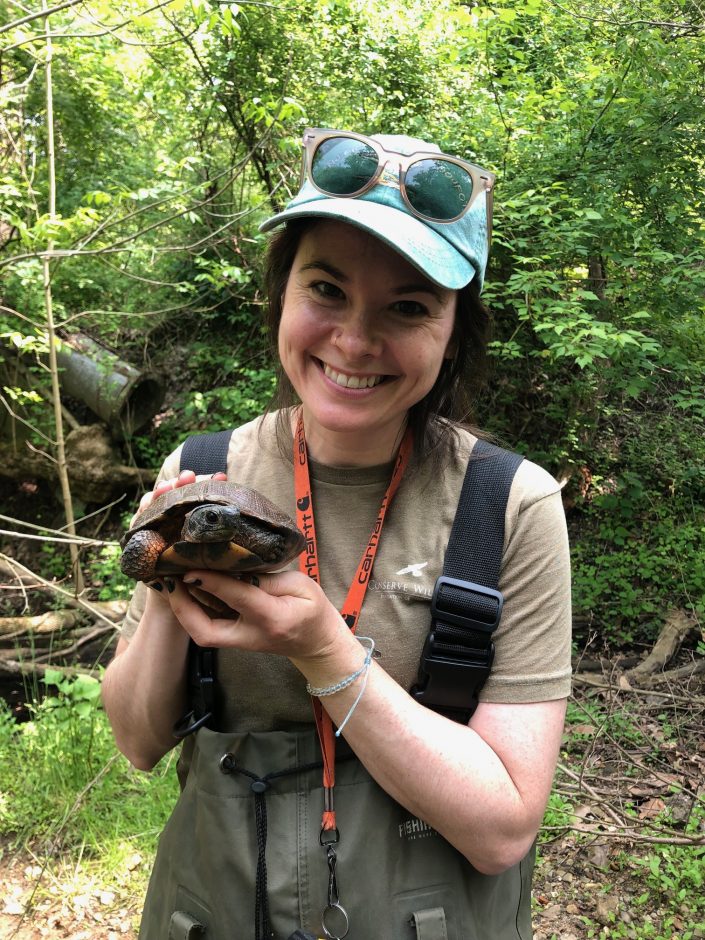
Conserve Wildlife Foundation has been partnering with the United States Fish and Wildlife Service (USFWS) on bog turtle conservation initiatives for years. We do this using a multi-faceted approach. We connect landowners with qualifying habitat with federal funding opportunities and technical support that can preserve and restore significant wetlands. We assist the state and nonprofit partners with visual surveys to better understand the status of historic populations. Finally, we suit up with USFWS personnel each fall and winter to remove invasive species and woody vegetation that are shading out nesting spots, rendering bogs and fens inhospitable to turtles. We applied to continue this work for the next few years but decided to shake things up a bit by adding in tasks targeting the protection of the bog turtle’s closest living relative… the wood turtle, a state threatened species that is currently under consideration for federal listing.
CWF biologist Christine Healy with a wood turtle, found during a spring survey. Photo Credit: Connor Zrinko
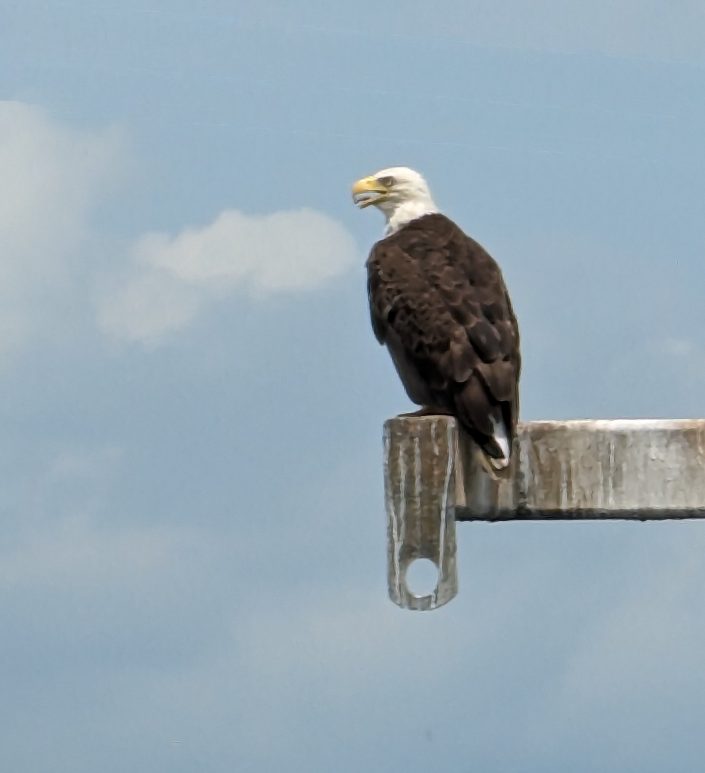
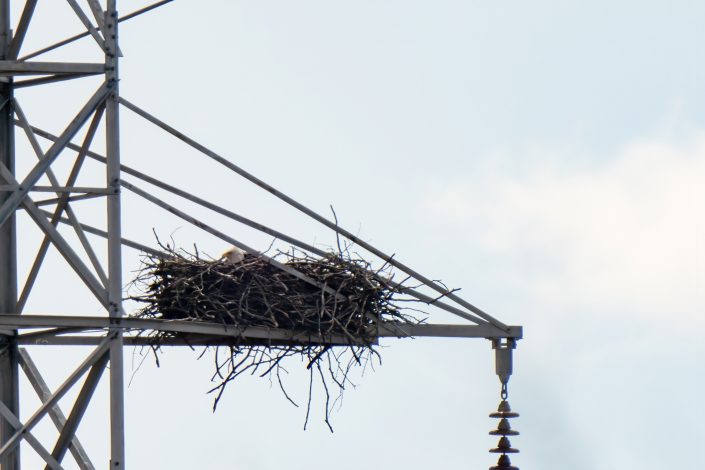
Nesting pair of eagles near Atlantic City@ Bill Reinert
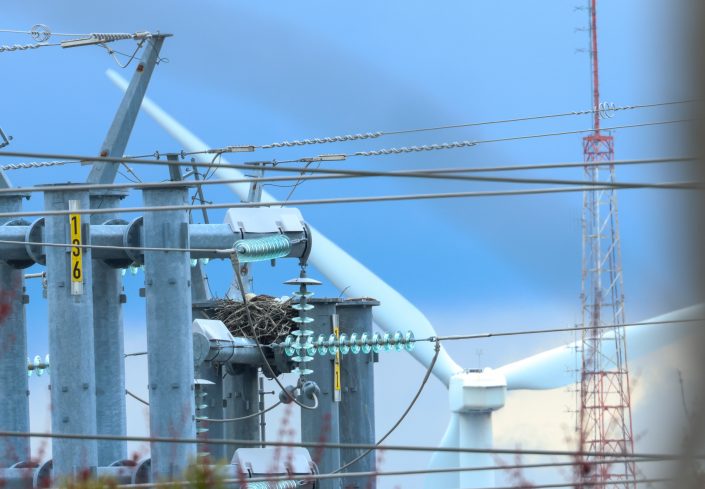
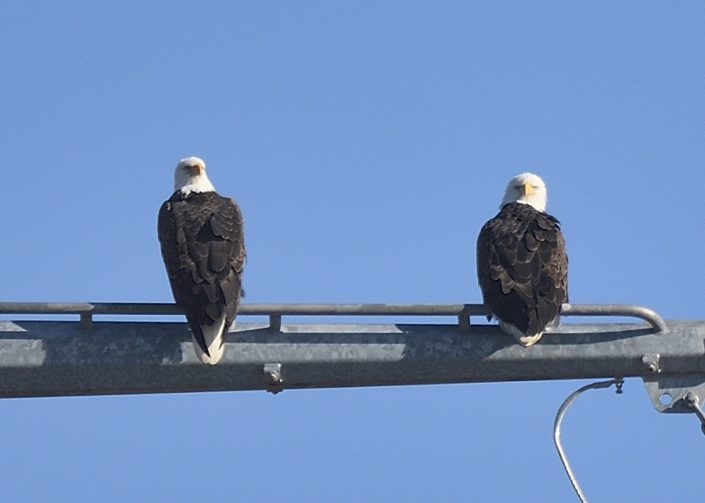
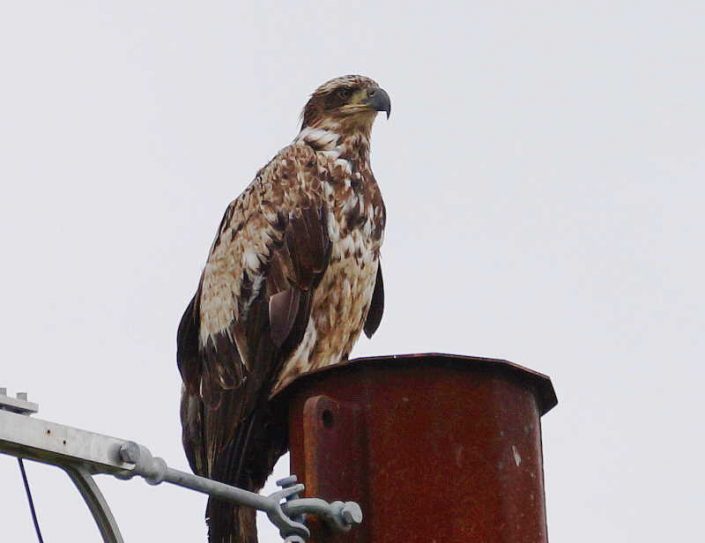
Last week I attended the APLIC (Avian Powerline Interaction Committee) workshop hosted by PSE&G. APLIC is a group that leads the electric utility industry in protecting avian resources while enhancing reliable energy delivery. We all use electricity and power lines are needed to distribute the power to where it’s needed. Powerlines and transmission towers have become a normal part of the landscape and we don’t pay much attention until our power goes out. All different species of birds, from bald eagles to starlings, interact with powerlines, poles and towers daily, including perching and nesting on them.
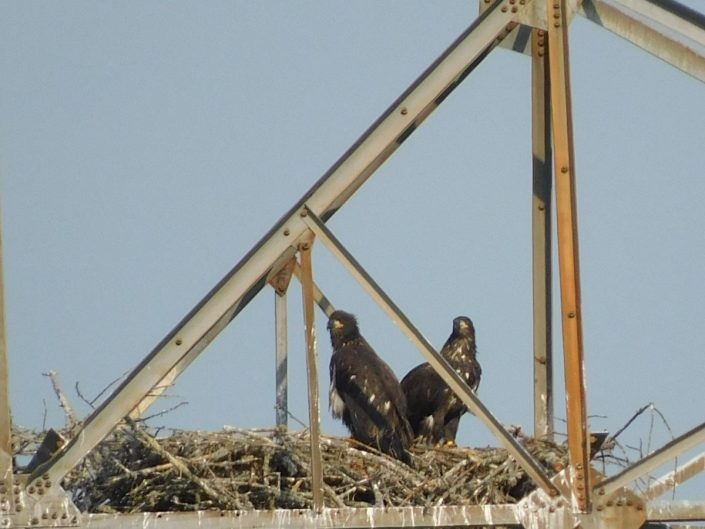
photo by Cheryl Leonardnest on transmission tower @ Barb McKeephoto by Mary Ellen Hillphoto by Jeff WhiteKin Buc pair@Kevin Redden
With these interactions come issues, birds can be injured or die from electrocution and collisions which can cause power outages. Nests on poles and transmission towers can create problems with outages and fires as well as risk to chicks or adults. One part of my job is keep track of all reported injured or dead bald eagles in New Jersey. In 2023 there have been fifteen confirmed eagle electrocutions. Any recoveries that are a suspected electrocution or collision with a powerline are reported to the appropriate utility company. CWF and the NJ ENSP have a good relationship with the Utility companies in New Jersey. Each utility company has biologists that work on environmental issues including avian. There are a whole set of issues that they need to be taken into consideration when deciding how best to minimize negative avian interactions. The solutions require time, money and often scheduled power outages. When an area of lines or poles are identified as a risk for bird electrocution/collision, they are made as avian safe as possible. When new distribution lines are rebuilt, avian issues are taken into consideration and the appropriate measures are implemented.
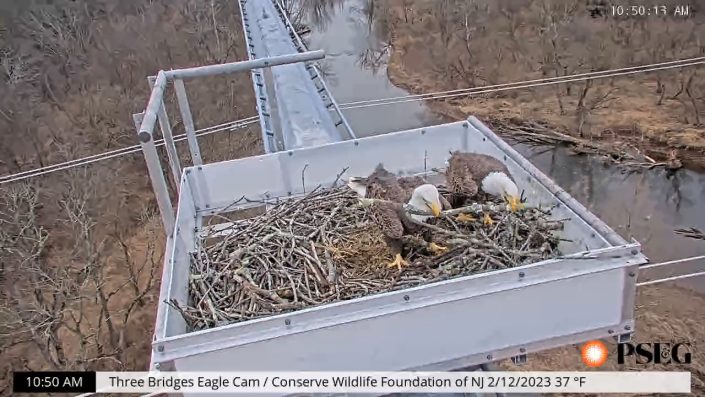
There are quite a few bald eagles and ospreys that nest on poles and transmission towers throughout New Jersey. Most of these nests don’t cause problems, but if they need to be removed, the utility company works to obtain the proper permits and replace the nest with a new nesting structure in close vicinity. One example is the Three Bridges eagle nest. PSE&G needed to replace the entire distribution line where an eagle pair had been nesting on one of the towers for years. After much planning and coordination the nest was removed and placed on a nest platform installed on one of the new towers.
I certainly learned a lot at the workshop and gained a new appreciation for everything that goes into keeping our electricity flowing at the flick of a switch and making sure that avian species stay safe at the same time.
Restoring floodplains and protecting urban communities may not sound like a typical workday for the biologists of Conserve Wildlife Foundation of NJ (CWFNJ). However, multiple staff and board members of CWFNJ were present at the annual Blue Acres Floodplain Restoration Fall Planting and Clean-up Day on October 27th, clearing weeds, trash and planting new trees and shrubs at the Tremley Point restoration site in Linden. Blue Acres, a program created by the New Jersey Department of Environmental Protection, helps residents in low-lying areas that are subject to repeated flooding by buying out their properties and aiding in homeowner relocation. The acquired properties eventually become buffer zones, such as floodplains, that protect surrounding communities from the impact of storms and rising sea levels by acting as natural floodwater storage. The land purchased through the Blue Acres program may also be restored into functional wetlands, habitat for wildlife and open green space for the community to enjoy. Blue Acres not only provides disaster relief for residents whose homes have been destroyed or damaged by flooding and surges caused by large storms, but also contributes to the NJ Climate Change Resilience Strategy by proactively creating wetlands and floodplains to lessen the severity of future flood events.
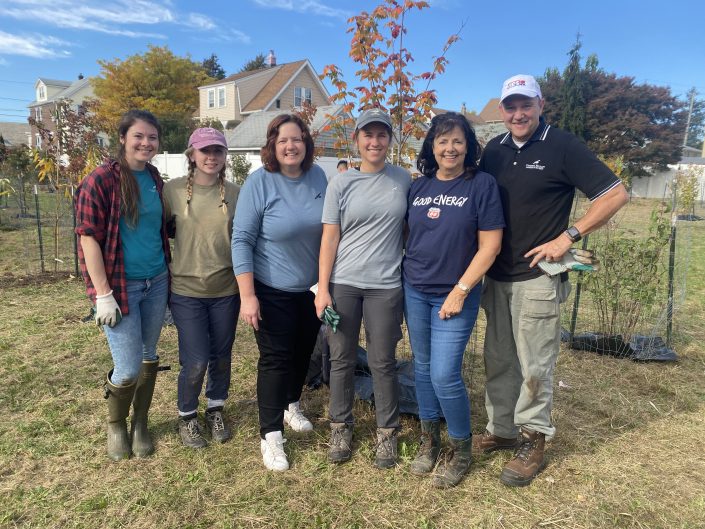
From left: Christine Healy (CWF Wildlife Biologist), Leah Wells (CWF Assistant Wildlife Biologist), Liz Silvernail (CWF Executive Director), Sherry Tirgrath (CWF Wildlife Biologist), Nancy Sadlon (Phillips 66 Public Affairs Manager), and Marty McHugh (CWF Trustee) at the Blue Acres restoration event.
Internationally celebrated, Bat Week runs from October 24th through October 31st. This week we celebrate bats to raise awareness for these nocturnal creatures that are often left in the dark. In New Jersey, we have two federally listed bat species, the Indiana bat and the Northern long-eared bat. Several more bats are being uplisted to the threatened and endangered list. Threats primarily include habitat loss and a fungal disease called white-nose syndrome.
To learn more about bats, why they matter, and how you can take action, visit https://batweek.org/ .
Each year since 2017, CWF has been teaming up with partners from the USFWS New Jersey Field Office to survey the JB McGuire Airfield for grassland birds during the breeding season. Part of a long-term monitoring project, the airfield has been undergoing habitat restoration to maintain native warm season grassland habitat. The habitat restoration efforts are nearly 70% complete with roughly 700 acres seeded since 2017 and another 100 acres to be completed the following year.
Six of the ground-nesting bird species documented at the airfield are State-listed as either endangered, threatened, or of special concern. The eastern meadowlark (Sternella magna), a member of the blackbird family, is a State Species of Concern. It prefers a minimum of ten to twenty acres of unfragmented dense grasses of medium height for nesting. The State-threatened grasshopper sparrow (Ammodramus savannarum) favors patches over 100 acres containing short- to medium-height bunch grasses interspersed with patches of bare ground, a shallow litter layer and scattered forbs. The savannah sparrow (Passerculus sandwichensis), also State-threatened, requires a mix of short and tall grasses, a thick litter layer, dense ground vegetation, and scattered forbs. Another member of the blackbird family is the State-threatened bobolink (Dolichonyx oryzivorus). Bobolinks prefer to place their nests in areas of greatest vegetative height and density and could potentially nest in patches as small as five to ten acres. The State-threatened horned lark (Erimophila alpestrias) nests in areas of barren ground with short and sparse cover and are quick to abandon sites as vegetation grows thicker.
Grasshopper sparrow nest located at McGuire Airfield, May 2023. The well-camouflaged nest was discovered after the adult bird flushed from the grass. The eggs were as tiny as a thumbnail.
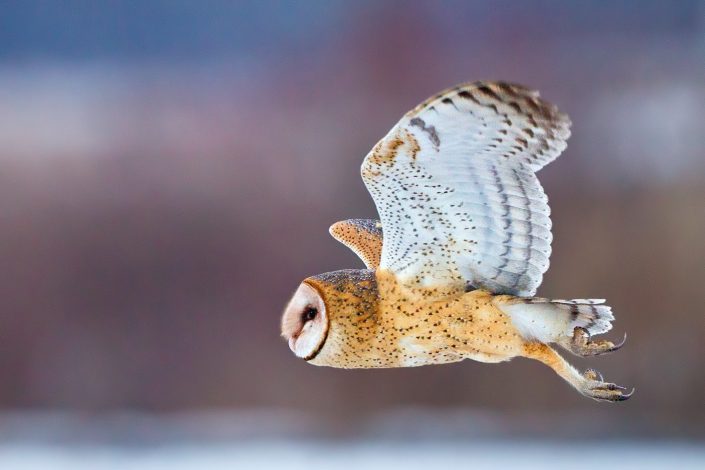
Barn Owls (Tyto alba) are one of the most widespread avian species in the world. Despite this impressive distribution, their numbers have been decreasing in parts of their range, and New Jersey is no exception. The barn owl population in New Jersey is in decline due to habitat loss associated with urban sprawl and development of former agricultural lands. Little is known about the Barn Owl population in central New Jersey. Through a grant from the Monmouth Audubon Society, Conserve Wildlife Foundation of New Jersey is partnering with Monmouth County Park System and the New Jersey State Park to construct, install and monitor three barn owl boxes. By providing suitable nest site opportunities we can potentially boost the barn owl population locally within Monmouth County as well as regionally as fledglings disperse to find their own nesting areas.
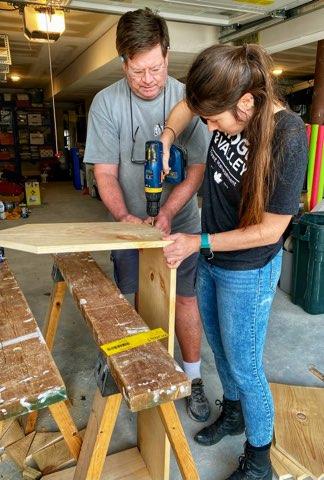
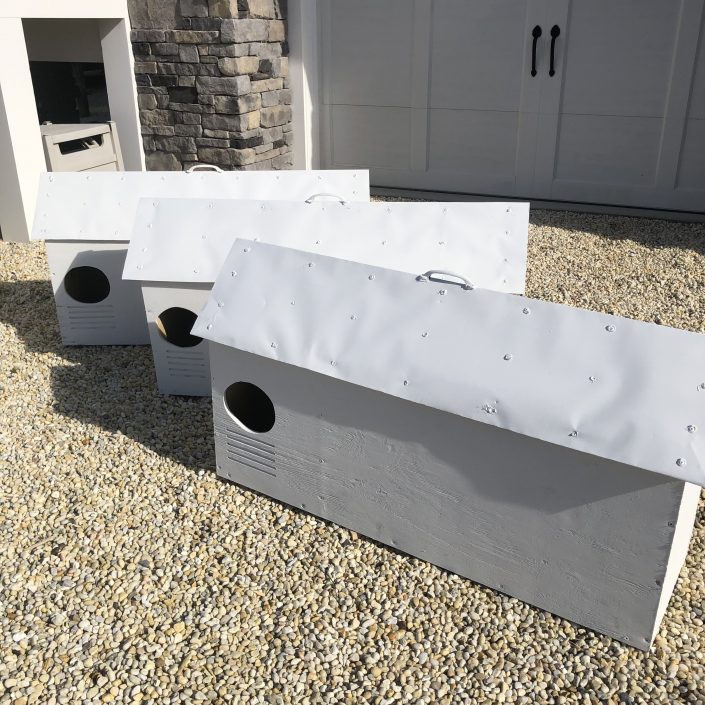
The first step of the project has been completed. CWF biologist Christine Healy and her Father Jim Healy have constructed three nest boxes that are ready for installation.
Christine and Jim Healy construct Barn Owl nest boxescompleted Barn Owl nesting boxes
Would you like to learn more about the elusive Barn Owl, support the CWF Barn Owl Project and have a fun family night? Join us at Howls for Owls, at the Screamin’ Hill Brewing.
We Hope to see you there. This outdoor event will be cancelled for bad weather, so please stay updated on our website.
CWF had a busy summer at the Long Beach Island Foundation of the Arts and Sciences (LBIF), having launched a new partnership this year to help strengthen their science programming through a grant from the Osprey Foundation. A number of offerings targeting both adults and kids, highlighted by three week-long science camps for ages 7-9 and 10-12, were developed and led by CWF’s staff. The LBIF facility, with its close proximity to both the ocean and bay, is an ideal location to feature New Jersey’s coastal species and their unique conservation challenges.
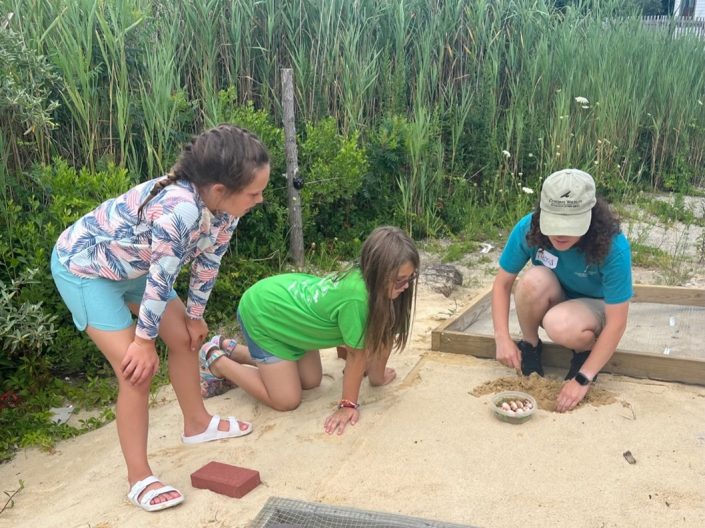
Campers watch as summer intern Victoria Rosikiewicz moves a clutch of terrapin eggs to a safe new nest.
Work on this project is done under NJDEP Fish & Wildlife Scientific Collecting Permit SC2023048
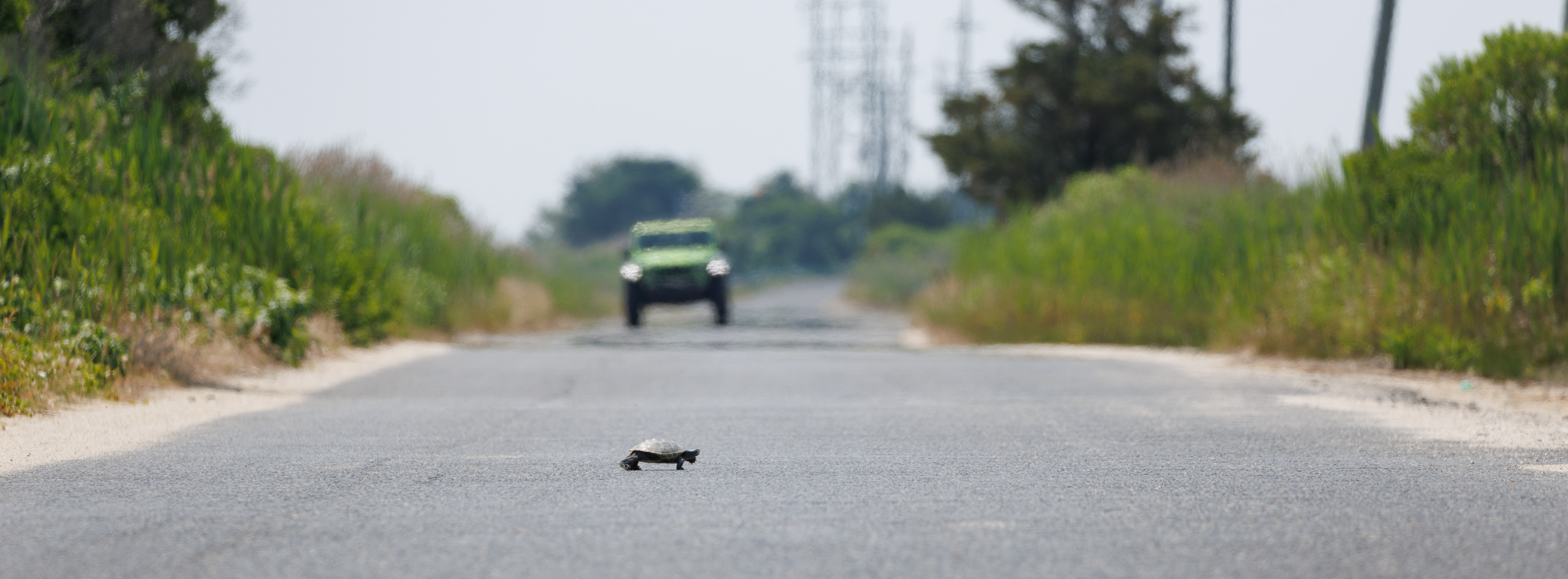
When we founded the Great Bay Terrapin Project, our goal was to reduce roadkills of adult female northern diamondback terrapins. This was largely due to personal observations of multiple roadkills during the summer months along roads in Little Egg Harbor Township and past research which accounted for a large number of adults DOR (dead on road). Since 2010, we’ve been able to cut the historic roadkill rate in half, all thanks to our devoted volunteers who patrol area roads and raise awareness for them! This allows adults to grow larger and live longer lives, which helps to ensure their long term survival.
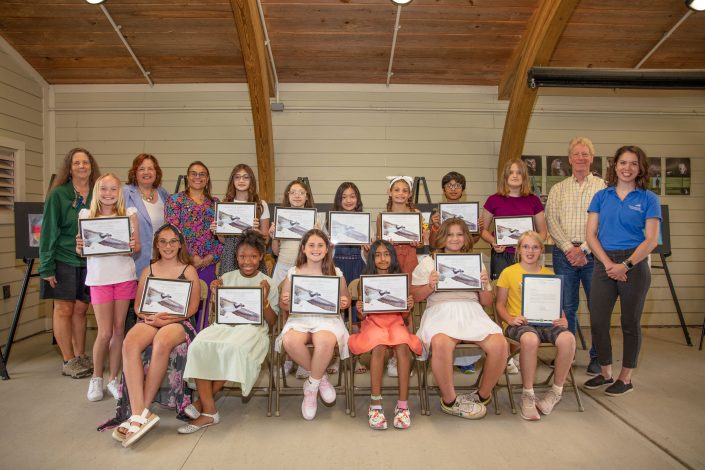
Mercer County Wildlife Center Director Diane Nickerson, CWF Executive Director Liz Silvernail, CWF Board Member and Atlantic City Electric Environmental Manager Lisa Thomas, Mercer County Park Commission Deputy Director Joseph Pizza, and CWF Director of Education Rachel McGovern join the 2023 Species on the Edge Contest Winners.
Conserve Wildlife Foundation of New Jersey recognized the winners of the 21st annual Species on the Edge Art & Essay Contest at an awards ceremony held at Mercer County Wildlife Center. The statewide educational contest empowers fifth graders to advocate for an endangered or threatened wildlife species through their research, artwork, and writing.