Boy Scout Dylan Green gives osprey nesting platform a needed upgrade
by Ben Wurst, Habitat Program Manager
Dylan and his father John pose for a quick portrait in front of one of the new platforms.
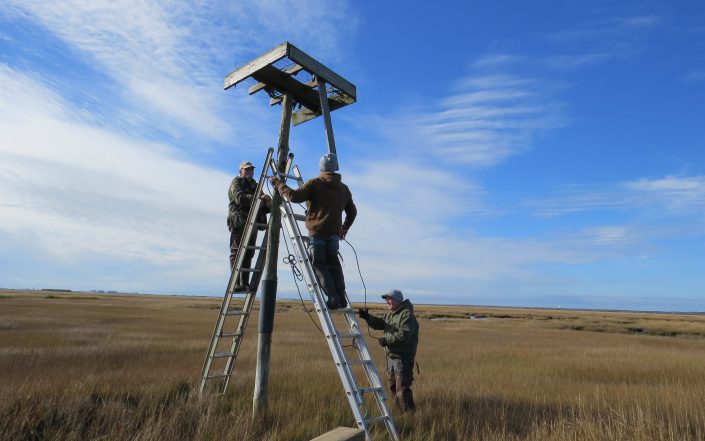
This past Sunday we assisted Dylan Green, along with his family and fellow Troop 65 scouts to install three new osprey nesting platforms. The project was done by Dylan as part of his Eagle Scout Service Project. He self funded the project using his own money to purchase the supplies needed to construct the platforms and built the platforms together with his fellow Boy Scouts. The platforms were used to replace two platforms that were in bad condition. The third was installed in a location where a platform used to be located. The osprey population at Cheesequake State Park is small, but it is good habitat for ospreys. Continue reading “Photos from the Field: Cheesequake Osprey Platform Replacement”
Ready to release Chump. RIP, Chump! photo by Northside Jim.
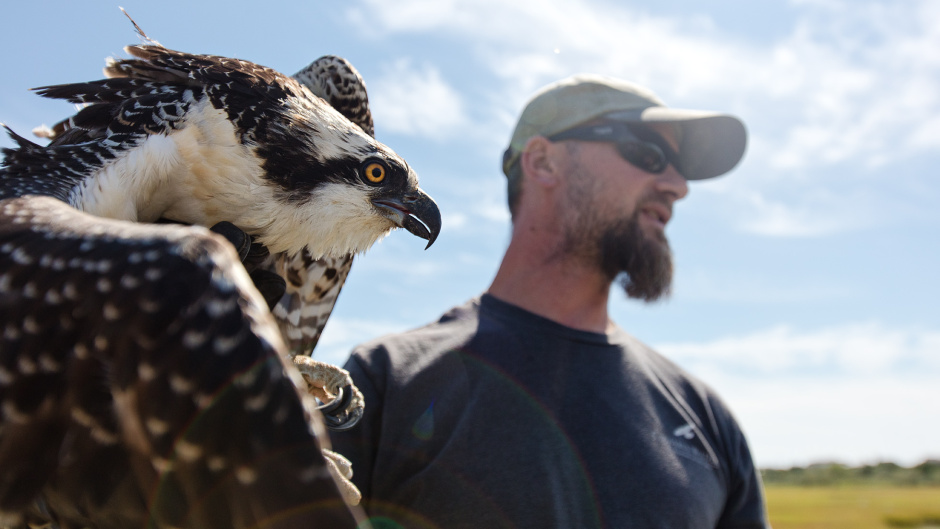
I thought long and hard about sharing this news, hence the delay in this post. In late October, we received news that a young osprey I banded this summer was re-sighted. It turns out that this bird was not your average young osprey, out of the 892 produced this year. This young bird hatched at a nest behind the Long Beach Island Foundation of the Arts & Sciences, around June 11th, a nest referred to as home to “LBI’s Most Famous Osprey Couple, Jack & Wendy.”He was banded, along with his nestlings, on July 5th. He was tagged with a red auxiliary “field readable” band: 78/D, as part of Project RedBand, which allows fellow biologists and citizen scientists the ability to identify the bird while still alive (most osprey band reports occur during mortality based events). At the time of banding, he was also given the name Chump, by Northside Jim.
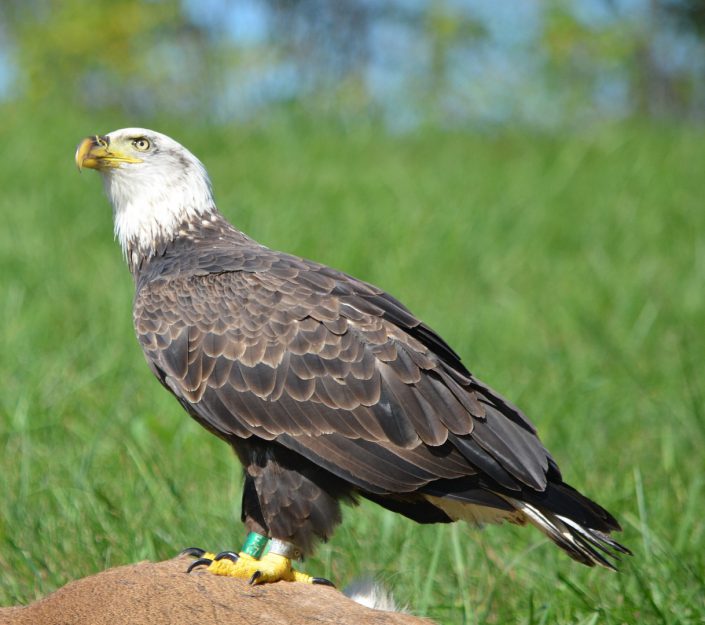
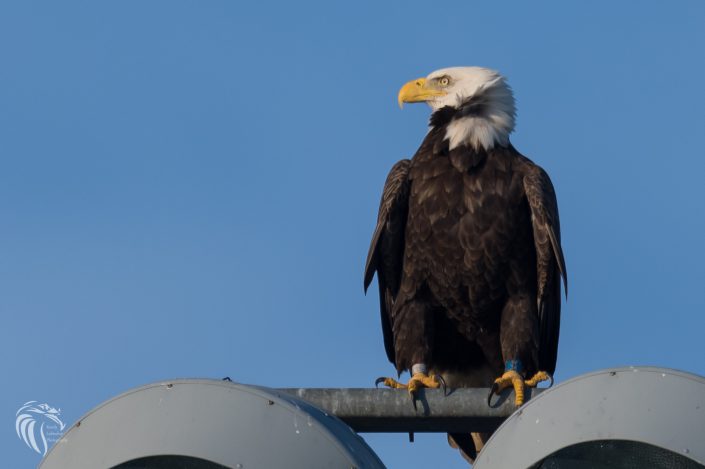
In the end of October, NJ Eagle Project volunteer Randy Lubischer spotted a banded adult bald eagle near his home in Monmouth County. He was able take good photos that showed the bird was banded with a blue (NY) band on the left leg and was able to get a very clear image of the letter and number code on the band. We reached out to the NY Division of Fish, Wildlife and Marine Resources to find out more information on the eagle.
In the fall of 2011, an injured hatch year bird was found on the side of the road in Onondaga County, NY. The bird was rehabbed, banded (NY Blue band W34) and released on October 7, 2011 at the Montezuma NWR. On 11/18/2016, W34 was sighted in Darlington, Maryland and then in in NE Maryland again on 3/1/2017.
W34& mate 11/7/17@Randy Lubischer
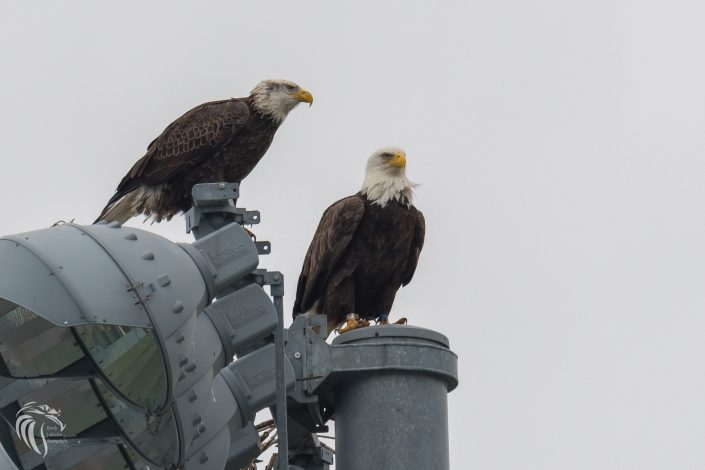
W34 looks to be staying in NJ to nest as he has found a mate, a sub-adult female, who still has dark feathers on her head. They have started to build a nest and have been copulating.
We can’t necessarily assume that W34 was hatched in NY. Since he was found injured and not banded he could well be a NJ bird. We have followed NJ recent fledges outfitted with transmitters, take long flights north after leaving their nest areas. We also know that many NJ banded eagles do return to NJ to nest. So we’ll never know the true origin of W34 but we can piece together some of his story and hopefully have more news about him and his mate in the upcoming nesting season.
NJ Osprey Project Volunteers Wayne Russell, Matt Tribulski and John King repair an osprey platform.
New Jersey ospreys have headed for warmer climates until their return in the spring. NJ osprey project volunteers are busy repairing and cleaning out nests, adding predator guards and perches in preparation for the nesting season. It’s an endless job as there are 100’s of nesting platforms throughout the state and maintenance is always needed. These repairs keep the nests as safe as possible for the nesting ospreys.
A new pollinator habitat is created in Middle Township
By: Larissa Smith; CWF Wildlife Biologist
The Middle Township Environmental Commission in cooperation with the Conserve Wildlife Foundation of NJ worked to create a pollinator habitat at a recreation site in the township which is located in Cape May County. Commission members had been working to obtain permission to plant a pollinator garden on a township site. The Ockie Wisting Recreation Complex was just officially opened in the end of October. This recreation site will have playing fields, a playground and a wooded trail that leads to a lake and fishing pier.
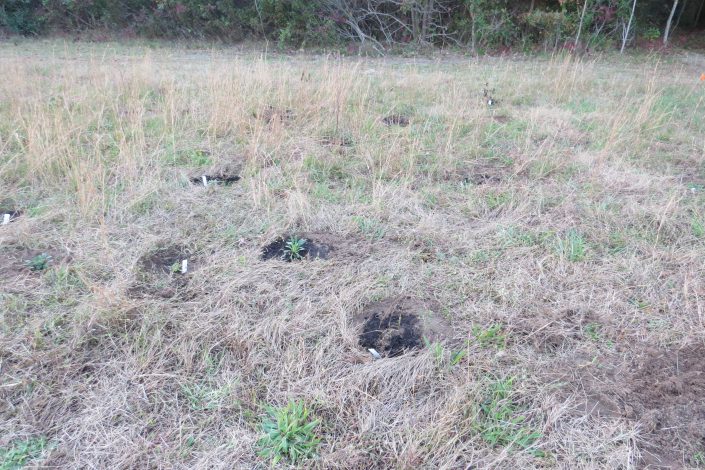
With funding from Atlantic City Electric volunteers with the Middle Township Environmental Commission and Conserve Wildlife Foundation of NJ planted 138 native perennials . While it doesn’t look like much right now, come next spring and summer there will be plants for bees, butterflies and birds to use for food and habitat. Not only will this pollinator meadow be great for wildlife, it won’t have to be mowed. The Environmental Commission will be in charge of maintenance and plans another work day in the spring to remove any non-native plants and trees in the area. We also plan to use this site as a demonstration garden for others interested in planting for pollinators.
Ockie Wisting Pollinator Habitat: List of Plantings – Fall 2017
Preservation of declining habitat is key to survival of high marsh wildlife
by Ben Wurst, Habitat Program Manager
Litter, debris and trash dumped at NJDOT Mitigation site on Absecon Bay.
As the sea rises, high areas on the coastal salt marsh will decline or disappear. These areas are higher in elevation and usually consist of more sandy soil. The sandy soil attracts nesting female diamondback terrapins, like many roadsides throughout New Jersey. As we harden shorelines to hold back floodwaters, terrapins will face more dangerous treks to find suitable nesting habitat, unless these high marsh areas are enhanced and elevations raised. For the past five years we have been surveying Route 30 (Whitehorse Pike) during summer months for the occurance of terrapins on the highway. Adult female terrapins enter the roadway while seeking these sandy areas above the high tide line. Most, if not all, do not survive crossing Route 30. Continue reading “Volunteers help clean up critical habitat along Absecon Bay”
ACTION ALERT: Support ecological management of the most valuable public resource for our coastal ecosystem and economy
by Ben Wurst, Habitat Program Manager
Menhaden is a common food source for ospreys during their nesting season in New Jersey. Photo by Northside Jim.
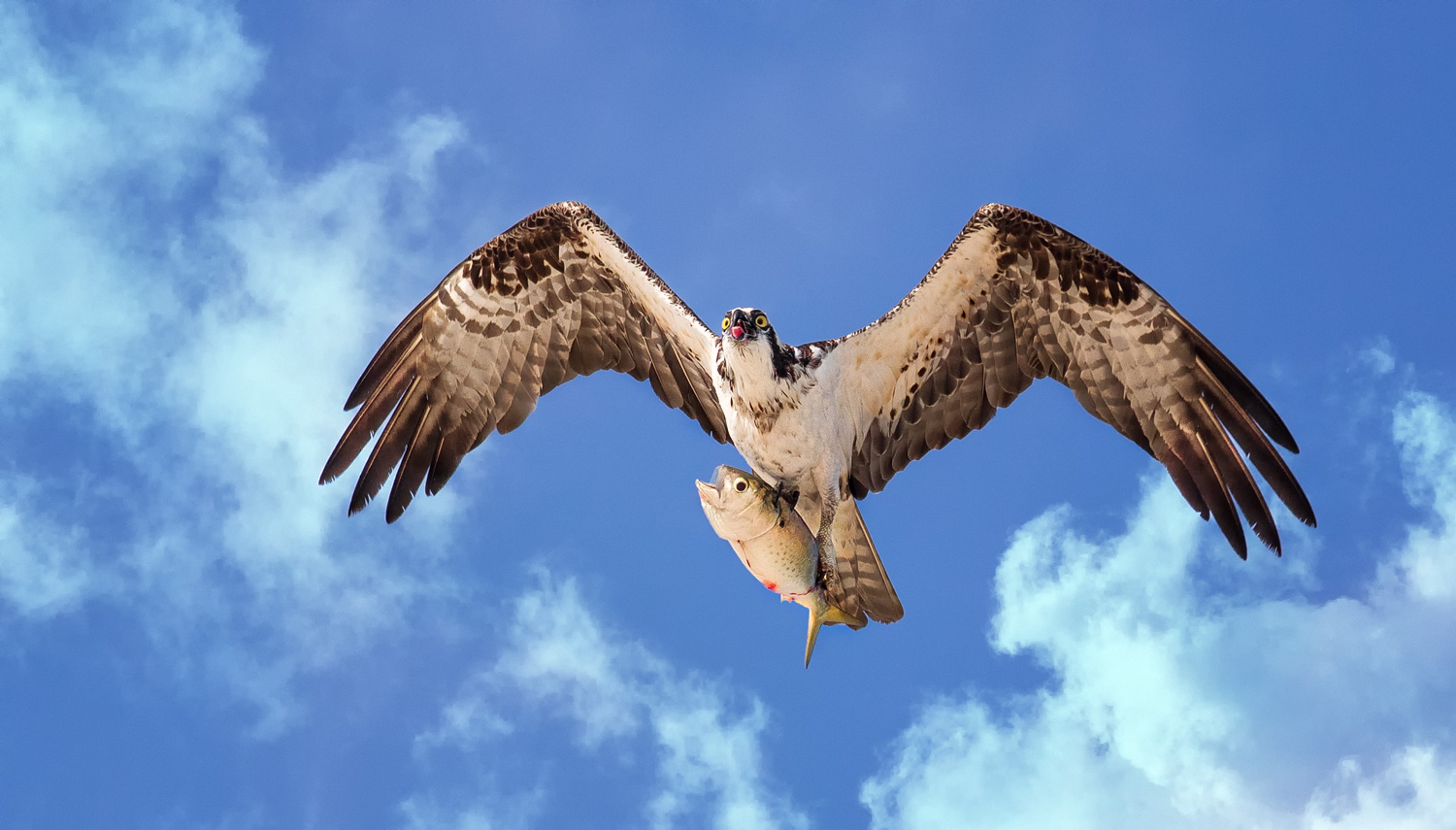
The Atlantic States Marine Fisheries Commission is accepting public comment on the establishment of ecological management of Atlantic menhaden (Brevoortia tyrannus), which is a keystone species. Basically, a keystone species is one that plays a large role in the ecosystem where it lives. If a keystone species is lost then the ecosystem would dramatically change or cease to function, causing widespread effects to other species that benefit. In New Jersey, ospreyshave largely benefited from a healthy menhaden population as we’ve had relatively high reproductive rates (more than double what’s needed to sustain population) over the past decade. From 2006 to 2016, the population has grown by 30% and above the pre-DDT, historic milestone of over 500 nesting pairs. Around 82% of the state population of ospreys nests along the Atlantic Coast and we observe menhaden at a huge number of nests during our mid-summer surveys. If menhaden numbers drop, then we will likely see osprey numbers follow suite, as reproductive rates will decline, as they are in the Chesapeake Bay.
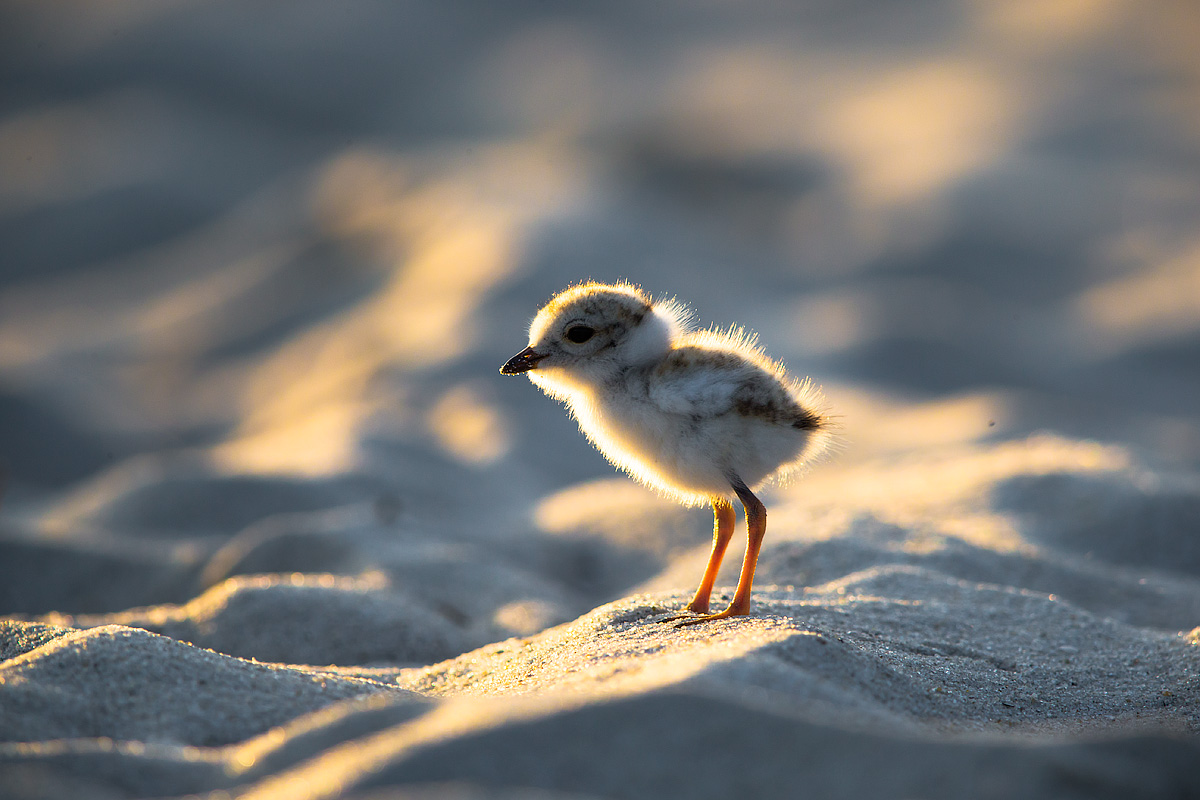
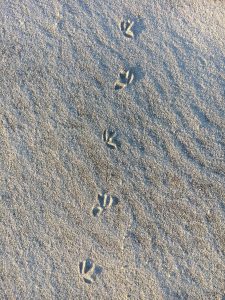
Anyone who has monitored or closely followed piping plovers knows these (pictured) tracks well. They have to. Most wildlife leaves behind distinct clues that reveal their presence, but if you are tracking the well camouflaged piping plover, the best, and sometimes only, clue you have are these ephemeral tracks in the sand.
Finding these tracks, especially the first ones of the breeding season in early spring, makes my heart stir, even after 20+ years of searching for piping plovers. They shout, “I’m here, now find me”. These particular tracks happen to be a late season find, sighted just this past week, special in a different way as they were unexpected and may be my last glimpse of them here in New Jersey this year as most piping plovers have now migrated south for the winter. I followed the tracks like I always do and soon enough I spotted three pale beauties resting absolutely still on a nearby sand hummock.
This blog doesn’t contain any earth-shattering conservation message. It is just about my own love affair with piping plovers. I am lucky to have found that magical something in nature that moves me. I hope each of you has your own version, whether it be a delicate monarch butterfly improbably fluttering thousands of miles in the wind towards its wintering grounds in Mexico or a powerful bison lumbering across a grasslands vista out west. One of the main reasons my colleagues and I are engaged in conservation work is so everyone has the opportunity to experience and be inspired by wildlife in its natural habitats.
Piping plovers will not provide a cure for cancer, they will not boost our economy, and they certainly will not be the key to uniting us politically. They will bring a smile to your face, they will evoke wonder, and they may just make your day. Sometimes that is enough.