Wakefern Food Corp. interns Niki Tripathi and Nadia Saponara
This summer, we happily traded in our summer intern cubicles, laptops and professional attire for kayaks, clam rakes and bathing suits for a trip to Barnegat Bay. We headed to Sedge Island, off of Island Beach State Park, and kicked off the day with a boat ride to the island. There, we joined fifth grade “Species on the Edge” art and essay contest winners, their parents, and state wildlife biologists with their seasoned interns.
Conserve Wildlife Foundation, in partnership with our sponsor PSEG Foundation, is proud to recognize the winners of our 2018 Species on the Edge 2.0 Social Media Contest. High school students from across the state submitted original social media campaigns showing why wildlife protection is so important in New Jersey. Our winners exceeded 10,000 likes on Instagram and Facebook.
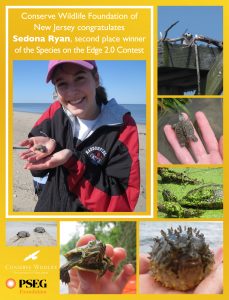
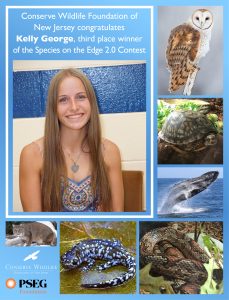
Casey Finnegan of Toms River High School North was awarded first place and a $1,000 scholarship . Sedona Ryan, our second place winner from Haddonfield Memorial High School, received $500. Third place and $250 went to Kelly George from Toms River High School North.
The annual Species on the Edge 2.0 contest capitalizes on high school students’ expertise with social media platforms, and provides them with the opportunity to showcase their talent, creativity, and love of nature. The contest helps to develop students’ experience in STEAM (Science, Technology, Engineering, Art and Mathematics) and their project management skills. Thank you to everyone who entered.
The contest is made possible through a grant from PSEG Foundation.
Conserve Wildlife Foundation today released a video featuring the range of nature programs available at Sedge Island Marine Conservation Zone and Island Beach State Park, from kayaking and fishing to birdwatching and diamondback terrapin releases. Edited by CWF videography intern Melinda Tibbitts and written by Executive Director David Wheeler, “Get Wild This Summer at the Jersey Shore” explores these unique ecosystems along the Barnegat Bay – with a special focus on the Sedge Islands Celebration Day earlier this summer!
Enriching Learning Experiences while Enhancing Biodiversity
by Ben Wurst, Habitat Program Manager
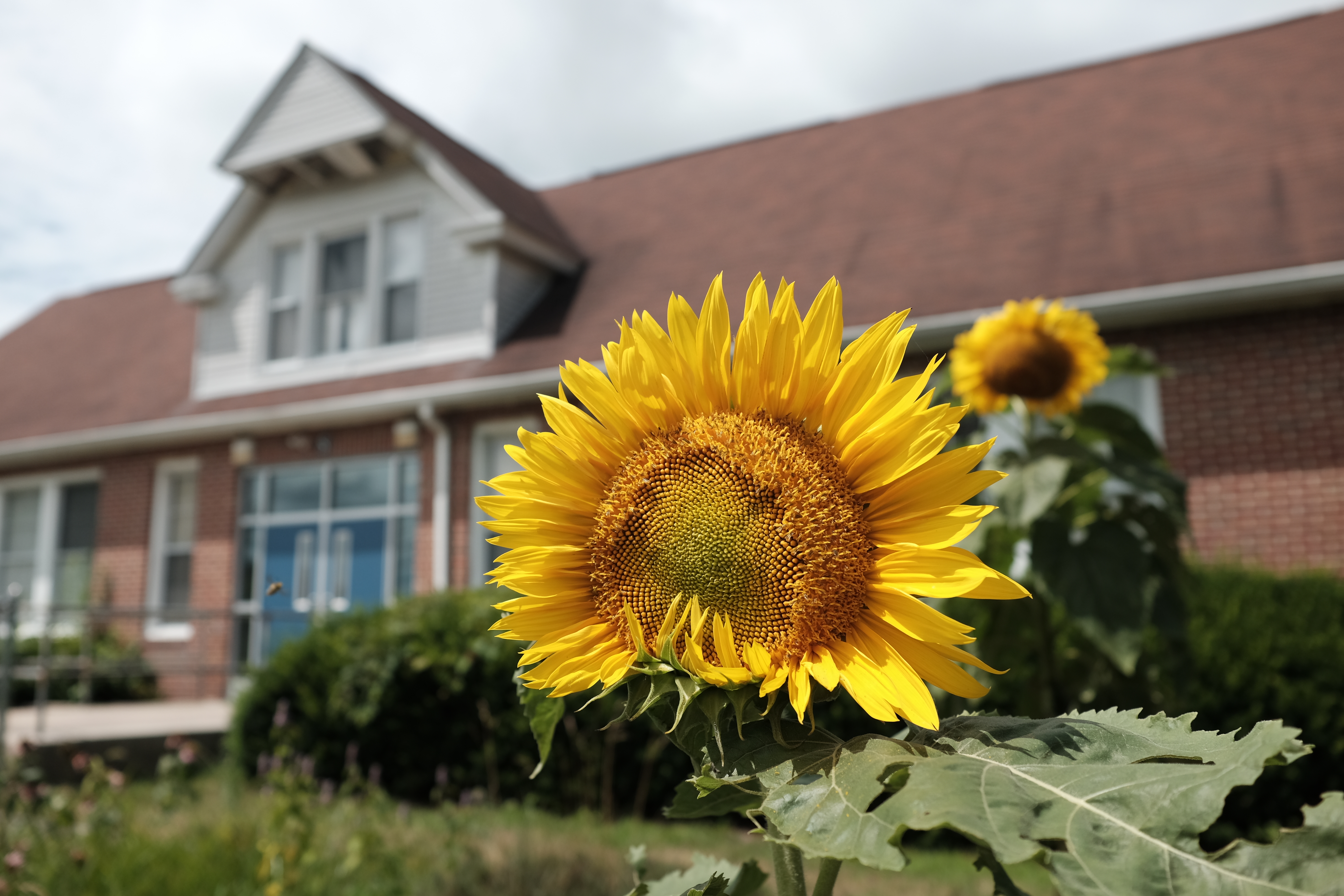
Sunflower in bloom out front of Bass River Elementary School.
Bass River Elementary is a small school located in Bass River Township, Burlington County. Students and faculty are passionate about protecting wildlife and the habitat that’s required to survive. From headstarting hatching N. diamondback terrapins, composting, and raising monarch caterpillars, they know that hands on education is key to engaging future generations to care about our environment. We knew it would be the perfect place to create a wildflower garden to provide food for nectar feeding insects! Continue reading “Bass River Students Enhance Pollinator Habitat”
Last week, Conserve Wildlife joined the American Littoral Society at their annual Parade of Boats event in conjunction with the Operation Oyster program.
Conserve Wildlife, through funding from NOAA’s Marine Debris Program, has spent the last several years in a related effort to clean up Barnegat Bay. Removing derelict crab traps or ghost pots from the bay has been an ongoing initiative. Ghost pots are lost in a variety of ways including improper rigging to buoys and buoy lines cut by passing boat traffic.
The issue spans not only the commercial crabbing industry, but the recreational industry as well. The longer the pots sit on the bottom of the bay the more likely they are to serve as a deathtrap for a variety of marine species. The more marine life that becomes trapped the more the pots continue to attract other marine life. This is of particular concern for Northern Diamondback Terrapins that frequently investigate these pots looking for a quick meal only to be trapped and quickly drown. Continue reading “Helping oysters recover in Barnegat Bay through our crab pot recycling program”
Photos courtesy of Chanta L Jackson, Asbury Park School District Communications Director unless otherwise noted.
It is only week two of the Conserve Wildlife Foundation (CWF) Summer Learning Experience program, a part of the Asbury Park School District Summer Camp offerings, and third-grade students have had the opportunity to not only see an osprey up close and personal but to visit a local nest and learn to simulate building the predatory bird’s nesting place.
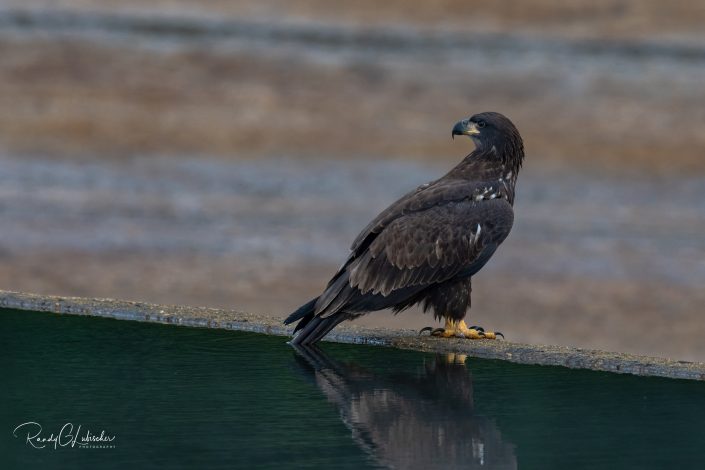
So far this season 123 eagle chicks have fledged (taken their first flight). Even after fledging the chicks will stay around the nest area for the next few weeks learning to hunt, fly and survive on their own.
Below are some photos of recent fledges taken by NJ Eagle Project Volunteers
The best news is a direct consequence of these good conditions, the number of knots and turnstones increased this year. Our season-high estimates show that there are 34,500 knots in the bay and 21,000 ruddy turnstones. These may be the highest counts on the bay in at least 15 years.
Why? At first one would conclude the increased numbers on the bay represent a real increase in the size of the population, but it is not. Shorebirds need time to respond to improving conditions because they are relatively slow breeders, as are most Arctic breeders. Knot numbers on Delaware Bay basically depend on the availability of crab eggs. In bad years, numbers go down because birds come to the bay and leave quickly. Continue reading “Good horseshoe crab egg densities draw 34,500 Red Knots to the bay”


 The contest is made possible through a grant from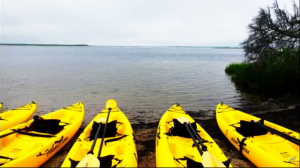

 Last week, Conserve Wildlife joined the American Littoral Society at their annual Parade of Boats event in conjunction with the Operation Oyster program.