Statewide Census Documents over 650 nesting pairs in New Jersey
by Ben Wurst, Habitat Program Manager
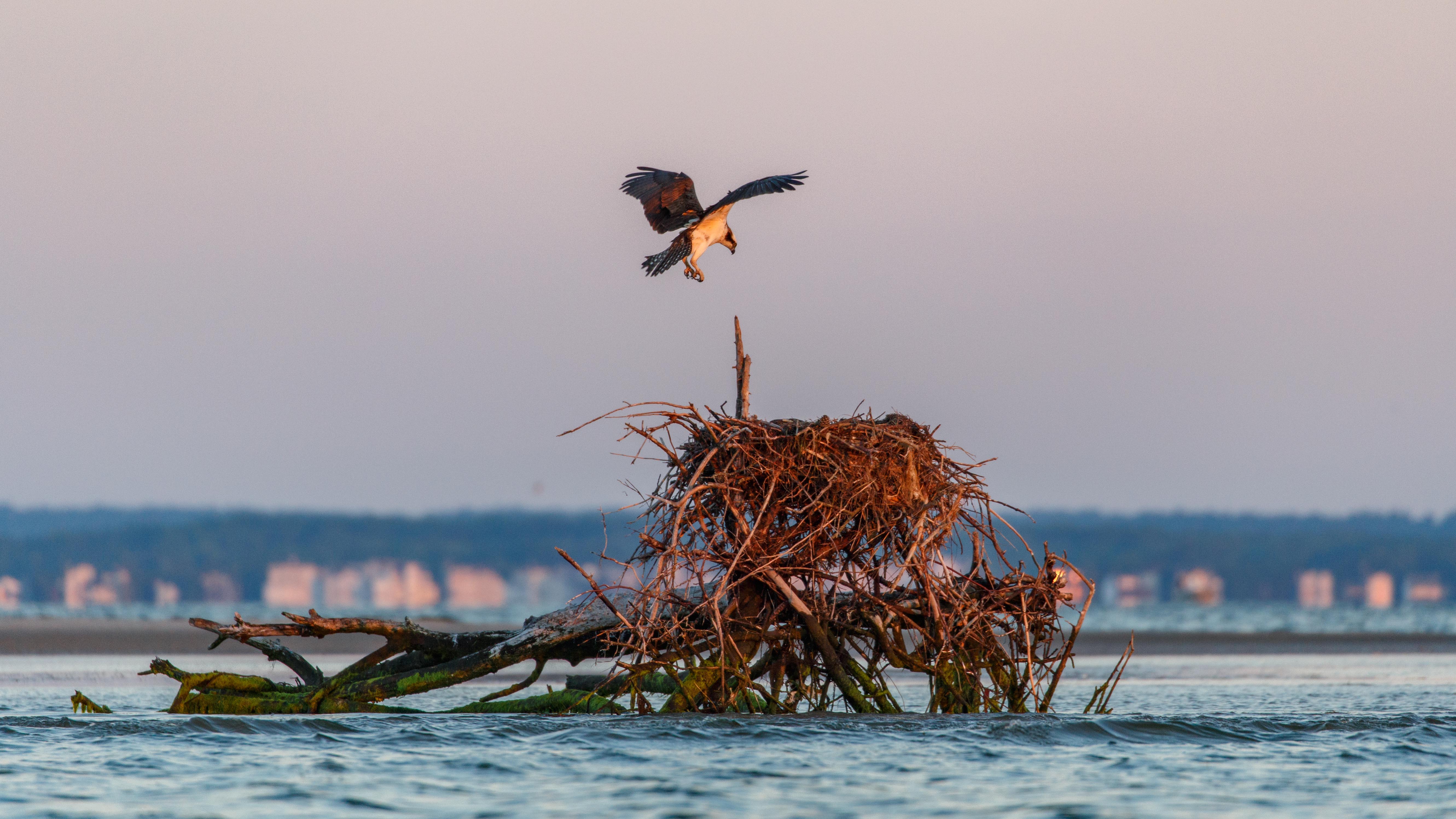
An osprey prepares to land on a natural nest. Barnegat Bay, NJ.
Since we began to work more closely with ospreys in 2006, we have documented the population grow beyond the historic population estimate of 350-450 nesting pairs (Henny 1977) to a new historic milestone. In 2017, a total of 668 active nests were recorded during a statewide census of nesting ospreys, which is well above the post-DDT milestone of 500 nesting pairs, and show that the population continues to grow. This is the second census conducted without the use of manned aircraft since 2009 after all known osprey nests were released and mapped online in 2013. Despite the lack of aircraft, we’re still able to obtain an accurate representation of the size and health of the statewide population, while reducing the overall project cost. Continue reading “Osprey Numbers Surge Above Post-DDT Milestone”
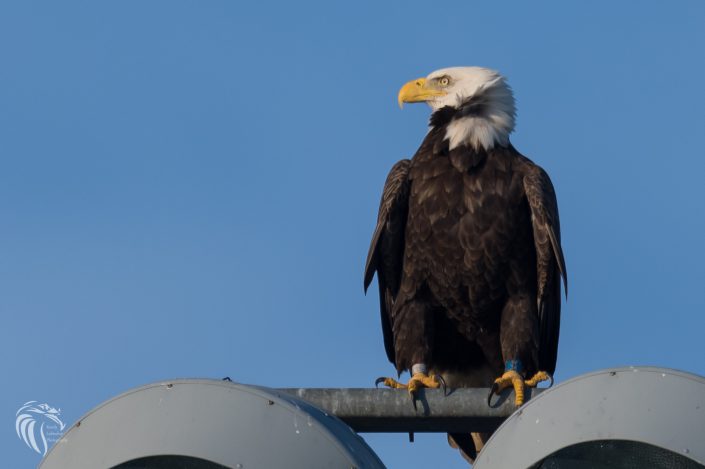
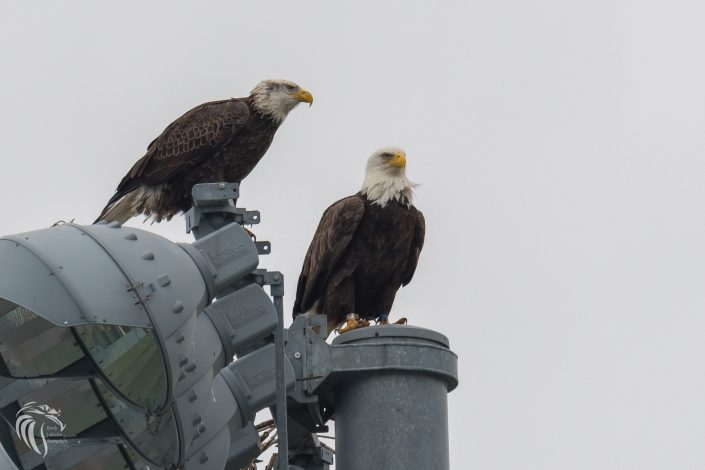
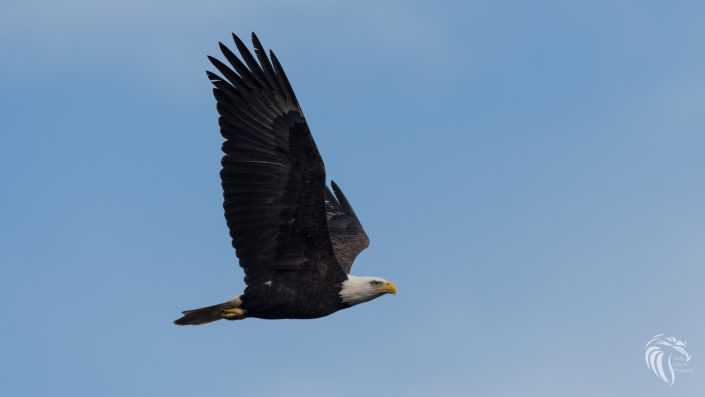
CWF will be at the festival on February 3rd. There are presentations, walks, viewing sites and exhibitors. It’s a great way to learn about NJ’s eagles and other raptors.
Nests on towers and buildings maintain stability in the state population
by Ben Wurst, Habitat Program Manager
Jersey City tiercel. photo by Ben Wurst
Results from the 2017 nesting season for peregrine falcons was released in a report from New Jersey Fish & Wildlife’s Endangered Species Program, and falcons had a decent year. New Jersey’s population remained stable with 32 active nests (with 34 known pairs) as compared to last years’ results of 30 active nests (35 known pairs). Nest success was slightly better than last year, with 22 pairs producing 52 young as compared to 20 pairs producing 47 young. The productivity rate, which is a measure of the health of the population, was very close to what was observed in 2016 at 1.59 young/active nest. Continue reading “New Jersey Falcons Remain Stable in 2017”
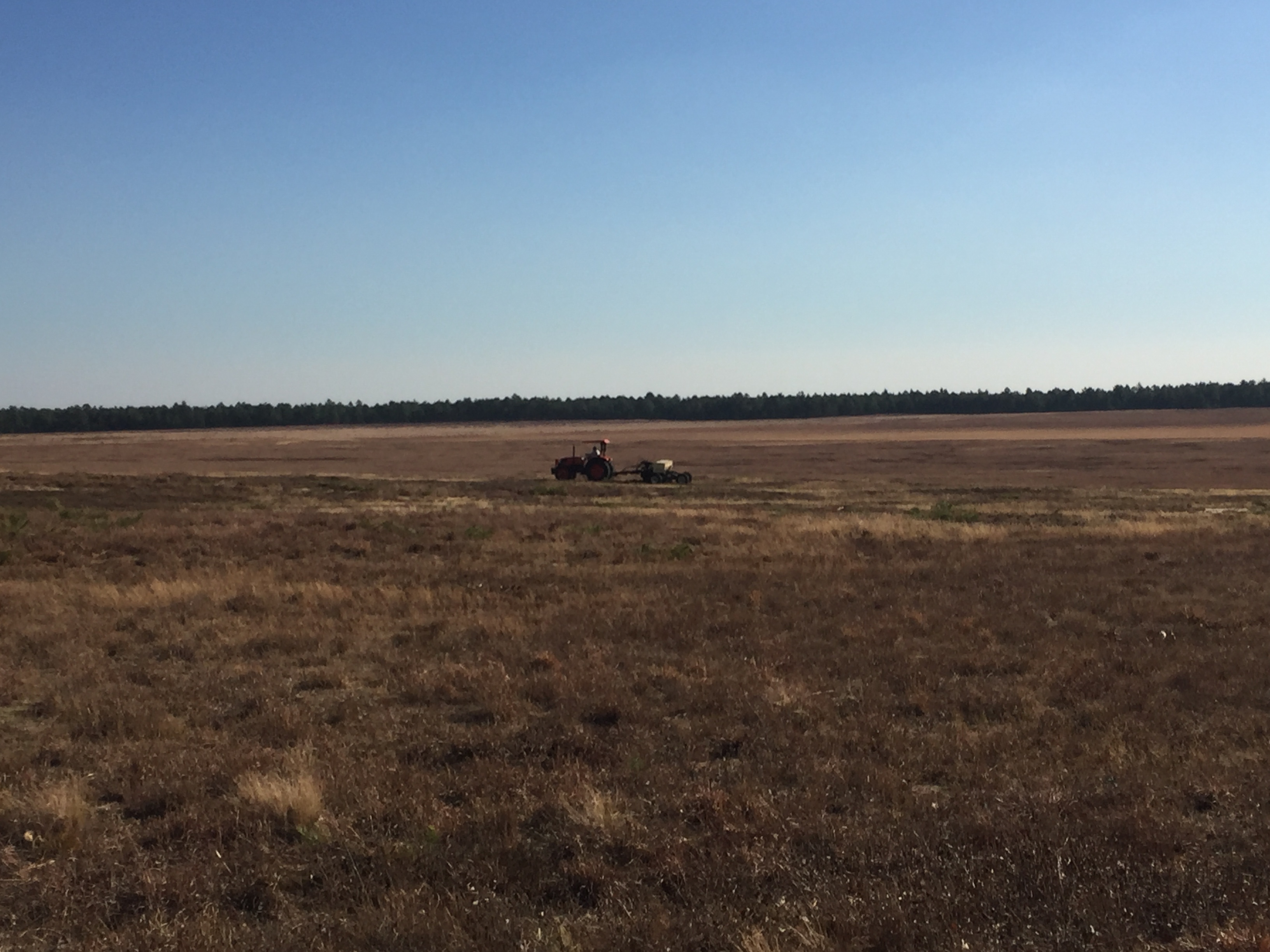
In Part I of this series, I discussed the drastic loss of grasslands in New Jersey and the importance of preserving and restoring this disappearing habitat for grassland-dependent bird species. Due to this habitat loss, in much of the northeastern United States (including New Jersey) airports have become significant breeding grounds for many threatened and endangered grassland birds. In fact, airports are often the only suitable habitat available for New Jersey’s rarest grassland bird, the upland sandpiper. If these large expanses of open fields are managed properly, they can support nesting birds while still remaining safe for aircraft operation. This is the goal of CWF’s new restoration project at one of the most critical breeding sites in New Jersey.
Restoration site at Lakehurst breeding grounds, December 2017. Photo by Meghan Kolk.
The Joint Base McGuire-Dix-Lakehurst (JBMDL) in central New Jersey hosts the largest known breeding colony of the endangered upland sandpiper (Bartramia longicauda), and the second-largest known breeding colony of the threatened grasshopper sparrow (Ammodramus savannarum) in the State. The bobolink (Dolichonyx oryzivorus), savannah sparrow (Passerculus sandwichensis), horned lark (Eremophila alpestris) (all threatened) and eastern meadowlark (Sturnella magna) (special concern) all make a home here as well during the nesting season. CWF has partnered with the U.S. Fish and Wildlife Service to restore hundreds of acres of this vital land to increase suitability and to alter management practices to benefit both wildlife and airfield operations. Continue reading “Grassland Birds of New Jersey”
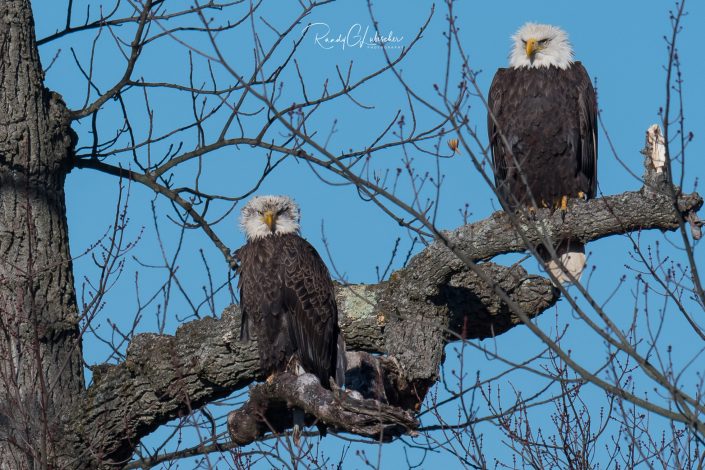
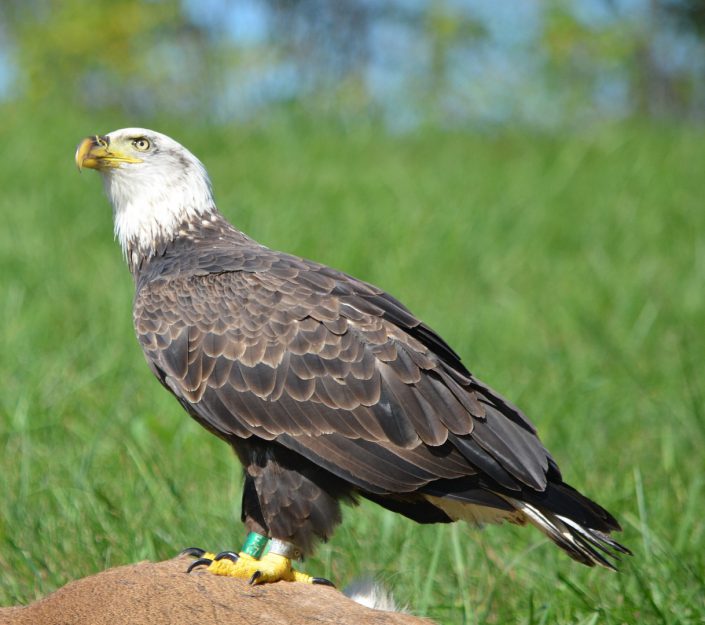
In the end of October, NJ Eagle Project volunteer Randy Lubischer spotted a banded adult bald eagle near his home in Monmouth County. He was able take good photos that showed the bird was banded with a blue (NY) band on the left leg and was able to get a very clear image of the letter and number code on the band. We reached out to the NY Division of Fish, Wildlife and Marine Resources to find out more information on the eagle.
In the fall of 2011, an injured hatch year bird was found on the side of the road in Onondaga County, NY. The bird was rehabbed, banded (NY Blue band W34) and released on October 7, 2011 at the Montezuma NWR. On 11/18/2016, W34 was sighted in Darlington, Maryland and then in in NE Maryland again on 3/1/2017.
W34& mate 11/7/17@Randy Lubischer
W34 looks to be staying in NJ to nest as he has found a mate, a sub-adult female, who still has dark feathers on her head. They have started to build a nest and have been copulating.
We can’t necessarily assume that W34 was hatched in NY. Since he was found injured and not banded he could well be a NJ bird. We have followed NJ recent fledges outfitted with transmitters, take long flights north after leaving their nest areas. We also know that many NJ banded eagles do return to NJ to nest. So we’ll never know the true origin of W34 but we can piece together some of his story and hopefully have more news about him and his mate in the upcoming nesting season.
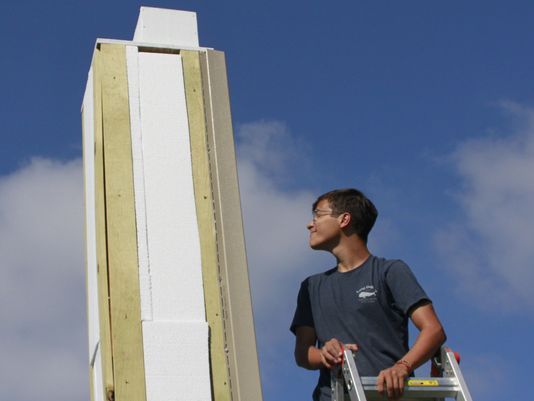
“Chimney swifts, which migrate through northern New Jersey by the thousands each September, have fallen on tough times as more and more large chimneys fall into disuse.
These small, insect-devouring birds have abandoned traditional migration roosts like the huge chimney at George Washington Middle School in Ridgewood in recent years. Another popular roost for these fast-flying, bug-eating birds — a chimney at the Berkeley Elementary School in Westwood — may get capped in 2018.”
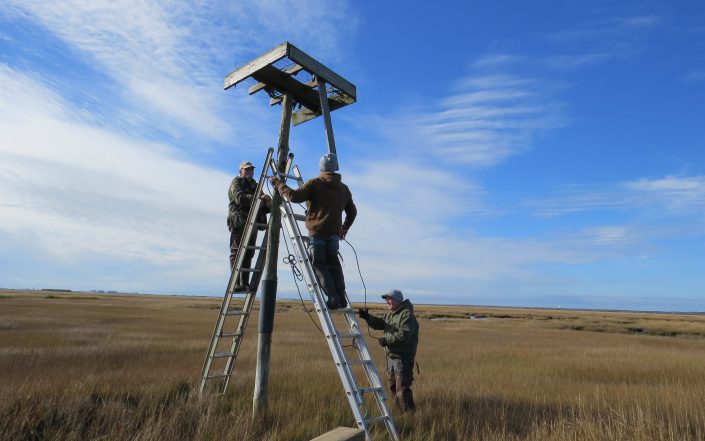
NJ Osprey Project Volunteers Wayne Russell, Matt Tribulski and John King repair an osprey platform.
New Jersey ospreys have headed for warmer climates until their return in the spring. NJ osprey project volunteers are busy repairing and cleaning out nests, adding predator guards and perches in preparation for the nesting season. It’s an endless job as there are 100’s of nesting platforms throughout the state and maintenance is always needed. These repairs keep the nests as safe as possible for the nesting ospreys.
A new pollinator habitat is created in Middle Township
By: Larissa Smith; CWF Wildlife Biologist
The Middle Township Environmental Commission in cooperation with the Conserve Wildlife Foundation of NJ worked to create a pollinator habitat at a recreation site in the township which is located in Cape May County. Commission members had been working to obtain permission to plant a pollinator garden on a township site. The Ockie Wisting Recreation Complex was just officially opened in the end of October. This recreation site will have playing fields, a playground and a wooded trail that leads to a lake and fishing pier.
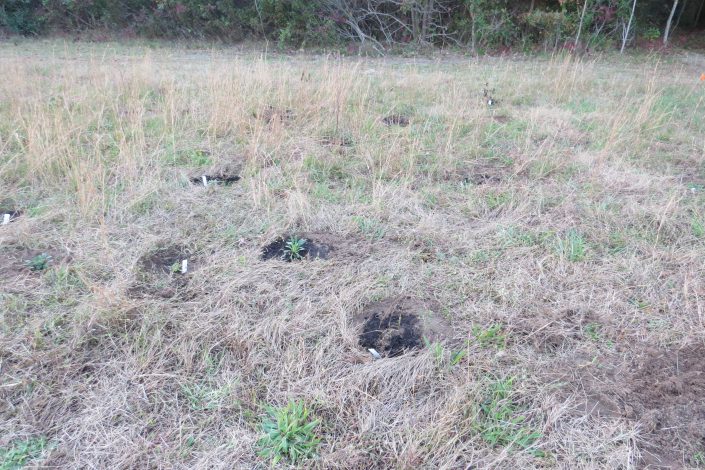
With funding from Atlantic City Electric volunteers with the Middle Township Environmental Commission and Conserve Wildlife Foundation of NJ planted 138 native perennials . While it doesn’t look like much right now, come next spring and summer there will be plants for bees, butterflies and birds to use for food and habitat. Not only will this pollinator meadow be great for wildlife, it won’t have to be mowed. The Environmental Commission will be in charge of maintenance and plans another work day in the spring to remove any non-native plants and trees in the area. We also plan to use this site as a demonstration garden for others interested in planting for pollinators.
Ockie Wisting Pollinator Habitat: List of Plantings – Fall 2017