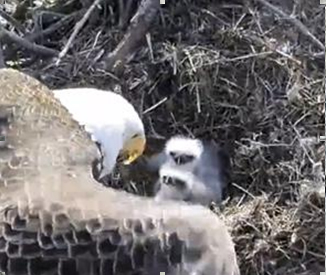
Nature can be awe inspiring and beautiful. Watching a powerful bald eagle gently offer food to a newly hatched chick is amazing. Cheering awkward chicks walking on wobbly legs, and holding your breath when they take that first flight are the events live cam viewers look forward to year after year.
Duke Farms nest-2016
We are reminded of the harsh realities of nature too. Nest fails can and do happen. Many things can go wrong: storms, predators in the nest, or conflicts with other eagles and territorial disputes. Watching it happen live, can be heartbreaking. Every event is a learning experience for us all.
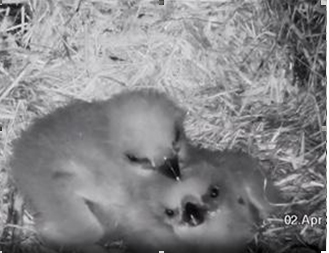
There is a sad ending this year at the Duke Farms nest. It was hard to see the adult pair defending their nest from younger interlopers again. Harder still was actually witnessing the failure of both eggs. Hatching is a complicated business. We’ve been fortunate to have many years of success. As watchers, we must take the good with the bad. This is nature after all.
So what do we do now? My love of nature and the bald eagle will have me seeking out other live cams, but missing my local wild family. I will remember the successes of past years. I will stare in amazement as I look up into the sky to watch a bald eagle soaring overhead.
Duke Farms- 2016
Life will go on. The cycle will continue, if not in “my” nest, in another. Nature will find its balance. Thank you to Duke Farms and Conserve Wildlife Foundation of NJ for bringing us the live cam. Thank you to the state biologists who work every day to preserve and protect the wildlife in our state.
NJ.com reporter Alexis Johnson at Duke Farms in Hillsborough
Conserve Wildlife Foundation has long partnered on the famed Eagle Cam at Duke Farms in Hillsborough, which has thrilled over 13 million viewers since it started.
In this video, NJ.com reporter Alexis Johnson covers the state’s longest running Eagle Cam with an interview with Duke Farms Executive Director Michael Catania.
Bald eagles have nested at Duke Farms since 2005. Currently the pair has laid two eggs in this nest, with the first egg laid on Valentines Day this year.
From just a single nest remaining in the state in the late 1970s and early 1980s, bald eagles have recovered to over 170 nests, thanks largely to scientists and volunteers from the New Jersey Endangered and Nongame Species Program and Conserve Wildlife Foundation.
The Duke Farms Eagle Cam can be found here, and author Jim Wright’s e-book “Duke Farms’ Bald Eagles” provides some fascinating additional information about this nest.
CWF’s Bald Eagle webpage and annual Bald Eagle report details the story of bald eagles in New Jersey, with a number of other helpful links.
The Press of Atlantic City covered the troubling findings of Conserve Wildlife Foundation’s recent expedition to Tierra del Fuego in Chile to survey wintering red knots.
The numbers of red knots – an endangered migratory shorebird that spends every May along New Jersey’s Delaware Bay coast feasting on horseshoe crab eggs – declined by more than 20 percent between the team’s counts last year and this year.
The WNET-PBS Nature program Peril & Promise’s second live interview with Conserve Wildlife Foundation marked the Great Backyard Bird Count by focusing on the inspiring recovery of the bald eagle. This interview, taking place at DeKorte Park in the Meadowlands, features program host Emily Harris speaking with CWF Executive Director David Wheeler, CWF Trustee Kumar Patel, and Jim Wright, who has written two e-books about bald eagles.
Holding an authentic (empty) can of DDT, Wright noted, “Eagles had some tough times…with things like DDT, a really nasty pesticide that got into the food chain and would get into the fatty tissues of the bald eagles, and they had trouble laying their eggs because their eggshells were so weak. It got to the point in New Jersey where they were down to one nesting pair in the late 1970s, and they were not producing eggs…. But now there are…approximately 170 nesting pairs in New Jersey, including two right here in the Meadowlands.”
We were subcontracted by NJDOT to install a new nesting tower for peregrine falcons in Stafford Twp., Ocean County. We’ve assisted NJ Fish & Wildlife with monitoring the falcon nest that was previously located beneath the Route 72 Causeway Bridge for the past several years. The new tower is located on Bonnet Island and highly visible on the eastbound side of Route 72. Continue reading “Photos From the Field: Bonnet Island Falcon Tower”
Dedicated volunteers help reduce mortality of adult female terrapins
by Ben Wurst, Habitat Program Manager
Volunteers Elizabeth and Courtney measure the height of a female terrapins carapace.
Now that Northern diamondback terrapins (Malaclemys terrapin terrapin) are officially considered a nongame species, our work to help conserve breeding adult females is more justifiable. Before July 2016, adult terrapins, including egg bearing females, could be harvested during an open season from November to March. With that said, it was troublesome to know that a 15+ year old female that you helped safely cross a road in summer, could be harvested, shipped to Asia and eaten only a few months later… Now, we can rest (somewhat) easy knowing that the hard work of our dedicated volunteers will live on and help the population grow (there are still many threats to terrapins including collisions with boats, vehicles, poaching, drowning in ghost crab pots, etc…) Continue reading “Reducing Roadkills of Terrapins in S. Ocean County”
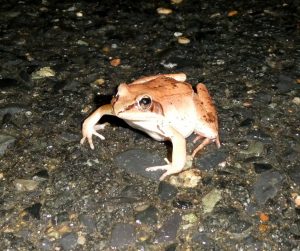
The salamanders and frogs in East Brunswick got an early start to their migration season by crossing this week on February 15. David Moskowitz found spotted salamanders, wood frogs, dozens of spring peepers, and one wood frog crossing the temporarily closed section of Beekman Road in the early evening rain.
“This is the earliest they’ve ever moved – by about a week – in the 12 years I’ve been closing the road,” said Moskowitz.
East Brunswick has closed the road for a few nights each late winter/early spring when conditions are just right. While all amphibian species are vulnerable, spotted salamanders are a species of special concern in New Jersey.
Photo by David Moskowitz
Conserve Wildlife Foundation partners with certain municipalities and the Division of Fish and Wildlife’s Endangered and Nongame Species Program on salamander crossings in northern New Jersey. This is a key initiative among CWF’s amphibian projects.
The East Brunswick crossing offers the best opportunity for the public to take part and see these salamanders and frogs up close. Check their website for the next expected crossing and share the road with a salamander!
Each New Year promises an exciting year ahead, and conservation science is no exception! As biologists gear up for the field season, CWF’s amphibian programs are particularly noteworthy.
Our Amphibian Crossing Project has made major strides in protecting the frogs, toads, and salamanders migrating to breeding areas, and we’re launching a new program this year to better document the newly discovered mid-Atlantic coast leopard frog. You can help CWF biologists collect data and save these fragile creatures.
Read below for more details about each program. In the meantime, if you would like to support CWF’s amphibian programs, please visit our YouCaring page here: https://www.youcaring.com/conservewildlifefoundationofnewjersey-1091698 . Your contribution will help us develop training materials and cover research expenses to protect our most vulnerable frogs and salamanders!
Amphibian Crossing: A New Twist on an Old Program
The long-standing Amphibian Crossing Project, established in partnership with the New Jersey Endangered and Nongame Species Program (ENSP) in 2002, has been organizing dedicated volunteers each spring to chauffer migrating amphibians across roads as they trek from their upland hibernation sites to their breeding ponds. This program has saved thousands of frogs, toads, and salamanders from vehicle strikes so that local amphibian population sizes can be maintained, which is especially important for species of concern, such as the Jefferson and spotted salamanders.
Seeking a more long-term solution to the amphibian road mortality problem at the Amphibian Crossing Project’s top site, ENSP has finally secured funding to construct crossing structure system for amphibians to move safely across Waterloo Road in Byram Township, Sussex County. This system, including under-road tunnels and guide fencing, will help amphibians avoid problems on the road all season long. CWF is preparing its second year of monitoring along Waterloo Road to track the changes in amphibian vehicle-caused mortality before and after this system is installed.
Leopard Frogs: A New Program for a New Species
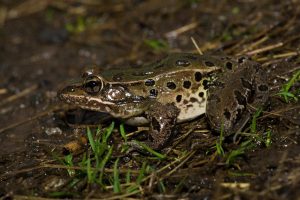
This year marks the launch of CWF’s Kauffeld’s Calling Frogs program. Similar to New Jersey’s Calling Amphibian Monitoring Program (CAMP), volunteers will listen and document frog calls during the breeding season. Kauffeld’s Calling Frogs, however, will focus specifically on the newly discovered mid-Atlantic coast leopard frog. This frog, named after the late avid herpetologist Carl Kauffeld, had been mistaken as a member of the southern leopard frog species for decades. Only recently was it determined to be a separate species with unique habitat requirements.
Despite only being an official species since 2014, it is already considered a Species of Greatest Conservation Need in New York, and may be declining from other portions of its range. CWF biologists are eager to document the current extent of this frog’s range within New Jersey in order to monitor the population for possible declines. Knowing where this species is found is the foundation for future research into its habitat needs and threats.
Getting the Public Involved
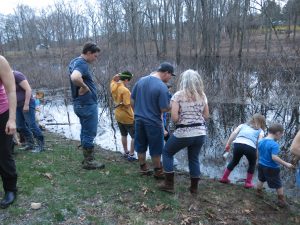
These amphibian programs cannot move forward without the dedication of CWF volunteers. Over 100 volunteers have been involved with the Amphibian Crossing Project, and a dozen more dedicated at least a day a week for months to monitor Waterloo Road amphibian mortality. With the success of CAMP in mind, this first year of Kauffeld’s Calling Frogs promises to be full of new frog population discoveries.
Make sure to follow CWF on Facebook, Twitter, and Instagram for the latest updates on our amphibian programs as the season progresses!
A sign of success. CWF Volunteer Matt T. atop the newly constructed peregrine falcon nesting tower on Bonnet Island, Stafford Twp., NJ. The 16′ tower was built from locally grown white cedar and installed for a pair who formally nested beneath the Route 72 Causeway Bridge. photo by Ben Wurst
Over the past two years, our team, with the help of funding from the Neotropical Migratory Bird Conservation Act, has worked to create critical habitat maps and detailed threat maps for at-risk shorebird species in Northern Brazil and in Tierra Del Fuego, Chile. These projects have established the foundation for conservation planning in these important wintering areas for migratory shorebirds like red knots.
Brazil:
Two years ago, our team began working in Northern, Brazil covering the Atlantic coastline of both Pará and Maranhão state between Belém and São Luís. Our team conducted two successful excursions to Brazil taking point count surveys of wading shorebirds collecting approximately 44,700 individual bird sightings to add to the database our team created for the critical habitat maps (Figures 1 & 2).
Figure 2. Results from the 2017 point count survey
Figure 1. Results from the 2016 point count survey
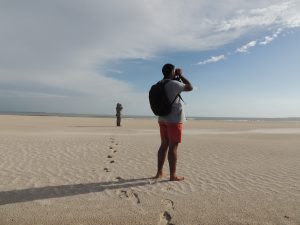
David Santos and Larry Niles conduct point sampling surveys in Maranhão Brazil.
We conducted surveys using point count methods using fixed radius plots positioned along transects, with all wading birds counted within the 250m radius. Transects were conducted by either walking or while in a boat across various tidal stages and a variety of habitat types including mangrove creeks, sand flats, mudflats and beaches.
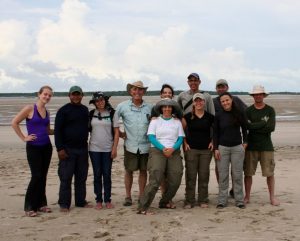
Brazil Team: Carla Meneguin, Paulo Siqueira, Ana Paula Sousa, Larry Niles, Juliana Almeida, Carmem Fedrizzi Joe Smith, Stephanie Feigin, Yann Rochepault, Laura Reis and Christophe Buiden (photo by Juliana Almeida)
Our team then created threat maps of the region from coastal development, mining operations, offshore drilling, and shrimp farming to help inform future conservation planning and mitigate impacts of these activities to the critical shorebird habitat in the region.
Chile:
This year, with a second round of funding, our team conducted work in Tierra Del Fuego, Chile to create critical habitat and detailed threat maps for Bahia Lomas in Chile. Bahia Lomas is both a globally significant RAMSAR wetlands site and a Western Hemisphere shorebird site of hemispheric importance.
Shorebirds in Bahia Lomas
Historically, Bahía Lomas and nearby Rio Grande supported wintering populations of 67,000 red knots – the largest wintering area for knots in the Western Hemisphere. In the last 30 years, however, the population has declined to less than 15,000 knots in Bahía Lomas and the population in Rio Grande is functionally extinct (Morrison et al 1989).
Aerial Survey over Bahia Lomas
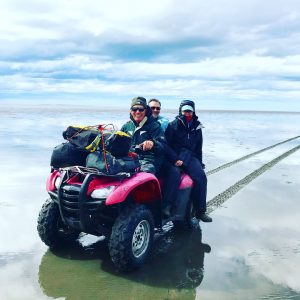
This January our team conducted surveys along the coast of Bahia Lomas to understand distribution of shorebird species within the region, using the same sampling methods, study key roosting and feeding habitats, and delineate critical habitat and threats to the region to inform future conservation and minimize impacts to shorebird populations.
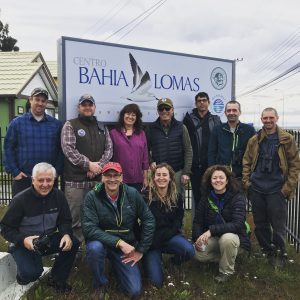
Team in Chile including Ross Wood, Stu Mackenzie, Carmen Espoz, Larry Niles, Joe Smith, Yann Rochepault, Christophe Buidin, Antonio Larrea, Richard Lathrop, Stephanie Feigin and Amanda Dey.
Over two weeks our team of New Jerseyans and Canadians conducted point-count sampling surveys throughout the bay with large assistance from our partners from Universidad Santo Tomás in Chile to determine key habitats. Additionally, our team conducted four aerial surveys to get species distribution counts on a large scale of the whole bay at various tide stages, as well as a helicopter survey to continue the population counts of the region done by Dr. Guy Morrison. Finally, our partners with the Universidad Santo Tomás conducted marine invertebrate sampling surveys. These data will be combined to aid in the creation of a GIS mapping system that can identify the most important shorebird habitats in the region.
In the next few months our team will use these data and overlay them with threat mapping to determine the critical habitats undergoing the greatest threats. This project is designed set the stage for proactive conservation planning that will mitigate future threats and will hopefully uncover the source of ongoing declines to the shorebirds in this region.
Citation:
Morrison R.I.G. & Ross R.K. (1989) Atlas of Nearctic shorebirds on the coast of South America. Canadian Wildlife Service Ottawa (Canada).

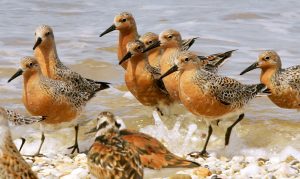 The Press of Atlantic City covered the troubling findings of Conserve Wildlife Foundation’s recent expedition to Tierra del Fuego in Chile to survey wintering red knots.
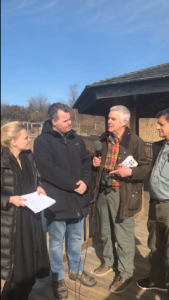 The WNET-PBS Nature program Peril & Promise’s second live interview with Conserve Wildlife Foundation marked the Great Backyard Bird Count by focusing on the inspiring recovery of the bald eagle. This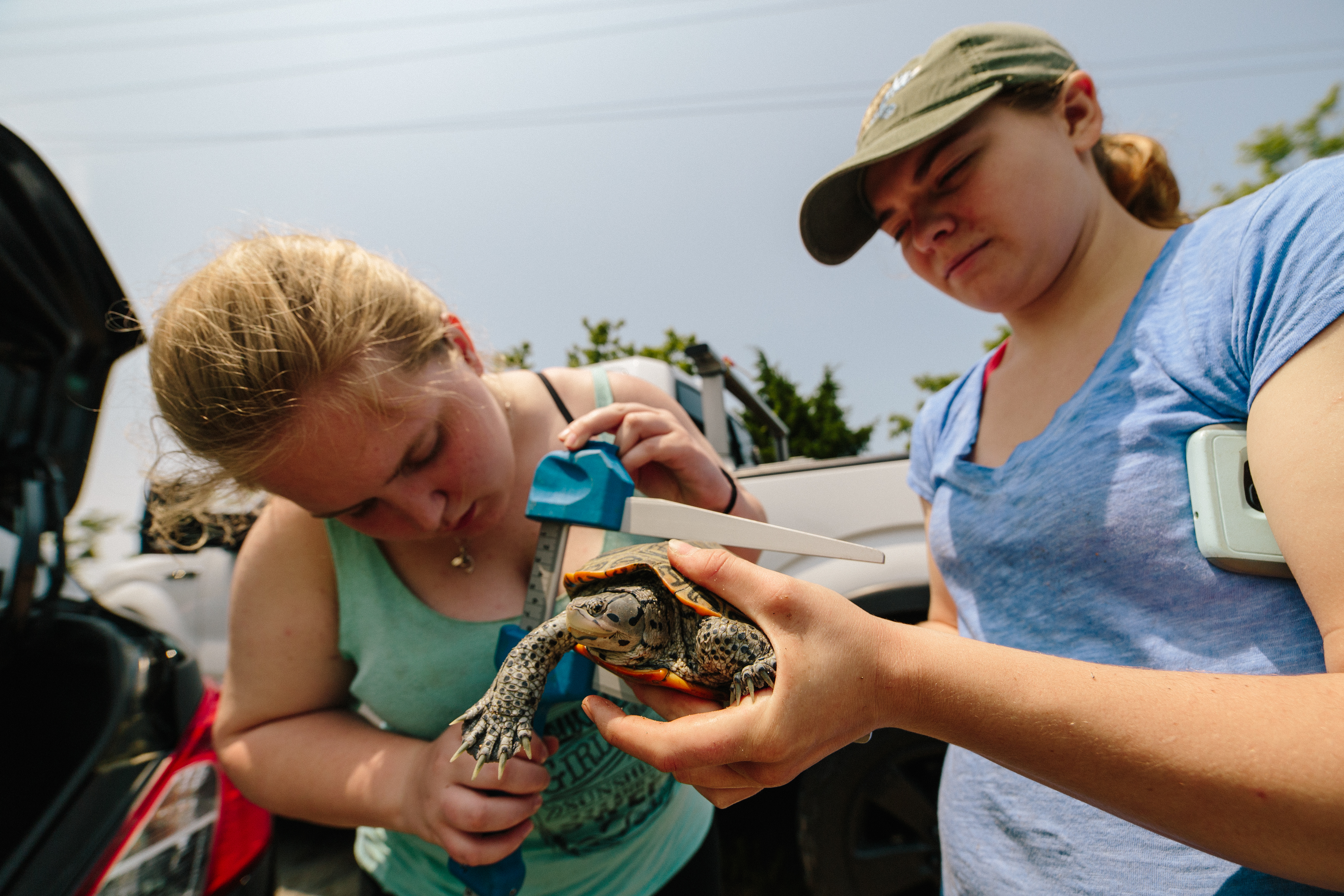


 These amphibian programs cannot move forward without the dedication of CWF volunteers. Over 100 volunteers have been involved with the Amphibian Crossing Project, and a dozen more dedicated at least a day a week for months to monitor Waterloo Road amphibian mortality. With the success of CAMP in mind, this first year of Kauffeld’s Calling Frogs promises to be full of new frog population discoveries.