2016 Species on the Edge Art & Essay Contest Winners honored at Awards Ceremony
by Lindsay McNamara, Communications Manager
2016 Species on the Edge Winners with representatives from CWF, Wakefern, PSEG and GAF.
On Tuesday, May 24, 2016, Conserve Wildlife Foundation of New Jersey celebrated and recognized the winners of the 2016 Species on the Edge Art & Essay Contest, a statewide educational contest open to all fifth-graders. The 14th annual contest encourages students to become wildlife biologists through their research and artwork on the endangered and threatened wildlife species in New Jersey.
“These talented children poured their hearts into the Species on the Edge contest, creating vibrant artwork and passionate essays about these rare wildlife species,” said David Wheeler, Conserve Wildlife Foundation Executive Director. “We are inspired to help connect the next generation of New Jersey conservation leaders with the natural world around them. Their art and essays illustrate the wonders of nature – and reveal many of the challenges we must overcome to help vulnerable wildlife survive in our densely populated state.”
Students were asked to draw a picture of one of New Jersey’s over 80 endangered and threatened wildlife species and compose an essay about how the animal became endangered and what can be done to help protect it. The Species on the Edge Art & Essay Contest encourages students to learn about local environmental issues, express their concerns for the world around them, think creatively about ways to improve it, and to consider how their actions impact the natural world.
This year’s ingenious group of winners was honored at an awards ceremony which was hosted at the New Jersey Education Association, in Trenton, New Jersey. The contest was sponsored by PSEG, NJEA, GAF, Atlantic City Electric, Church & Dwight and ShopRite.
The statewide contest drew over 2,000 entries from across the state. Since 2003, over 10,000 children from across New Jersey have entered the Species on the Edge Art & Essay Contest.
Encouraging a Conservation Ethic in Locals and Travelers Alike
by Kelly Triece, Wildlife Biologist
Even though Honduras is no larger than the state of Tennessee, the country is very diverse in landscape and wildlife. In a short period of time, you can travel from the Caribbean and lounge on its white sand beaches and then visit the high-altitude pine forests. You can also see the Honduran emerald, an endemic hummingbird in the arid dessert. The diversity in eco-types and warm climate makes Honduras a great candidate for ecotourism, a growing industry since the 1990’s.
While Honduras is very diverse in climate and landscape, for many years it has been a country based on agriculture. Cattle ranching and growing cash crops, such as coffee and bananas, are common. While subsistence farming is essential to the Honduran way of life, the wide-spread slash and burn method to create agricultural land is destroying many Honduran forests and other landscapes. Since the country is rich in forest, marine and other natural resources, ecotourism can have many benefits on the land and the economy. Ecotourism may have the potential to serve as another way of living for Hondurans.
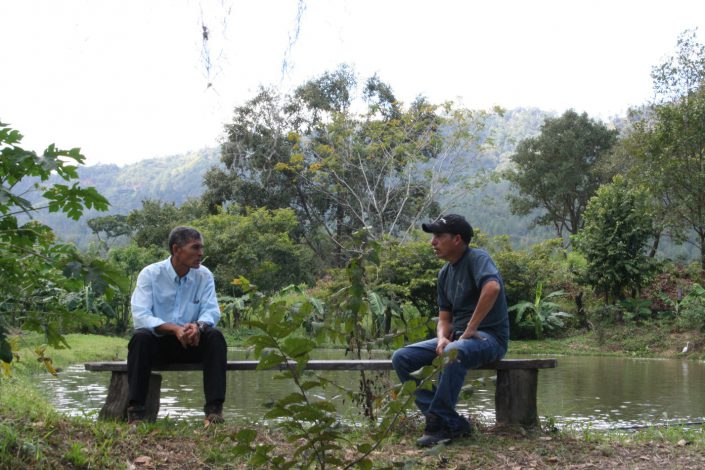
Isidro (on left) and visitor at Isidro’s wildlife education preserve.
During my stay in Honduras, I had the opportunity to meet many local conservationists eager to make a living off environmental education and ecotourism. We met with one such man, named Isidro on the fourth day of our trip. Upon arrival, we were offered some fresh brewed coffee from his farm and then headed straight through the forest for a tour of his land. Isidro bought the land in the 1990’s and has since been managing the land for bird habitat. Isidro told us he originally bought the land to raise cattle, but eventually decided instead turn the land into a nature preserve for wildlife.
He now resides with his wife and children on the property and dreams to have an environmental education program, where people come to hike, eat fresh local tilapia and view wildlife. At the environmental center, adults and children will have the opportunity to go bird watching, take a hike and learn about the importance of the natural world. He grows citrus, avocados and other fresh fruits, leaving many fruits just for the birds as well as shade grown coffee. This form of ecotourism is a way to bring nature and people together. Once children and others care about the natural world around them, they too will work to preserve it. It also provides a sustainable way of living for those like Isidro and his family.
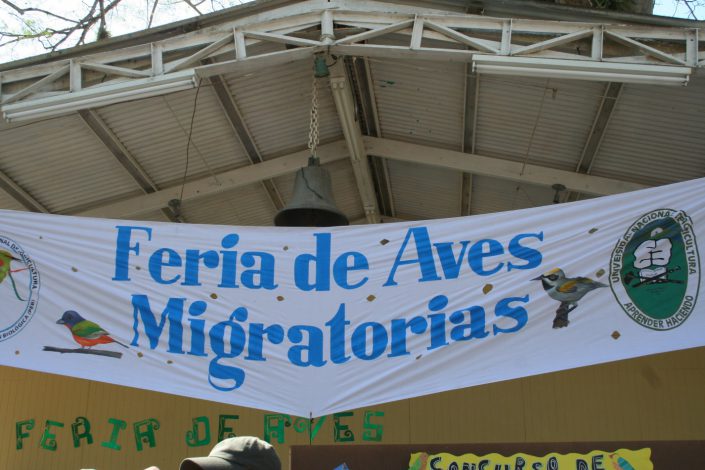
Migratory Bird Festival photo by Kelly Triece
Education about the environment through hands-on experience, as well as formal education, has the potential have a significant impact on local communities. While visiting the Universidad de las Agricultureal (Agriculture University) in Olancho we had the opportunity to take place in the Feria de Aves Migratorias (Migratory Bird Festival). The festival was put on by the Juniata Valley Audubon Society and Ruth Bennett, Ph.D. student at Cornell. The festival was part of a program that educates Honduran families that live very close to national parks. The program teaches children about the national park, local flora and fauna and its overall ecological importance.
Elementary children learning about migratory birds at the festival. Photo by Kelly Triece
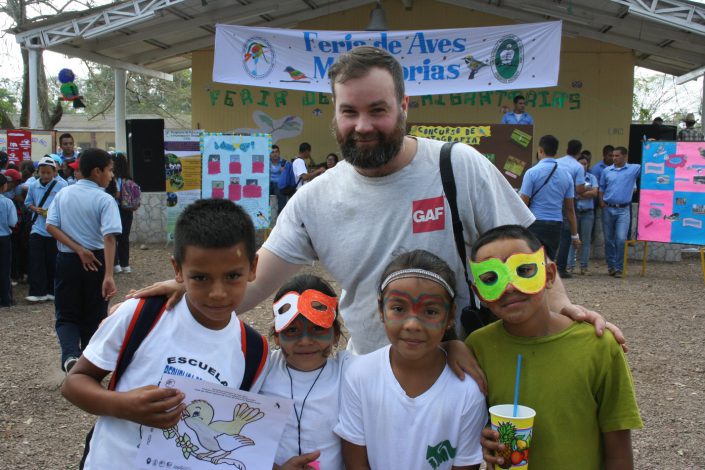
We had the pleasure of attending the festival, where we colored pictures of birds with elementary children and spoke to the college students. Most of college students are majoring in Natural Resources and are eager to learn about becoming a biologist. Students also compete in bird photography contests, present posters and learn about the natural history of migratory songbirds. The festival brings education and awareness to migratory songbirds, especially the Golden-winged Warbler.
Jon Kauffman, Raptor Center Assistant Director of Penn State’s Shaver’s Creek poses with the elementary children at the festival. Photo by Kelly Triece
Through education of Hondurans and visitors alike, ecotourism has the potential to serve both the local communities and those visiting the country. Ecotourism should inform tourists about the environment and wildlife they are seeing, as well as help local populations understand the importance and value of their home. Through the combination of education and ecotourism, a sense of stewardship can be fostered by encouraging travelers and locals to be mindful of their natural resources and instill a sense of wonder about the natural world. For those who are educated about wildlife and the natural world, will often work toward preserving it as well.
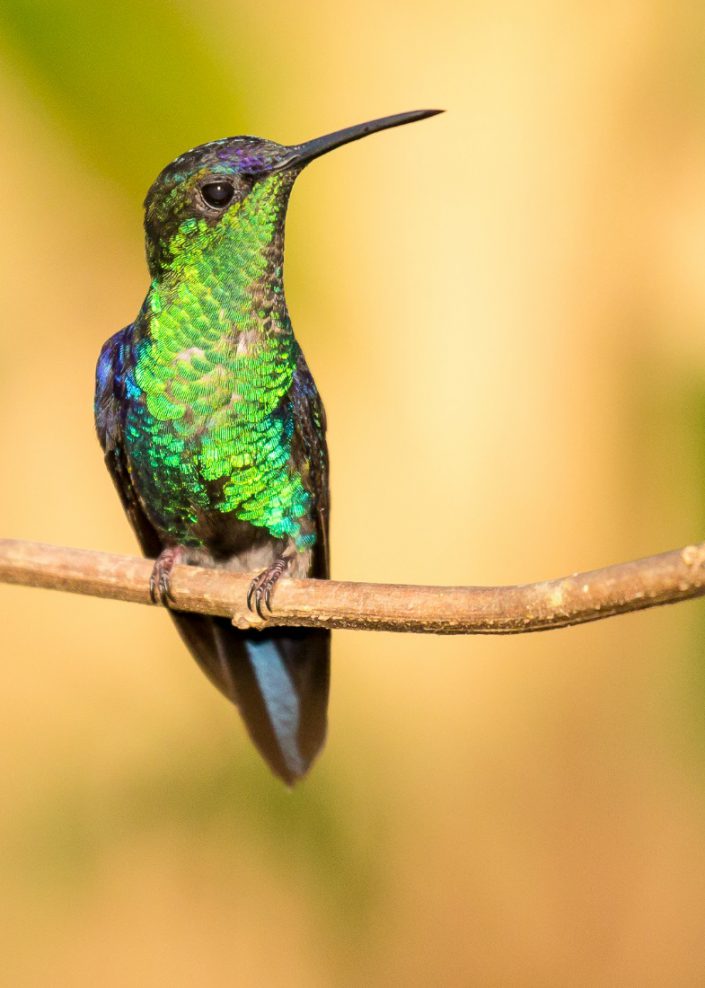
Violet-crowned Wood Nymph. Photo by Laura Jackson
In Honduras, wildlife is all around. Melodious blackbirds, Social flycatchers and Violet-crowned wood nymphs, fly tree to tree in and among the villages and farm fields. When children, such as those at the migratory bird festival, learn the importance of biodiversity, they too will want to protect these amazing animals. Ecotourism not only provides a way to travelers to see exotic wildlife, it also provides a way of living for locals. It is through sustainable ecotourism and education that Honduras can continue to be rich in culture and wildlife.
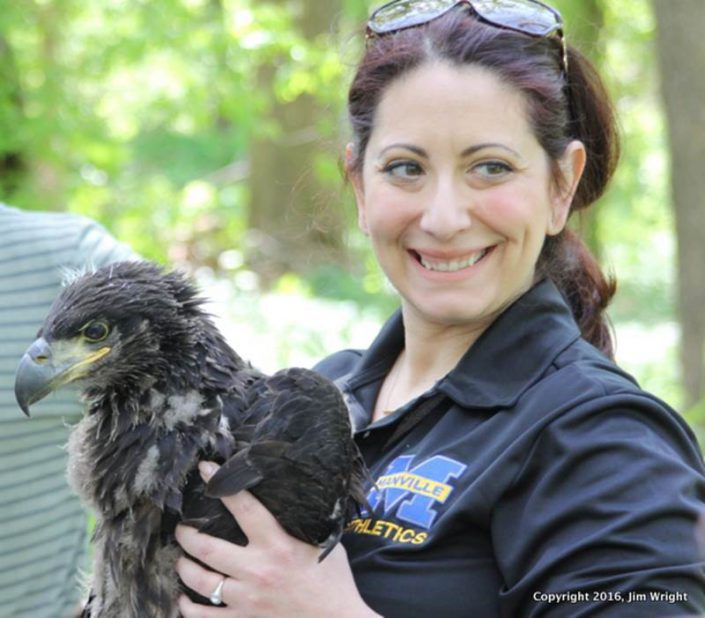
Manville School District science teacher Lauren Kurzius joined biologists to help band Duke Farms EagleCam chicks earlier this month
by Lindsay McNamara, Communications Manager
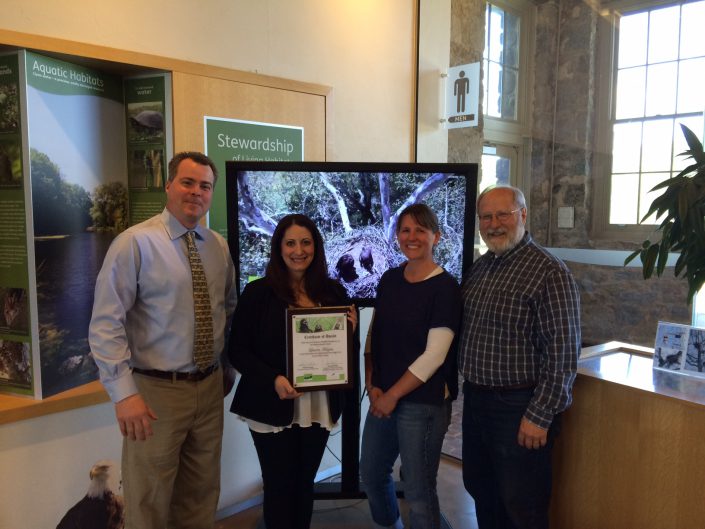
2016 Lesson Plan Winner Lauren Kurzius
Manville School District science teacher Lauren Kurzius was recognized by Duke Farms and Conserve Wildlife Foundation for winning our EagleCam lesson plan contest earlier this month! Kurzius joined wildlife biologists to help band the new Duke Farms EagleCam chicks on Monday, May 9. The EagleCam lesson plan contest, jointly organized by Duke Farms and Conserve Wildlife Foundation, called upon educators to submit lesson plans incorporating the Duke Farms EagleCam into their classrooms.
Installed in 2008, the Duke Farms’ EagleCam has provided a streaming look into the daily lives of the eagle family for over 10 million viewers. Kurzius is working with the Duke Farms and Conserve Wildlife Foundation EagleCam team to expand the camera’s potential as an educational vehicle by including her lesson plan for use in classrooms across the country.
“Duke Farms is pleased once again to support dedicated New Jersey teachers that bring wildlife ecology into their classrooms. Lauren Kurzius’ winning lesson plan (“Birds of Prey – Who Done it?”) is a terrific introduction to predator-prey interactions, patterns among organisms, and ecosystem viability while allowing them to take on the role of student detective” explained Michael Catania, Duke Farms Executive Director. “Her participation in this year’s banding of the Duke eagle chicks was one of the highlights for our staff, and certainly a thrill for her students in Manville, New Jersey to watch.”
The EagleCam became a prominent teaching tool in Kurzius’ classroom in 2013. She had begun viewing the eagles in 2011 and recognized its potential for using it in the classroom immediately. Regarding the banding process, she says it was “priceless,” adding, “I connected with educators, scientists, and environmentalists. I get to share that with my current students and my future students. When you have new experiences, it leads to authentic teaching. Maybe my experience will inspire one of my students to follow a career path in science and that makes the banding all worth it.”
From left to right: David Wheeler, Lauren Kurzius, Duke Farms Programs and Community Garden Manager Tanya Sulikowski, Duke Farms Executive Director Michael Catania.
CWF’s David Wheeler stated that “by exploring science with creativity and a sense of wonder, Lauren Kurzius inspires her students to connect with the natural world around us. That personal connection reveals just how much people can strengthen the environment and benefit wildlife like bald eagles, which have made an awe-inspiring comeback. The Duke Farms webcam offers Lauren’s students and so many others the opportunity to intimately experience the lives of these magnificent creatures.”
We were thrilled at the enormous response received from teachers across the state, and will continue to offer the amazing opportunity to teachers in New Jersey! Congratulations, Lauren!
One in a Series of Updates on the 20th Year of the Delaware Bay Shorebird Project
by Dr. Larry Niles, LJ Niles Associates LLC
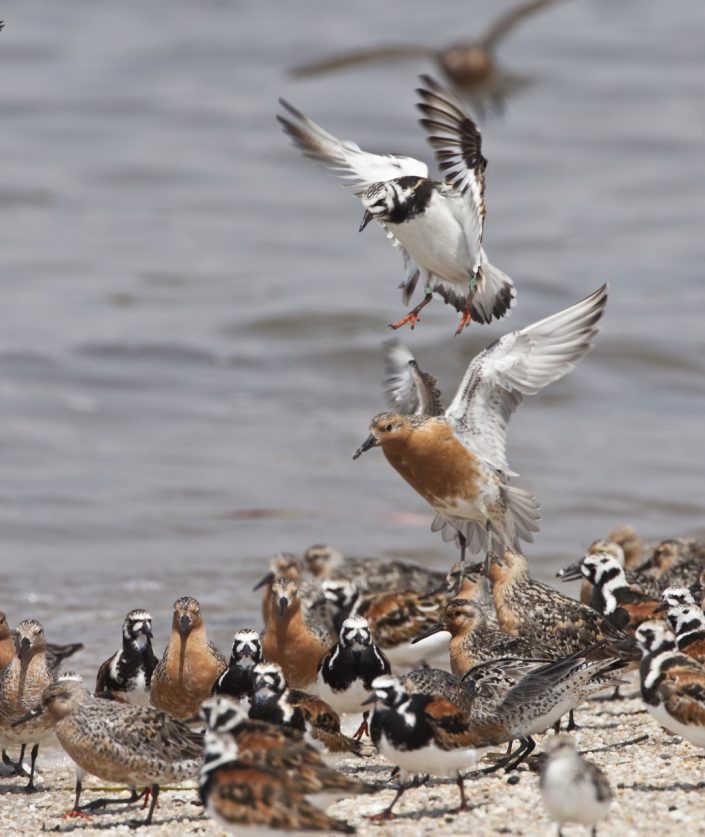
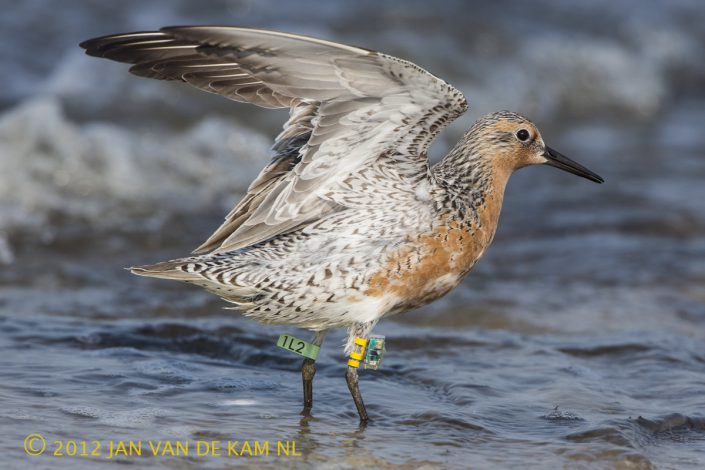
Photo by Jan van der Kam.
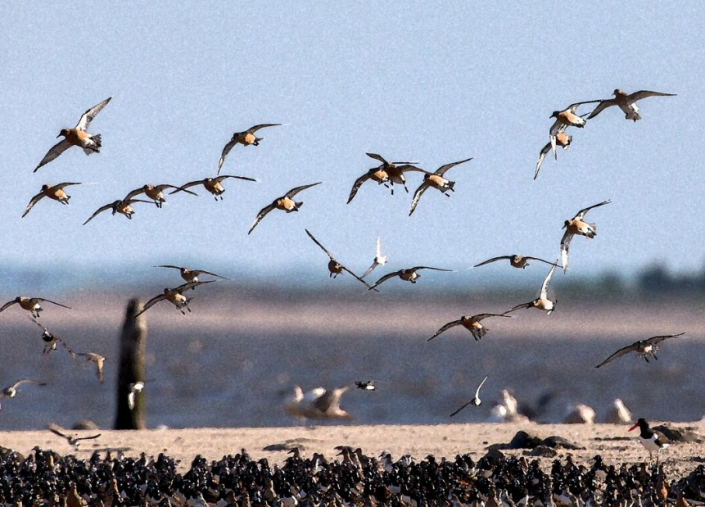
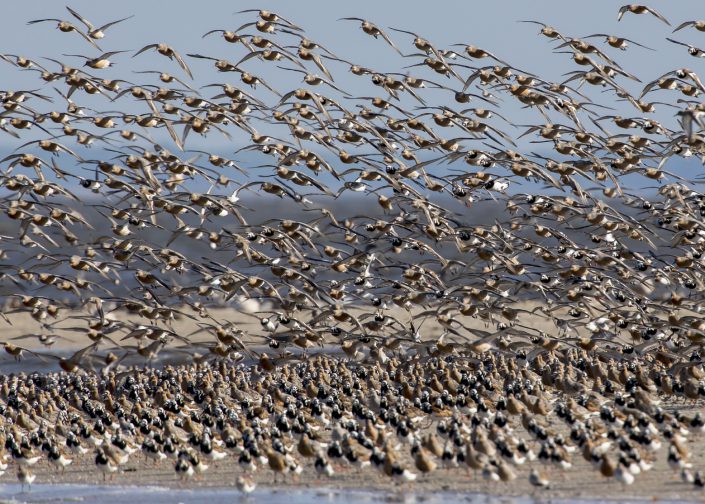
We conducted our first bay-wide count of shorebirds on Delaware Bay and the results suggest we are rapidly approaching the peak number of shorebirds. Last year, we counted 24,700 knots and 16,000 ruddy turnstones. This year’s counts are lower because it’s earlier, but we are still over 20,000 knots and 16,000 turnstones, and 10,000 sanderlings that have stopped over in the bay. These promising results are preliminary, but it seems we are getting close to our peak population of red knots and at the peak of the other two species – if populations are similar to last year.
This year’s aerial counts were conducted by Guy Morrison and Christian Fries, both of Environment Canada.
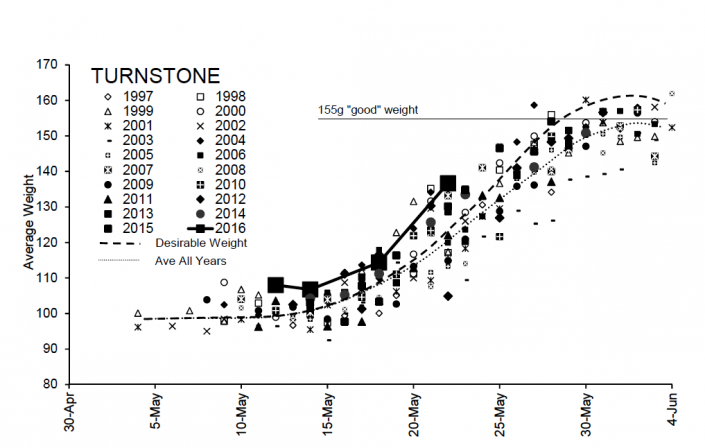
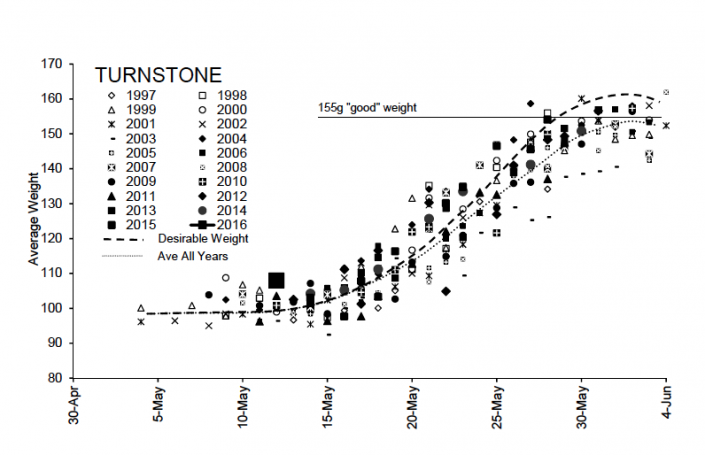
Bird condition also looks promising. Our catches show average weight increases for red knot compared to past years, which is good news given the very spotty horseshoe crab spawn. Ruddy turnstone average weights have increased considerably, the best in the twenty years we have been trapping (see the graph below). The distribution of these weights reveal more.
This graph shows the average weights of all ruddy turnstone catches made from 1997 to 2016. 2016 is represented by big squares and shows a very good increase in weights.
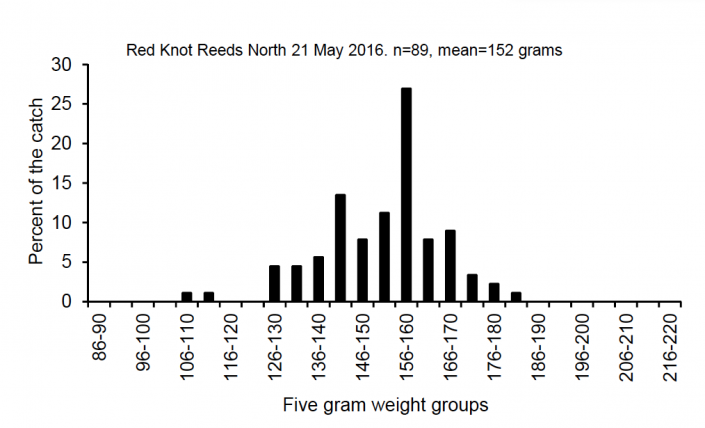
If we sample the same bird population with our cannon net catches, one would expect increasing average weights but similar distribution of weights – the same proportion of different weight birds, all getting higher. If a new group of birds arrives in the area, then one would see a new distribution of weights, only lower than the group that has been in the area longer. This can be seen in the historgram for ruddy turnstones below. The historgram supports our assumption that a new group of turnstones has arrived in the bay and are busy gaining weight. Based on our last catch, the distribution of knot weights shows no new arrivals, however the aerial survey and ground counts done after the catch point to a new group yet to be sampled. To our team of biologists this data is food for hungry minds. Within a few days, all will be revealed.
This histogram shows the number of red knots in each weight category in our catch made on May 21. See text for more explanation.
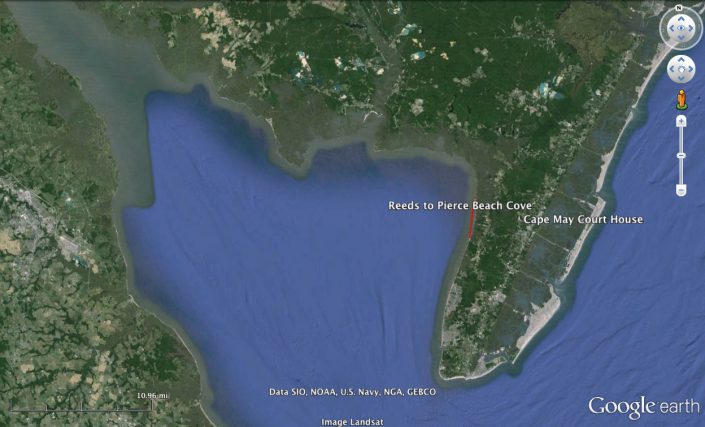
The actual distribution of the birds in the count tells another important story – the importance of the beaches and creeks between Reeds Beach and Pierce’s Point. This 3-mile section of Delaware Bay accounted for more than half of the entire population of red knots on the bay and outsized portions of the other species. This has been consistent through this season and over the last three years – ever since Conserve Wildlife Foundation (CWF) and American Littoral Society (ALS) restored the four beaches with new sand.
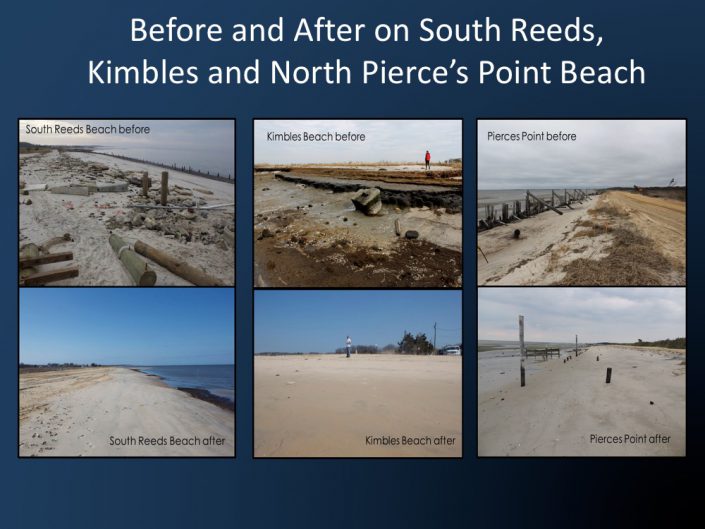
The restoration of these beaches avoided a potential disaster caused by Hurricane Sandy, which not only destroyed seventy percent of all the suitable horseshoe crab habitat on the New Jersey side of Delaware Bay, but it did much more. South Reeds Beach tells the story.
After the hurricane ripped through the area and pounded Reeds Beach with punishing westerly winds, most of the sand had been pushed off the beach and onto the marsh behind it. This unveiled a long standing and nearly impervious layer of rubble, remnants of long abandoned houses, bulkheads and the access road connecting them. We had no idea this laid beneath the sand of Reeds Beach South, but it explained why it never had good crab egg densities. Crabs couldn’t burrow deep enough to lay eggs.
The CWF and ALS restoration teams with funding from the United States Fish and Wildlife Service (USFWS), National Fish and Wildlife Foundation (NFWF), the Geraldine R. Dodge Foundation and Community Foundation of New Jersey, along with other groups, removed the rubble and laid down a beautiful sandy beach. Every year since, horseshoe crab egg densities were among the highest in the bay. This, of course, attracted higher than average shorebird numbers which greedily consumed the newly available trove of eggs. Similar work was done at Cooks, Kimbles and Pierce’s beaches.
However, the restoration work did even more. Sand naturally erodes from these beaches just as it does on the Atlantic Coast beaches. The sand lost at Stone Harbor and Avalon beaches, for example, ends up in Hereford Inlet. The same happens on Delaware Bay beaches and the eroding sand flows into the the nearby creeks forming beautiful crab spawning shoals. I described their importance in the Reeds – Pierce’s Cove in the previous blog. These creek shoals represent the best habitat in the bay, because they are loose sand, create small inner protected areas loved by spawning crabs and are washed by warm water flowing out from the small intertidal water drainages. Early season spawning almost always occurs in or near creek mouth shoals. Thus, even sand lost from restored Delaware Bay beaches goes to a good end.
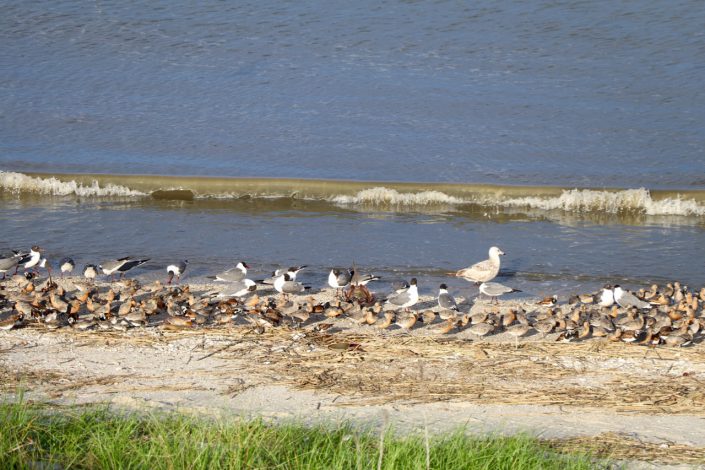
A sandy shoal at the mouth of the nameless creek between Reeds and Cooks Beach. At the time of this picture, over 3,000 knots and 1,000 ruddy turnstones were using the shoal and the inner sandy beach behind the shoal. Photo by Stephanie Feigin.
One more characteristic, perhaps the most important feature, is that all these beaches, creeks and their shoals together create a small and very important landscape within the overall Delaware Bay landscape. The overall warming creates the best early season habitat for crabs and shorebirds and the continued volume of spawning maintains the value throughout the season. We now have over 10,000 knots on these beaches and thousands of other shorebirds.
All of these important natural features are greatly strengthened by the New Jersey Division of Fish and Wildlife’s restrictions that keep people from disturbing the birds. Without them, visitors, even those with good intentions, may disturb the birds from feeding. The restrictions are implemented without conflict by a very cheery and passionate group of volunteer stewards who explain the importance of letting the birds take advantage of good habitat. Ironically, the Reeds to Pierce Cove still attracts the most people in the bay because they can easily see the birds from access areas provided at each of five road ends and the Bidwells Creek jetty.
All in all, it’s a shorebird’s – and shorebird lover’s – paradise. But soon it may be a paradise lost.
This year, state and federal agencies permitted thousands of structural aquaculture racks to sprawl over this wonderful shorebird habitat. If all goes according to their plan, soon ATV’s will be rolling all over the intertidal area, disregarding their long-term impact. Welded rebar racks will stop some a portion of the crabs from reaching the beaches, and more importantly impair their return. More and more crabs will fail to breed or die as gulls tear apart crabs stranded on the intertidal shore. Like much of New Jersey, this beautiful cove has the potential to be degraded by runaway commercial exploitation.
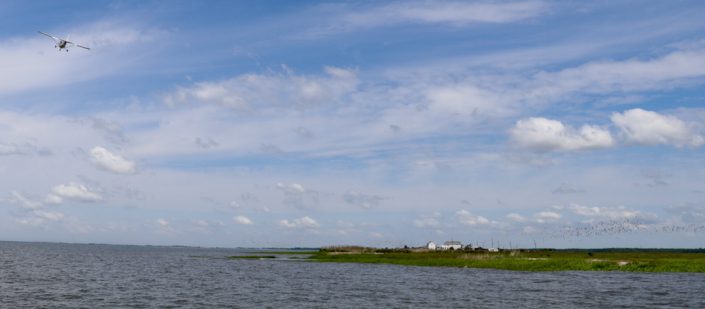
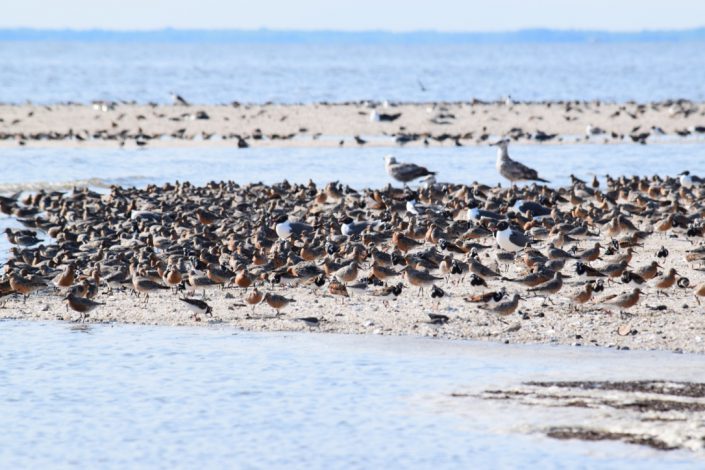
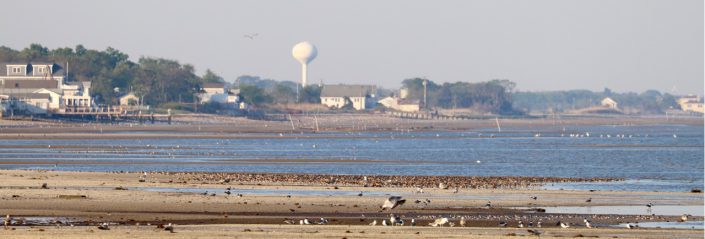
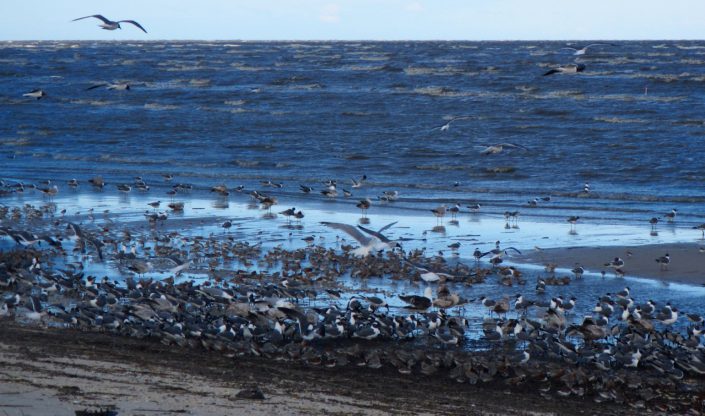
This photo of about 4000 red knots and turnstones was taken at low tide in an area the federal and state agencies have declared as not useful to the birds, about 300 meters from the beach. It is also the area now be filled by the sprawling oyster aquaculture. Looking close you can see the first of the racks in the background on a lease owned by family of staff of Rutgers Extension, the primary advocates of the expansion. – Dr. Larry Niles
There are ways to expand aquaculture without destroying shorebird habitat. This is not one.
Dr. Larry Niles has led efforts to protect red knots and horseshoe crabs for over 30 years.
Discover New Jersey’s Hidden Coast – the Delaware Bayshore
by Lindsay McNamara, Communications Manager
Making your plans for Memorial Day Weekend at the Jersey Shore? Discover New Jersey’s “other” coastline, a Hidden Coast, the Delaware Bayshore.
A new episode of our video series “New Jersey’s Hidden Coast” will air every two weeks throughout the summer! Catch a glimpse of the bay, the horseshoe crab at the center of the bay’s system, and the incredible relationship between horseshoe crabs and migratory birds, like the red knot. We will reveal the real value of horseshoe crabs, the challenges to the ecosystem, and the potential for a thriving regional economy along the Bayshore. We will show Hurricane Sandy as a catalyst for decisive action and the work being done to rebuild the area for both people and wildlife.
Over the next several weeks, we will explore the use of “living shorelines” instead of bulkheads and the central importance of marshes to the marine ecosystem. We will discover the on-the-ground, grassroots efforts of the community to build oyster reefs alongside veterans. And we will examine the future of the Bay and the work that needs to be done to preserve our conservation successes thus far.
One of a Series of Updates on the 20th Year of the Delaware Bay Shorebird Project
by Dr. Larry Niles, LJ Niles Associates LLC
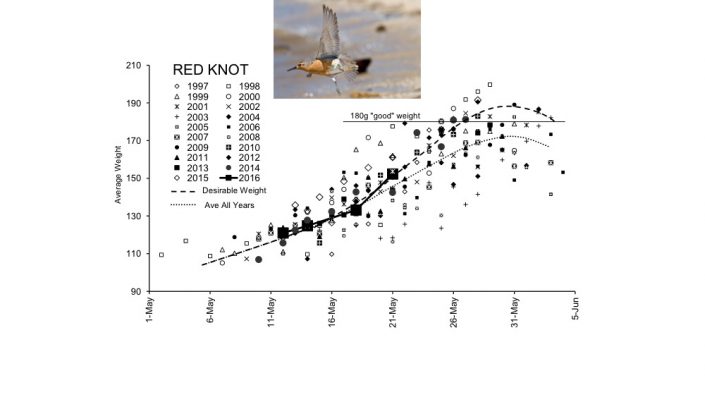
In spite of the very spotty horseshoe crab spawn, the shorebirds on Delaware Bay seem to be gaining weight on schedule. Below you will find a graph composed of the average weights of all the red knots by our team for the last 20 years. The curve is the result of combining all the data we collected and shows the sweet spot for most knots. As they arrive, they take time to gain weight but after about 5 days they start gaining weight rapidly. After the 26th or so, birds start reaching the critical weights necessary to safely reach the Arctic breeding grounds. One can see the curve deep at the end of the month because fat birds fly off leaving the less fat behind. In general, weights above the line are good, below the line not good. The large squares on the graph are the average weight of this year. So far, so good.
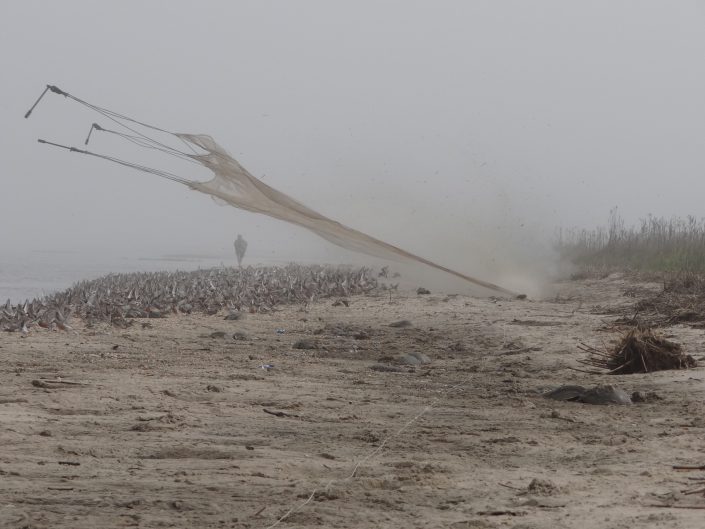
Average Red knot weights from catches made in 1997 to 2016. The most recent are the big squares. So far average weights are following normal pattern of weight gain.Cannon net firing over red knots on Delaware Bay
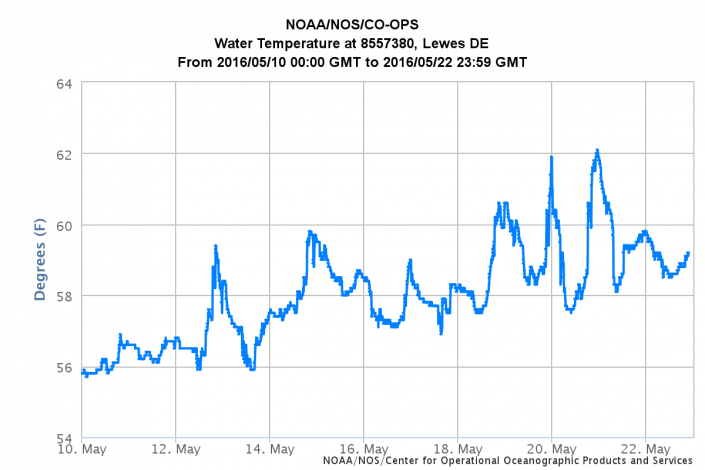
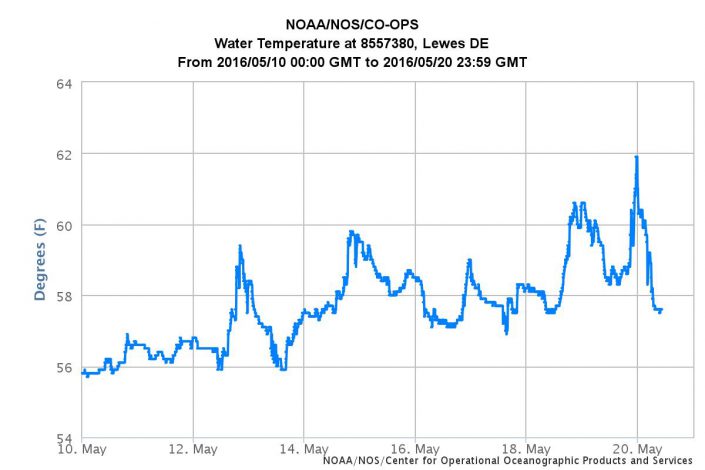
This is a bit of a surprise for the team. The weather here on Delaware Bay is wet and cold. The water temperature struggles to lift above 59 degrees, the temperature necessary for a crab to spawn on Delaware Bay. So far, the temperature has been below 59 degrees more than above. We had good spawns in the last few days, but only in key places.
Water temperature at the mouth of Delaware Bay.
A key place for horseshoe crab spawn happens to be the mouths of small creeks. The New Jersey side of Delaware Bay is blessed with many small intertidal creeks, most draining only marsh or small inland watersheds. Some of these creeks have names, Goshen Creek, West Creek, Nantuxent Creek, but many do not. Almost all have shoals at their mouth with the bay because bay currents, tidal flow and wind driven waves act against each other to settle sand coming from adjacent beaches or from inside the creek drainage. Much of the sand lost from our restored beaches settles into these shoals. For horseshoe crabs, these shoals are sweet places.
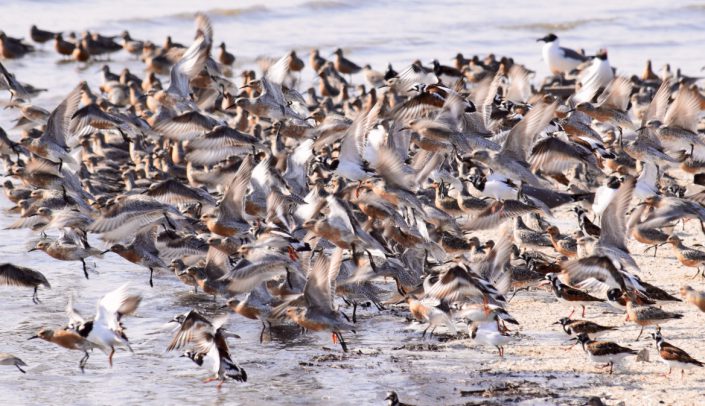
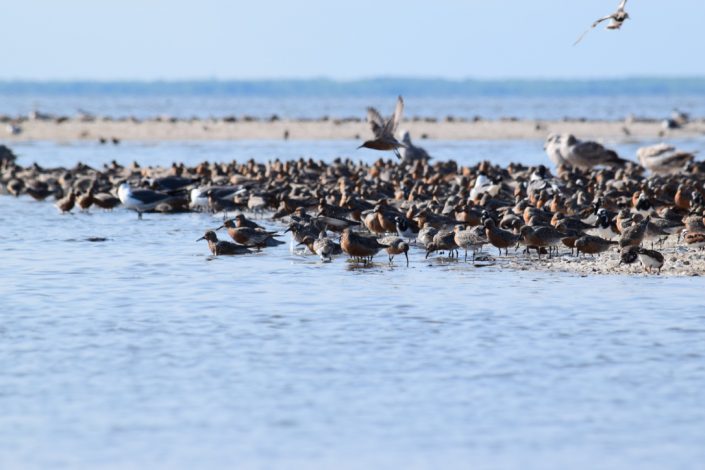
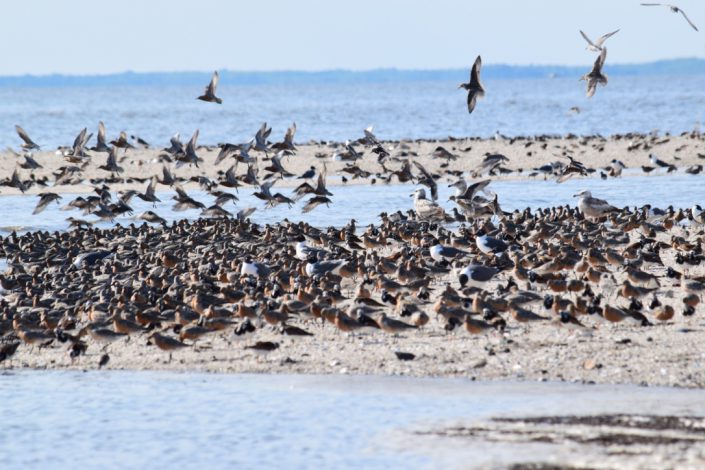
A sandy shoal at the mouth of the nameless creek between Reeds and Cooks Beach. At the time of this picture, over 3,000 knots and 1,000 ruddy turnstones were using the shoal and the inner sandy beach behind the shoal. Photo by Stephanie Feigin.Red Knots in flight on Cooks Shoal. Photo by Stephanie Feigin.Red Knots on Cooks Shoal. Photo by Stephanie Feigin.Red Knots on Cooks Shoal. Photo by Stephanie Feigin.
Usually, the shoals lie just under the high tide line and are composed of large grain sand, the optimal conditions for a good crab spawn. However, the most important characteristic and key to this unusually cold May, is the warming water flowing out from the marsh drainages. On a flooding tide, colder warmer flows into the vast marshes of the Delaware Bay. This warms the water. On an ebbing tide, it flows out the creek and over the shoals, making them slightly warmer and more conducive to inducing crabs to spawn. Even on these cold days, they literally climb over themselves to breed on the shoals. The shoals also protect the inner mouths of the creeks thus making the sandy shores at the mouth of the creek a crab spawning heaven.
Breeding horseshoe crabs. Photo by Jan van der Kam.
However, as it seems usual with this blog, there is a growing concern. Right now, most of the red knot population on the bay is feeding on these shoals along with thousands of other species, but only half have arrived from southern wintering areas. We now have about 12,000 red knots on the bay and in a day or two we should find another 12,000 falling from the sky. Will there be enough eggs? Will the water temperature finally reach normal levels? These are the important question for the next few days.
New, weekly updates from New Jersey’s beach nesting bird project team
by Todd Pover, Beach Nesting Bird Project Manager
American oystercatcher Chick
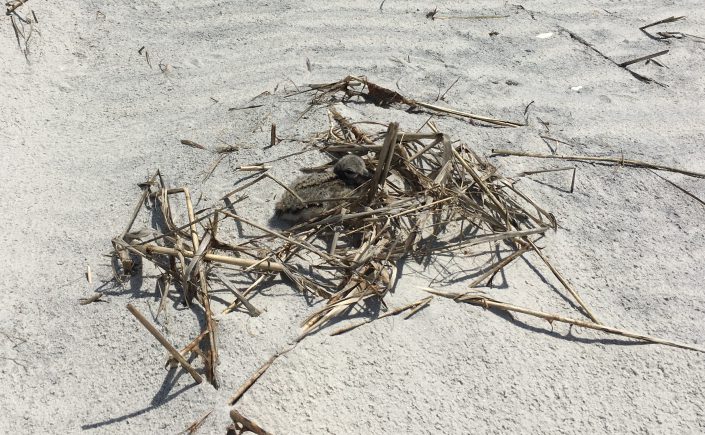
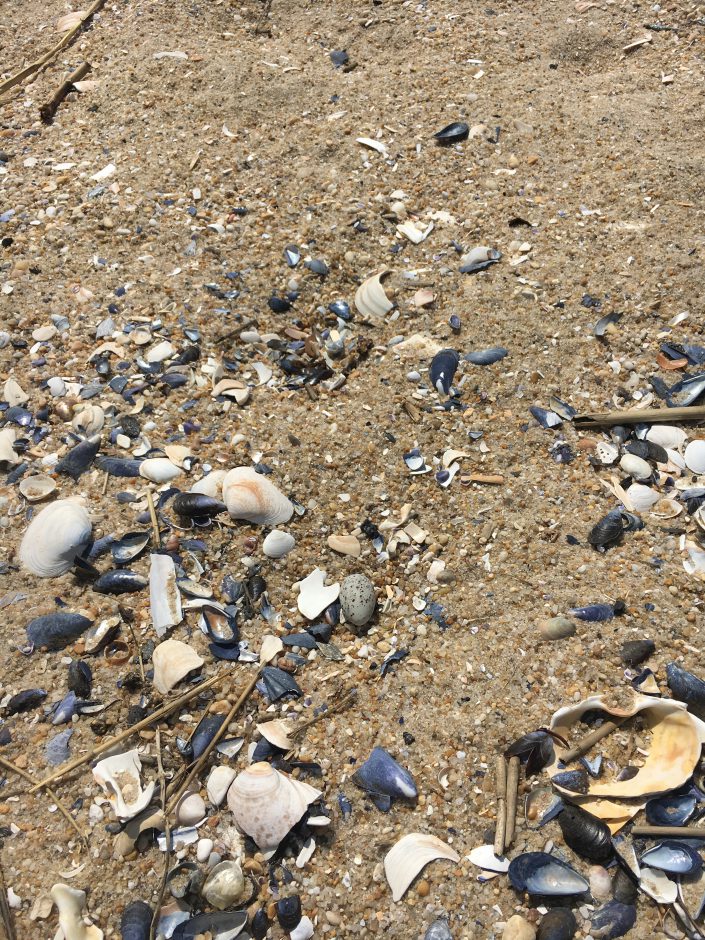
It has been a busy week on the beach nesting bird project! We had our first least tern nests of the season, as the brief spell of warmer weather (finally) made for a burst of breeding activity. The first American oystercatcher nests hatched, so we have chicks on the beach now, as well.
Least Tern Nest
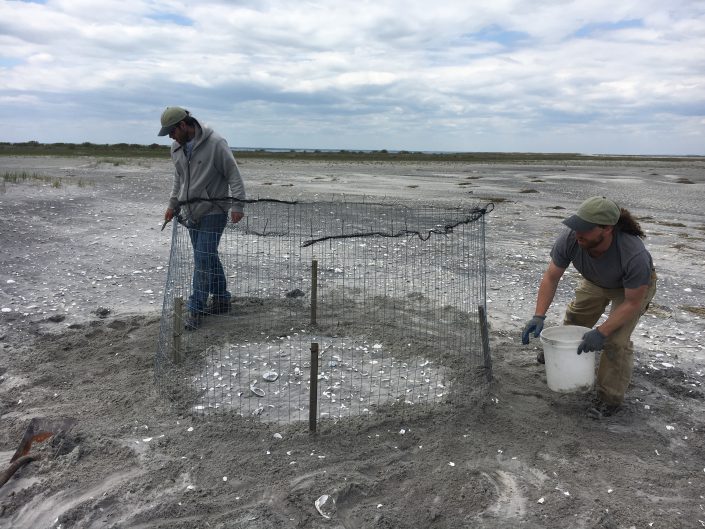
And there was a big spike in new piping plover nests all along the coast, so we were busy erecting “predator exclosures” to protect the eggs from predators, such as crows, cats, gulls, and foxes. While they are not effective or viable to use on every nest, these wire cage structures are one of our best management techniques to increase hatch success by deterring predators.
Piping Plover Exclosure
This week we will be even busier, as we make a mad scramble to protect the nests and colonies before the crowds of beachgoers arrive for the Memorial Day weekend!
One of a Series of Updates on the 20th Year of the Delaware Bay Shorebird Project
By: Dr. Larry Niles, LJ Niles Associates LLC
Shorebirds and no horseshoe crabs along the Bay.
It’s well known that the Delaware Bay shorebird stopover depends on horseshoe crabs, but few know that Delaware Bay is a near perfect horseshoe crab habitat.
There are many places on the eastern seaboard where horseshoe crabs breed. Most are too small to provide sustenance for energy-starved shorebirds. Places like Cape Romain Refuge in South Carolina have enough horseshoe crabs so that one breeding female unearths eggs of another and thus lays out a tidy meal for shorebirds. But the areas are small and at this time unimportant to the population of shorebirds. Most of the others are too small to have eggs reach the surface. Its only in Delaware Bay where crab numbers reach into the millions and spawn in such great numbers that they spread like a carpet over nearly all beaches from Gandy’s Beach to Villas, approximately 20 miles of spawning habitat. The number of eggs and ultimately hatched young reach staggering numbers.
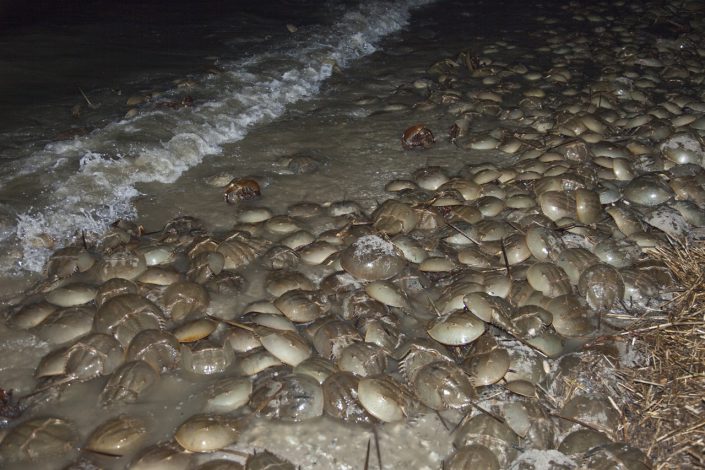
Horseshoe crabs breeding at night.
The huge population of horseshoe crabs on the bay is no accident. The bay almost seems built to suit the crabs. Crabs need beaches with large and deep sand flats, allowing just enough water to sufficiently oxygenate the eggs without drowning them. They need the sea floor to gently rise into breeding beaches, allowing easy access. While breeding, crabs have to eat small bivalves, which they find in abundance in the bay’s extensive intertidal and subtidal flats.
Horseshoe crab eggs.
The most important aspect of the bay is its quickly warming waters in the spring. On Delaware Bay, horseshoe crabs don’t breed until waters reach 59 degrees. You won’t see this temperature on the Atlantic Coast until June. Not so on Delaware Bay! Although the bay has deeper water, mostly in sloughs that snake under the surface out to its mouth at Cape May, most of the water is relatively shallow — usually less than 18 feet. That may sound deep, but keep in mind the Chesapeake has 100 feet water for most of its length and deeper water throughout. The shallow water of Delaware Bay allows it to heat up soon after the air temperature rises.
Unfortunately, it also cools down quickly and because of this the crab spawn has stopped. The bay’s water temperature went up dramatically in late March and April, so much so that we worried it might reach the critical 59 degree threshold in April long before the birds arrived in May. But then the warm weather stopped and the bay temperature dipped than rose, several times in fact. By early May, it had gotten just above the threshold, heating up to about 61 degrees at the Cape Henlopen marine buoy. We hoped for the best. Crabs started to breed in good numbers on a few beaches, like Reeds Beach, but were thin elsewhere. We had about 20,000 shorebird relying on the spawn and the eggs that were brought to the surface.
Than the bay cooled down again. A nasty western wind and cold front enveloped our area over the weekend and the cool weather followed. By Monday, the temperature went down again and the crab spawn stopped. This is bad.
When the spawn stopped the birds hovered up the remaining eggs in a few days. Then they started wandering to find eggs in odd places, under houses, along bulkheads. Some even went to areas like the oyster aquaculture racks to find eggs to the delight of the people trying to expand aquaculture. But what they saw was desperation.
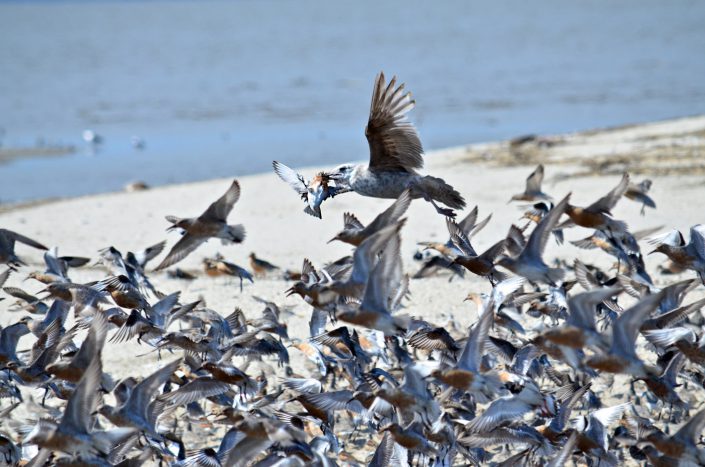
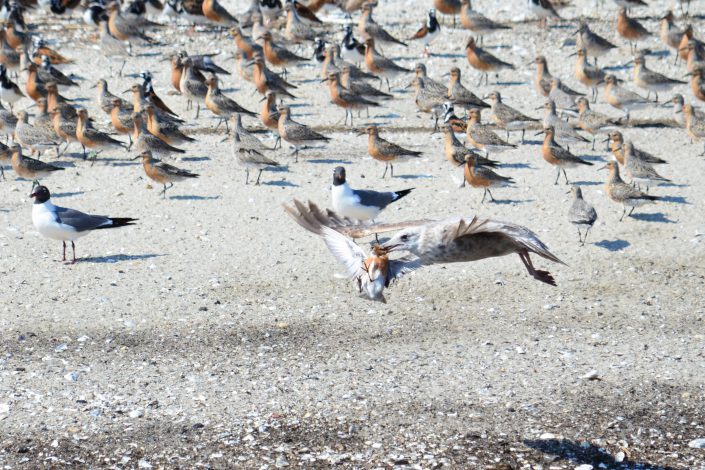
Herring gull hunting red knot, Cooks Beach, New Jersey. Photo by Jack Mace.
Worse the Black Back and Herring Gull that feed on eggs and overturned crabs couldn’t find eggs and started eating shorebirds. By the end of Thursday (May 19) we found 8 dead red knots. These gulls can swallow small sanderling and semipalmated sandpipers like gum drops, so we really don’t know how many shorebirds died.
Herring gull hunting red knot, Cooks Beach, New Jersey. Photo by Jack Mace.
Relief might be in sight though. Thursday, Friday and today will be warmer. The bay’s temperature is back up over 60 degrees. Thursday night we had a fairly good spawn. Hopefully we will be back in business soon.
A Series of Updates on Year 20 of the Delaware Bay Shorebird Project
By: Dr. Larry Niles, LJ Niles Associates LLC
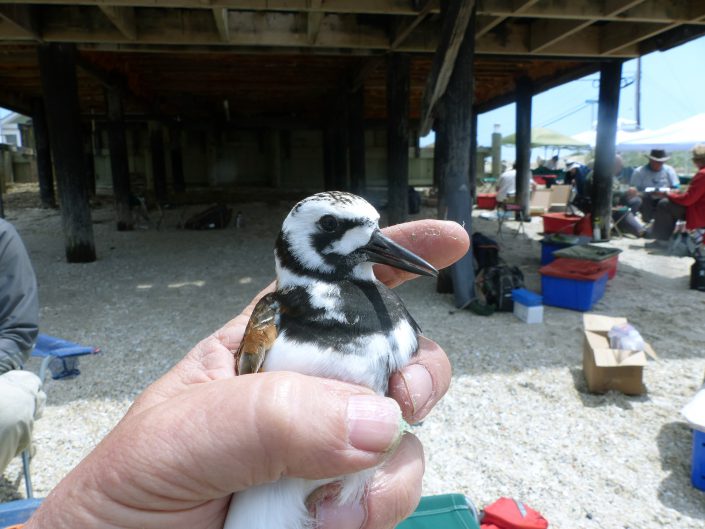
Our team trapped over 500 shorebirds over the weekend including several hundred red knots in two catches on May 12th and 14th! Most of the caught birds, knots, ruddy turnstones and sanderlings arrived in good condition, which is always a relief at this early stage in the season. Ruddy turnstones returned in better-than-average condition, weighing in at 5 grams higher than normal arrival weights.
Team banding ruddy turnstones on Reeds Beach.
The condition on arrival is an important focus of the project. In some years, knots struggled to get to the bay, coming in at average weights of 105 grams, 15 grams lighter than this year. One poor soul practically fell onto the beach with only 84 grams of weight, dangerously burning muscle to get here.
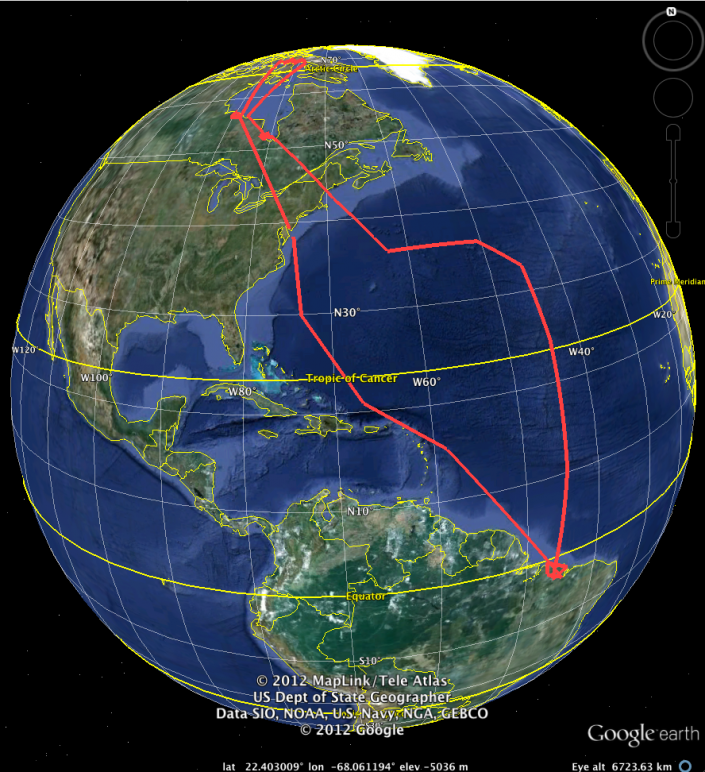
To really understand it best you must put yourself in the birds’ shoes (in a matter of speaking). We can do this because we have been attaching small tracking devices called geolocators on knots and turnstones for the last 5 years. Geolocators must be recovered to download the data, and we did this with a knot banded with the inscribed flag TVV in 2015. The map of that bird’s heroic journey can be seen below.
Delaware Bay, New Jersey, USA
Follow TVV’S path from Delaware Bay to its Arctic breeding area, then down to its Chilean wintering area, then back to Delaware Bay. It spent less than one month in the Arctic but over 6 months in its Tierra Del Fuego winter quarters. The rest of the time was spent flying or resting between flights. It’s flight from Southern Brazil to Delaware Bay was truly awe inspiring!
Imagine you are TVV and about to fly from balmy Brazil to Delaware Bay, 5,000 miles away. Most birds will leave near nightfall, when the weather is settled and usually when there tends to be a favorable wind. Once aloft you have no idea of the conditions you will face for the next 6 days. Some birds have an easy time of it, some get caught in opposing winds, others get blown off course and must struggle to return. This is the reason for the varying weights on arrival.
Red knot photo by Al Janerich.
So what did the birds find when they arrived this year? So far, the horseshoe crab spawn has gone well. It started early in the month, so that by the time birds like TVV arrived, they found a nice concentration of eggs for the taking on Delaware Bay beaches. At first, the birds poured into the bay. Last Thursday May 10th, we had about 1,000 knots on the New Jersey side of the bay. By Saturday, the number has grown to 8,000 knots – and our two catches proved they were gaining weight at a good clip.
All that changed on Sunday when a complicated cold front hit the bayshore. For two days we have had strong winds from the west, creating breaking waves on much of the New Jersey bayshore. The crab stopped spawning in most places. The winds blow as I write this blog and is certainly holding up birds from arriving, some may have stopped migrating others are fighting this merciless 30 mph wind.
Early morning on Pierce’s Point in a 30 knot wind from the west, blowing directly on shore and stopping all horseshoe crab breeding.
In our next post, learn how the winds affected the birds over the last few days.
We begin the 20th year of the Delaware Bay Shorebird Project this year with many of the same team members that helped start the project in 1997. That’s 20 years of studying one of the most intellectually challenging and endlessly fascinating species of wildlife in the world. Few have had the good fortune to do so.
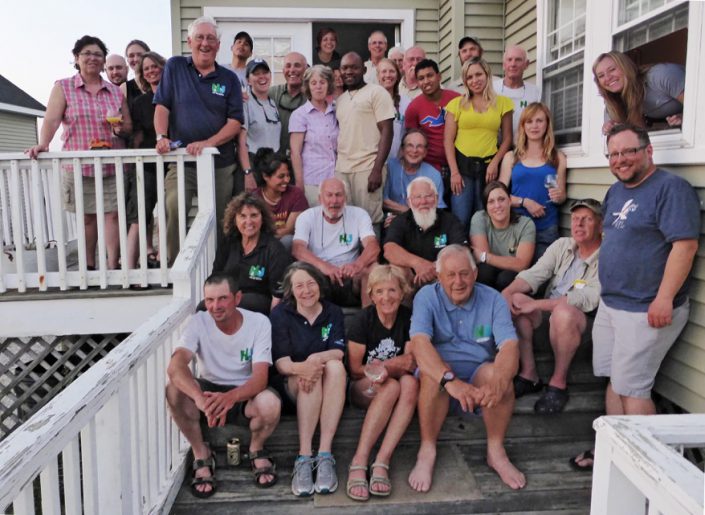
The 2015 Delaware Bay Shorebird Project Team
Unfortunately, we do not start this year with the same shorebird population. In the last twenty years, the Delaware Bay stopover fell precipitously from its once lofty perch as one of the top three stopovers in the world. Where once we counted over 1.5 million shorebirds, we now see less than 400,000, a sweet number but far less than the bay’s heyday. Red knot numbers have crashed from over 90,000 to a low of only 13,000. Ruddy Turnstones, the virtual working man of shorebirds, fell from 135,000 to just over 16,000. In this time, many intrepid shorebirds came to the bay to find succor provided by a once endless bounty of horseshoe crab eggs only to find empty beaches and no way back to their Arctic home.
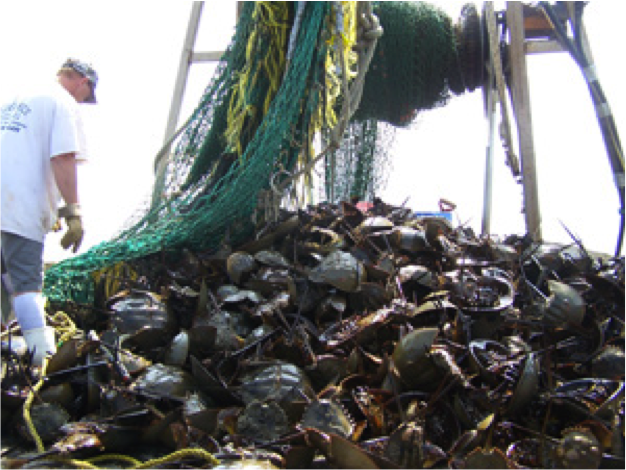
Much of this was caused by short-sighted decisions made by the commercial fishing industry in the 1990’s, which decided to spend this bay’s natural (and publicly owned) wealth of horseshoe crabs. They needed bait and relentlessly pursued the crabs. Horseshoe crab populations fell to a quarter of their historic number and may have been driven to extinction without the work of the bay’s conservationists who fought bravely and with determination to stop them. Atlantic sturgeon, weakfish, herring, eels, and many of the bay’s once abundant fisheries weren’t so lucky.
Now a new industry, the oyster aquaculture industry, wants to consume another public natural resource, the bay’s intertidal flats. Cultivating oysters on metal racks placed on the bay’s extensive tidal flats is cheap and easy when you can use public trust lands. The expansion got a vital assist from the state agencies who side lined crucial environmental reviews to determine impact to species like the red knot, and required no public hearing, comment period or the involvement of any shorebird experts. This could have been corrected when the red knot was federally listed.
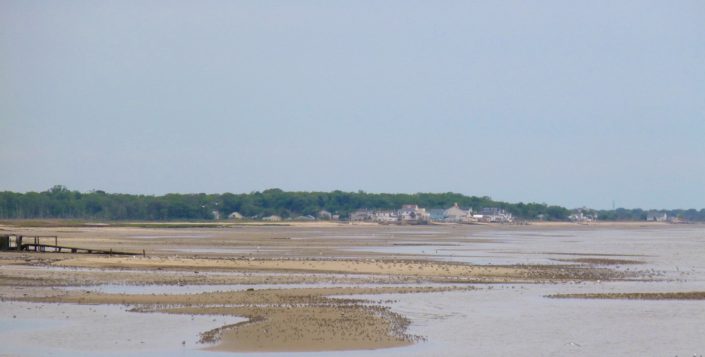
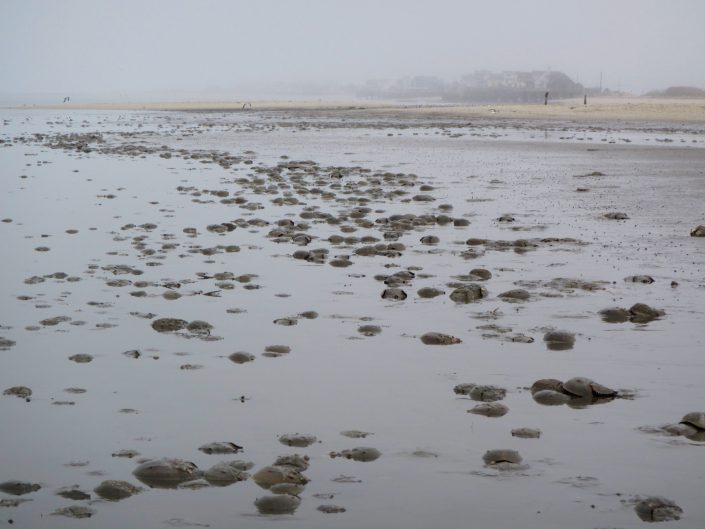
Thousands of red knots, ruddy turnstones, sanderling, semipalmated sandpipers use the inter tidal flat near Kimble’s Beach, Delaware Bay. They forage on eggs washed out from the beaches and spread across the flat.
Unfortunately, the red knot’s federal listing has not helped in this controversial expansion of aquaculture. Instead, it proposed growers should be compensated for economic losses caused by the listing, and allowed the controversial expansion despite the obvious impacts to birds and crabs. Such decisions speak to Desperate Environmentalism, a term coined by Yale School of Forestry’s Joshua Galperin, describing the increasingly fraught position of conservationists who feel they must play ball with politically powerful industries or lose all. This desperate conservation could have been avoided if growers and conservationists worked together to expand aquaculture without significant impacts — because after all everybody loves oysters!
Horseshoe crabs rely on the intertidal flats to forage for marine invertebrate like small clams.
But this dark cloud cannot diminish the progress made by our team and groups like American Littoral Society and Conserve Wildlife Foundation of New Jersey. Just one example is the successful effort to restore horseshoe habitat on 2.7 miles of Delaware Bay horseshoe crab breeding habitat. The effort, funded by National Fish and Wildlife Foundation and the U.S. Fish and Wildlife Service, overcame the damage caused by Hurricane Sandy and prevented what could have been another shorebird disaster. This work has blossomed over the last four years into a network of activities that provides new hope for a long term protection of the bay. This conservation is not desperate but inspirational for hundreds biologists, land managers and volunteers.
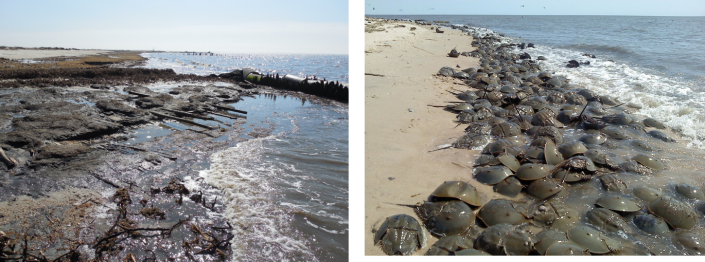
Moore’s Beach before and after restoration by the American Littoral Society and Conserve Wildlife Foundation of New Jersey.
So our 20th year is much like our first year, a group of conservation-minded shorebird scientists and volunteers gathering to help these poor birds find a way to make it home. As with most conservation stories in this time, it’s a David and Goliath story that hopefully has the same result.
Red Knot photo by Al Janerich.
Dr. Larry Niles has led efforts to protect red knots and horseshoe crabs for over 30 years.