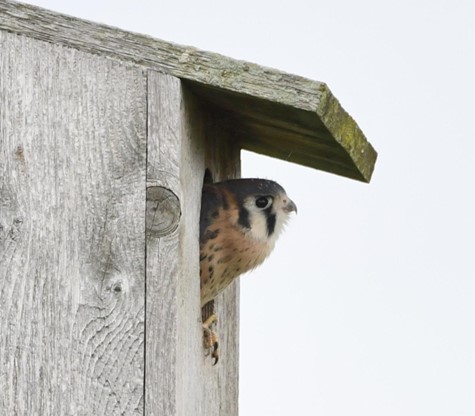
As a volunteer for Conserve Wildlife Foundation of NJ and NJ’s Wildlife Conservation Corps I monitor bald eagle, osprey, and kestrel nests for the state. Kestrel monitoring is new to me this year. They are North America’s smallest falcon. I enjoy watching them hunt, hovering over the grasslands and open fields. Monitors watch and record milestones of the nesting season. Fledge Day is the end of our season and what we hope to witness. Friday – I knew the chicks would be fledging soon, and hoped I had not missed it. I sat in my vehicle and watched for just over 3 hours! I could hear noise from inside the box as wings were being flapped and exercised. For the longest time, I thought one had already fledged since I was just seeing one perched in the box opening.
By: Susan Harrison, NJ Bald Eagle Project Volunteer
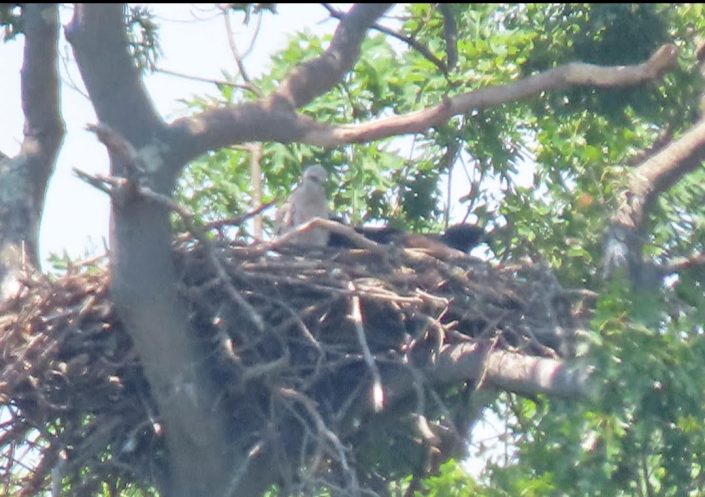
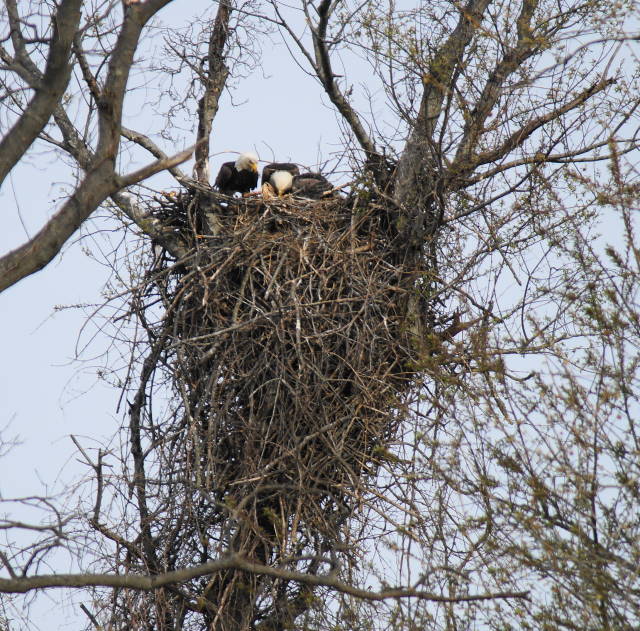
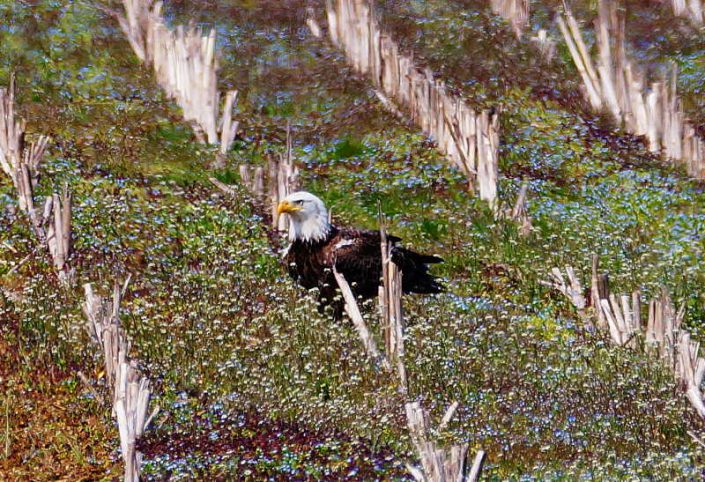
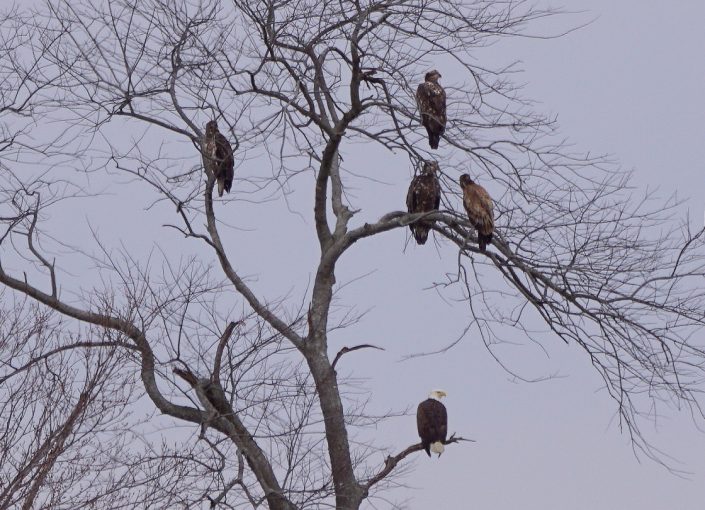
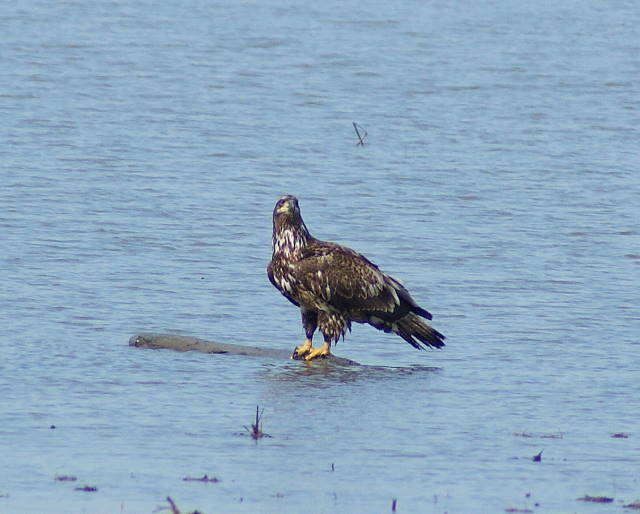
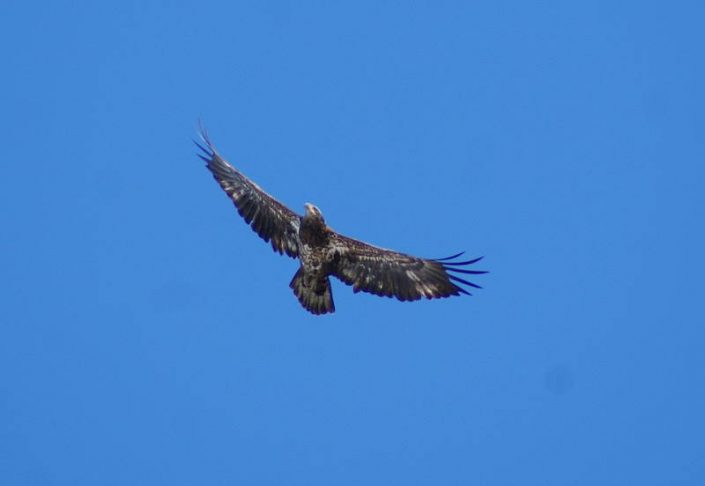
I am a volunteer eagle nest monitor for New Jersey’s Bald Eagle Project. A new nest was discovered in central New Jersey this year by birder Chris Brown. Larissa Smith, the volunteer coordinator for the Bald Eagle Project and Conserve Wildlife Foundation asked me to monitor this nest. I did not know at the beginning of nesting season, what an interesting story would unfold! In mid-April, by watching the behavior of the adult eagles, I could see that eggs had hatched and that the adults were feeding eaglets that were still too small to see. At the beginning of May I caught glimpses of the head of one eaglet peeking up over the top of the nest rails. Too cute! By the end of May, I could see the head of a second chick in the nest. But this chick looked very different! I soon discovered this chick looked different because it was not a Bald Eagle at all! It was a red-tailed hawk chick in the eagles’ nest! I could not believe what I was seeing! I took lots of photos to document this situation, a first for New Jersey! I consulted with two respected birders in the state, Chris Brown, who is a county eBird reviewer and Tim Brown, to help verify and document my observations for CWF and the NJ DEP/ENSP. We observed the adult eagles feeding both the red-tailed hawk chick and the bald eagle chick. It was one big happy family, with both chicks getting along with each other and with the adults quite well.
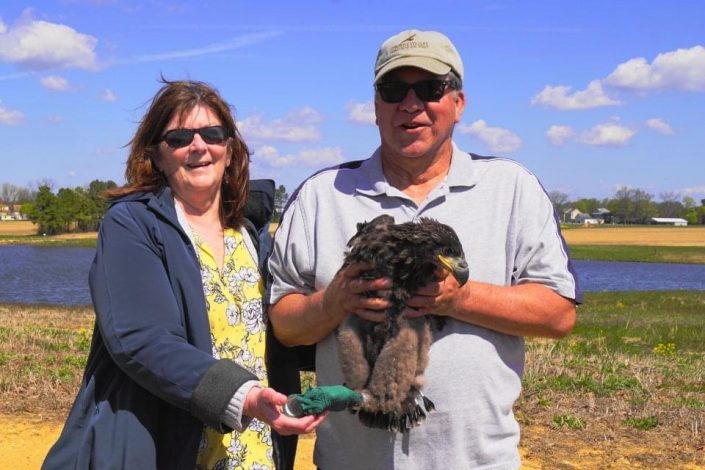
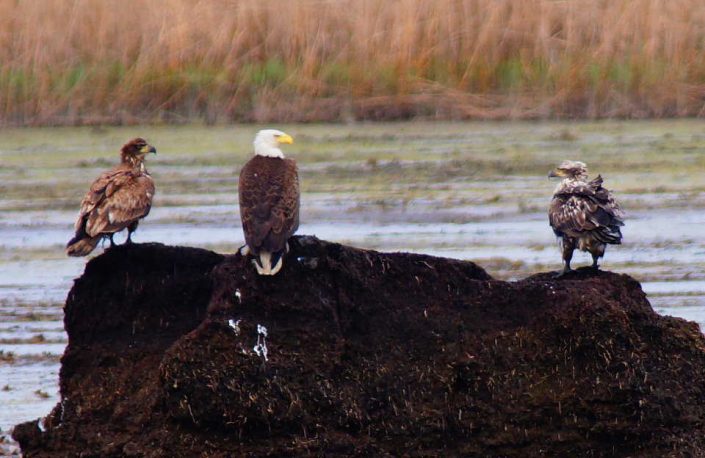
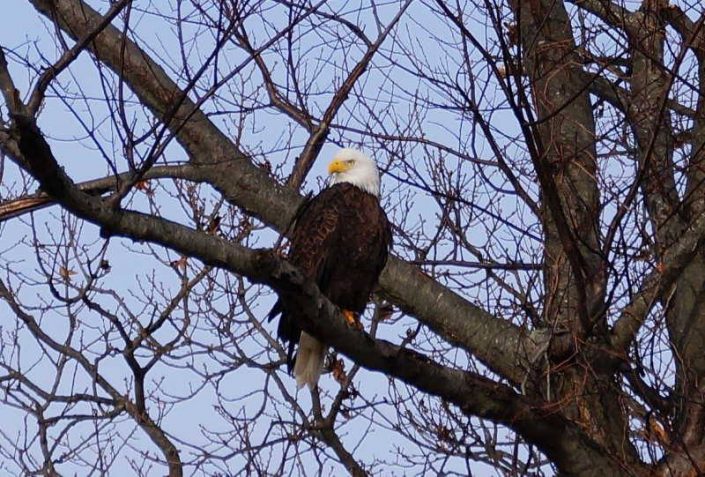
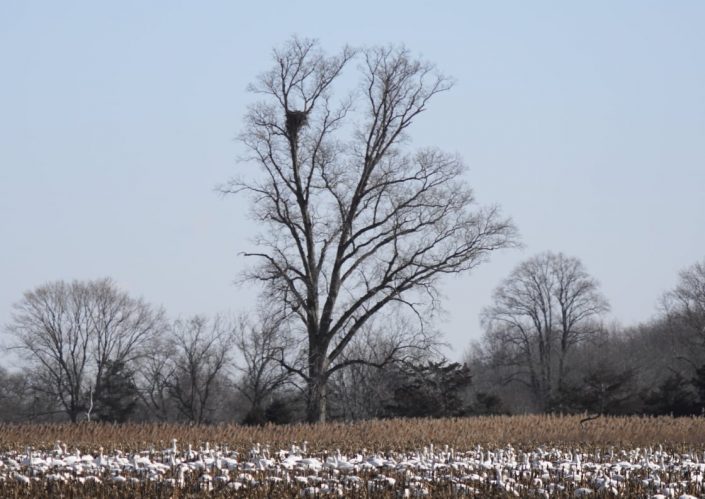
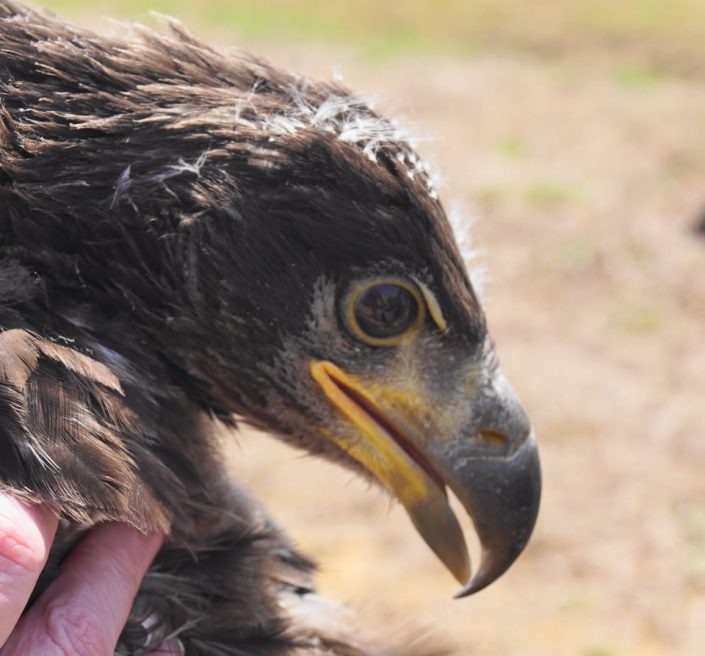
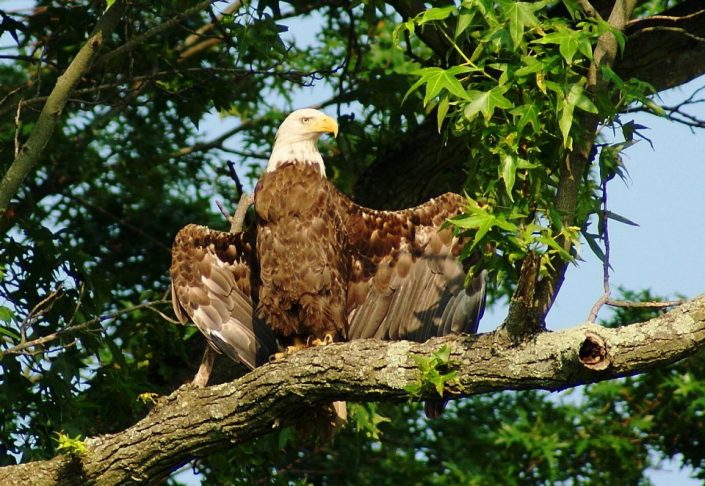
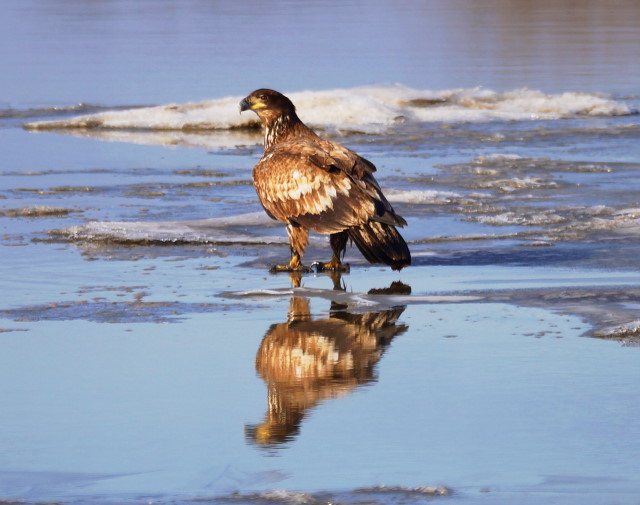
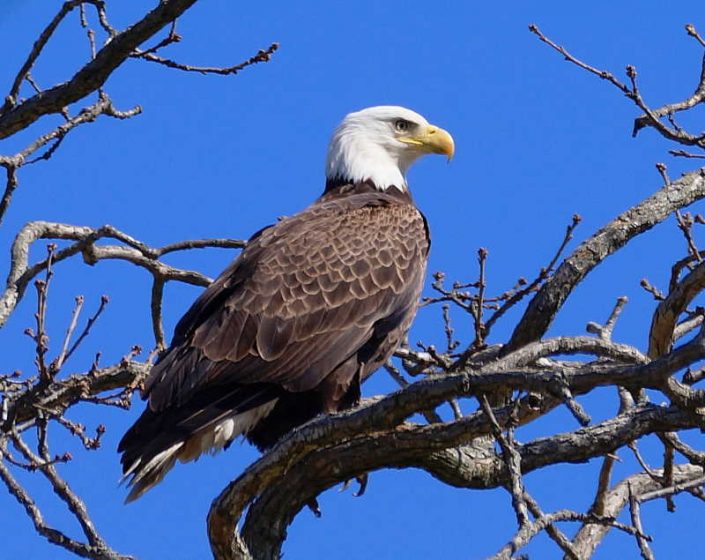
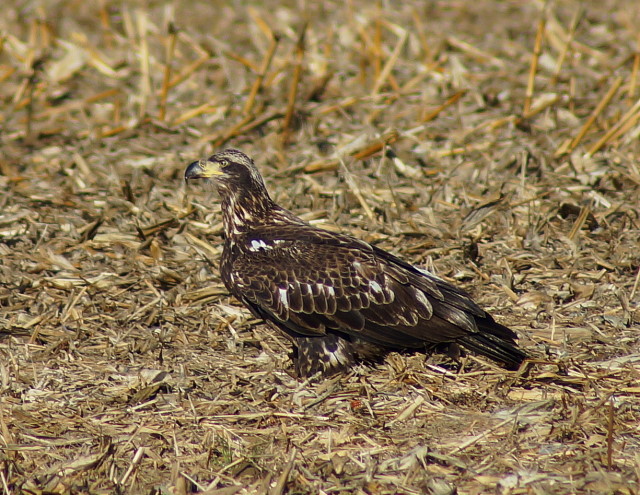
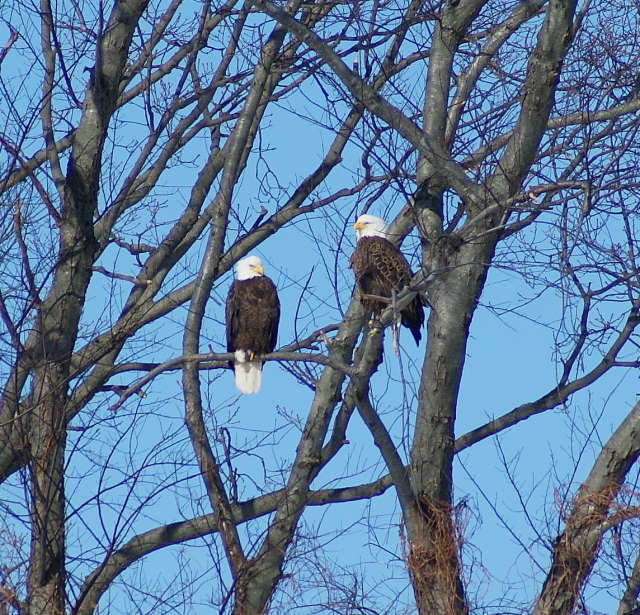
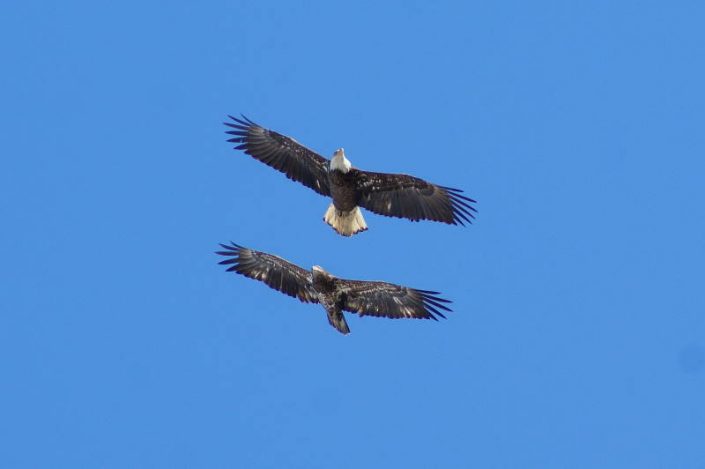
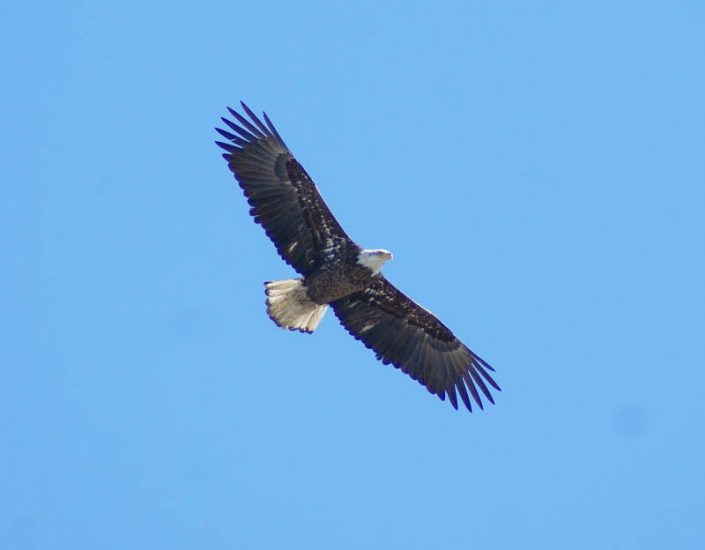
New Jersey Eagle Project nest monitors Cathy and Jeff White have been volunteering with the program since 2009. The 2022 eagle nesting season was officially their last as they will be “retiring.” When they started with the bald eagle project, they had two eagle nests that they monitored in Southern New Jersey. As of 2022 they were monitoring 25 eagle nests. That is a lot of nests to keep straight! During their 14 years of observing nesting behavior to determine egg laying, hatching, and fledging, a total of 244 eagle chicks fledged from their nests. The Whites have witnessed the eagle population grow over the years and have played a large role in the success of the eagles, including many rescues of both chicks and adults. Their dedication to the eagles through both the good and bad outcomes, is commendable and they are irreplaceable.
They have done so much for the eagle project and will be greatly missed. Thank you!
Photos taken by the Whites throughout their years of monitoring eagle nests.
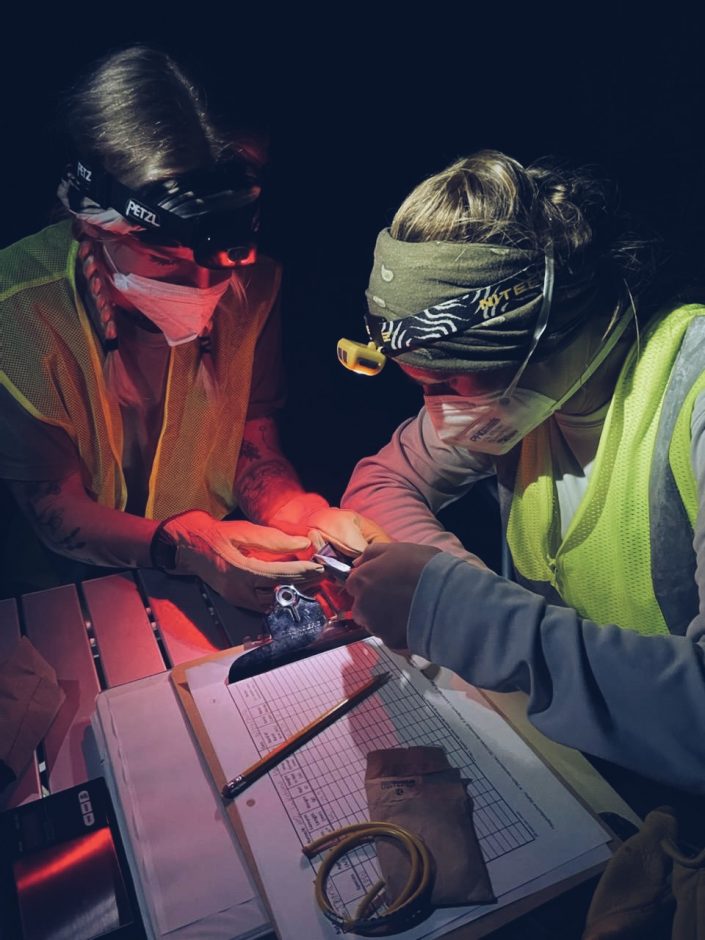
Biologists Leah Wells and Meaghan Lyon banding a Big Brown Bat
Since 2018, CWF has partnered with the USFWS New Jersey Field Office in completing summer mist netting surveys for bats in the Pinelands. The goal of these surveys is to capture the federally threatened Northern long-eared bat and track these bats to maternity roosts.
Hello! I would like to introduce myself as a new member of the Conserve Wildlife Foundation of New Jersey team. My name is Rachel McGovern, and I am joining CWF as the Education Director.
I am a lifelong NJ resident and have always been passionate about environmental issues in the state. After completing my undergraduate degree in Human Ecology at Rutgers University, I spent a year in the Americorps New Jersey Watershed Ambassador Program (NJWAP) where I first taught environmental education lessons. Since then, I have had wonderful experiences teaching at nature-based organizations across the state.
Most recently, I was the Program Director at Flat Rock Brook Nature Center in Englewood, NJ. This center is located on a 150-acre forested preserve surrounded by dense development just minutes from the George Washington Bridge. At Flat Rock Brook, I led the education team in developing and delivering school programming, community events, and summer camp. I was also fortunate to take on the care of five non-releasable raptors—a job that deepened my admiration for all raptors in NJ (particularly falcons).
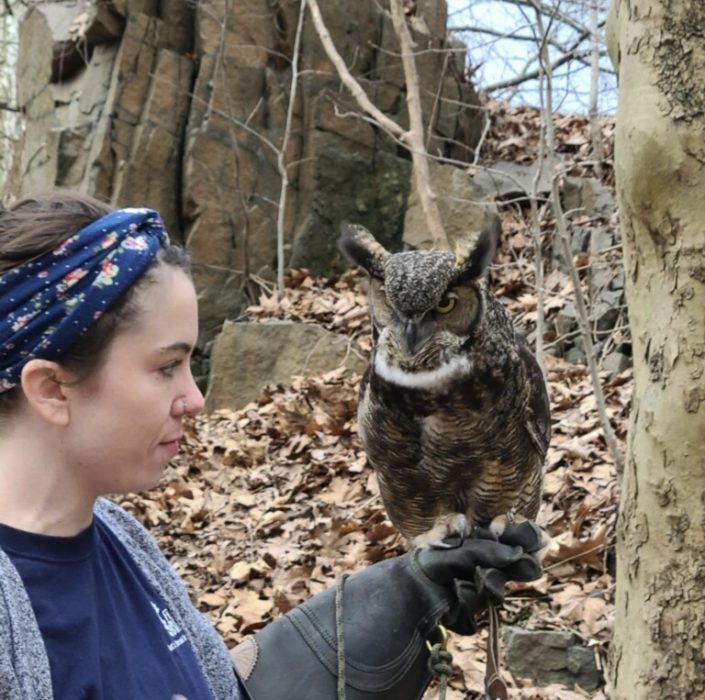
Josephine is a great-horned owl. She is an imprint, meaning she was raised by humans and now “identifies” with humans.
An empty osprey nest on a sandbar located on Barnegat Bay.
In the coming weeks CWF staff, NJDEP Biologists, and a handful of dedicated volunteers will descend onto the coastal saltmarshes of New Jersey to conduct a census of nesting ospreys. The last census was conducted in 2017 when 668 nesting pairs was recorded. They will survey remote areas of back bays by boat. Nests are surveyed in a variety of methods, with ladders being the traditional method, which allow for closer inspection of nests and banding of young for future tracking. Other nests are surveyed from a distance using optics or cameras with telephoto lenses, a mirror, smartphone or GoPro on an extension pole and a sUAS (when operated by a FAA licensed unmanned pilot). The goal is to recorded the total number of nesting pairs throughout the State.
Kathy Clark carefully places a young falcon in a reusable shopping bag.
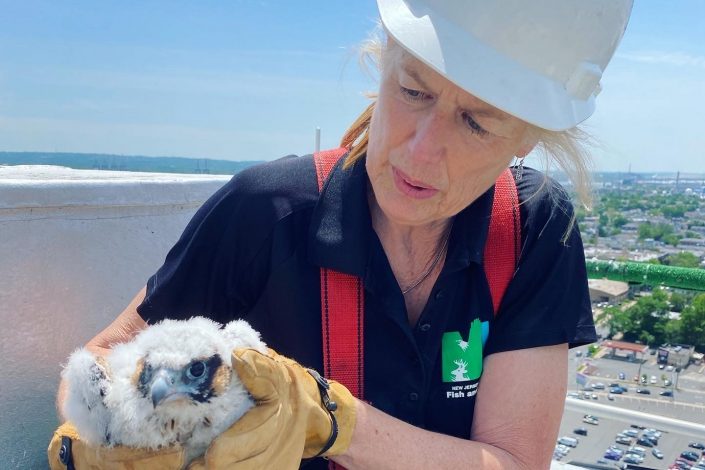
On May 23, NJDEP Fish & Wildlife Supervisory Zoologist Kathy Clark and myself visited the Union County Courthouse in Elizabeth, NJ to band the three eyases that were produced by the nesting pair of peregrine falcons. We were joined by Union County staff and guests, who assisted with the banding. The nest is located on the roof of the building. As soon as the hatch made a sound, the adults took off and started to defend their nest and flightless young. As we enter their turf, we are dive bombed by the adults — it is clear that the female has become more aggressive — as she flies very close to us on the roof in sweeping dive bomb attacks. As Kathy goes to the nest to grab each young who are placed in reusable shopping bags, I use her trusty feather duster to ward off the adult female. All who enter the roof wear fall arrest harnesses and hard hats. Kathy and I know that the hard hats are not just worn for fall protection, but also from attacks from above. Both of us received bumps from the adult female to our helmets!
Since 2003 Conserve Wildlife Foundation has been coordinating the Delaware Bay Shorebird Stewards. Shorebird Stewards are posted at the beaches with restricted access during the shorebird season. This is done so that the shorebirds can feed undisturbed on horseshoe crab eggs. The beach restrictions are from May 7th to June 7th. The Delaware Bay is an important stopover for these birds on their way north to their breeding grounds. Stewards educate the public about the need for the beach restrictions. Once most people learn about the connection between the horseshoe crabs and shorebirds, they are more than happy to accept the restrictions. This season there were thirty-one stewards on 10 beaches in Cape May and Cumberland Counties. They are dedicated and on the beaches despite the weather, bugs and sometimes lack of shorebirds. Stewards are on beaches through Monday, so stop by and say “hello”.
Thank you Shorebird Stewards
Shorebirds on Thompson’s Beach, photo by: Matt Tribulski
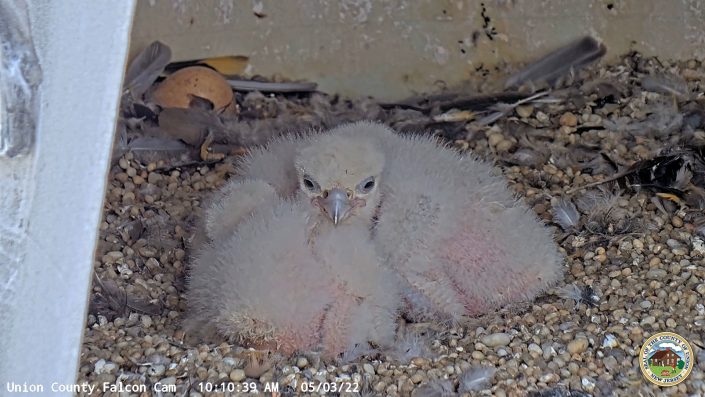
Another season of growth and new life is here! As many species are beginning their annual life cycle to reproduce, some peregrine falcon pairs already have young. The eyases (young falcons) at the Union County Falcon Cam are a prime example. They are now a little over a week old and have been examined and treated for a pigeon borne disease, called trichomoniasis, which adult falcons can transfer to their young. If young falcons would get trich., then they could perish. Kathy Clark, NJDEP Fish & Wildlife Supervisory Zoologist, UC staff and colleague Cathy Malok, w/ The Raptor Trust visited the site to ensure the survival of this brood.
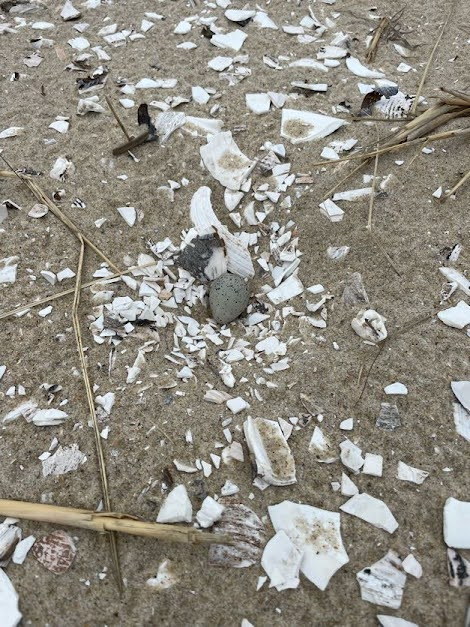
Our infamous Piping Plover pair, Joey and Hamlet, officially have a nest!
Joey (the male), and Hamlet (the female) were seen exhibiting breeding behavior for weeks since arriving back to their nesting grounds. The pair had been favoring a spot recently improved with habitat enhancements that included removing dense American beach grass and adding shell cover.