COVID-19 has changed our lives in virtually every possible way over the last few months. Our relationship to wildlife is no different. This three-part series explores the impacts of the COVID-19 pandemic and shutdown on wildlife in New Jersey and across the world. Read Part 1 here, and check out our podcast on COVID-19 and wildlife.
Wildlife from your Window
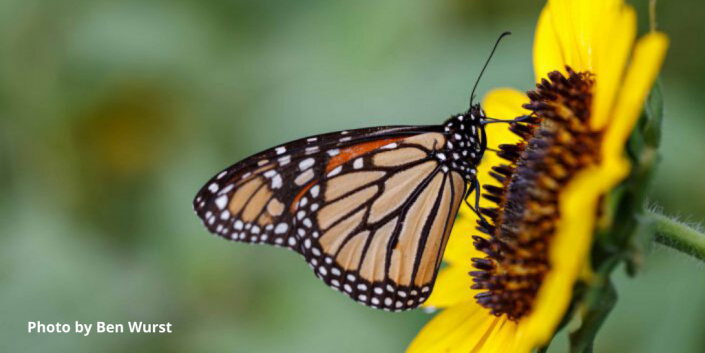
We have received more reports than ever from people seeing wildlife species they hadn’t seen before, and behaviors they had never previously observed, much of it from their own yards. People are tending to gardens more than ever before, and enjoying seeing the attendant pollinators.
by: Dr. Larry Niles of Wildlife Restoration Partnerships. Dr. Niles is working in Delaware Bay on behalf of Conserve Wildlife Foundation. He has helped lead the efforts to protect at-risk shorebirds and horseshoe crabs for over two decades.
A migratory stopover for arctic nesting shorebirds must provide each bird the energy necessary to get to the next stopover or to the ultimate destination, the wintering or breeding area. Delaware Bay stands out among these shorebird refueling stops because it delivers fuel in the form of horseshoe crab eggs giving birds options. Our telemetry has shown that Red knots, the species we best understand, may leave Delaware Bay and go directly to their Arctic breeding areas, or stopover on Hudson Bay. The choice of going straight to the breeding area or stop at another stopover may be critical to understanding the ecological dramas now underway on Delaware Bay.
COVID-19 has changed our lives in virtually every possible way over the last few months. Our relationship to wildlife is no different. This three-part series will explore the impacts of the COVID-19 pandemic and shutdown on wildlife in New Jersey and across the world. Be sure to also check out our podcast on COVID-19 and wildlife.
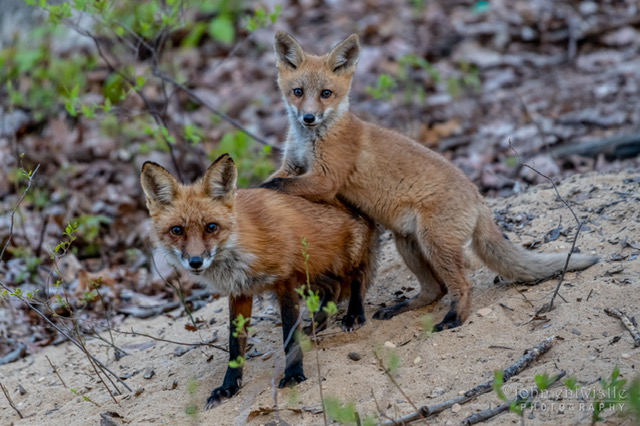
From my car window, I observed as many red foxes in a recent week as I had seen in the previous year combined. And it wasn’t just fox I was seeing more of. Wild turkeys, raccoons, migratory songbirds – I was seeing them all in greater abundance since the COVID-19 pandemic restricted most of us to our homes for nearly all of our waking hours.
When asked to describe the ecological conditions of any one year of our 23 years of work on Delaware Bay, Humphrey Sitters, one of the first biologists to understand the value of Delaware Bay to shorebirds would respond “every year is unprecedented”. And so it seemed until this year.
Get a little wild while being safe at home! Join Conserve Wildlife Foundation and Mercer County Park Commission to get your eyes on eagles – virtually.
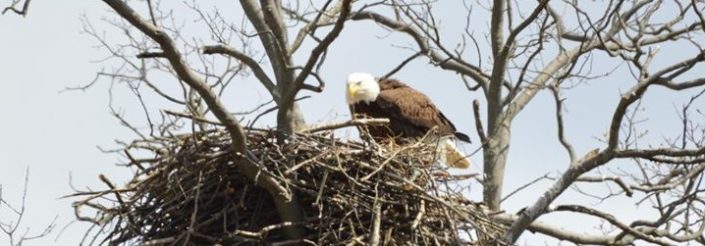
We’re co-hosting hour-long webinars on May 10 and June 7 with Mercer County Park Commission. Each virtual event will feature current footage collected safely from one of the bald eagle nests in the County Park system, along with bald eagle history and interpretation provided by Park naturalists and David Wheeler, Executive Director of Conserve Wildlife Foundation.
Some of the species (super) volunteer John King has helped.
When I retired from teaching, one of my first tasks was to search for local organizations that encouraged volunteers, especially in areas of wildlife conservation. Luckily, I found Conserve Wildlife Foundation. I have to say that over the past few years, my volunteer service with CWF has been both rewarding and inspiring!
Wild New Jersey and the COVID-19 pandemic: During these stressful times of social distancing and isolation, taking solace in the natural world is more valuable than ever. I want to share some of my favorite outdoor oases with you. My hope is that by visiting on your own, with your family, or in some cases with your beloved dog, that you too will find the peace and happiness I feel when spending time in the wildest parts of our state.
In a time like this,
it’s reassuring to find a place where you can admire the New York City skyline
across the great New York Harbor – while being surrounded not by people, but by
dune grasses, spring migrants, and overhead ospreys carrying fish.
Sandy Hook, New Jersey. Photo by: Tomwsulcer / CC0
Conserve Wildlife Foundation is excited to release The Red Knot’s Journey, the second episode of ‘State of Change’, our podcast exploring how climate change is affecting wildlife in New Jersey.
New Jersey has more people per square mile than any other state by far. It’s not an easy place for wildlife to survive. Yet countless wildlife species from bald eagles to bobcats are doing just that.
But what happens when you inject climate change into the mix? Superstorms and sea level rise, coastal erosion and salt water intrusion, invasive species, disrupted life cycles and wildlife disease.
Conserve Wildlife Foundation is excited to introduce the ‘State of Change’ podcast that explores how climate change is affecting wildlife in our state. Hosted by CWF executive director David Wheeler and produced by Matt Wozniak, each episode highlights a different climate change issue – and every story helps paint a portion of the big picture of our changing world.
Duke Farms female November 22, 2019 screen shot taken by Diane Cook
Bald Eagles all over New Jersey are starting to work on their nests for the upcoming nesting season. The next few months are a good time to get outdoors and spot eagles. Wintering eagles will be in NJ during the next few months as well as the NJ nesting pairs. You can also keep an eye on eagles from the comfort and warmth of your home via eagle cams on the CWF website.