Eagles In Every County: NJDEP Posts 2020 Bald Eagle Press Release

NJDEP & CWF REPORT RECORD NUMBER OF BALD EAGLE NESTS, WITH EAGLES CONFIRMED IN ALL 21 NJ COUNTIES

by Ethan Gilardi, Wildlife Biologist

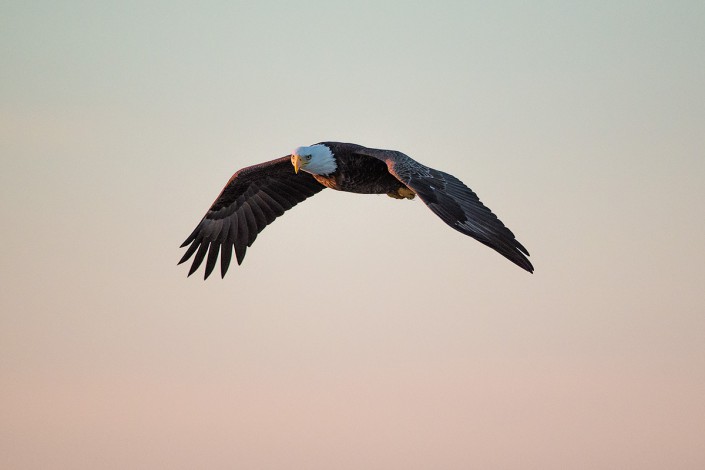
Photo by Northside Jim

2020 was a record breaking year for Bald Eagles in New Jersey. Going from just one recorded nest in 1980, New Jersey’s Bald Eagles hit three major milestones this year in terms of new nests, locations and total nests monitored.

A record 36 new eagle nests were found in 2020. 22 nests were found in southern New Jersey, seven in northern New Jersey, and seven in central New Jersey.

This means that Bald Eagle are now confirmed to nest in every county in the state!

An astounding (and record breaking) 220 nesting pairs of eagles were also monitored in 2020. These pairs produced a total of 307 eaglets, with an additional 28 nesting pairs tracked to nests, but laying no eggs. Of the 210 known-outcome nests, an average of 1.46 young were produced per nest, exceeding the productivity rate necessary to maintain a stable population of 1.0 young per nest.

These numbers could not have been achieved or documented without the dedicated efforts of the almost one hundred volunteers with the Bald Eagle Nest Monitor program, managed by the Conserve Wildlife Foundation of NJ in partnership with the Endangered and Nongame Species Program. These volunteers conduct the majority of the nest-observation work vital to the Endangered and Nongame Species Program in tracking the population and nest distribution of our state’s Bald Eagles.

“The comeback of the bald eagle in New Jersey ranks among the most inspiring recoveries of endangered wildlife species anywhere,” said David Wheeler, Executive Director of the Conserve Wildlife Foundation of NJ. “The bald eagle’s return illustrates what is possible for many other rare species when you bring together proactive wildlife management, strong public investment, and the unparalleled dedication of biologists and volunteers.”

CWF thanks our dedicated volunteers and partners who make our bald eagle conservation work possible, including PSE&G, Wakefern Food Corp./ShopRite Stores, P&G, Wells Fargo, Mercer County Parks, Wildlife Center Friends, the American Eagle Foundation, and the Zoological Society of New Jersey.

Click here to read the full NJDEP press release.


Learn more about CWF’s Bald Eagle Project & read the annual Bald Eagle Project Reports by clicking here.

Learn about tracking Bald Eagles through New Jersey EagleTrax by clicking here.

Learn more about Bald Eagles in CWF’s Field Guide by clicking here.

Save Your Seeds This Halloween!

by Meaghan Lyon

Halloween is right around the corner and of course that means preparing for the age-old tradition of carving pumpkins into jack-o-lanterns. An event that brings joy to your household and trick or treaters on Halloween night can also be beneficial to wildlife! Instead of tossing the seeds and guts of your pumpkins into the trash, save the seeds to feed wildlife in your own backyard.

As the weather gets cooler and food becomes scarcer, wildlife species like migrating songbirds and small mammals seek out fall nuts and berries to help get them through the cold weather months. Migrating songbirds need energy to fuel their long migration south and molt into their winter plumage. Songbirds also need to store more fat to help resist the cold. Pumpkin seeds are full of essential nutrients and trace minerals that could be hard to come by in the winter.

Small mammals like squirrels and chipmunks can also benefit from pumpkin seeds. Although you may not see as many squirrels and chipmunks in the winter, they do not hibernate. Their activity slows down considerably in the winter and they rely on the food they stored in the fall. Food caching is a common practice among small mammals which allows them access to food when the ground is frozen or covered in snow. Additionally, pumpkin seeds are a healthy snack to help store fat for the winter.

There are many ways you could provide these seeds to wildlife. The pumpkin seeds can be added to a bird seed mix or just sprinkled on the ground. They do not need to be baked or dried, just left in a small bowl accessible to your backyard critters. If carving pumpkins is not your aesthetic, wildlife will also enjoy the pumpkin or squash in its entirety.

This is a great way to use every part of your Halloween pumpkins and be left with no waste! After Halloween, the pumpkins can also be composted at a local facility to help benefit the environment. Let’s make this year a Happy Halloween for communities and for wildlife!

Meaghan Lyon is a biologist with Conserve Wildlife Foundation. 

Survey of Beach Litter Finds Many Threats to Nesting Birds

by Mary Emich

Plover chick next to a seabeach amaranth plant. Photo by Alice Brennan.

Despite hundreds of trash bins conveniently located on the beach, litter is still found in the sand every day. Many people enjoy their summer days at a key beach nesting bird site in Sea Girt. Beach goers leave behind trash that litters the crucial environment. These include plastic bottles, bags, cans, wrappers, straws, fishing line, etc. Plastic pollution effects the surrounding environment and wildlife that inhabits it.

At the Sea Girt beach, piping plovers (Charadrius melodus), an endangered beach nesting bird species, travels hundreds of miles to breed and nest during the summertime. This species is directly affected by the amount of litter that pollutes the beach. Every year shore birds, and many other species, ingest plastic or get entangled in fishing line which lessens their chance of survival.

Seabeach Amaranth. Photo by Meghan Kolk.

Another significant endangered species located at Sea Girt beach is seabeach amaranth (Amaranthus pumilus). This annual plant needs a healthy ecosystem free of debris to thrive every season. It is important to maintain a strong coastal habit for reproduction and population growth.

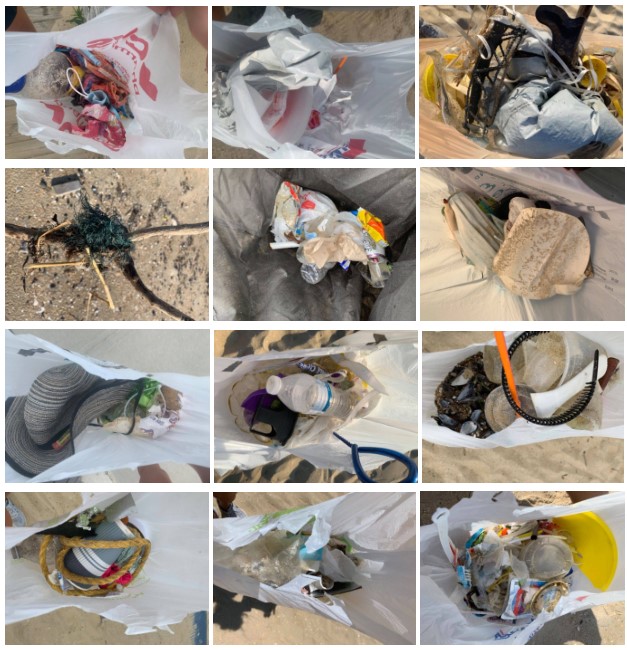
Twenty weeks of litter was collected at the Sea Girt beach with approximately 200 plastic straws, 50 plastic bags, 75 bottles, and 25 pieces of fishing line. Pollution on the beach can be prevented if patrons are mindful of properly disposing their trash at the end of their trip.

20 weeks worth of beach trash recovered from the Sea Girt beach.

Mary Emich is an assistant biologist with Conserve Wildlife Foundation.

Help Us Continue the Inspiring Recovery of New Jersey’s Bald Eagles: The first $5,000 donated will be matched dollar for dollar!

by Larissa Smith, CWF Biologist

Photo by Barb McKee

None of us could have predicted what would happen in 2020, and that’s certainly true for New Jersey’s bald eagles.

When our eagle volunteers joined me at our kick-off training in February, we prepared as usual to monitor known nests and educate landowners and the public about the importance of minimizing disturbance to our breeding pairs.

We never imagined how important eagles would become to so many people during the COVID-19 pandemic. Dozens of you shared the wonder you felt in seeing eagles fly overhead, some for the first time. Eagles became a sign of strength and resilience for those staying at home, as well as those venturing out to do essential work.

And New Jersey’s eagle population soared – both literally and figuratively – breaking records with more than 200 active nests (with eggs) and 300 young fledged – up from just one pair in the early 1980’s.

We can thank our devoted eagle volunteers for this year’s success, as well as the individual, foundation, and corporate supporters who came through with funding to support our tireless efforts.

Unfortunately, not everyone who gave in the past, or who expected to give this year, donated as planned. And we recently learned that we’re losing our largest project funder for the coming season.

That is why I’m asking you to donate today to help CWF raise $10,000 to help cover the shortfall. Two generous donors have each put up a $2,500 match, which means that the first $5,000 donated will be matched dollar for dollar.

While having the best season on record is exciting news for all of us, important work remains to be done. Eagles still face serious threats of habitat loss and disturbance. The increasing population will require an even larger team of trained volunteers to observe nesting behavior and determine egg laying, hatching, and fledging dates. It also means an increase in the number of injured eagles which will need help. All of this takes time and resources.

For my part, I’m happiest when I’m outside working with bald eagles as I have for 20 years. After all, I’m a biologist, not a fundraiser! But in this case, I’m reaching out to ask for your support for the Eagle Project. We have overcome financial challenges in the past with the help of people like you. Whether you have always supported this project, or have newfound appreciation for these majestic raptors, please help us to ensure that this incredible success story continues to inspire all of us!

Thank you and stay safe.


Learn more about CWF’s Bald Eagle Project here.

Learn more about New Jersey EagleTrax here.

Watch the CWF/Duke Farms Eagle Cam here.

Three Vultures get a second chance

by: Larissa Smith, CWF Biologist

Juvenile Black vulture at release@Kathy Clark

Three juvenile Black Vultures were released back into the wild at at site in Cumberland County.

This location is the site where several other juvenile eagles were released recently after recovering from various injuries. A feeding station has been set up and stocked every other day with fresh fish to supplement their diet until they are able to hunt on their own. Game cameras set up by ENSP, Kathy Clark show that both eagles and vultures have been visiting the site. One of the first juvenile eagles to be released and banded E/96, makes almost daily visits to the site.

Diane Nickerson Director of the Mercer County Wildlife Center was caring for three Black Vulture juveniles 3.5 to 4 months old, that were ready for release. It was decided to release them at the feeding station in Cumberland County where they could be around other vultures.

Black vulture nestlings at Mercer Co. Wildlife@ Diane Nickerson

Black vultures do not build nests, they lay their eggs in tree cavities, hollow logs, caves and on the floor of abandoned buildings. Two of the vulture nestlings had been removed from a barn during renovation and dumped in the woods. Luckily a neighbor found them and they arrived at Mercer County Wildlife Center on May 28, 2020. The third nestling came from the Raptor Trust in June.

Vultures are social, they roost, eat and soar in groups. The three juveniles needed to be released where there were other vultures. The nest cams at the feeding site showed that there were plenty of both Turkey and Black vultures, at the feeding site.

Juvenile Black vultures at release@ Kathy Clark

Thank you to Mercer County Wildlife Center and everyone who made this release possible, including the Eagle Project volunteers who have been dropping fish off at the feeding station.


Photos from the Field

Grounded: Resurgence of natural osprey nests

by Ben Wurst, Habitat Program Manager

A ground nest with three young. photo by Ben Wurst

It’s not very common to see ospreys, a large predatory bird, nest on the ground. Despite the rarity of these sightings, it has become more common and acts as a glimpse into the past (and future), before humans dominated the landscape. Today, more and more ospreys are building nests on the ground and snags over water.

Continue reading “Photos from the Field”

Beach Restoration Project Shows Promise for Piping Plovers at Barnegat Light

Piping plover chick feeding at the restoration-created pond.  Photo courtesy of Northside Jim.

Last winter the Conserve Wildlife Foundation, in partnership with Rutgers University, the United States Fish & Wildlife Service, and New Jersey Fish & Wildlife’s Endangered and Non-Game Species Program, completed the final stages of a beach restoration project in Barnegat Light State Park.

The project, which broke ground the winter before last, aimed to create more ideal habitat for the endangered piping plover away from human disturbance at Barnegat Light’s more recreationally busy beaches. This was accomplished by removing vegetation, grading dunes to be more suitable for nesting, and creating alternative feeding sites (i.e. ephemeral pools).

Now, with the beach nesting bird season at its peak and the final stages of the project complete, we can start to assess the effectiveness of the work that has been done.

Continue reading “Beach Restoration Project Shows Promise for Piping Plovers at Barnegat Light”

Red knot decline confirmed by CWF research highlighted in NY Times

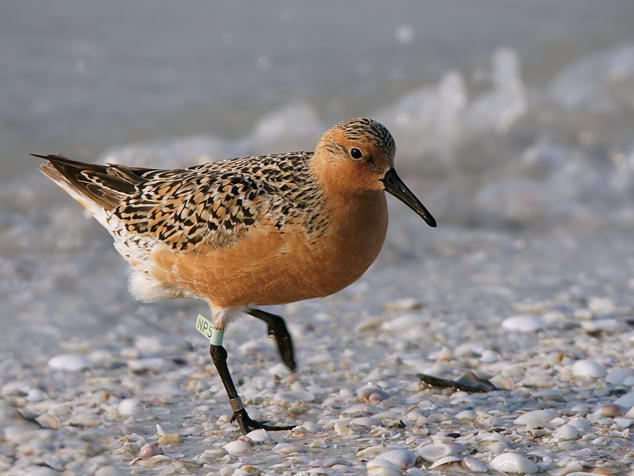
Photo by Hans Hillewaert

Conserve Wildlife Foundation’s research with scientist Dr. Larry Niles was highlighted in today’s New York Times feature detailing the 80 percent decline in red knots in New Jersey’s Delaware Bay this spring.


by Jon Hurdle, The New York Times

A sudden drop in the number of red knots visiting the beaches of Delaware Bay during migration this spring has renewed concern among scientists about the survival of the threatened shore bird’s Atlantic Coast population.

According to biologists, the number of knots that stayed to feed at the bay in May declined by about 80 percent from the same time last year. The Delaware Bay is one of the world’s most important sites for shorebird migration.

Continue reading at nytimes.com.

Four Peregrine Falcon Chicks Banded in Union County

Left: Adult falcon in flight. Right: Peregrine chick ready to be banded. Photos by Eric Sambol.

Peregrine falcons have nested atop the Union County Court House in downtown Elizabeth for many years. Each year, before the young birds fledge, scientists gather up the chicks and band their legs. 

The banding was a smaller than usual human affair this year to comply with social distancing and other health restrictions due to the COVID-19 pandemic. But it was a very active avian event with the adult falcons energetically dive bombing the biologists as they brought the eyases (young falcons) indoors for the banding.

Continue reading “Four Peregrine Falcon Chicks Banded in Union County”

New Jersey’s Wildlife in the Time of COVID-19 – Part 2

by David Wheeler

COVID-19 has changed our lives in virtually every possible way over the last few months. Our relationship to wildlife is no different. This three-part series explores the impacts of the COVID-19 pandemic and shutdown on wildlife in New Jersey and across the world. Read Part 1 here, and check out our podcast on COVID-19 and wildlife.

Wildlife from your Window

We have received more reports than ever from people seeing wildlife species they hadn’t seen before, and behaviors they had never previously observed, much of it from their own yards. People are tending to gardens more than ever before, and enjoying seeing the attendant pollinators.

Continue reading “New Jersey’s Wildlife in the Time of COVID-19 – Part 2”