Early days on Delaware Bay – Horseshoe Crabs Just Beginning To Breed as Shorebirds Arrive

by Larry Niles

Horseshoe Crabs Just Beginning To Breed as Shorebirds Arrive


Delaware Bay horseshoe crab eggs reach sufficient levels to give red knots and other shorebirds a good start on the fat they need to fuel the last leg of their yearly journey in the first week of the stopover ( May 12-19).  Knots need at least 180 grams to fly to the Arctic and breed successfully.  This week we caught birds that weighed 93 grams which is 30 grams below fat-free weight.  These birds had just arrived from a long flight, probably from Tierra del Fuego, Chile or Maranhão, Brazil.  In the same catch, we weighed red knots as high as 176 grams or only 5 grams from the 180-gram threshold.  These birds are probably from Florida or the Caribbean wintering areas and so arrive earlier,  resulting in them having more time to gain weight.  All together it looks like a normal early migration and a modest horseshoe crab spawn, just barely enough for the birds in the bay.

shorebirds in a net
Our team prepares a catch of knots turnstones and semipalmated sandpipers for extraction to keeping cages. The birds will be covered to prevent feather abrasion before extraction (Photo by Stephanie Feigin)

However, we are still short of about half the population.  Our bay wide count won’t take place until next week on May 22 and 26. At this point it looks like we have about 14,000 knots in the bay, of which 8,000 are in New Jersey. In the last 5 years we have had a bay wide population of about 24,000 red knots.  The situation is similar for ruddy turnstones and sanderlings.  The southernly winds of the next few days will almost certainly bring in the rest of the flock by mid-week.

The Stopover Habitat is Growing


The condition of the stopover is mixed.

The work of Niles & Smith Conservation Services, Conserve Wildlife Foundation of NJ, and American Littoral Society continues to supply high-quality habitat for horseshoe crabs. We have developed an efficient system for maintaining the essential requirements of a good spawning beach, deep and large grain sand with berm heights that prevent over washing in a way that keeps cost down. First, by creating low oyster reefs to break waves in lower tides, thus protecting beaches from wind waves at low and mid tides.  Second, by placing sand on beaches that typically erode fast losing sands to adjacent creek inlets and the next beach south.  This way we can use one restoration to restore three different places.  For example, Cooks Beach loses sand to South Reeds.


restored beach in Delaware Bay
Thompsons beach before and after restoration by American Littoral Society and partners. (Photo by Larry Niles)

Oddly these successes may be contributing to the next big problem for the birds. The state of Delaware has been carrying out much larger scale beach replenishment projects that have added significant new sandy beach for crabs spawning.  At the same time the Atlantic States Marine Fish Commission has failed to deliver on its promise to increase the number of crabs.  The population is still 1/3 below carrying capacity or the number that existed 20 years ago.  The same number of crab divided by more beach equals decreasing crab densities.  Decreasing densities means fewer eggs reaching the surface because crabs are not digging up existing eggs to lay their own.

In other words, we need more crabs.

The Industry Finds New Ways around the ARM Quota


But the resource agencies seem perfectly happy to keep killing adult crabs for both bait and bleeding at near historically high numbers. Bait harvests recorded as coming from the bay have stayed the same, however other states such as NY are still taking and landing large numbers of crabs despite having no known crab historic population of their own. Additionally, Virginia states that a crab population still exists in the state, even though most field biologists consider them lost.  The truth is they are very likely taking Delaware Bay crabs and landing them as their own.

The Conservation groups are no longer satisfied with this loose regulation and are calling for regulations similar to those used for Striped Bass.  The Delaware Bay harvest should be restricted to just the quota agreed upon by everyone through the Adaptive Resource Management system.  All other landed crabs should be genetically linked to a source population, and if they do in fact come from Delaware Bay they should be taken out of the ARM quota. No one should be allowed to get away with killing our crabs outside the quota.

Or just stop the senseless killing of these valuable animals as bait for the dying couch fishery.


crab eggs graph on Delaware Bay
This graph compares the finding of Botton et al 1994 from horsesoe crab egg surveys done in 1990 and recent counts done in 2017


The same goes for the killing of crabs by the companies bleeding crabs.  The industry makes untold millions (the numbers are hidden from the public) but does virtually nothing to conserve the crabs while killing thousands. Their own estimate is well over 65,000 a year, but independent estimates double that.  This killing could also stop because a new synthetic lysate is available and can be used now, potentially cutting the need for natural lysate by 90%.

An Ecosystem Collapse and the Need for More Crabs


Why kill such a valuable animal?  It all started because the fishing industries saw little value and figured why not destroy the population until they are no longer economically viable.  Its called economic extinction and sadly it’s a tradition amongst Delaware Bay fishers still carried out this to this day on eels, conch, and other species.  But they didn’t know back in the early 90’s they would wrecking the entire ecosystem.

In 1991, we counted an average of 80,000 horseshoe crabs/meter squared.  Now we count 8,000.  Then the eggs stayed at that level for all of May and June then hatched young at similar densities. In other words, the horseshoe crab was a keystone producer of an abundant resource that maintained the bay ecosystem.  It was not just chance that at the same time the bay has one of the most productive weakfish and blue claw crab fisheries in the Atlantic coast.  Fish populations blossomed with the flush of horseshoe crab eggs and hatched young each year.

Now we must bring it back.  For the birds, for the fish, and for the people who love to bird and fish.


storm delaware bay horseshoe crabs
A storm looms over Delaware Bay. The last 4 days have been rain, some intense and cold. The water temperature needs to be 59 degrees or so for Crabs to spawn. On Saturday the 19th the water temperature fell below and the spawn virtually stopped in many places. It should resume with the warmer temperatures of Saturday and Sunday.

We are grateful to the National Fish and Wildlife Foundation and other donors who make this project possible.

Dr. Larry Niles has led efforts to protect red knots and horseshoe crabs for over 30 years.
Salamanders already on the move

by David Wheeler

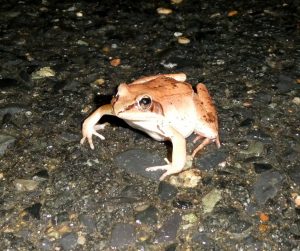
Photo by David Moskowitz

The salamanders and frogs in East Brunswick got an early start to their migration season by crossing this week on February 15. David Moskowitz found spotted salamanders, wood frogs, dozens of spring peepers, and one wood frog crossing the temporarily closed section of Beekman Road in the early evening rain.

“This is the earliest they’ve ever moved – by about a week – in the 12 years I’ve been closing the road,” said Moskowitz.

East Brunswick has closed the road for a few nights each late winter/early spring when conditions are just right. While all amphibian species are vulnerable, spotted salamanders are a species of special concern in New Jersey.


Photo by David Moskowitz

Conserve Wildlife Foundation partners with certain municipalities and the Division of Fish and Wildlife’s Endangered and Nongame Species Program on salamander crossings in northern New Jersey. This is a key initiative among CWF’s amphibian projects.

The East Brunswick crossing offers the best opportunity for the public to take part and see these salamanders and frogs up close. Check their website for the next expected crossing and share the road with a salamander!

New Year brings a new amphibian!

by Allegra Mitchell, Wildlife Biologist


Each New Year promises an exciting year ahead, and conservation science is no exception! As biologists gear up for the field season, CWF’s amphibian programs are particularly noteworthy.


Our Amphibian Crossing Project has made major strides in protecting the frogs, toads, and salamanders migrating to breeding areas, and we’re launching a new program this year to better document the newly discovered mid-Atlantic coast leopard frog. You can help CWF biologists collect data and save these fragile creatures.


Read below for more details about each program. In the meantime, if you would like to support CWF’s amphibian programs, please visit our YouCaring page here: https://www.youcaring.com/conservewildlifefoundationofnewjersey-1091698 . Your contribution will help us develop training materials and cover research expenses to protect our most vulnerable frogs and salamanders!


Amphibian Crossing: A New Twist on an Old Program

The long-standing Amphibian Crossing Project, established in partnership with the New Jersey Endangered and Nongame Species Program (ENSP) in 2002, has been organizing dedicated volunteers each spring to chauffer migrating amphibians across roads as they trek from their upland hibernation sites to their breeding ponds. This program has saved thousands of frogs, toads, and salamanders from vehicle strikes so that local amphibian population sizes can be maintained, which is especially important for species of concern, such as the Jefferson and spotted salamanders.


Seeking a more long-term solution to the amphibian road mortality problem at the Amphibian Crossing Project’s top site, ENSP has finally secured funding to construct crossing structure system for amphibians to move safely across Waterloo Road in Byram Township, Sussex County. This system, including under-road tunnels and guide fencing, will help amphibians avoid problems on the road all season long. CWF is preparing its second year of monitoring along Waterloo Road to track the changes in amphibian vehicle-caused mortality before and after this system is installed.


Leopard Frogs: A New Program for a New Species

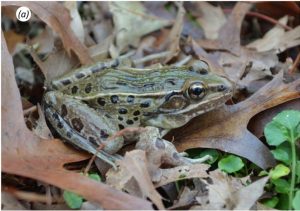
This year marks the launch of CWF’s Kauffeld’s Calling Frogs program. Similar to New Jersey’s Calling Amphibian Monitoring Program (CAMP), volunteers will listen and document frog calls during the breeding season. Kauffeld’s Calling Frogs, however, will focus specifically on the newly discovered mid-Atlantic coast leopard frog. This frog, named after the late avid herpetologist Carl Kauffeld, had been mistaken as a member of the southern leopard frog species for decades. Only recently was it determined to be a separate species with unique habitat requirements.


Despite only being an official species since 2014, it is already considered a Species of Greatest Conservation Need in New York, and may be declining from other portions of its range. CWF biologists are eager to document the current extent of this frog’s range within New Jersey in order to monitor the population for possible declines. Knowing where this species is found is the foundation for future research into its habitat needs and threats.


Getting the Public Involved

These amphibian programs cannot move forward without the dedication of CWF volunteers. Over 100 volunteers have been involved with the Amphibian Crossing Project, and a dozen more dedicated at least a day a week for months to monitor Waterloo Road amphibian mortality. With the success of CAMP in mind, this first year of Kauffeld’s Calling Frogs promises to be full of new frog population discoveries.
 

Make sure to follow CWF on Facebook, Twitter, and Instagram for the latest updates on our amphibian programs as the season progresses!


And consider supporting our YouCaring amphibian campaign here: https://www.youcaring.com/conservewildlifefoundationofnewjersey-1091698 .

The (Bergen) Record spotlights a backyard birding favorite


Just in time for next week’s Great Backyard Bird Count, The (Bergen) Record’s Jim Wright takes a look at the hairy woodpecker with help from CWF Executive Director David Wheeler. This backyard birdwatching favorite is still a common sight on many New Jersey feeders and tree trunks, but remains vulnerable nationally due to its nesting reliance on old tree snags.

Read the article here:

https://www.northjersey.com/story/entertainment/2018/02/07/bird-watcher-wonderful-world-hairy-woodpecker/1047289001/

Piping Plovers in the Bahamas

Our Work isn’t Done – the Ongoing Importance of Band Resighting

 By Todd Pover, Senior Wildlife Biologist

Earlier in January, I attended the Abaco Science Alliance Conference to make a presentation about recent conservation and research developments for piping plovers in the Bahamas. This marks the eighth year, starting in 2011, either solo or with CWF staff and other colleagues, that I have been able to follow piping plovers to their wintering grounds in the Bahamas to conduct work to better understand and help recover this at-risk species. And in another sense, to be an international ambassador for piping plovers.

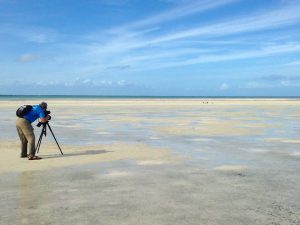
Todd Pover, CWF Senior Biologist, busy searching for piping plovers on the flats in the Bahamas

Over that time, the focus of those trips has varied widely, including conducting surveys for the International Piping Plover Census in 2011 and 2016, improving our understanding of how piping plovers use the various habitats, engaging students with our Shorebird Sister School Network from 2014-17, helping Friends of the Environment, our primary partner there, integrate piping plovers into their educational/school programs, building conservation partnerships, and even producing a video. Tremendous positive changes have occurred in that time with regard to awareness of and attitudes towards piping plovers in the Bahamas and some significant conservation progress has been made, most notably the establishment of several new national parks by the Bahamian government that help protect piping plovers and other shorebirds.

Continue reading “Piping Plovers in the Bahamas”

The Atlantic Coast Leopard Frog – Uncovering the past

by Taylor Forster, GIS Intern

©Brian R.Curry

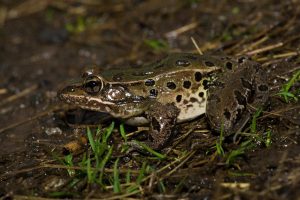
On a Tuesday morning, Conserve Wildlife Foundation of New Jersey biologist Allegra Mitchell and I, GIS Intern Taylor Forster, went to the New Jersey State Museum in Trenton. We were looking at a newly identified species recently found in one of the largest metropolitan areas – New York! I learned that this species was discovered because of its unique “call.” A “call” is the sound a male frog makes to attract a female frog, and each frog species’ call is unique. It seems that this species remained undiscovered for so long because of its similar appearance to other, closely-related leopard frog species. The cryptic nature of this new species meant that the only noticeable distinction between it and other leopard frogs was the sound it makes.

After looking at this newly discovered frog, now known as the mid-Atlantic coast leopard frog, a few defining characteristics came to light that set it apart from the other leopard frogs. These characteristics make it easier to identify other mid-Atlantic coast leopard frogs that have been preserved and categorized as other species for museum collections. With this information in mind, Ms. Mitchell and I were at the New Jersey State Museum to investigate when and where this frog had been found throughout the state before anyone realized its significance. Continue reading “The Atlantic Coast Leopard Frog – Uncovering the past”

CWF education leadership highlights NJEA Review cover story

by David Wheeler, CWF Executive Director

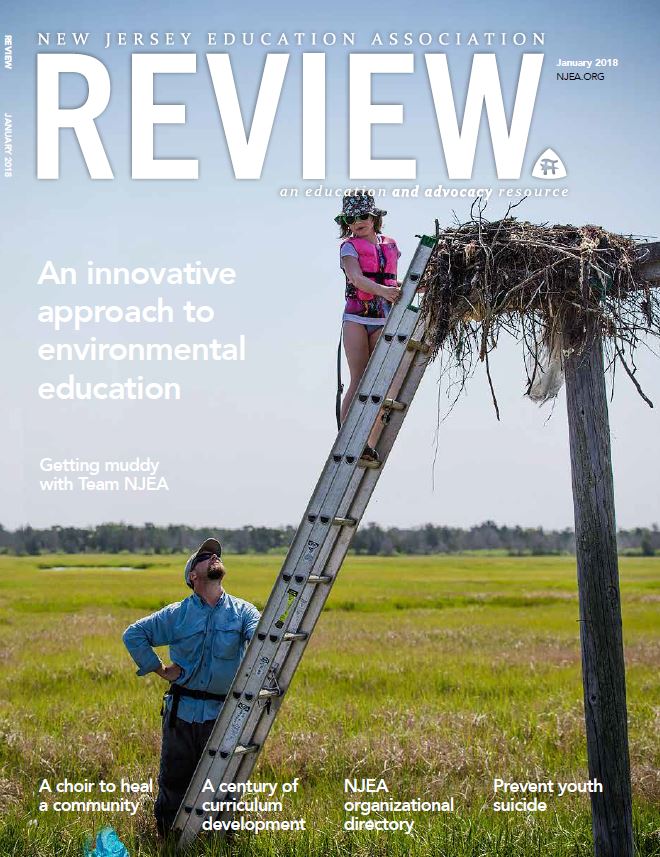
CWF’s innovative environmental education program served as the cover story for the New Jersey Education Association (NJEA) Review, a monthly magazine that reaches over 200,000 subscribers, including every public school teacher in the state. The story, written by education director Stephanie DAlessio and executive director David Wheeler, highlights CWF’s singular approach to environmental education, which meets NGSS standards by melding experiential learning with scientific observation and hypothesis testing about nature’s phenomena via wildlife webcams and other online resources, all based on educational theory.  Continue reading “CWF education leadership highlights NJEA Review cover story”

Photo From The Field

CWF Volunteers Are Wildlife Heroes

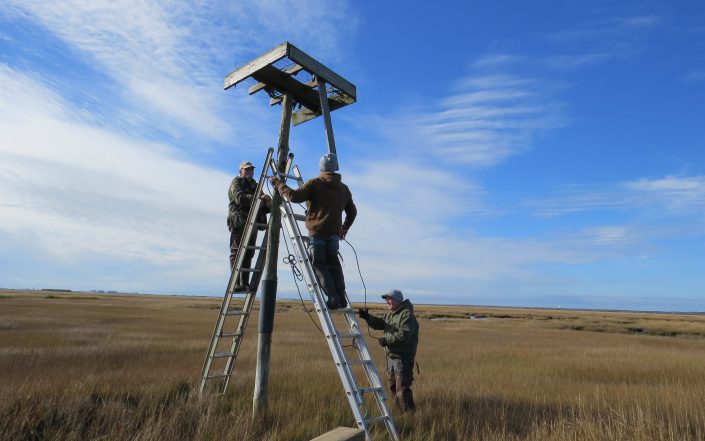
NJ Osprey Project Volunteers Wayne Russell, Matt Tribulski and John King repair an osprey platform.

New Jersey ospreys have headed for warmer climates until their return in the spring. NJ osprey project volunteers are busy repairing and cleaning out nests, adding predator guards and perches in preparation for the nesting season.  It’s an endless job as there are 100’s of nesting platforms throughout the state and maintenance is always needed. These repairs keep the nests as safe as possible for the nesting ospreys.

Thank you to all the dedicated CWF volunteers!


CWF Honors Four Inspiring Leaders at 12th Annual Women & Wildlife Awards

Former Gov. Kean delivers stirring keynote speech before 200 people at Duke Farms event


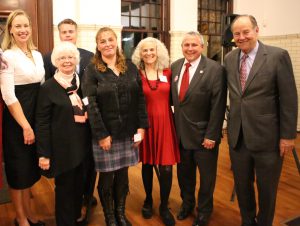
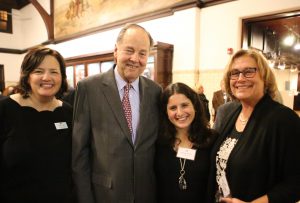
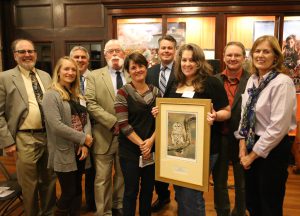
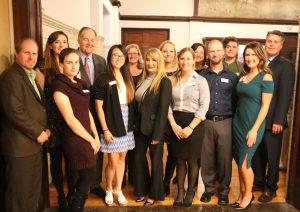
Kelly Mooij, Jeannie Geremia, CWF Executive Director David Wheeler, Hazel England, Amy S. Greene, Honorable Kip Bateman, and Honorable Tom Kean.

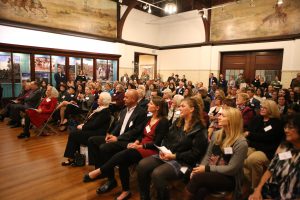
Hillsborough, NJ – The nonprofit Conserve Wildlife Foundation of New Jersey (CWF) celebrated their 12th annual Women & Wildlife Awards on November 1 before over 200 people at Duke Farms in Hillsborough, New Jersey.


The 2017 honorees include Hazel England of the Great Swamp Watershed Association, Jeannie Geremia of the Garden Club of New Jersey, Kelly Mooij of New Jersey Audubon, and Kris Schantz of the New Jersey Endangered and Nongame Species Program.


CWF Development Director Liz Silvernail, The Honorable Tom Kean, Yasmine Pessar from Dewberry, and Betty Ann Kelly from Union County Dept. of Parks and Recreation.


“Tonight we are recognizing four great women who have accomplished wonderful things and who have worked in their own way to make this world and this state a better place,” said former New Jersey Governor Tom Kean in his keynote speech. “They have worked to do what is necessary to make sure that when we pass this planet down to our children and our grandchildren, it is not worse than what we received. These four women show us what great things an individual can do for all of us.”


Since 2006, CWF’s Women & Wildlife Awards have recognized special individuals for their achievements on behalf of New Jersey’s wildlife and the advances they have made in professions in which women have long been underrepresented.


“All too often, young girls are turned away from promising careers in the STEM fields – Science, Technology, Engineering, and Mathematics,” said David Wheeler, CWF Executive Director. “Yet here in New Jersey, wildlife conservation efforts benefit from a strong and inspiring core of female scientists, educators, advocates, researchers, and rehabilitators who serve as role models for the next generation. Thanks to our Women & Wildlife honorees, today’s young girls can feel confident in pursuing science and conservation as careers with limitless and exciting possibilities.”


Hazel England, Great Swamp Watershed Association Director of Outreach and Education, was honored for bringing environmental education programs about our local ecosystems and habitats to students and teachers of all ages.


“I am honored to have received the Educator Women & Wildlife Award from Conserve Wildlife Foundation. It was truly humbling to be in the company of such inspirational women who are working in the field of conservation,” said England. “I’m thrilled that my two daughters got to experience this event with me; learning about the great work these other remarkable women are doing, and gaining some very direct political insight from Governor Tom Kean. It was a real privilege to hear him speak and a highlight of the night for me.”


Jeannie Geremia, Great Swamp Watershed Association Director of Outreach and Education, was honored for bringing environmental education programs about our local ecosystems and habitats to students and teachers of all ages.

Service honoree Jeannie Geremia with friends and family.

“Receiving the Conserve Wildlife Foundation’s Women in Wildlife 2017 Award for Service is one of the highlights of my life and I am humbled by the august company of outstanding women who were similarly honored,” said Geremia. “Nature is our passion and working to ensure that our imperiled wildlife species, including our pollinators, survive and thrive is the common goal.  Joining dedicated individuals and organizations in a united effort of educating and inspiring people to action will accomplish these mutual goals of a healthy environment for all living creatures.  Governor Kean said it all so eloquently as he invoked the spirits of Rachel Carson and Helen Fenske in his heartfelt keynote speech, setting the tone for this memorable event.”


State Senator Kip Bateman presented Jeannie Geremia with her award.


“Jeannie, you really have dedicated your life to making a difference, and it’s so important what you’ve done,” said Senator Bateman. “It’s a real pleasure to be here to honor four outstanding women who have truly made a difference in New Jersey. Each of you is so deserving of this award.”


Kelly Mooij, New Jersey Audubon Vice President of Government Relations, was honored for her strong leadership on a number of successful watershed protection, open space preservation, and wildlife funding campaigns.


“I’m honored to have received this recognition from the Conserve Wildlife Foundation, a wonderful partner in protecting our amazing wildlife throughout the State,” said Mooij. “Educating decision-makers and supporting science-based policy is one of the most effective and efficient ways to protect wildlife and preserve habitat and I’ve been so fortunate in my career to be able to work with amazing non-profit colleagues and to use the powerful tool of advocacy to make NJ a better place for people and wildlife.”


Kris Schantz, principal zoologist with the New Jersey Department of Environmental Protection’s Endangered and Nongame Species Program, was honored for her work protecting the endangered timber rattlesnake and other at-risk reptiles.

Inspiration honoree Kris Schantz with NJDEP supporters with CWF Executive Director David Wheeler.


“I am truly honored to have received this award from the Conserve Wildlife Foundation, as there are so many deserving women doing invaluable conservation work within New Jersey,” said Schantz. “We must all – women, men, children – continue to strive to make NJ a better place for our citizens and future generations through the protection and nurturing of our natural resources.”


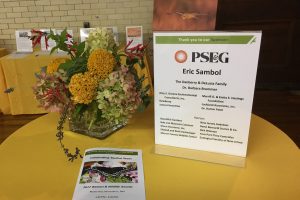
Event sponsors included PSE&G, Eric Sambol, The Danberry and DeLucia Family, Dr. Barbara Brummer, Dewberry, James Fiorentino, Amy S. Greene Environmental Consultants, Inc.,  Lackland Associates, Inc., Merrill G. & Emita E. Hastings Foundation, Dr. Kumar Patel.


Patrons included Bountiful Gardens, Bob and Maureen Coleman, Glenn Insurance, Inc., Elwood and Ruth Kerkeslager, Mercer County Wildlife Center, New Jersey Audubon, Renzi Bernardi Suarez & Co., Rick Weiman, Your Part-Time Controlled, and Zoological Society of New Jersey.

Conserve Wildlife Foundation staff with former New Jersey Governor Tom Kean.


For more information on the 2017 Women & Wildlife Awards, please visit www.ConserveWildlifeNJ.org/getinvolved/event/women/.

To learn more about CWF, please visit www.ConserveWildlifeNJ.org.


The short biographies for the honorees follow:


HAZEL ENGLAND: EDUCATION

Hazel England has spent 24 years as an enthusiastic environmental educator and naturalist in New Jersey, bringing education programs about our local ecosystems and habitats to students and teachers of all ages. Since 2004, Ms. England has led educational and stewardship programs at the Great Swamp Watershed Association as the Director of Outreach and Education. She is a state-certified facilitator for many nationally acclaimed environmental education curriculums, including Project WILD, WET, WOW, PLT HWHP, and Bridges to the Natural World.

Ms. England has a Bachelor of Science in Zoology and Botany from the University of Dundee, as well as a Master’s degree in Ecology and Environmental Management from the University of Aberdeen in Scotland. She sets an excellent model for other women to follow by being an accomplished natural scientist who brings her passion to life for people of all ages.


JEANNIE GEREMIA: SERVICE

For the past decade as the Vice President for the Garden Club of New Jersey, Jeannie Geremia has followed her passion for protecting pollinators by leading, inspiring, and educating others on the importance of pollination and wildlife habitat gardens. Ms. Geremia championed the designation of the Black Swallowtail Butterfly as the New Jersey State Butterfly. Her action earned her recognition from both the New Jersey Senate and the General Assembly.

Ms. Geremia created attractive Pollinator Education Signs that are displayed statewide at local plant nurseries, horticulture garden visitor centers, and a variety of education centers. She has also created and presented over 75 Pollinator Education programs, and has written 89 articles – and counting – for Gardener News on wildlife preservation, conservation, and growing our decimated pollinator population.


KELLY MOOIJ: LEADERSHIP

Since 2008, Kelly Mooij has dedicated herself to utilizing the tools of law, policy, and government affairs to protect our state’s wildlife as Vice President of Government Relations at the NJ Audubon.

Ms. Mooij helped lead the formation of the multi-state Coalition for the Delaware River Watershed to protect the watershed that provides drinking water for 16 million people and support hundreds of miles of vital fish and wildlife habitat. In coordinating the Keep It Green Coalition for open space preservation, Ms. Mooij helped lead the passage of two state-wide bond measures totaling $600 million dollars. The 2014 permanent source of open space funding will bring $1 billion to the state every ten years.

Ms. Mooij also leads the annual lobbying efforts of New Jersey’s environmental organizations for the State and Tribal Wildlife Grant Program, which provide an average of $1 million dollars in federal grant funds to state fish and wildlife agencies. Ms. Mooij earned her Juris Doctorate and Master of Studies in Environmental Law, focusing on marine biodiversity and land and water use issues.


KRIS SCHANTZ: INSPIRATION

Kris Schantz works with one of New Jersey’s most underappreciated and persecuted species: the timber rattlesnake. Ms. Schantz developed the Venomous Snake Response team of volunteers and professionals in law enforcement, animal control, and parks management who safely remove venomous snakes from areas where they pose a risk – while also protecting these endangered reptiles.

Her field studies have expanded to include other vulnerable snake species, such as the corn snake, northern pine snake, and scarlet snake. Ms. Schantz has also led the development of the department’s Wildlife Action Plan, transforming and bettering the wildlife conservation agency’s work. She earned her Masters of Science degree from Rutgers University. Ms. Schantz has gained the deep respect of the nearly everyone who works with imperiled snakes in New Jersey, and she serves as an example of passion, enthusiasm, and commitment in her field.

NJ DEP ENDANGERED AND NONGAME SPECIES ZOOLOGIST KRIS SCHANTZ HONORED FOR INSPIRATION

Kris Schantz, 2017 Inspiration Award Honoree

As a Principal Zoologist for the New Jersey Department of Environmental Protection’s Endangered and Nongame Species Program, 2017 Women & Wildlife Inspiration Award Honoree Kris Schantz works with one of New Jersey’s most underappreciated and persecuted species: the timber rattlesnake. She earned her Masters of Science degree from Rutgers University based on a study of the rattlesnake and its habitat in northern New Jersey, and her passion in both learning and developing greater understanding of this species has helped improve its protection.

Ms. Schantz partners with academic and consultant biologists, as well as a number of reptile enthusiasts to accomplish the New Jersey Department of Environmental Protection’s conservation mission. Her responsibilities have expanded to include other vulnerable snake species, such as the corn snake, northern pine snake, and scarlet snake. Continue reading “NJ DEP ENDANGERED AND NONGAME SPECIES ZOOLOGIST KRIS SCHANTZ HONORED FOR INSPIRATION”