CWF’s Shorebird Stewards Protect Delaware Bay Shorebirds and Educate the Public
by Larissa Smith, wildlife biologist
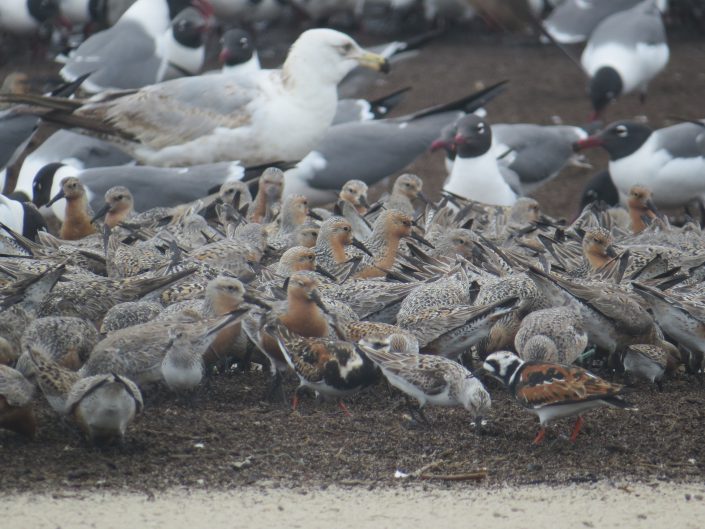
Shorebirds at Reed’s Beach Photo by Bob Bocci
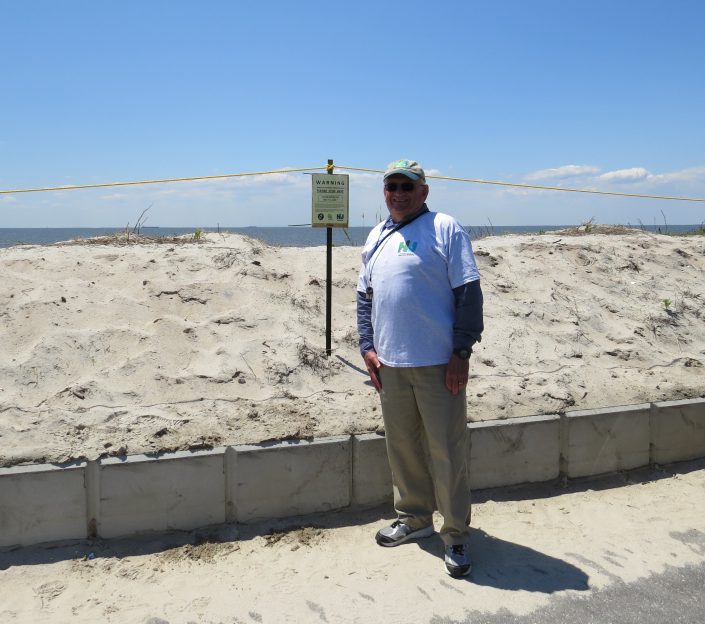
This shorebird season, twenty-one stewards helped to patrol the closed shorebird beaches in Cape May and Cumberland Counties. Stewards not only make sure that no one is entering the closed areas but also educate beach goers about the shorebirds and horseshoe crabs.
Thank you to all Shorebird Stewards!
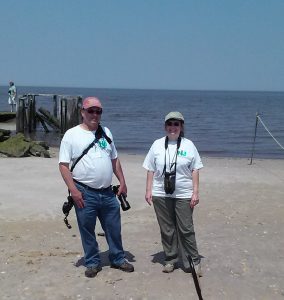
Steward Bob Bocci at Fortescue Photo by M. TribulskiStewards Dan & Cheryl Alexander at Cook’s Beach
Conserve Wildlife Foundation Releases New Amphibian Crossing Story Map
by Kelly Triece, Wildlife Biologist
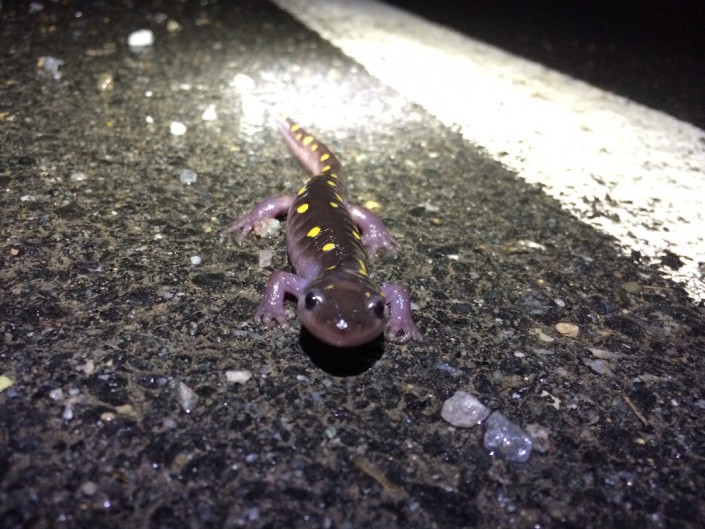
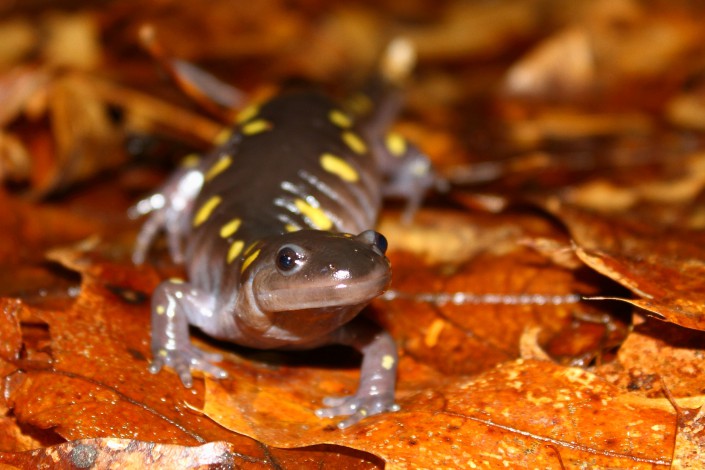
Spotted Salamander Crosses a busy road to reach a nearby breeding pool. Photo by Kelly Triece
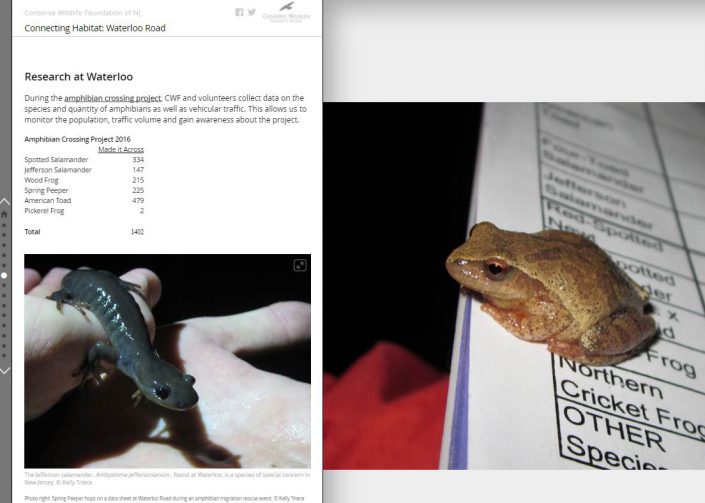
Farewell to May — also known as Wetlands Month! As a final ode to Wetlands Month, Conserve Wildlife Foundation would like to share a storyabout a very special wetland! Please check out our latest Story Map: “Connecting Habitat: Waterloo Road.” This story map shares the story about a vernal pool wetland that is located at Waterloo Village History Site in Byram Township, Sussex County, New Jersey.
This vernal pool wetland, as depicted in the Story Map, is a breeding ground for thousands of amphibians. However, each spring these amphibians must cross the heavily trafficked Waterloo Road in order to reach the pool. A single vehicle can crush dozens of the slow-moving animals as they try to cross the road during migration. High enough traffic volumes can wipe out entire populations over time.
Since 2002, Conserve Wildlife Foundation of New Jersey has worked to protect early-spring breeding amphibians like the wood frog, spotted salamander, Jefferson salamander, and spring peeper during their annual migrations through the Amphibian Crossing Project. On peak nights each spring, we work with a fleet of incredible volunteers to hustle amphibians across the road at rescue sites, collect data on the numbers and species seen, measure the impacts of vehicular traffic, and document additional amphibian crossings for future protection.
This is our 2016 Waterloo Road Amphibian Crossing Report:
Spotted Salamander: 334
Jefferson Salamander: 147
Wood Frog: 215
Spring Peeper: 255
American Toad: 479
Pickerel Frog: 2
TOTAL Amphibians: 1,432
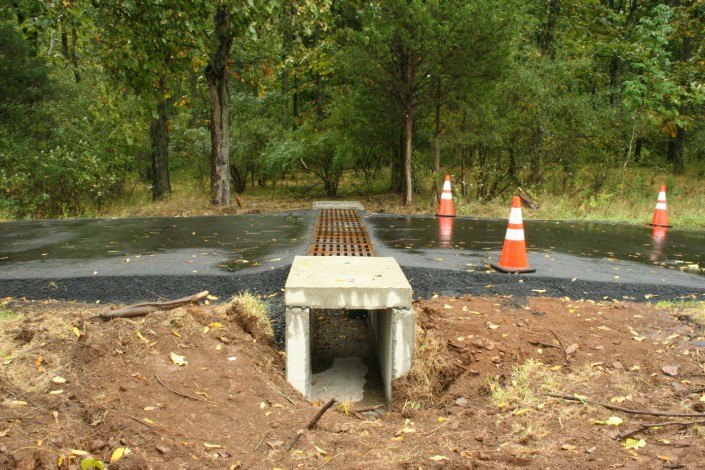
The Amphibian Crossing Project aims to secure funding for amphibian crossing tunnels at Waterloo Road. This project is part of a larger effort led by the Division of Fish and Wildlife called Connecting Habitat Across New Jersey (CHANJ). CHANJ aims to identify key areas and the actions needed for preserving and restoring habitat connectivity for terrestrial wildlife in New Jersey. CHANJ has the potential to increase the sustainability of New Jersey’s terrestrial wildlife populations and de-list endangered species. #CHANJiscoming #CHANJ
CWF Biologist Larissa Smith Looking for Data from EagleCam Viewers
by Lindsay McNamara, Communications Manager
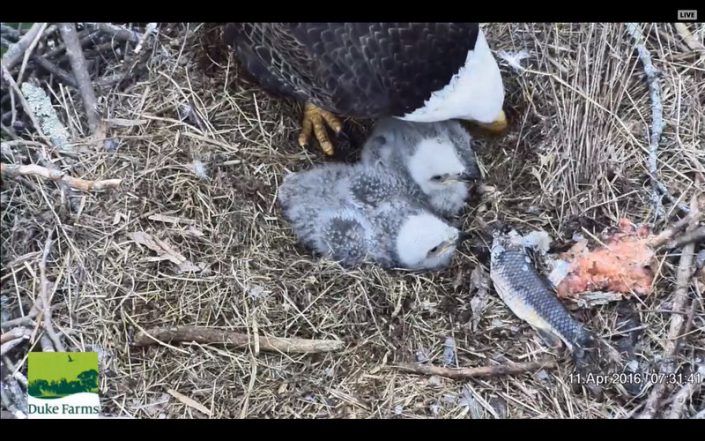
Conserve Wildlife Foundation eagle biologist Larissa Smith has launched a new citizen science project in an effort to learn more about New Jersey’s eagles. We know that many teachers, students and bird lovers watch the wildly popular Duke Farms EagleCam, and now those viewers can help Larissa gather data by participating in the Eagle Food Observation Project.
Larissa holding an eagle at a banding last week.
Jim Wright — author of the popular posts about the eagles for Duke Farms’ “Behind the Stone Walls” blog, as well as, “The Bird Watcher” column for The Record — interviewed Larissa Smith in the most recent post on Duke Farms’ blog. In this interview, Larissa explains her latest citizen science project to learn more about the Duke Farms eaglets’ diet.
Second Annual “Shell-a-Bration” brings volunteers to strengthen coast’s resiliency and habitat
by Lindsay McNamara, Communications Manager
Today, conservation organizations leading the efforts to restore New Jersey’s Delaware Bay beaches today organized the Second Annual “Shell-a-Bration” oyster reef building volunteer event.
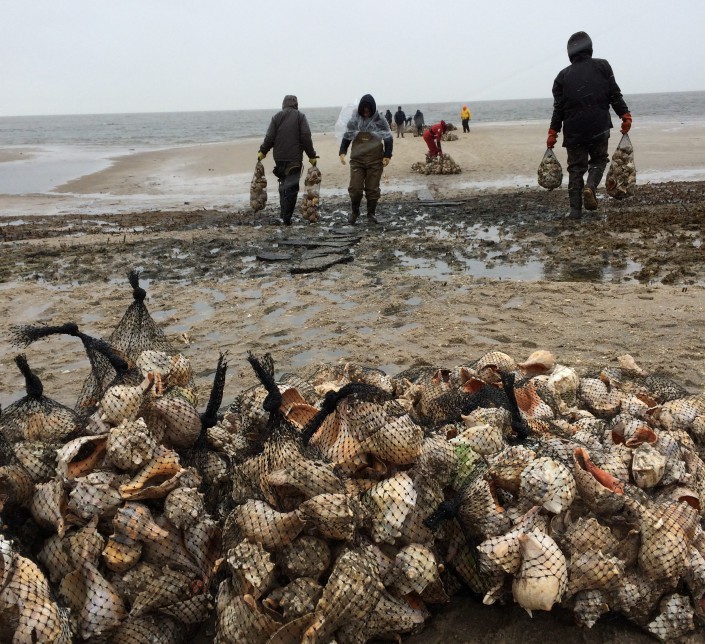
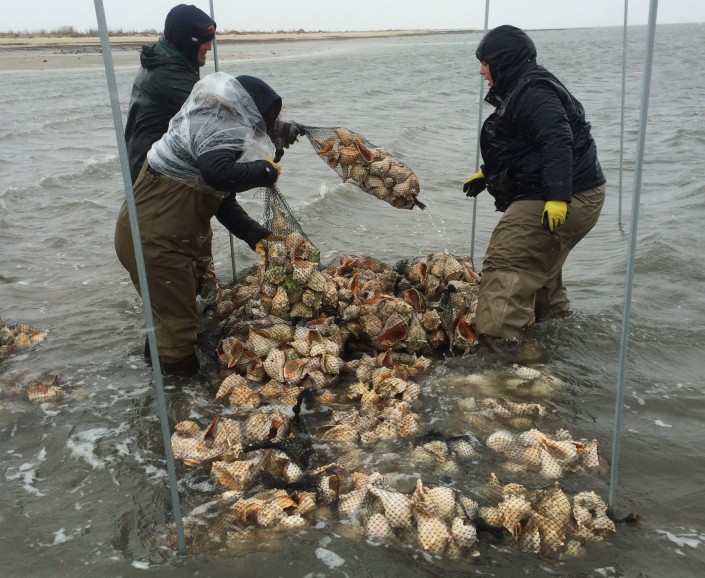
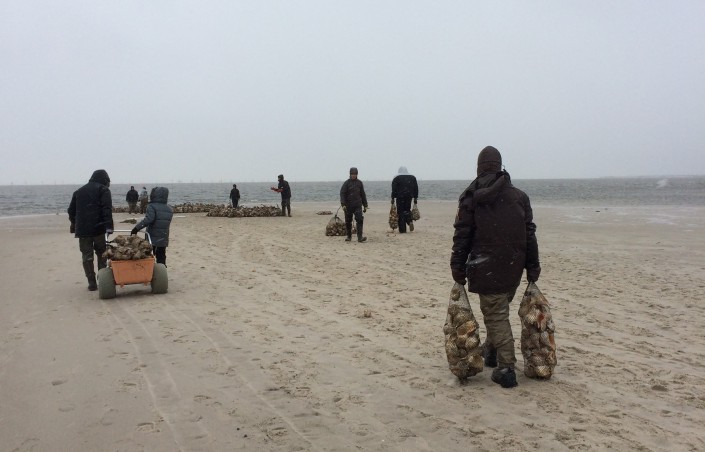
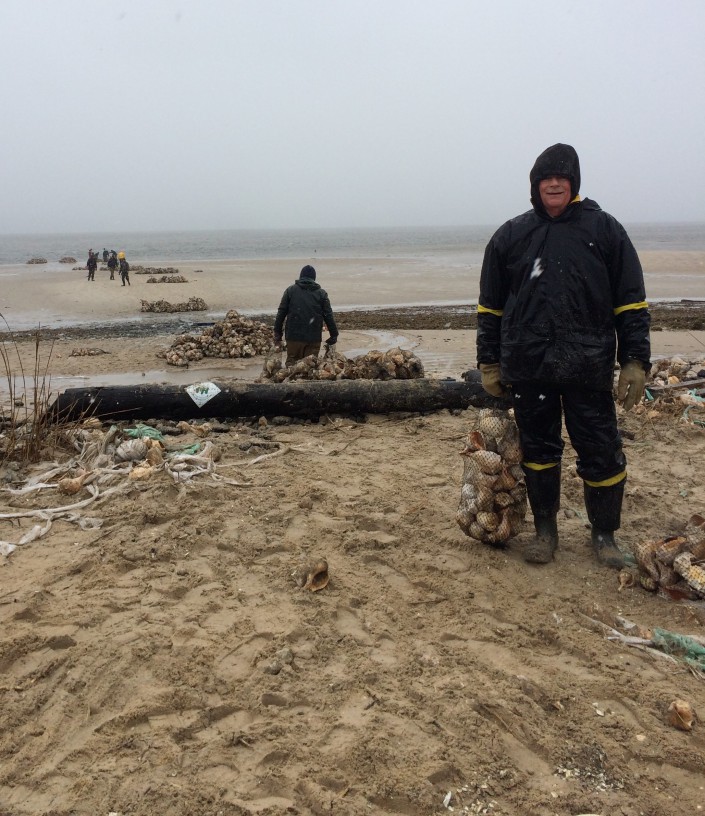
Dedicated volunteers braved the elements and worked alongside American Littoral Societyand Conserve Wildlife Foundation of New Jersey to establish a near-shore whelk shell bar at Moores Beach in Maurice River Township along New Jersey’s Delaware Bayshore. The shell bar was built to prevent sand loss from wind-driven waves. An approximately 200-foot oyster reef was constructed offshore to test whether the reef bars help reduce beach erosion and create calmer water for spawning horseshoe crabs.
“The Second Annual Shell-a-Bration truly celebrates the ecology, community, and culture of the Delaware Bayshore,” stated Captain Al Modjeski, Habitat Restoration Program Director, American Littoral Society. “It reinforces the connectivity between the natural and human-built bayshore communities through reef building and celebrates the significance of the Bay’s resources through restoration.”
“There are many strategies to defend our Delaware Bayshore, but one of the best and most productive are these oyster reefs,” stated Dr. Larry Niles, a biologist with American Littoral Society and Conserve Wildlife Foundation of New Jersey. “They not only replicate a lost but important habitat on Delaware Bay — reefs once covered much of the bayshore — but they provide just enough protection to make a difference in how long our beaches persist against the unrelenting forces of nature. In a way, we are fighting nature with nature.”
Shorebirds, like the federally listed Red Knot, depend on an uninterrupted supply of horseshoe crab eggs when they stopover in Delaware Bay during their migration. In recent years, countless horseshoe crab eggs have been lost because of the devastating storms that swept away the beaches they depend on.
The new oyster reef will attenuate waves but still allow for horseshoe crab breeding. In existing areas where crabs can breed without interruption, like creek mouths protected by sand shoals or rock jetties, egg densities can exceed ten times the egg densities on unprotected beaches.
“New Jersey’s Delaware Bayshore hosts an annual wildlife spectacle of global significance – the time-honored migration of Red Knots to reach the eggs of these ancient horseshoe crabs,” said David Wheeler, Conserve Wildlife Foundation of New Jersey Executive Director. “Red Knots fly to New Jersey’s Delaware Bay from as far away as Tierra del Fuego in South America to feed on horseshoe crab eggs. Volunteer projects like the Shell-a-bration help connect the people of New Jersey with these endangered shorebirds and the largest population of horseshoe crabs in the world.”
Last year, over 130 volunteers and veterans built the South Reeds Beach oyster at the First Annual Shell-a-Bration. Veterans Day on the Bay 2015 dedicated the South Reeds Beach oyster reef to all veterans and highlighted veteran involvement in the effort to restore New Jersey’s Delaware Bayshore. Event attendees honored their own military veterans by inscribing that special person’s name on a shell and placing that shell on “Veterans Reef.” Guests also helped study the wildlife living in this new reef with hands-on, interactive marine science activities like seining, trapping, trawling, and species identification.
Our “assembly line” of volunteers all working together to build the reef.
Veterans Reef and the Moores Beach Oyster Reef are two of the many projects that American Littoral Society and Conserve Wildlife Foundation are working on to restore the ecology and economy of the Delaware Bayshore.
In the wake of Hurricane Sandy, American Littoral Society and Conserve Wildlife Foundation of New Jersey worked with the U.S. Fish and Wildlife Service, the New Jersey Division of Fish and Wildlife and the New Jersey Recovery Fund to remove 8,000 tons of debris and added 45,000 tons of sand to the beaches just before the annual spring arrival of the red knot in 2013.
Additional work after 2012 restored another mile of shoreline, including two new beaches of poor quality even before Sandy. To date, the groups have placed 85,000 cubic yards of sand and restored seven beaches along New Jersey’s Delaware Bayshore. In early 2016, groups began another phase of restoration work at Cook’s Beach and Kimble’s Beach in anticipation of the return of the horseshoe crabs and red knots in May.
2015 New Jersey Osprey Report documents close to 600 pairs up from low of 50 pairs
by Lindsay McNamara, Communications Manager
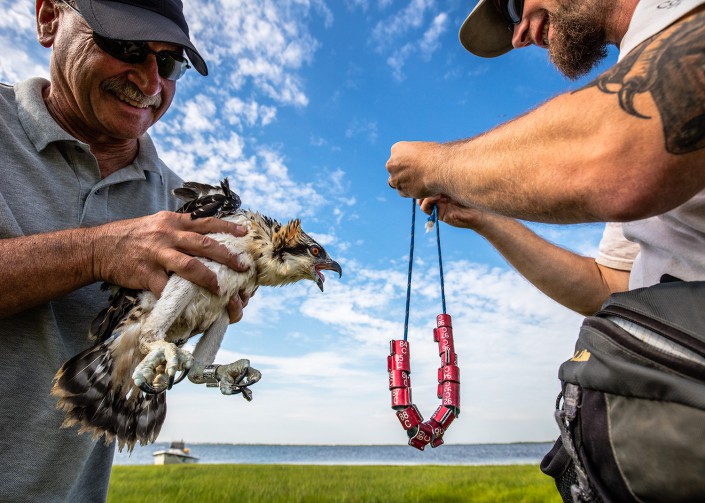
Bill Clarke, project supporter holds a young and feisty osprey that Ben Wurst prepares to band with a red auxiliary band on Barnegat Bay. July, 2015. Photo by Northside Jim.
Today, we released the 2015 New Jersey Osprey Report with our partner New Jersey Division of Fish and Wildlife’s Endangered and Nongame Species Program (ENSP). The report highlights the continued recovery of this threatened bird of prey.
“Ospreys are an important indicator of the health of our coastal ecosystems, so it is important to track the health of their population. Their continuing recovery is a very promising sign for our estuaries and the fish and other wildlife that depend on clean water to survive” stated Conserve Wildlife Foundation executive director David Wheeler. “Today, no visit to a coastal waterfront would be the same without the magnificent sighting of an osprey soaring above or crashing down to the water’s surface for a fish.”
Though only about 50 osprey pairs remained in New Jersey in the early 1970s, the report documents close to 600 pairs using a total of 534 active nests in 2015, more than any other year in the project’s history.
CWF and ENSP survey an estimated 80% of the population and create an accurate representation of overall health. Biologists have come to rely on the assistance of specially trained volunteers (osprey banders) and many “Osprey Watchers” who report nests on Osprey-Watch.org.
“The vital work of our volunteers helps us keep our finger on the pulse of the population,” said Kathy Clark, supervising biologist with the DEP’s Endangered and Nongame Species Program. “Having dedicated volunteers is a great long-term monitoring tool and really strengthens the team’s ability to cover the state osprey population effectively.”
“Over the past few years we’ve really seen a shift in how we can track the overall health of the osprey population. In previous years, the use of aerial helicopter surveys to document the size and health of the statewide population allowed biologists to reach large areas, but was also very expensive,” stated Conserve Wildlife Foundation habitat program manager Ben Wurst. “Today, we utilize volunteers to help collect much of this valuable data. These ‘Osprey Watchers’ can view all nests, report nest activity, and other data online that we can, in turn, use to track the statewide population. The use of Osprey-watch.org also helps to raise awareness and educate citizens about ospreys and current environmental issues that aquatic ecosystems face today, including global climate change, depletion of fish stocks, and environmental contaminants.”
As in previous years, biologists and dedicated volunteers conducted ground surveys in mid-summer. These surveys were conducted in the most densely populated colonies of nesting ospreys in New Jersey. From the Meadowlands, south to Cape May, and west along Delaware Bay, a sample of each major colony is checked and nest outcome data are used to determine how well our ospreys are faring. During these surveys, the health of nestlings is assessed and they are banded with USGS bird bands for future tracking. Since this is usually the only visit to nests each year, the condition of the nesting platform is also noted and repairs or replacement are scheduled for the non-breeding season.
In 2015, CWF continued to band young ospreys produced in Barnegat Bay with a red, alpha-numeric coded auxiliary band. Project RedBandis focused on ospreys that nest in the Barnegat Bay watershed from Point Pleasant to Little Egg Harbor. The main goal of the project is to engage the public in osprey management and conservation along the Jersey Shore. At the same time, while collecting data from re-sightings, biologists will learn about their dispersal, foraging habits, site fidelity, migration routes, and life span. This year 33 bands were deployed, putting the total in the field at 95. 2016 marks the first year that red banded ospreys (from 2014) will start to return here from their wintering grounds in South America.
2015 Report Highlights:
In 2015, 423 known-outcome nests fledged an average of 1.74 young per active nest. That rate has averaged 1.75 in recent years, remaining well above the minimum necessary for a stable population (1.0 young/active nest).
The 2015 productivity rate was near the long term average and suggests the population will continue to grow.
Thirty-one new nests were found this year, and we combined that number with last year’s census to estimate the overall population close to 600 pairs.
The next statewide census will occur in 2017.
Of the 423 known-outcome nests, 347 were found along the Atlantic Coast and 76 were found on Delaware Bay.
A total of 737 young were produced from these known-outcome nests.
A total of 432 young were banded by volunteers and biologists with USGS leg bands for future tracking.
Population growth remains around 10% since approximately 2009.
You can help protect New Jersey’s ospreys and all other rare wildlife by supporting ENSP’s New Jersey Endangered Wildlife Fund when you file your state income tax this year and every year. Simply look for Line 59 on your NJ 1040 income tax return, and check-off for wildlife. Every dollar you donate goes directly to ENSP, enabling biologists to continue their work to restore, conserve and enhance New Jersey’s populations of rare species. What’s more, your contribution is matched with an equal amount of federal funding, further strengthening efforts to protect hundreds of imperiled species.
Lindsay McNamara is the Communications Manager for Conserve Wildlife Foundation of New Jersey.
Interested in Helping Amphibians Cross the Road this Spring?
by Kelly Triece, Private Lands Biologist
Spotted Salamander Crosses a busy road to reach a nearby breeding pool. Photo by Kelly Triece
Amphibians, our harbingers of spring, are soon to be calling in the swamps, pools and woodlands of New Jersey. Thousands of salamanders, frogs, and toads make short, stealthy migrations through the forest to breed and lay their eggs in breeding pools every spring.
However, vehicle mortality during amphibian migration season is a big issue for small animals like amphibians. A single vehicle can harm dozens of the slow-moving animals as they try to cross the road during migration. High traffic volumes can wipe out entire populations over time. For Conserve Wildlife Foundation biologists, this means we will be out on the roadways helping secure safe passage for these amphibians.
Since 2002, we have worked to protect early-spring breeding amphibians like the wood frog, spotted salamander, Jefferson salamander, and spring peeper during their annual migrations. Last year at our biggest Amphibian Crossing site, we assisted 2,684 Spring Peepers, 1,100 Spotted Salamanders, 270 American Toads, 139 Wood Frogs, 95 Jefferson Salamanders and 18 Red-spotted newts cross the road!
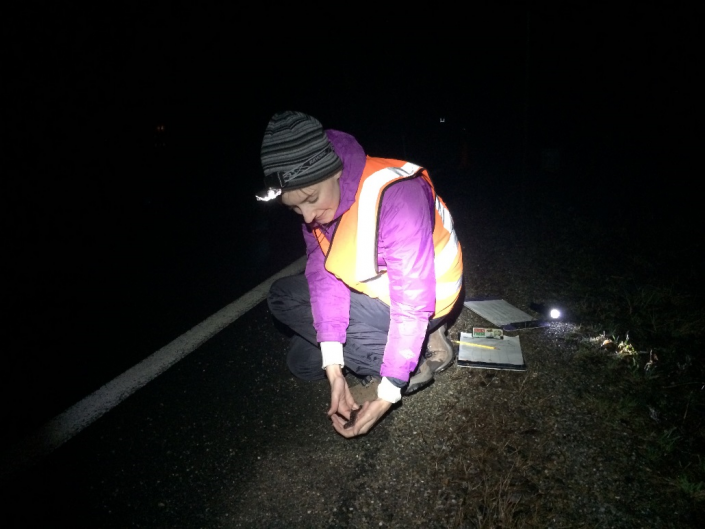
The Amphibian Crossing Project relies on volunteers like you. Amphibian migration is completely weather-dependent, but usually occurs between March and April, three-five nights a year. We work in evening shifts and scan the road for crossing amphibians, record species, and number of animals crossing.
If you are interested in volunteering with our Amphibian Crossing Project at locations in North Jersey, please contact Kelly Triece. Volunteers must be 18 years or older.
A volunteer assists in CWF Amphibian Crossing Project. Photo by Kelly Triece.
The Amphibian Crossing Project aims to secure funding for amphibian crossing tunnels at two priority sites. This is part of a larger effort led by the Division of Fish and Wildlife called Connecting Habitat Across New Jersey (CHANJ). CHANJ aims to identify key areas and actions needed for preserving and restoring habitat connectivity for terrestrial wildlife in New Jersey. CHANJ has the potential to increase the sustainability of New Jersey’s terrestrial wildlife populations and de-list endangered species. #CHANJiscoming
Stay tuned as the amphibian attempts to cross the road once again!
In New Jersey and throughout the world, almost every ecosystem is under some degree of disturbance caused by human impact. In particular, urbanization and deforestation often have negative consequences on ecosystems because they typically lead to overall habitat loss. A reduction in available habitat creates habitat fragmentation, where an ecosystem becomes segmented and broken apart. Habitat fragmentation can have multiple negative effects on wildlife, including dispersal, genetic isolation, and community structure impacts. Here in New Jersey, wildlife species are up against steady urbanization and a dense network of roads compromising the connectivity of habitat and wildlife populations. Today, the state of New Jersey remains the most densely populated state in the country occupying about 39,000 miles of public roads.
Connectivity is vital for wildlife. Different color habitat patches represent different resources essential for survival. Lines represent possible corridors connecting patches.
In order to maintain diversity and sustain healthy wildlife populations, we must connect various fragmented habitats and wildlife communities. Animals need to be able to move through the landscape to find food, shelter, mates, and other resources. Without that ability to move, healthy populations cannot persist over the long term. In order to curb the effects of roads and habitat fragmentation, wildlife road crossing structures can be installed to reduce wildlife road mortality. In addition, wildlife habitat corridors can be prioritized for land management, restoration and acquisition.
What is New Jersey doing to create habitat connectivity for our state’s diverse wildlife?
Connecting Habitat Across New Jersey(CHANJ) was formed in 2012 by the Division of Fish and Wildlife, with the vision of making our landscape and roadways more permeable to wildlife movement. CHANJ represents a blueprint for strategic habitat conservation that will identify key areas and the actions needed for preserving and restoring habitat connectivity for terrestrial wildlife in New Jersey. CHANJ has the potential to increase the sustainability of New Jersey’s terrestrial wildlife populations and de-list endangered species. Connecting populations of wildlife will improve gene flow and allow wildlife to move freely throughout the landscape.
How can you help?
Be mindful of wildlife while driving: Peak wildlife crossing season occurs in the spring and summer as wildlife travel to find food and mates. If wildlife such as amphibians and turtles are on the road, safely pull over and carry them to the shoulder in their direction of travel. Always be mindful of safety and do not attempt to handle any wildlife if you are not comfortable.
Conserve Wildlife Foundation of New Jersey today released the 2015 Bald Eagle Report, highlighting the number of nesting pairs, active nests and nest productivity for the raptors throughout New Jersey with data collected by New Jersey Department of Environmental Protection Division of Fish and Wildlife biologists, CWF biologists and committed volunteers.
“With 161 pairs of bald eagles this past year — up from just a single nest in the early 1980’s — the dramatic ongoing recovery of bald eagles across the northeast continues to inspire so many of us,” said David Wheeler, Conserve Wildlife Foundation Executive Director. “The thrill of seeing a bald eagle fly across the sky is unparalleled. This report captures how these eagles are continuing their All-American return.”
The report notes that thirteen new eagle pairs were found this season, nine in the south, two in Central Jersey and two in Northern New Jersey.
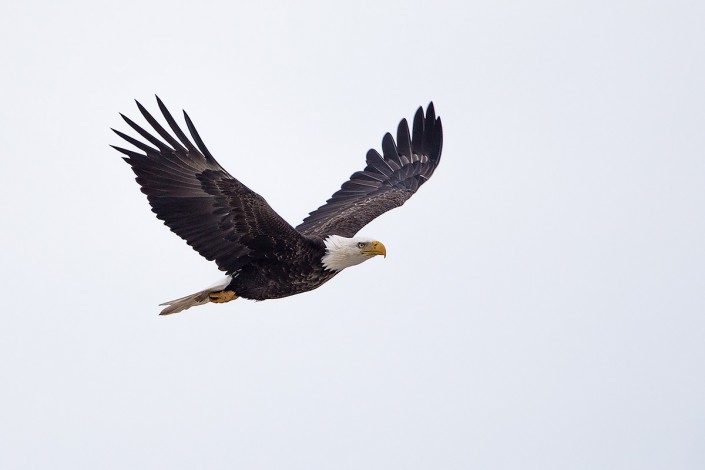
With a wingspan of six to seven feet, bald eagles are larger than most birds. The bald eagle is restricted to North America and is usually found within close proximity to open water. In New Jersey, bald eagles reside year-round, usually remaining in the area surrounding their nest. They begin courtship and nest building in late December and January, adding to their existing nest. Over time, some nests can reach 10 feet across and weigh up to 2,000 pounds.
Conserve Wildlife Foundation partners with Duke Farms on a webcam that provides a live look at a bald eagle nest in Hillsborough, New Jersey. This spring, the EagleCam will allow viewers an up close and personal view into the lives of a pair of bald eagles as they breed, incubate, and raise young. Between the general public and classrooms up and down the east coast, the EagleCamhas many fans – over 10 million viewers and growing!
The federal government removed the bald eagle from its list of Endangered Species in August of 2007, but the bald eagle’s official New Jersey status remains state-endangered for the breeding season and state-threatened for the non-breeding season.
“One of our encouraging findings is that the population of wintering bald eagles has grown along with the nesting population over the past decade,” said Conserve Wildlife Foundation eagle biologist Larissa Smith. “This growth reflects the increasing populations in New Jersey and across the northeast, as recovery efforts continue to pay off for eagles. In addition to our fellow scientists in New Jersey and nearby states, I’d like to thank the wonderful eagle project volunteers who make keeping track of all these nests possible.”
The Division of Fish and Wildlife’s Endangered and Nongame Species Program (ENSP) bald eagle recovery efforts, implemented in the early 1980’s, have resulted in a steady recovery of New Jersey’s bald eagle population. ENSP biologists, Conserve Wildlife Foundation of New Jersey staff, and volunteer observers continue to locate and monitor bald eagle nests and territories each year to analyze the state of the population. The state’s eagle population would not be thriving without the efforts of the dedicated eagle volunteers who observe nests, report sightings, and help protect critical habitat.
The statewide population increased to 161 territorial pairs in 2015, up from 156 last year.
Thirteen new eagle pairs were found this season, nine in the south, two in central and two in northern New Jersey.
One hundred-fifty pairs were known active (meaning they laid eggs), up from 146 last year.
One hundred twenty-two nests (81%) were known to be successful in producing 199 young, for a productivity rate of 1.33 young per known-outcome active nest, which is above the required range of 0.9-1.1 young per nest for population maintenance.
One chick, orphaned from a Maryland nest, was fostered into a Cumberland County nest and fledged, bringing the total fledged to 200.
Twenty-eight (19%) nests failed to fledge young.
The Delaware Bay region remained the state’s eagle stronghold, with 40% of all nests located in Cumberland and Salem counties.
Volunteers and Students from Cape May County Technical School
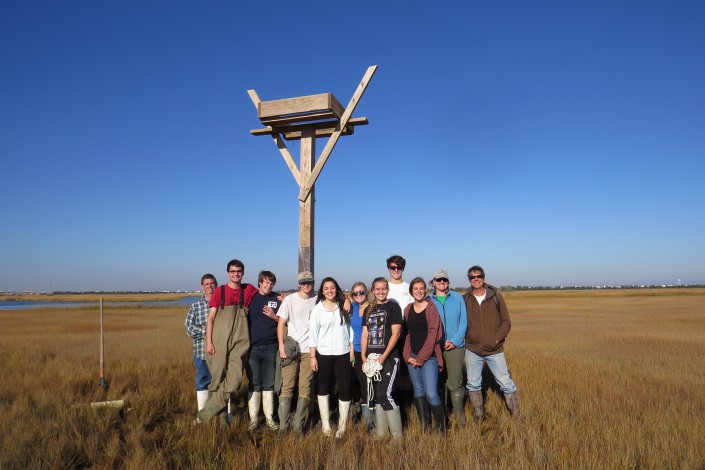
One lucky pair of ospreys received a brand new nesting platform due to the effort of volunteers and students from the Cape May County Technical School! Dedicated osprey project volunteer Matt Tribulski reached out to CMC Tech Natural Science teacher Hanna Toft, regarding replacement of an aging platform in the Avalon back bay. Hanna is an osprey project volunteer and bander and incorporates the osprey project into her curriculum. The nest that was replaced was an old four poster that was unstable and not predator proof. The nest was located at the edge of the water causing the birds to get off the nest every time a boat or jet ski went by (which in the summer is quite frequently).
Hanna had a platform available that her students had built last year. We couldn’t have picked a better day for the install, the weather was gorgeous and warm for November. We met Hanna and eight of her students out on the water. The new platform was placed further back from the water and has a predator guard. The students removed the old platform, leaving some posts for the ospreys to perch.
We hope that the birds like their new home when they return in the spring.
Thank you to Matt, Hanna and her students for all of their help!