Meet the 2015 Honorees: MacKenzie Hall, Women & Wildlife Inspiration Award Winner

Wildlife Biologist Celebrated for Inspiring Non-Scientists of All Ages to Become Passionate Conservationists

by Lindsay McNamara, Communications Manager
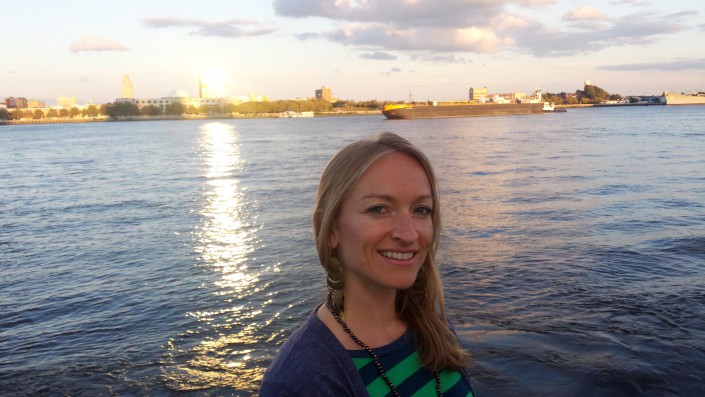
MacKenzie Hall, 2015 Women & Wildlife Inspiration Award Winner

A powerful force behind the conservation of wildlife in New Jersey, MacKenzie Hall began working as a wildlife biologist for Conserve Wildlife Foundation in 2004 and was been involved with projects spanning bat colonies, migrating amphibians, and grassland birds. What is most remarkable about Ms. Hall, however, is her ability to motivate the public to participate in these projects, inspiring non-scientists of all ages to become passionate conservationists.

 
Ms. Hall has supported and participated in bat research projects throughout the state. She took part in colony monitoring, mist-netting, and banding, working through many nights in order to benefit these enormously important species. In 2012, she launched a “Bats in Buildings” program offering New Jersey homeowners bat-friendly “eviction” resources, as well as free bat houses for displaced colonies.


In addition to her involvement in bat conservation, Ms. Hall is a passionate advocate for New Jersey’s amphibians and reptiles. She worked to address amphibian mortality on state roads, teaming up with working groups to help species of frogs and salamanders safely cross roads during their spring breeding season. She successfully coordinated amphibian surveys throughout the state, a task requiring road closures, the cooperation of multiple municipalities, the recruitment and training of volunteers, and the willingness to work outdoors overnight on cold, rainy nights!

 
In her work to implement conservation programs such as the Natural Resources Conservation Service’s Wildlife Habitat Incentive Program, Ms. Hall’s keen understanding of the process and positive attitude turned many farmers and landowners alike into dedicated environmental stewards.


Join us to honor MacKenzie and the two other 2015 Women & Wildlife Award Winners on Wednesday, October 28 beginning at 6pm. Purchase events tickets and find more information.


We asked MacKenzie a few questions about what working in wildlife conservation means to her:


What motivates you to get out of bed each morning and go to work?

So much to do!  Somehow the day always ends with more on the to-do list than it started with.  Working statewide means a lot of ground to cover, a lot of emails to answer, and a lot of people to convince that the bats in their eaves aren’t looking to murder their family.  Every day is a different adventure, even if I never leave my desk.  Days that I actually get to spend up-close with animals or see our work making a difference – like finding kestrel eggs in a nest box we put up for them, or cupping a beautiful salamander in my hands and moving her to the safe side of the road – those are the little moments of glory that make it all feel so simple.  It’s also really great to work with people who look at the world the same way I do, and who I can keep learning from.


What do you find most challenging about your profession?

Same answer as the last one, I think.  This is work that’s never done.  We rarely get to clap our hands together and say, “Ok, that species is saved, who’s next?”  Most of our successes take years and years, a lot of educating others, a lot of help from others, and endurance.


Name one thing you can’t live without.

Sunshine…summertime.  These crisp October days feel clean and refreshing, but I don’t want to close the windows and put a coat on!  I want to bask in the sun like a turtle.  I want sand that’s almost too hot to stand on.  I want to run around in a tank top and pick berries and stay out in the balmy night in flip-flops, with frogs screaming from the trees.


What interests you the most about New Jersey’s wildlife?

Most of them live at or near some interface with the human world, because so much of New Jersey is covered in our footprints.  We’ve got falcons on skyscrapers and shorebirds raising their chicks between houses and beach umbrellas.  And yah, colonies of bats living up in the eaves.  There’s a sense of sharing, because we’re all trying to make the most of our little spaces.  We have so many chances to connect and commune with wildlife on common ground, if we just pay attention and learn to share nice.


Name one piece of advice you would give to someone who wants to change the world.

Figure out what you want the change to look like, and start with you.  Be a positive example for the people who are close to you, and they’ll help you pass it forward.  Don’t get too frustrated by the ones who don’t.


Please join us on Wednesday, October 28, 2015, from 6:00 – 9:00 p.m. at Duke Farms in Hillsborough, New Jersey to honor the contributions that MacKenzie Hall, Tanya Oznowich, and Pat Hamilton have made to wildlife in New Jersey.


This year’s very special event will feature keynote speaker Governor Christine Todd Whitman. The event will also celebrate CWF’s past decade of honoring women for their success in protecting, managing, restoring, and raising awareness for the Garden State’s endangered and threatened wildlife species.


Learn more:


Lindsay McNamara is the Communications Manager for Conserve Wildlife Foundation of New Jersey.
A Second Chance At Life

CWF Biologist and Volunteers Find Foster Home for Osprey Chick

by Meghan Kolk, Volunteer

On July 6, I had the opportunity to participate in an osprey banding project with Larissa Smith (Wildlife Biologist/Volunteer Manager) and her husband Matt, who have been banding ospreys for many years. I was thrilled that Larissa invited me to tag along because I knew that it would be an amazing experience, but I had no idea it would be a day that I would never forget. I was expecting to get some good pictures and maybe even get to hold an osprey, but we came upon a situation that would make the day so much more rewarding.

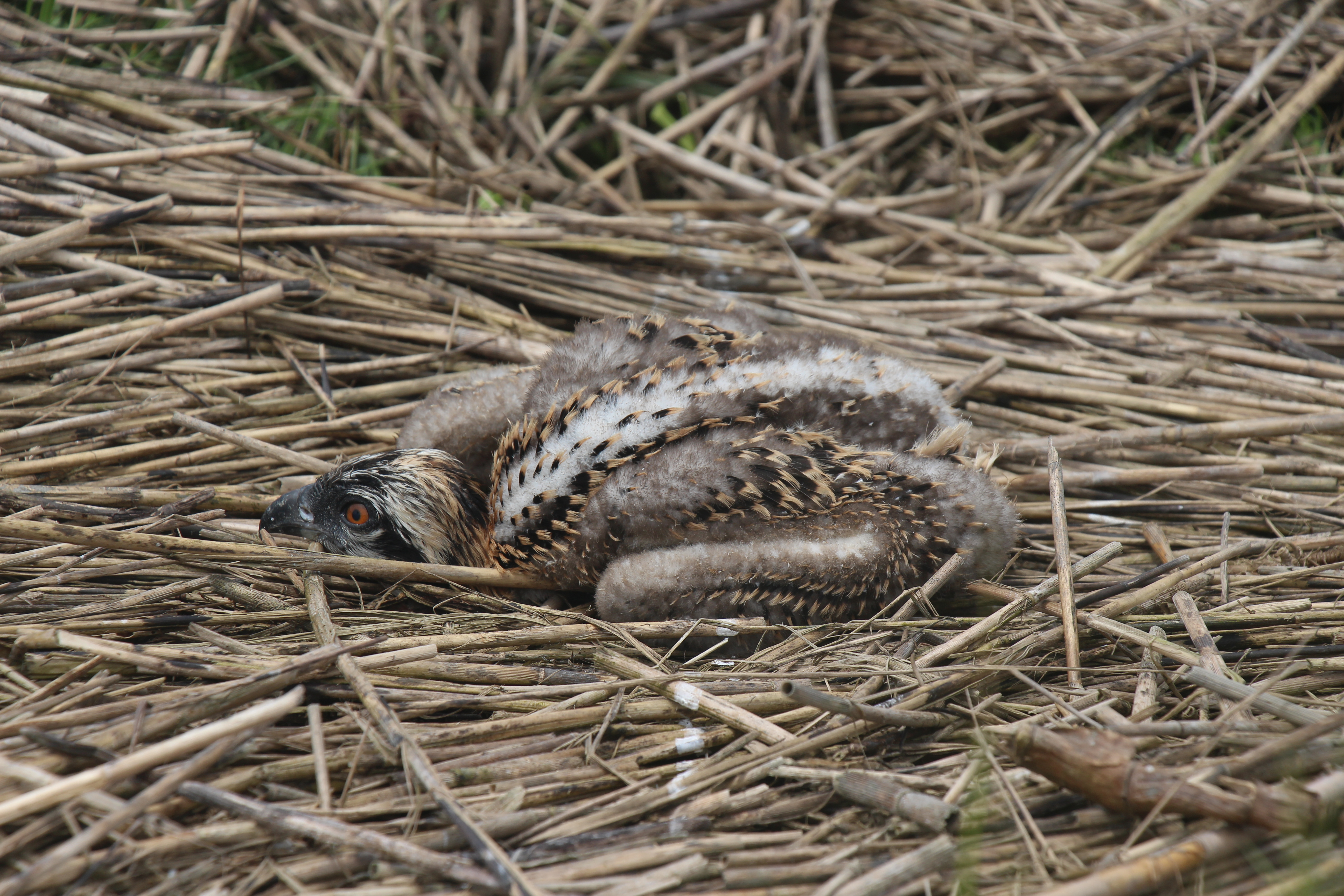
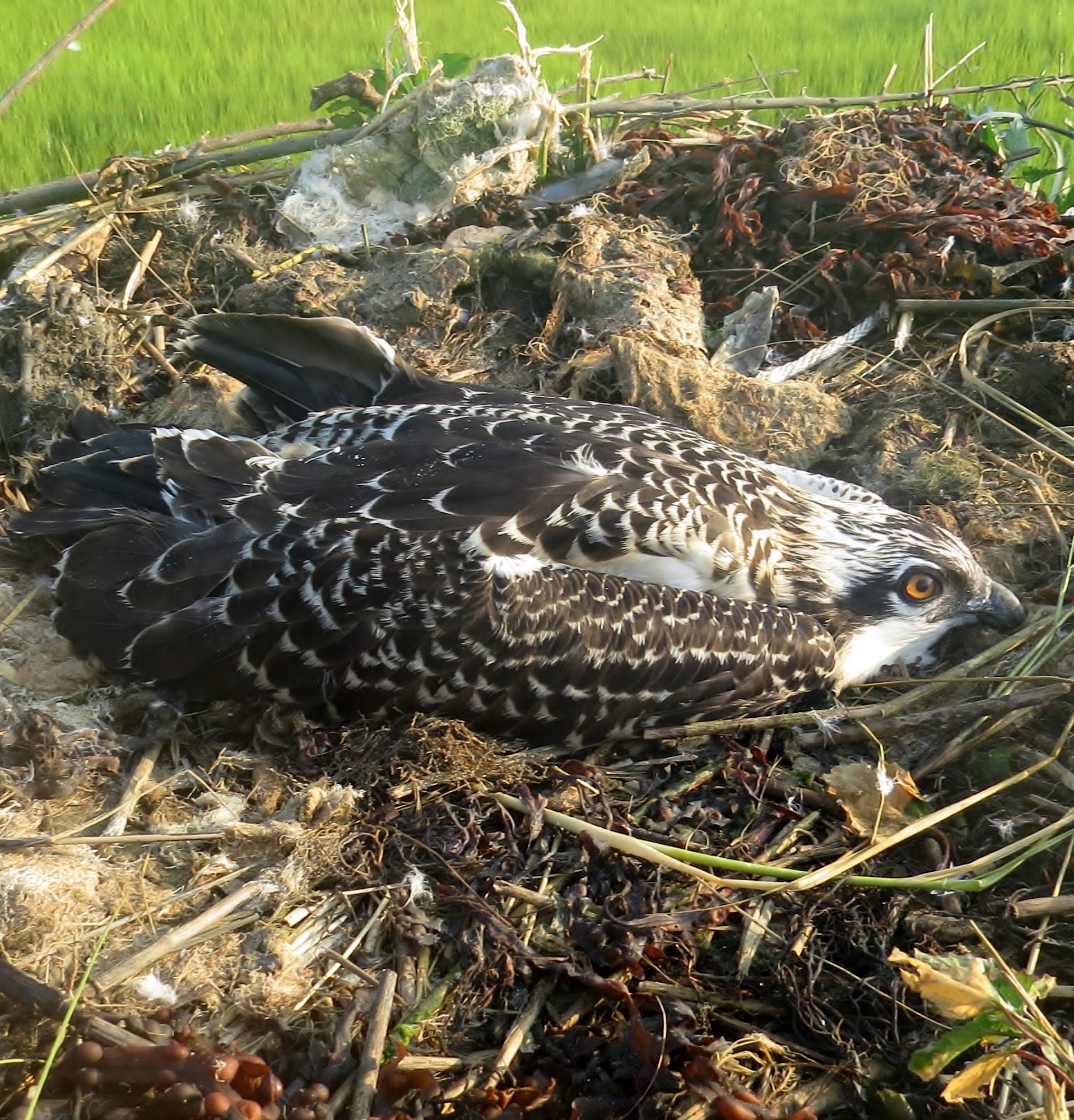
osprey chick found on ground July 6th, 2015, Avalon @ M. Kolk
Osprey chick found on ground July 6, 2015, Avalon Photo by M. Kolk

About half way through the day as Matt approached an osprey nest and got ready to climb up, he noticed a young osprey chick lying on the ground below the nest. It appeared weak and dehydrated, but uninjured. The nest above contained two older and larger chicks, and it became evident to us that the young runt was most likely pushed out of the nest by it’s competitive siblings. Our first thought was to put the chick back in the nest, however we knew that it would ultimately suffer the same fate, especially in it’s weakened condition. Our second thought was to take it to a rehabilitation facility, but since it did not appear to be injured we thought it would be best to keep it in the wild if possible. This brought us to our third option…find a foster home.


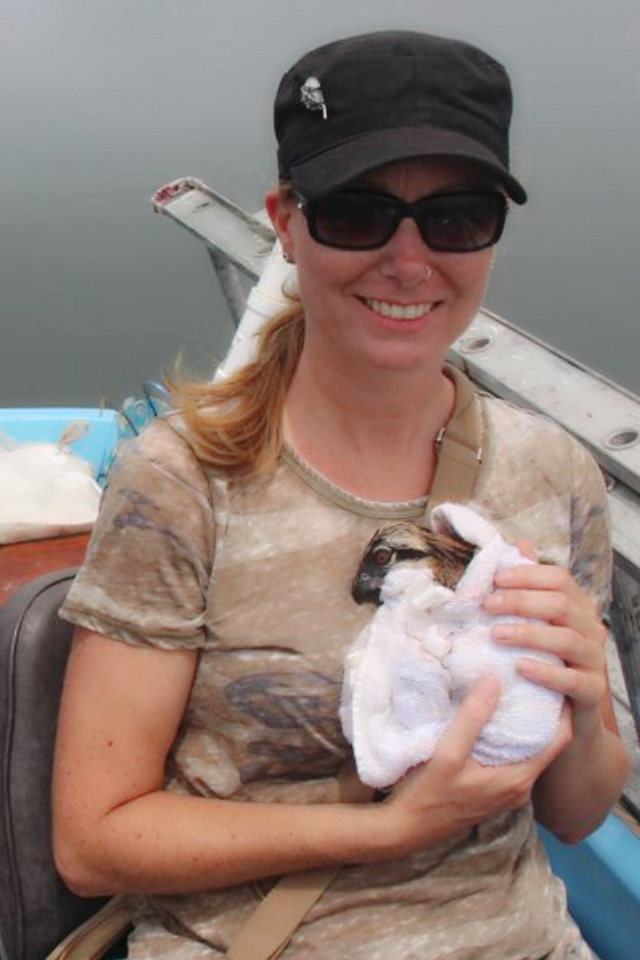
Meghan with chick@ L. Smith
Meghan with chick Photo by L. Smith

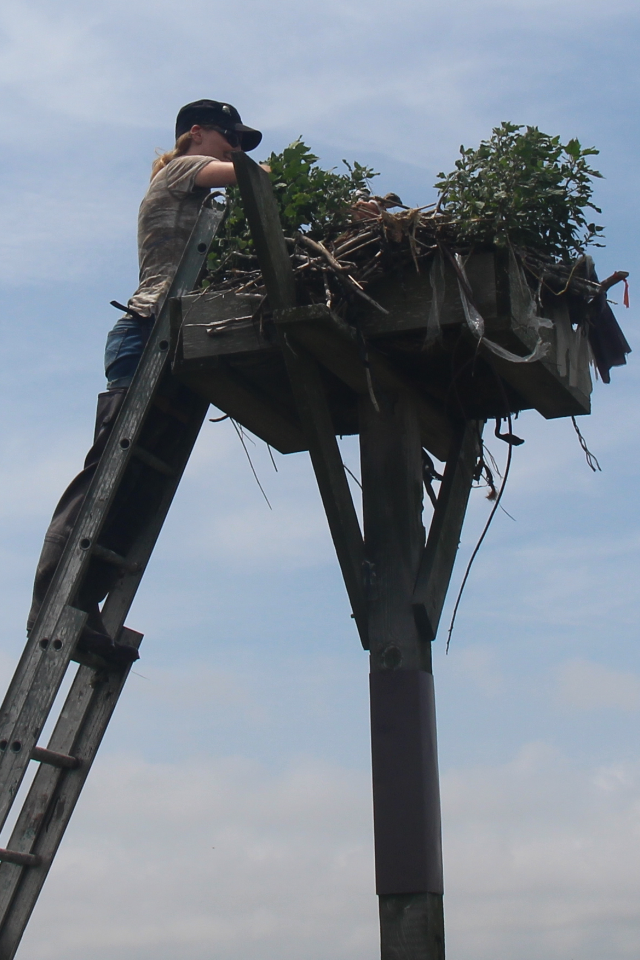
We offered the chick some much needed water and carried it back to the boat. I had the pleasure of holding and comforting our chick on the boat ride as we searched for the perfect nest. We came upon an empty nest holding three eggs which never hatched. The parents were lingering nearby and still seemed interested in parenting. We decided to give it a try. I was really enjoying my time with the chick and quickly grew attached, but I knew we had to get it into the care of some adults as soon as possible. Reluctantly, I climbed the ladder and placed the chick into it’s new home and said goodbye. We got back in the boat and watched from a distance to observe how the adults reacted.

Meghan placing chick into foster nest@ M. Tribulski
Meghan placing chick into foster nest Photo by M. Tribulski


One adult circled the nest many times observing from a distance. After several minutes it landed on the edge of the nest to get a closer look. I can just imagine the surprise and confusion it must have felt, but I was hoping that it was happy to see the little bundle of joy. After a few more minutes the partner joined in the nest, and we continued on with our banding to give them a little time to adjust.


Before finishing for the day, we went back to check on the nest. We were relieved to see both foster parents in the nest, and already protecting their adopted chick by swooping at us as we got close. It seemed as though they had already accepted the chick as their own.


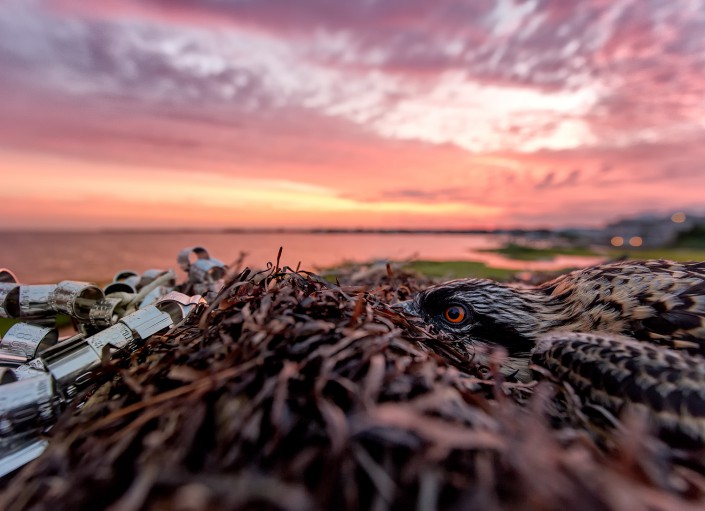
Two days later Matt went back to the nest to check on the foster family. The chick looked stronger and had a full crop. This made it clear that the parents were feeding it since the crop was completely empty on the day we found it. About three weeks later, at the end of July, he checked on the nest once more and found our foster chick in good health and growing. I was so elated to hear the news and to know that our rescue mission was a success and this wonderful bird got a second chance at life.

Chick in foster nest July 29th, 2015 @ M. Tribulski
Chick in foster nest July 29, 2015 Photo by M. Tribulski

This experience was so rewarding for me because even though we had to intervene, we were able to let the natural instinct of the osprey take over to raise this abandoned chick in need. I now have an even greater respect for ospreys because they will care for young that are not their own. This is an important characteristic for a threatened species to have in order to keep the population growing.


This particular chick experienced both the competitive instincts of it’s siblings fighting for survival, and also the protective instincts of it’s foster parents who put all of their energy into raising it. I feel so thankful to have been a part of this success story, and it reinforces all the reasons that I will continue to be a volunteer. Being able to make a difference even to just one individual is all the reward I need.


Learn more:


Meghan Kolk is a Volunteer for the Conserve Wildlife Foundation of New Jersey.

Help Bats in the Garden State

Build Bat Houses with CWF at the New Jersey WILD Outdoor Expo

by Ian Johansson, Eagle Scout Candidate and Conserve Wildlife Foundation Volunteer

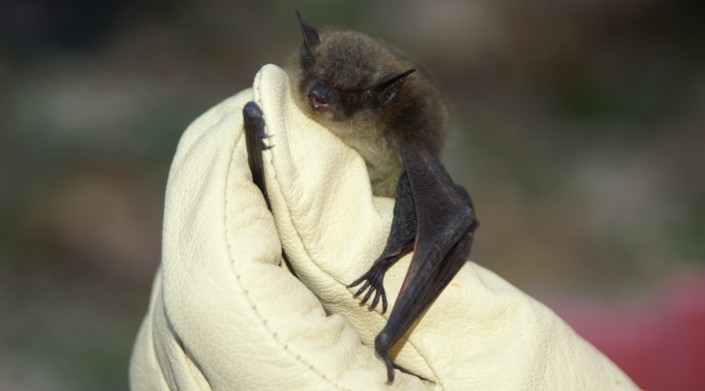
A little brown bat, one of several bat species which will be added to the state's list of Endangered species. Photo by MacKenzie Hall.
A little brown bat. Photo by MacKenzie Hall.

I first met Liz Silvernail when my sister and I were given the unique opportunity to hold an eaglet while biologists from Conserve Wildlife Foundation of New Jersey (CWF) took data. This took place in Brick, New Jersey. After speaking with Liz and explaining that I was beginning to consider what I should do as my Eagle Scout project, she was gracious enough to offer her assistance helping me find a project that I could complete with Conserve Wildlife Foundation.


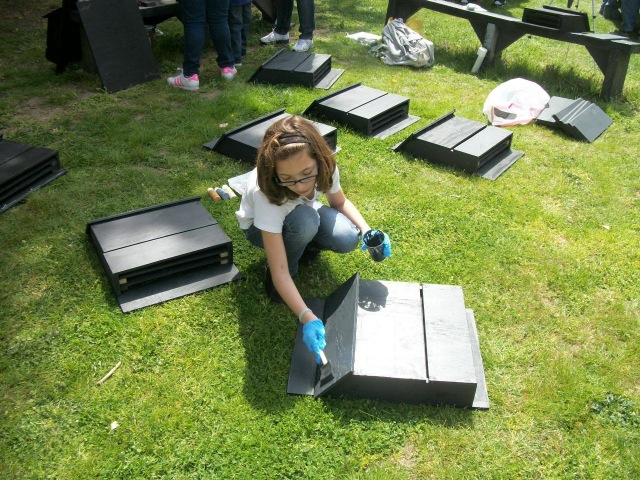
After introducing me to Stephanie Feigin, I was offered the chance to take on the project of building bat houses. The bat houses will be donated to Conserve Wildlife Foundation of New Jersey to put up before bats are evicted from attics, eaves, and buildings, so they can easily find a new place to roost. The bat houses will then be set up around the state to provide more suitable homes to bats that would otherwise be living in places that they were not welcome in or did not properly meet to their habitat needs.


Bat houses provide necessary roosting locations that cannot be provided in houses and buildings that bats inhabit if a proper living space is not readily available. Bat houses also provide spaces to raise young and hibernate, which is imperative for maintaining healthy bat populations.


Bats in New Jersey are the primary predators of night flying insects. They consume many of the pesky mosquitoes that swarm our backyards. Some bats can consume up to 4,500 insects nightly! A great way to help the bat population in New Jersey grow, is to build a bat house with us at the New Jersey Wild Outdoor Expo this weekend! The workshop is free. Materials are available on a first come, first served basis.


Stop by CWF’s tent at the Expo to learn more about bats and other imperiled wildlife species. You can always pick up plans to buy materials and make bat houses on your own.


Join us for the New Jersey WILD Outdoor Expo:

  • Saturday, September 12 and Sunday, September 13 from 10-5 PM
  • Colliers Mills Wildlife Management Area in Jackson Township, Ocean County
  • For online mapping directions and GPS navigation systems, use the address: 299 East Colliers Mill Road, New Egypt, NJ 08533
Bat houses getting the finishing touches.


Ian Johansson is an Eagle Scout Candidate and Conserve Wildlife Foundation Volunteer.

Banding Together: When the Shorebird Met the Biologist

Celebrating World Shorebirds Day, Sunday, September 6

by Lindsay McNamara, Communications Manager

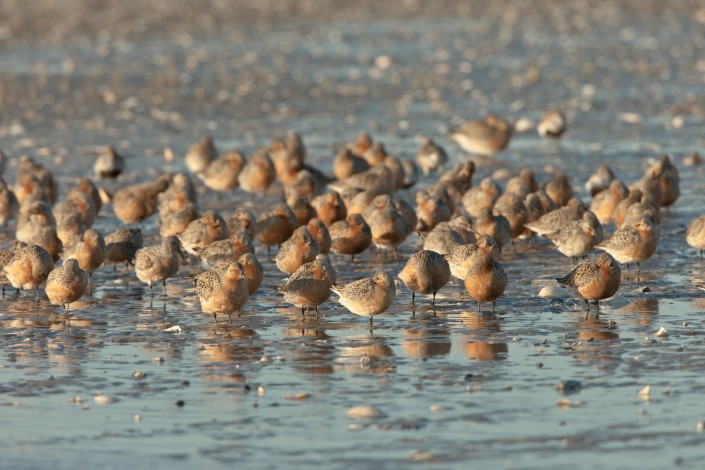
Red Knot Photo by: Jan van der Kam

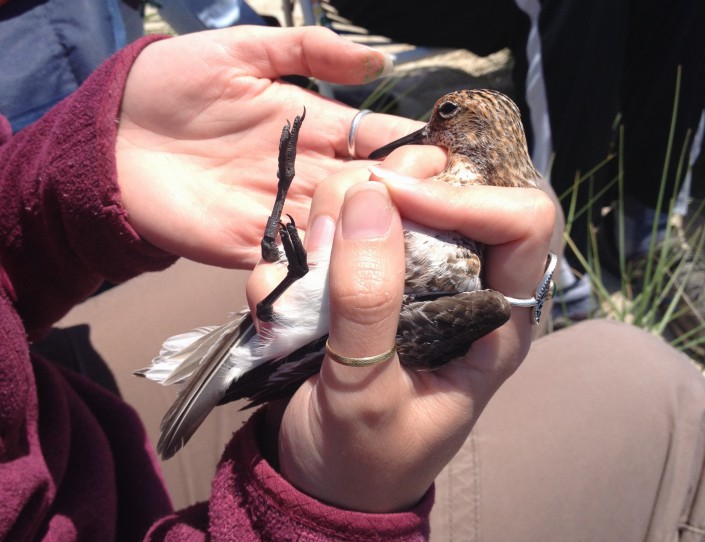
As a bird nerd, I’d often look on enviously at photos of biologists posted online holding shorebirds in their “bander’s grip” – the bird’s head in between their index and middle finger, using their thumb and pinky to steady the bird, while allowing its feet to dangle freely.

 
I always wondered: I wish I could do that! Hold a bird in my hands. Yet I never once thought: Wait, how did the bird end up in their hands in the first place?

 
I certainly hadn’t thought biologists run all over the beach chasing after shorebirds like a farmer chasing chickens – I just never thought the process all the way through.

 
This past summer, I was fortunate enough to become part of that process and learned exactly how a shorebird ends up in a biologist’s bander’s grip. The system may surprise you, but the steps have been mastered over nineteen years of practice, each one with shorebird safety as the top priority.


Conserve Wildlife Foundation (CWF)’s Delaware Bay Shorebird Project celebrated its 19th year this summer. The team members, led by Drs. Larry Niles of CWF working with Amanda Dey of New Jersey Division of Fish and Wildlife, are all extremely passionate about what they do and care deeply for the shorebirds they are studying and protecting.

 
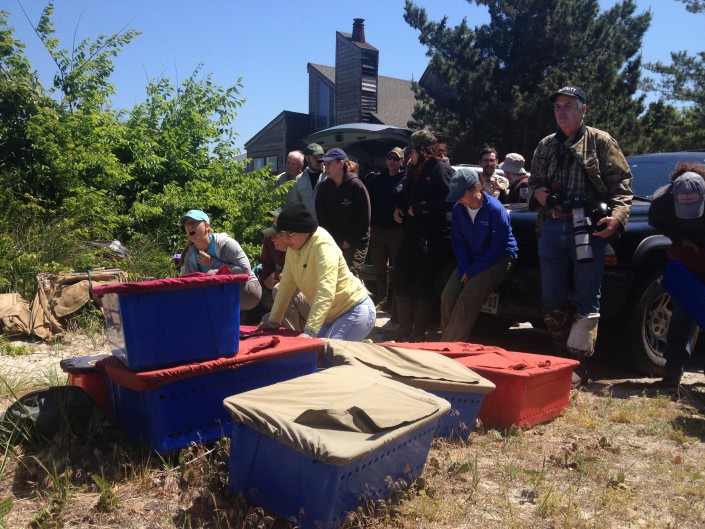
I arrived at the team’s house on Reeds Beach, along the Delaware Bayshore, early in the morning. Dr. Niles was concerned about the wind and had scoped out the safest beach for the banding that day. Our group of scientists, volunteers, supporters, interns and staff caravanned to Villas and joined our partner, American Littoral Society, at the site. We all picked up large, colorful plastic tubs, which had cloth covers that fit securely over the top of the box. The cloth cover had a Velcro pocket. We were told that these boxes would help in the shorebird “catch” that day. Larry and Mandy gave us instructions for how the banding day would go, safety tips and background information on the Delaware Bay Shorebird Project. We all listened intently and couldn’t wait for the day to begin!

The team waiting with our bins. Photo by Lindsay McNamara
The team waiting with our bins. Photo by Lindsay McNamara.

Well, we waited a bit before the day truly started. Dr. Niles and his team had binoculars with them and sat down in the sand, watching the shorebirds from afar for about an hour and a half. We waited by the cars up near the houses along the beach. The reason for the long wait? Dr. Niles and his team were waiting for the perfect moment to fire the net over top of the shorebirds along the coastline.

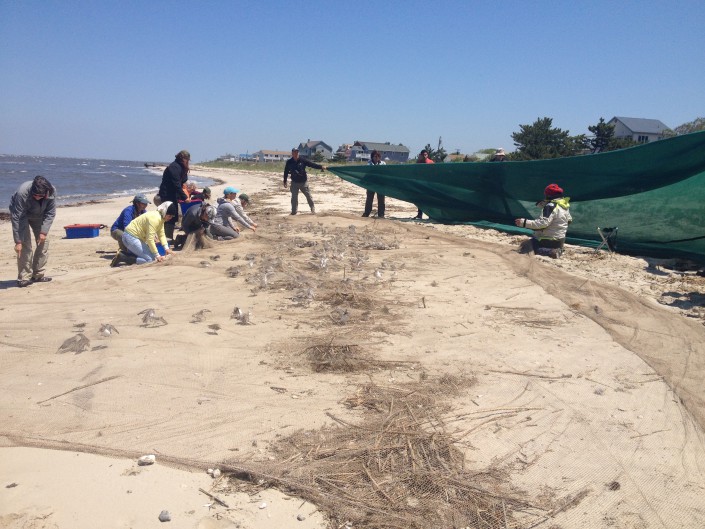
Biologists rolling away the net to reveal more shorebirds. Photo by Lindsay McNamara.

Cannons with gun powder charges fire heavy projectiles that carry the net over the birds only at the perfect moment – when birds are catchable and none in danger. Luckily, it was not a “wet catch,” that day, as the net did not go into the water. As soon as the cannon was shot, we all spirited single file carrying our tubs down the beach, following the biologists. The biologists immediately knelt at the base of the net and started picking up birds and shouting their identification and passing them to us, as they went they rolled the net away to reveal more birds.

 
It was very exciting! The idea was to get the birds out from under the net and into our carrying boxes and sealed in with a Velcro flap, as fast as possible, for the safety of everyone involved.

 
Each bin became devoted to the same bird species, so if the first bird that was handed to us was a sanderling, we kept putting only sanderlings in our bin. Once we had several birds in our bin, our pace completely changed. We walked very slowly away from the net, keeping the bin level at all times, towards the path in the sand at the beginning of the beach, to make the journey as safe for the birds as possible. There, biologists had burlap “keeping cages” for the birds to wait in. Birds were also sorted by species into these cages.

 
When every bird was taken out from under the net, and sitting in their temporary burlap enclosure, we formed “circles.” Each circle was composed of about 6 volunteers led by a core banding team member. Once formed birds were handed to us and finally, I learned how to safely hold a shorebird in my very own bander’s grip!

My very own bander's grip! Lindsay McNamara holding a sanderling.
My very own bander’s grip! Lindsay McNamara holding a sanderling.

Each bird received a metal band with a federal identification number, and a green tag with a three letter code. One person in the circle put the band on the bird and passed the bird to the next person, who placed the green tag on each birds’ leg and glued them shut. A recorder took notes on the band number and tag letters. Next, the birds’ wingspan and other data points were measured by other members in the circle. Lastly, the bird was weighed before it was released. During my trip with the banding team, we caught a large number of sanderlings and a few ruddy turnstones, federally listed red knots, and semipalmated plovers.

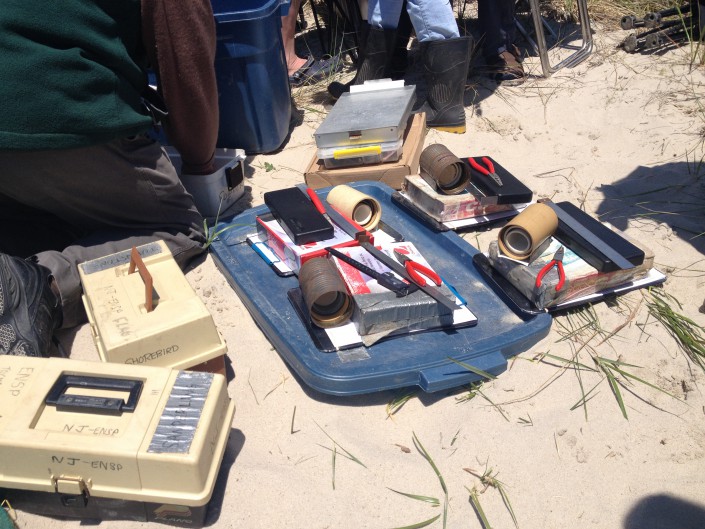
Banding team supplies. Photo by Lindsay McNamara.

Holding a shorebird in my bander’s grip was an amazing experience, but what I enjoyed most of all was taking part in the science of shorebird conservation. I placed the green tags on the shorebirds, which will tell other scientists who may recapture the birds that they once traveled to New Jersey. Our circle helped collect valuable data points, which will be combined with the data from the other years of the Shorebird Project, to assess the health of shorebird populations.

 
I wasn’t just holding a bird, I was helping the bird have a brighter future – and that is the best feeling any bird nerd can have.

 
Today is World Shorebirds Day! You can help shorebirds have a brighter future today by participating in the Global Counting Day Program. Join the hundreds of participants at over 93 locations that will count shorebirds and share their sightings online. Register today!


Learn more:


Lindsay McNamara is the Communications Manager for Conserve Wildlife Foundation of New Jersey.
Nature’s Chorus: Amphibian Calls

Conserve Wildlife Foundation Volunteers Survey For New Jersey Frog and Toads

by Larissa Smith, Wildlife Biologist/Volunteer Manager

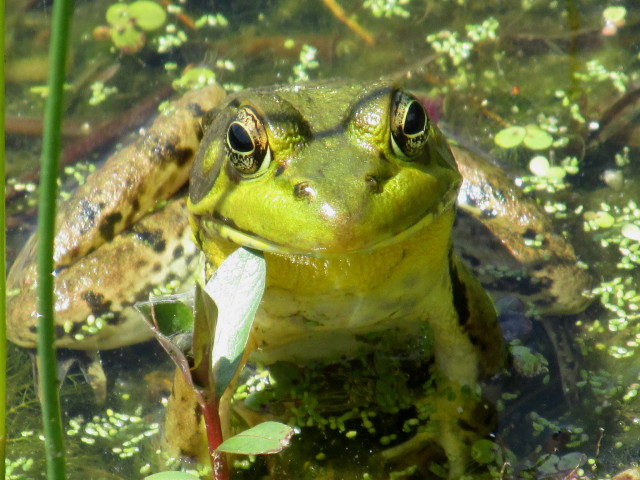
Green Frog photo by CAMP volunteer Lorraine Catt

Each spring, our Calling Amphibian Monitoring Project (CAMP) volunteers drive along a fifteen mile route after dusk, stopping at ten established stops along the route. They are hoping to hear the calls of some of New Jersey’s 17 species of frogs and toads. If they are lucky they’ll get to hear a chorus of several different species, sometimes so loud it’s almost deafening. Other times, they strain to hear a lone call from far away and many times they only hear the passing cars. It takes a dedicated volunteer to spend the time surveying and hearing only a few or no calls. But even the negative data is important, amphibians face many threats in New Jersey and establishing a long term database is key to learning about the population.


This season, twenty-one routes were surveyed and 16 of the 17 New Jersey frog and toad species were heard. The Eastern Spadefoot Frog was not heard this season. This year, the American Green Treefrog was recorded on one route in Salem County. This species of frog was first discovered in New Jersey in June 2011 in Salem County. The Northern Spring Peeper was heard on 19 out of the 21 routes, with Green Frogs heard on 15 routes and Northern Gray Treefrogs heard on 14 routes.

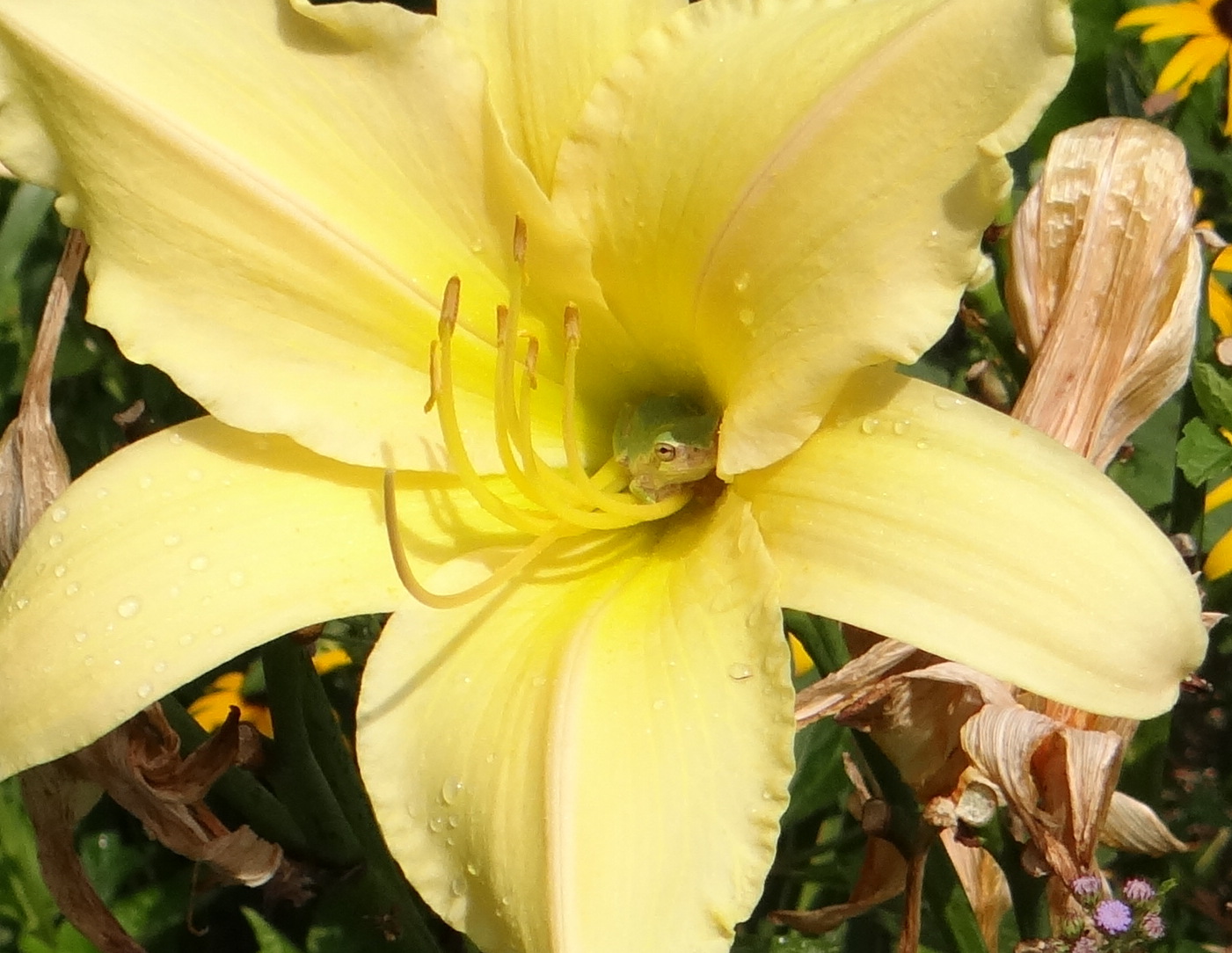
Gray Tree frog@ CAMP volunteer Marilyn Patterson
Gray Treefrog photo by CAMP volunteer Marilyn Patterson

There are 63 CAMP routes through out New Jersey. Currently 34 routes are available for the 2016 CAMP season. If you are interested in volunteering for the CAMP project, please contact Larissa Smith via email.


Learn more:


Larissa Smith is the Wildlife Biologist/Volunteer Manager for Conserve Wildlife Foundation of New Jersey.
Providing a Safe Haven for Diamondback Terrapins

A Closer Look at Project Terrapin, a Growing Initiative that Focuses on Diamondback Terrapin Conservation

by Kiran Sinha, 2015 Project Terrapin Field Team Member and Wildlife Conservation Intern

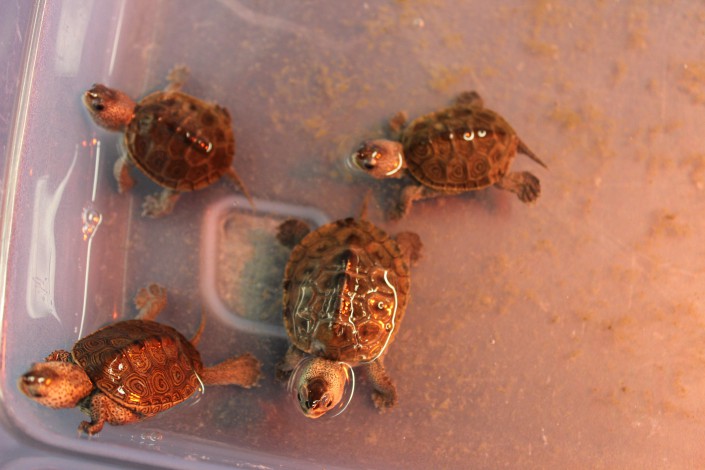
Terrapin Hatchlings by Kiran Sinah
Terrapin Hatchlings by Kiran Sinha

Diamondback Terrapins are a species native to coastal marsh areas in New Jersey. Terrapins are an interesting species, in part because they are the only native New Jersey turtle that has adapted to marsh habitats. Diamondbacks have been spotted all over the Great Bay area, increasingly so in the Manahawkin-Long Beach Island area. Although their shells are extravagant and beautiful, sometimes it is hard to notice them in the water, especially when it is dark and murky. Terrapins can travel by water and land; neither is safer than the other in the busy water and road ways of Barnegat Bay.


Diamondbacks in New Jersey have had a high mortality rate due to impact from cars and boats. In fact, only one in fifty hatchlings survive to a full-grown adult. One teacher and terrapin conservationist is trying to change that. Dr. John Wnek is a teacher at M.A.T.E.S High School in Manahawkin. Dr. Wnek is an avid terrapin conservationist and he incorporates it into his schoolwork as much as possible. For the past few years he has been rescuing terrapins in the Barnegat Bay area. Whether they are hit by a boat, a car, or trapped in a net, Dr. Wnek is there to help. He has many terrapins in his classroom, mostly those that he rescues. He introduced his love for terrapins to his students and they have joined in to help with a growing initiative, Project Terrapin.


For this project, Dr. Wnek and his students distribute over one hundred terrapin hatchlings to coastal high schools and colleges in New Jersey. These students and teachers keep their turtles in the classroom and take care of them for almost a full school year. At the end of May every year, the students and teachers from each school join at Island Beach State Park to release the hatchlings into the Barnegat Bay. When the turtles are hatched in the wild, they sometimes do not even make it to the marsh water or bay. Predators, such as seagulls, can pick them up easily when they are so small.


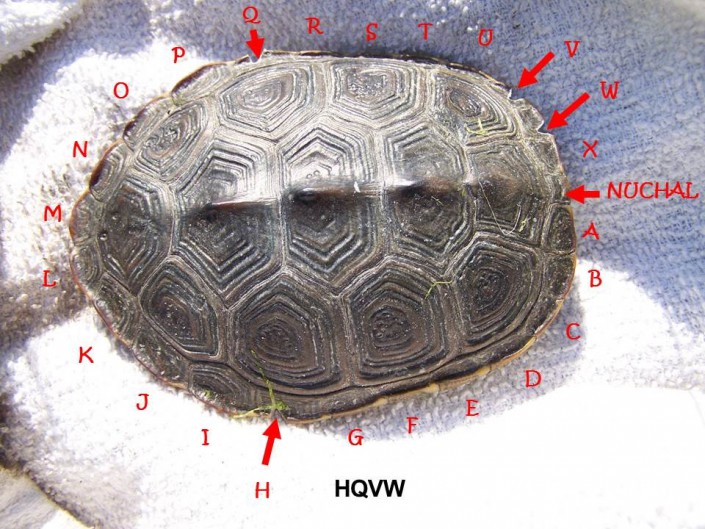
With the help from the schools, the terrapins are well fed and kept clean from diseases so they can finally be set free in their new homes. A very important part of maintaining the hatchlings while in the classroom is keeping track of them after they are released. Since the little turtles are too small to tag, we perform a procedure called notching. This process is like filing a human finger nail; it is quick, simple and painless. To notch a turtle shell, we use a filer to leave indents in the shell. As you can see from the pictures below, turtles have keratin plates that make up the shell, called scutes. In order to mark them accordingly to the year, we correlate each scute with the letter of the alphabet. This year we used the letters N and O, you can see the scutes that are marked on the hatchling and turtle. Once this process is complete, we finally set our little buddies go to where they can thrive and reproduce. The goal of this project is to help replenish the diamondback terrapin population, with the help of Dr. Wnek and his students, the next generation of terrapin conservationists.

Photo by Kiran Sinah
Photo by Kiran Sinha

Learn more:


Kiran Sinha is a summer 2015 Wildlife Conservation Intern with Conserve Wildlife Foundation of New Jersey and a 2015 field team member for Project Terrapin.

Lights, Camera, Action: Conserve Wildlife Foundation Releases New Video

New Video Showcases CWF’s Work to Protect the Garden State’s Wildlife

By: Lindsay McNamara, Communications Manager

Conserve Wildlife Foundation is thrilled to release a new video as an “introduction” to our work, keeping New Jersey’s wildlife in our future! We are a private, non-profit organization dedicated to the protection and preservation of New Jersey’s endangered and threatened wildlife and the habitats they depend on.


As the video demonstrates, we utilize science, research, wildlife management, habitat restoration, education and volunteer stewardship to help conserve and protect a variety of at-risk species of wildlife in New Jersey, the most densely populated state in the nation.


The video was produced by Tyler Grimm, a video intern with Conserve Wildlife Foundation.


Want to get involved? Learn more about Conserve Wildlife Foundation on our website.


Lindsay McNamara is the Communications Manager for Conserve Wildlife Foundation of New Jersey.
 

Project RedBand continues on Barnegat Bay

92 Ospreys Enlisted in Citizen Science Based Re-sighting Project

by Ben Wurst, Habitat Program Manager

A young osprey was banded with a color auxiliary band: 76/C for future tracking at a nest on Long Beach Island.
A young osprey named “Danny” was banded with a color auxiliary band 76/C for future tracking at a nest on Long Beach Island. Photo by Northside Jim.

This is the critical time of year for monitoring our nesting ospreys. Each year biologists and specially trained volunteers, aka Osprey Banders, conduct ground surveys by boat to monitor the state population. They visit or survey the most densely populated colonies of nesting ospreys: Sandy Hook, Barnegat Bay, Great Bay, Absecon, Ventnor-Margate-Ocean City, Great Egg Harbor Watershed, Sea Isle, Avalon-Stone Harbor, Wildwood, Maurice River, and parts of the Delaware Bay. These surveys have been conducted since the early 1970s when ospreys were not so common, with only 50 pairs in 1973.


Their recovery has been quite remarkable. With an estimated 600 nesting pairs throughout the state, our ospreys are in a much better position today. Why put so much time and effort into monitoring a seemingly healthy population? Even though their population is much larger than it was decades ago, ospreys still face a variety of threats that jeopardize their ultimate survival. It’s commonly known that ospreys face very high mortality rates in their first year of life. Before even leaving the nest their young are so vulnerable. They can fall or be blown out of the nest, predated by raccoons, crows, or eagles, killed by their own siblings, or die from starvation. After they fledge, then they need to learn to find and catch prey and avoid power lines and wind turbines. Then they need to learn to migrate south and avoid being shot in the process. Once they find a suitable wintering site, then they remain in the same area for the next two years. Then they return to their natal areas to find a suitable nest site and start their own osprey family!


Today, we need your help! We cannot reach all active nests in New Jersey. There is still plenty of time to help us keep track of the state population. Citizens are encouraged to submit sightings of activity at osprey nests on Osprey Watch, a global osprey watching community. In 2013 all of the known locations for osprey nests was released on Osprey Watch’s website. As a partner with Osprey Watch, we share and use the data collected to help determine the overall health of the population, which is summarized in our annual report.


To help engage our Osprey Watchers, we started Project RedBand, a citizen science based osprey re-sighting project. This is year two of the project. So far we’ve deployed 92 red bands (out of 100) on young produced at nests on Barnegat Bay (62 in 2014 and 30 in 2015). The young that were banded last year will start to return to New Jersey in 2016. Usually young adults return later than older adults, so the red banded birds might not be seen until May or June. That’s when they’ll find areas with high prey availability and suitable nest sites. Usually males don’t stray far from their natal areas but females do. With these red bands, we hope to learn a little more about where our ospreys are dispersing to and at the same time engaging our coastal communities in osprey conservation.


Learn more:


Ben Wurst is the Habitat Program Manager for Conserve Wildlife Foundation of New Jersey.
Be Terrapin Aware!

Public urged to use caution while driving in shore areas this summer

By: Ben Wurst, Habitat Program Manager and Stephanie Egger, Wildlife Biologist

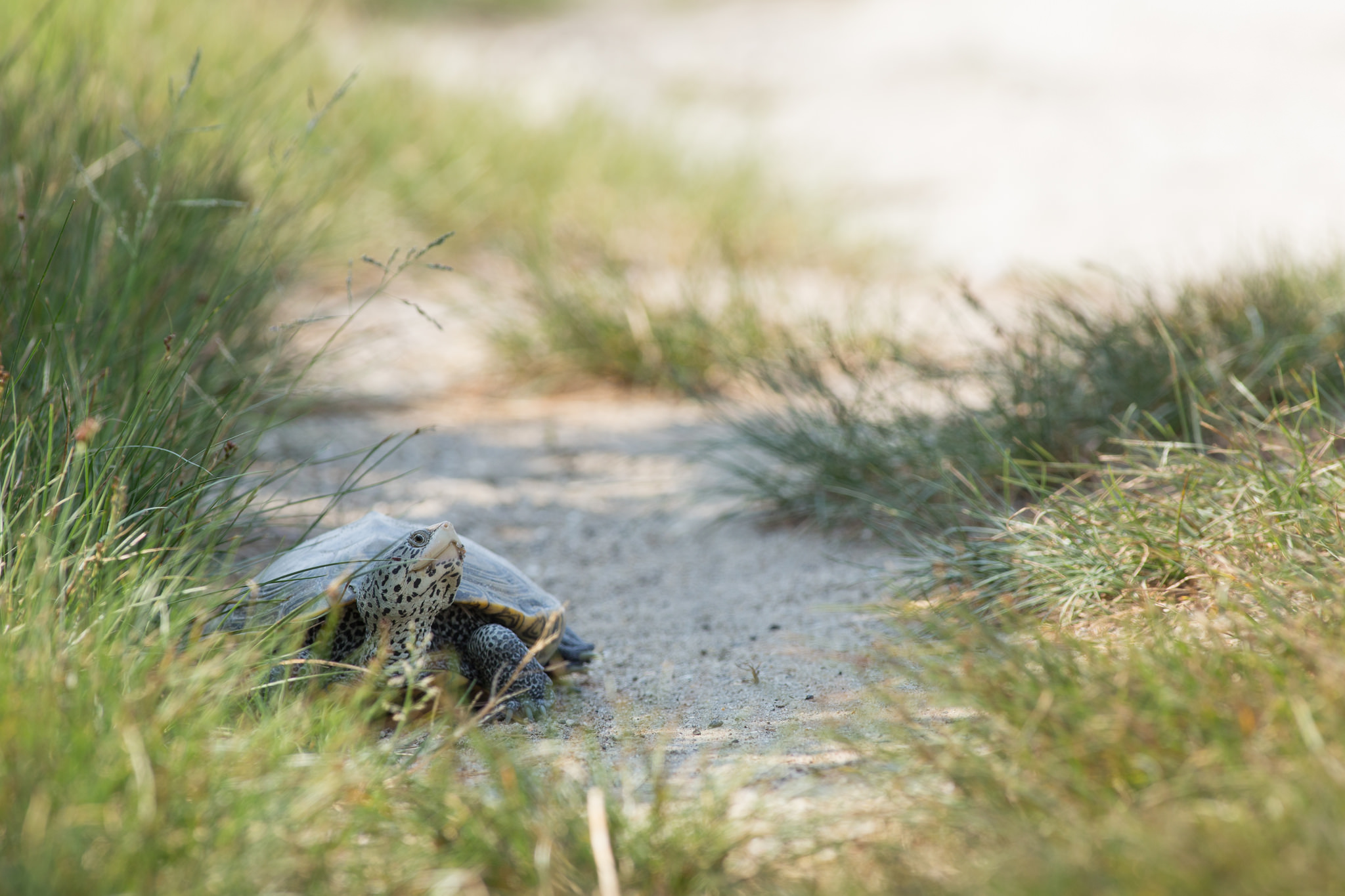
A adult female northern diamondback terrapin searches for a suitable nest site along Great Bay Blvd. Photo by Ben Wurst
An adult female northern diamondback terrapin searches for a suitable nest site along Great Bay Blvd. Photo by Ben Wurst

Each year in late May and early June the annual nesting season for northern diamondback terrapins begins. This unique species of turtle is the only one to inhabit our coastal estuaries year round. They live exclusively in brackish water.

During this time of year, adult females emerge from the protection of their aquatic habitat to find suitable areas to lay eggs. They seek nesting areas with a sandy gravel type substrate that’s above the high tide line.

Throughout their range along the coast, terrapins face a variety of threats to their survival. Terrapin nesting habitat has been lost due to commercial and residential development, shoreline hardening and flooding which poses a greater threat to these limited nesting areas. Loss of terrapin nesting habitat along marsh systems put terrapins at greater risk of mortality as a result of increased time searching for adequate nesting areas (Winters 2013). Terrapins will utilize roadsides for nesting which increases the threat of being hit by motor vehicles. Roads are essential to our daily life but they often are barriers to wildlife, especially small critters like terrapins. Studies have shown that adult females have become less abundant and smaller from road mortality. (Avissar, 2006).

You can help terrapins several ways during the nesting season. Driving more cautiously from now until mid-July is a simple way to be more aware of terrapins crossing the roads. Nesting peaks during the full and new moon cycles and they’re more active during the high tide (less distance to travel on land to nest sites). We ask drivers in coastal areas to “Be Terrapin Aware” while driving in these areas. If you find a terrapin crossing the road use these steps to help it cross safely:

  • Stay safe. Never put yourself at risk! Make sure that you do not endanger yourself, or others, by walking into traffic.
  • When safe to do so, pull your car over and onto the shoulder, if possible. Turn on your hazard signals.
  • When safe to enter the roadway, approach the turtle and pick it up by grabbing its shell with both hands between its front and hind legs. HOLD ON – Terrapins have strong legs!
  • It is important that you move the turtle in the direction that it is heading. They are not always headed directly towards water. They will turn around if you put them in the wrong direction, so work with their instincts.
  • Place the terrapin off the road onto the soft shoulder (dirt or grass).
  • If you have a GPS or a smartphone then record your location and submit your sighting on our website.
  • Please do not move a terrapin long distances to “somewhere safe!” They have very small home ranges and moving them will only hurt them.

Rescuing a live terrapin (or any other turtle) from the road is a rewarding experience. It’s a great way to engage future generations in caring for our terrapins.

You can also help terrapins during the nesting season by supporting our new “Turtle Gardens” project. CWF, in partnership with the Marine Academy of Technology of Environmental Sciencewill develop and implement an educational initiative to promote terrapin nesting habitat enhancement. These “Turtle Gardens” will raise awareness of the benefit of living shorelines to terrapins and other coastal wildlife, as it relates to sea level rise and coastal flooding within the Barnegat Bay Watershed. Turtle Gardens for terrapins are patches of sandy nesting habitat above the high water line that are less susceptible to flooding. They also reduce the risk of road mortality. We will be having informational training sessions for those that would like to volunteer for monitoring Turtle Gardens or have property that would support a Turtle Garden. Information on these sessions will be announced in mid-June.

In addition, we will also be looking for terrapin sighting information with Project Terrapin in Berkeley and Lacey Townships in Ocean County as part of an initiative to fill in data gaps for this species on the mainland. If you see terrapins in these locations please report your sightings online.

Learn more:


Ben Wurst is the Habitat Program Manager for Conserve Wildlife Foundation of New Jersey and Stephanie Egger is a Wildlife Biologist with Conserve Wildlife Foundation of New Jersey.
2015 Delaware Bay Shorebird Banding Season Comes to a Close

Delaware Bay Shorebird Project Team Finishes 2015 Banding Season

By: Dr. Larry Niles, LJ Niles Associates LLC

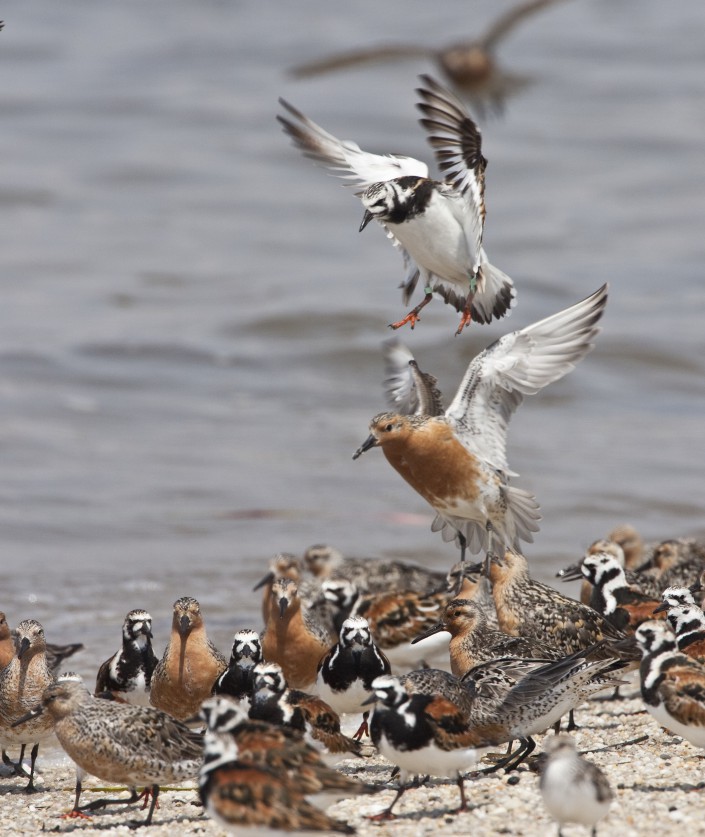
All our efforts to help shorebirds on Delaware Bay this year couldn’t have been better rewarded – nearly every red knot left the bay in good condition and in one of the earliest departures in the 19 years of the Project. We counted just over 24,000 knots in our aerial count of the entire Bayshore on May 26th. Just two days later, most had left and we could find only a few hundred, feeding on eggs like human shoppers feed on bargains at a half-price sale. By May 31st, virtually all were gone, along with the ruddy turnstones, sanderlings and semipalmated sandpipers. The beaches had an odd, deserted feel after the frenzy of the preceding days.

Photo by Jan van der Kam from Life on Delaware Bay

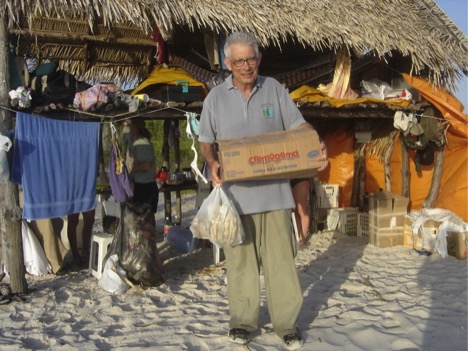
A good thing for birds and all those who love birds. The end of the shorebird stopover season also means the end of our shorebird team – at least for another year. All through the week, we lost team members—the North Americans left by car, those from other continents by air. Those who stayed shifted from research to manual labor: cleaning and storing equipment, closing up the rental houses, and reconnecting lost items to their owners.

Photo by Kevin Karlson

Will our project continue? Now in our 19th year of work on the bay, one must recognize the realities of time’s passage. Clive Minton just cleared 80, and the rest of the original team will soon follow. This author, who started at relatively young 44, is now pushing his mid-sixties. Death visited our team this year with the passing of Allan Baker. Surely the rest of us will start “falling off the perch” as Clive is fond of saying.

Allan Baker, the Senior Curator of Ornithology and Head of the Department of Natural History at Toronto’s Royal Ontario Museum suddenly and unexpectedly died in 2014.  His career included many significant achievements including early work that helped build a scientific case that overharvested horseshoe crabs caused the decline of red knot numbers. Photo from Wader Study.
Allan Baker, the Senior Curator of Ornithology and Head of the Department of Natural History at Toronto’s Royal Ontario Museum suddenly and unexpectedly died in 2014. His career included many significant achievements including early work that helped build a scientific case that overharvested horseshoe crabs caused the decline of red knot numbers. Photo from Wader Study.

And yet, all committed to return for a 20th year. I worry over the fundamentals: our funding remains uncertain, the listing of knots as Threatened in the U.S. creates new regulatory hurdles, and N.J. politics seem to get more fractious every minute. Will there be a 20th year of this project?


The answer starts and ends with the willingness of our team to do it again. It starts there because good ideas and projects always seem to find support; I know we will find a way. It ends there because this team provides the best chance of a strong scientific underpinning for protection. Our team includes some of the most important shorebird scientists in the world. At our dinner soirees (generously provided by Jane Galetto’s Citizens United team), Ph.D.’s are as common as empty beer bottles. It’s no surprise that conversation drills deep into conservation biology, behavioral ecology, migration physiology, stopover ecology, virology and many other subjects of interest to all our team, both scientists, old and young, and lovers of good science.


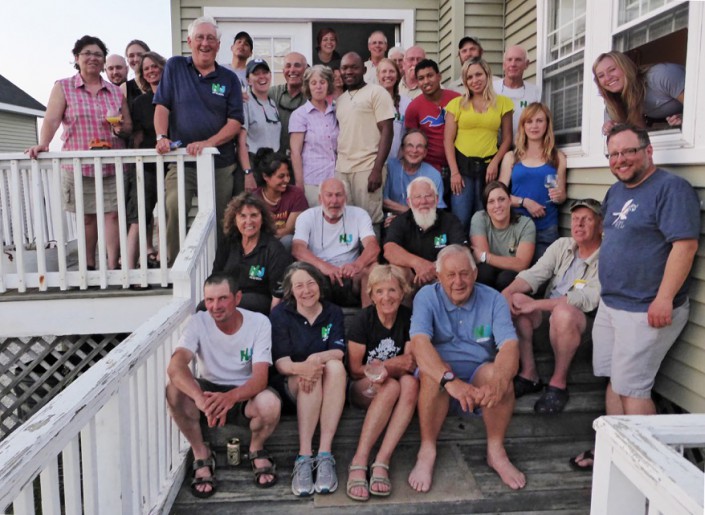
In many ways, the lives of our team members revolve around birds. The Delaware Bay Shorebird Project provides us a meaningful excuse to pull together once more. Our team members love birds, and do everything they can to help them. It’s been that way for 19 years, and it is this commitment that has led to this year’s results.

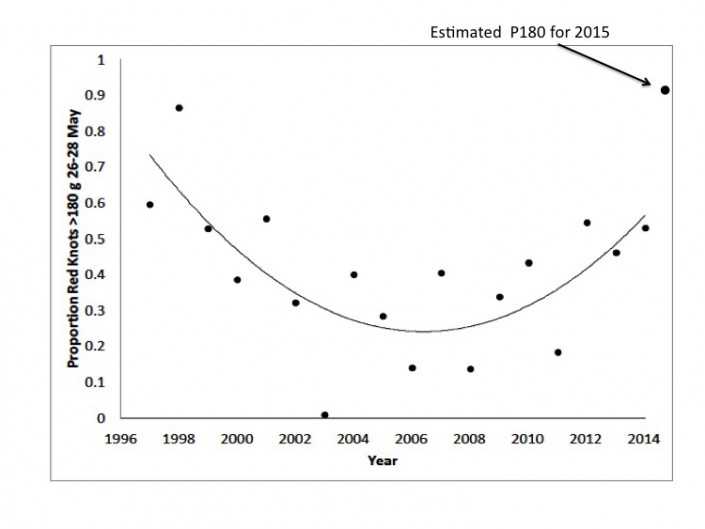
p180 red knots
This graph plots the percentage of red knots caught between May 26th and May 28th that have achieved at least 180 grams against the year of the catch. The 2015 result is still an estimate.

For the first time in 19 years, red knots left in a condition similar to the lucky ones migrating through before the fishing industry decimated horseshoe crabs in 1997. After that year, the populations of knots, turnstones, semipalmated sandpipers, and sanderlings fell off a cliff. For the last four years, however, the terribly reduced populations of shorebirds have been in rough balance with equally reduced number of horseshoe crabs breeding on the Bay. Consequently, the percentage of knots reaching the threshold weight of 180 g has climbed. (Knots need at least this weight to reach the Arctic and breed successfully.) From a low of just 5% making weight in 2003, they’ve clawed their way upward 30% in 2010, 50% in 2013 and now this year’s 90%.

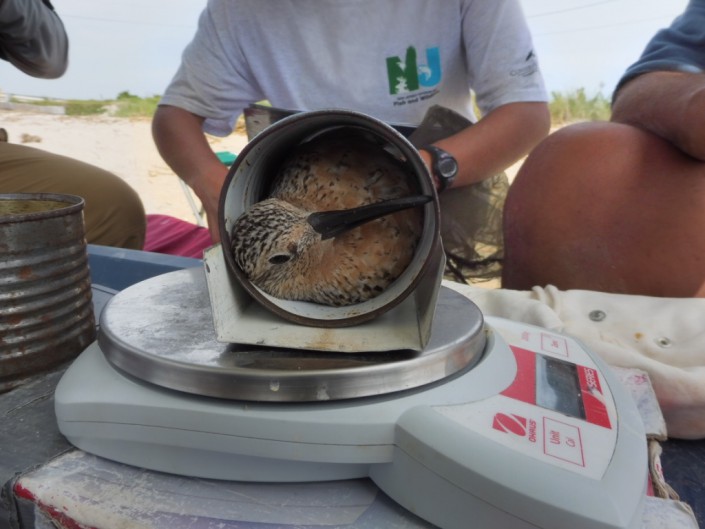
Fat knot on the scale by Philippe Sitters

One must be cautious about the interpretation of this number but the catch of red knots on which it was based were truly fat birds! One weighed 226 grams, nearly 100 grams higher than its fat free weight. Whatever the figure it was a good season for both birds and the people who love them.

Learn more:

Dr. Larry Niles has led efforts to protect red knots and horseshoe crabs for over 30 years.