Celebrate Endangered Species Day

Each year on the third Friday in May, the United States celebrates National Endangered Species Day. It is a chance for people of all ages to celebrate and learn about endangered species and how to protect them. Here are 5 ways you can celebrate New Jersey’s wildlife virtually, individually, and locally to stay safe during the corona virus crisis. Without the Endangered Species Act there wouldn’t be as many species in New Jersey to celebrate.

Continue reading “Celebrate Endangered Species Day”

Guest Post: Re-nesting Baby Screech Owls

by: Sam Galick

World Series of Birding 2020- after seeing snowflakes in Woodbine, I decided to check for nightjars in Belleplain State Forest. I drove along all of the roads, poking my head out of the car… nothing. Not really unexpected with the 20-25 mph winds gusting to 30-35 mph and 36 degrees at 4:30 in the morning.

I was stopped in my tracks by a recently fallen tree that blocked the road. I took a photo with my phone and decided what I should do next. I looked up briefly from my car window and noticed what I thought was a mushroom that had fallen off the tree turned it’s head and looked at me. I knew I was tired, but I shouldn’t be hallucinating already.

Continue reading “Guest Post: Re-nesting Baby Screech Owls”

Virtual Eyes on Eagles

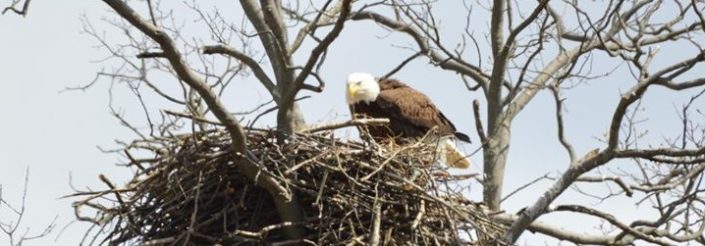
Get a little wild while being safe at home! Join Conserve Wildlife Foundation and Mercer County Park Commission to get your eyes on eagles – virtually.

We’re co-hosting hour-long webinars on May 10 and June 7 with Mercer County Park Commission. Each virtual event will feature current footage collected safely from one of the bald eagle nests in the County Park system, along with bald eagle history and interpretation provided by Park naturalists and David Wheeler, Executive Director of Conserve Wildlife Foundation.

Continue reading “Virtual Eyes on Eagles”

Support rare wildlife in New Jersey and make twice the difference!

by Ben Wurst, Habitat Program Manager

You may have seen that a generous group of supporters has stepped forward to provide $20,000 to match any gift Conserve Wildlife Foundation receives to protect New Jersey’s wildlife this season. Your donation – whether $10 or $1,000 – will be worth double the amount you give.

Please consider making a gift today to keep CWF wildlife biologists in the field, protecting our at-risk wildlife when they need us most.

Despite the hundreds of thousands of people sheltering in place over the past six weeks, life outside goes on. Wildflowers are in bloom, bees are buzzing, and hummingbirds are back. Bald eagle nestlings are getting ready to fledge and ospreys are incubating eggs. Wildlife and the environment are thriving in the absence of human activity outside. With your help, Conserve Wildlife Foundation biologists can monitor and manage imperiled wildlife species to ensure they remain in good health.

For those of us who work outdoors in the environmental field, our office is the great outdoors – where social distancing is the norm. Over the past six weeks, I feel privileged to work for an organization with donors who support our wildlife conservation and habitat enhancement projects. While also homeschooling my two kids and supporting my wife working on the front lines in healthcare, I am leading several projects that directly benefit wildlife in this critical period.

Your support will help ensure that we can continue to fulfill our mission to protect New Jersey’s rare wildlife.

Spring marks the beginning of the busy season, where more time is spent in the field monitoring and managing wildlife than behind a computer at a desk writing reports and responding to emails. For me, it is often multifaceted and changes widely from day to day. One day I may be planting dunegrass in the rain. The next day I’m climbing a tower to survey a falcon nest.

Over the past several weeks, I’ve worked on some exciting projects, even getting help from my kids for some.

I’ve successfully repaired several osprey nest platforms which had fallen into disrepair. Had I not been able to repair these platforms, these birds would not have had a home to raise a family.

I’ve monitored several peregrine falcon nests to identify the adults and confirm that they are incubating eggs. Without our role, we would not know if there has been a turnover in the nesting pair and when their eggs might hatch.

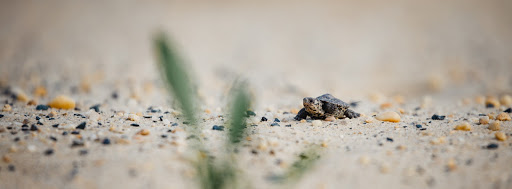
And I have led the enhancement of an innovative half-acre terrapin habitat enhancement site in Little Egg Harbor. A big component of the success of this “turtle garden” is making sure we keep the sand in place – and to help with that, I’ve planted 600+ native plants.

As many of our members, fans, and donors know, a big focus of my work with Conserve Wildlife Foundation of New Jersey has been aiding injured wildlife. My father was a veterinarian who also cared for wildlife, especially birds of prey, in his spare time, so his philanthropic efforts are in my blood.

A couple weeks ago I accepted a challenge to climb a large tree to re-nest a pair of great horned owl nestlings whose nest was destroyed in a windstorm. After a couple of hours of tree climbing and nest building, the two fuzzy owls were placed in their new nest. Although I was at first concerned that the adults might not return, I was delighted to hear that they were seen in the nest tree a couple days later.

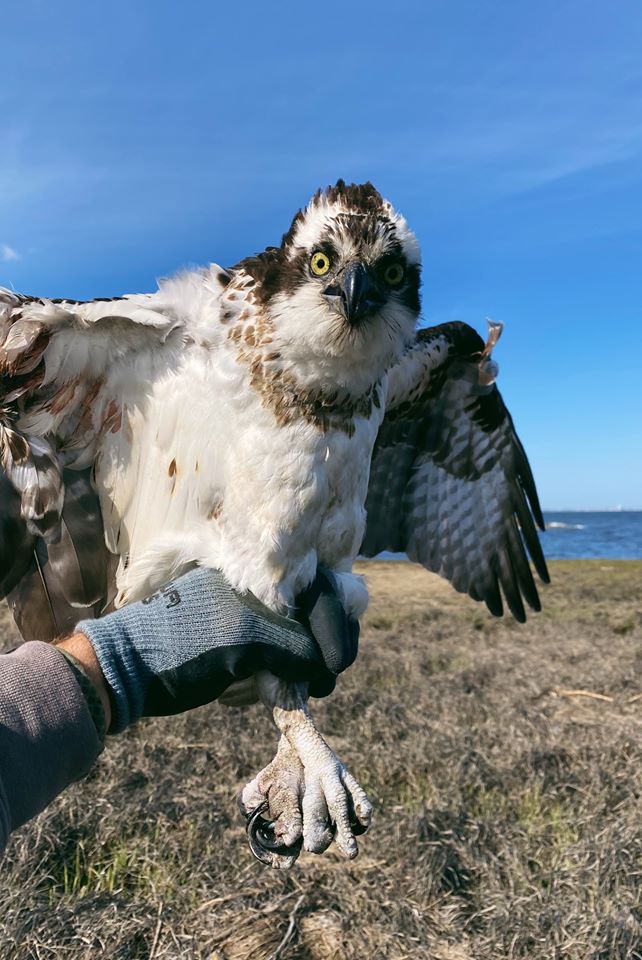
Just the other day, I joined my New Jersey Fish & Wildlife colleague, Kathy Clark, on Barnegat Bay to save an entangled adult osprey that had been dangling from its nest platform for hours before it managed to get free.

Fortunately, I was able to safely trap the bird and remove the ball of monofilament wrapped around her wing. Her injuries were treated, and she was set free.

Like my fellow CWF colleagues, I’m determined to carry out our mission to preserve at-risk wildlife in New Jersey this season. That’s why, even during this pandemic, I must ask for your financial support.

Please donate now, when your gift will be matched dollar for dollar, to support our essential work, if you can. Thank you to everyone for helping me to protect our wildlife in whatever way you can.

Be safe, stay healthy, and enjoy the outdoors where possible.

Amphibian Crossing Project on PBS EcoSense for Living

Wildlife habitats all over the country have been broken into ever smaller pieces by human development, making it challenging for animals to safely find food, mates or a place to make a nest or den. This is especially true in New Jersey, which has more people per square mile than any other state by far.

The PBS EcoSense for Living episode ”Wildlife Crossings” has captured the challenges habitat fragmentation poses to wildlife, along with the amazing work that scientists, engineers, and wildlife managers are doing to help. Projects supporting New Jersey Division of Fish and Wildlife’s Connecting Habitat Across New Jersey (CHANJ) initiative, including CWF’s Amphibian Crossing Project, are featured beginning at 14:10.

On warm, rainy spring evenings salamanders, frogs and toads venture out for the most eventful nights of their year. They have but one goal – to make it to a vernal pool to breed. But between them and the pool is a road, filled with cars barreling along, completely oblivious to their big plans.

A single vehicle can crush dozens of these slow-moving animals as they try to make it across the road. From the driver’s seat they may look like mere twigs, leaves, or raindrops bouncing off the road. With high mortality rates year after year, it doesn’t take long for a population to nose-dive.

The Amphibian Crossing Program helps hundreds of salamanders, frogs and toads make that hazardous journey so they can have their big night. We are also assisting NJDFW in preparing for a wildlife crossing structure system consisting of under-road tunnels and guide fencing to help amphibians at our busiest migration site.

Successful “critter crossings” at this priority site could pave the way for many other projects, allowing salamanders, frogs, and toads (as well as snakes, turtles, and other small animals) to safely and independently cross between their upland habitats and breeding pools each spring. To see how the Amphibian Crossing Project fits in with other statewide projects supporting wildlife habitat connectivity see Connecting Habitat Across New Jersey (CHANJ).

Want to help? Volunteers for the Amphibian Crossing Project must complete a training session. If you are interested in being a part of next year’s project, please contact allegra.mitchell@conservewildlifenj.org.

Resources

Wild for Volunteers Guest Post: Birds, Bats, Frogs and Horseshoe Crabs!

by John King

Some of the species (super) volunteer John King has helped.

When I retired from teaching, one of my first tasks was to search for local organizations that encouraged volunteers, especially in areas of wildlife conservation. Luckily, I found Conserve Wildlife Foundation. I have to say that over the past few years, my volunteer service with CWF has been both rewarding and inspiring!

Continue reading “Wild for Volunteers Guest Post: Birds, Bats, Frogs and Horseshoe Crabs!”

Wild for Volunteers Guest Post: Amphibian Crossing

by Annabel Weiman

About the author: Annabel is a sophomore at Indian Hills High School in Oakland, New Jersey. When not helping amphibians cross the road she enjoys photography, the beach and badminton. Thank you for volunteering and sharing your experience Annabel!

Please note: the Amphibian Crossing Project activity described here occurred before restrictions for COVID-19 were in place. At this time CWF is only performing essential wildlife monitoring and conservation duties while practicing social distancing and following all state and CDC guidelines.

In early March, my dad Rick got an email from wildlife biologist Allegra Mitchell of the Conserve Wildlife Foundation of NJ (CWF) saying tonight was the night. My dad came home from work excited, got the flashlights and rain coats out, and called my Aunt June and cousin Sarah asking if they wanted to go with us. We had all signed up to be CWF amphibian crossing volunteers. 

Helping a Spotted Salamander cross the road.
Continue reading “Wild for Volunteers Guest Post: Amphibian Crossing”

Earth Day 2020: 50 Years of Perseverance

Celebrating the 50th Anniversary of Earth Day in the spirit of resilience and recovery. Today we thank the countless biologists, volunteers, educators, and supporters who have played a critical role in the survival of so many of our rare wildlife species. Together, we will continue to stay strong and save wildlife.

Conserve Wildlife Foundation executive director David Wheeler brings you on an uplifting journey through the environmental progress we have made since the very first Earth Day in 1970, with a special focus on wildlife – and its importance to us in this challenging time of pandemic and social restrictions.

Continue reading “Earth Day 2020: 50 Years of Perseverance”

Wild for Volunteers

Happy Volunteer Appreciation Week, April 19-25

Many of our projects have depended on the hard work and dedication of volunteers for years. While some activities have been scaled back this year to keep everyone safe and comply with COVID 19 restrictions, our appreciation is stronger than ever.

Continue reading “Wild for Volunteers”