An Eagle and a Biologist: 22 Years in Common

by Larissa Smith, CWF Biologist

Duke Farms male A/59; March 4th, 2022

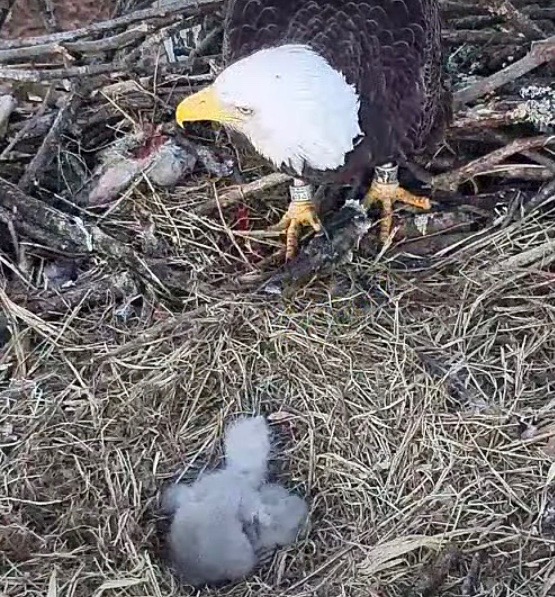
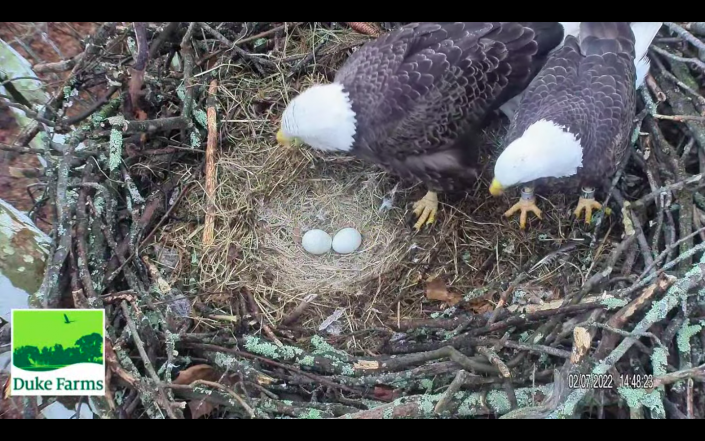
As I write this there are two fluffy little chicks in the Duke Farms nest. They will have an audience of millions of eagle cam viewers watching them as they grow and fledge. As the adult eagles step around the nest, look closely and you will notice that one of them is banded. The male is A/59 and he is twenty-two years old. Twenty-two years ago I began my career with the Conserve Wildlife Foundation working with the New Jersey Eagle Project. In March 2000, A/59 hatched in a nest located in Greenwich, Cumberland County. When he was two weeks of age, he was fostered into a nest along the Rancocas River in Burlington County. The Rancocas pair had failed to produce their own young for a few years and fostering a healthy chick into the nest would help to keep the pairs fidelity to the nest site.

On May 15, 2000, he was banded and a radio transmitter was attached with a harness which was designed to eventually fall off. A/59 fledged on June 3 and was tracked until the transmitter’s signal was last recorded on October 22. You can read more details about the telemetry in the 2000 Bald Eagle Report.

February 7, 2022

In 2000, when he hatched and I started working with eagles there were 25 nesting pairs of eagles that fledged 29 young. Compare that to last year’s numbers of 247 pairs we monitored and 296 young fledged. As the number of eagles increases in New Jersey so does the competition for nest sites. A/59 has been able to defend and hold onto his territory at Duke Farms since 2009.

It’s very interesting to know the history of this eagle. I feel a bond with him since we both started our “eagle” journey at the same time.

Habitat Enhancements for Rare Species at the Sea Girt National Guard Training Center

by Meaghan Lyon, Wildlife Biologist

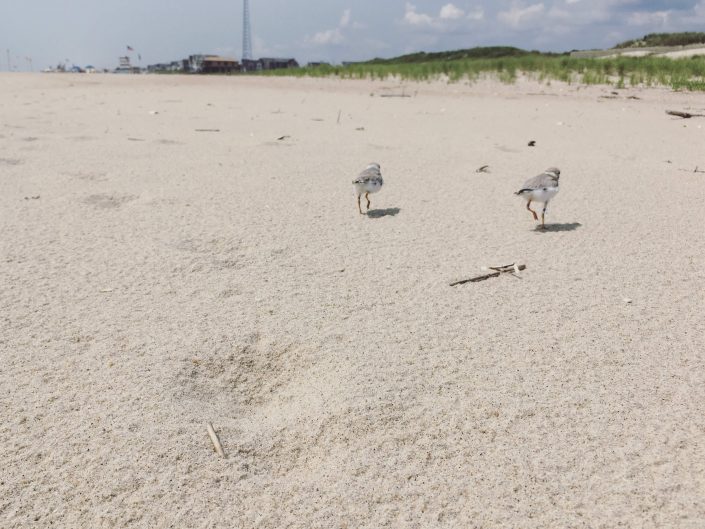
Although the Sea Girt National Guard Training Center (NGTC) has just a small section of beach to manage, their efforts there with threatened and endangered species has been big. Conserve Wildlife Foundation of New Jersey has been a partner in these efforts, monitoring the piping plovers that nest on this beach during the breeding season and assisting in the planning of habitat enhancements. The protection area at the NGTC has been the nesting site of a piping plover pair for the past three breeding seasons and it is likely they will return again this spring, all while supporting the military and recreational missions of the New Jersey Army National Guard.

Continue reading “Habitat Enhancements for Rare Species at the Sea Girt National Guard Training Center”

Salt Marsh Restoration Project to Benefit Imperiled Marsh Birds

by Meghan Kolk, Wildlife Biologist

Photo credit: KJ Knutsen Photography

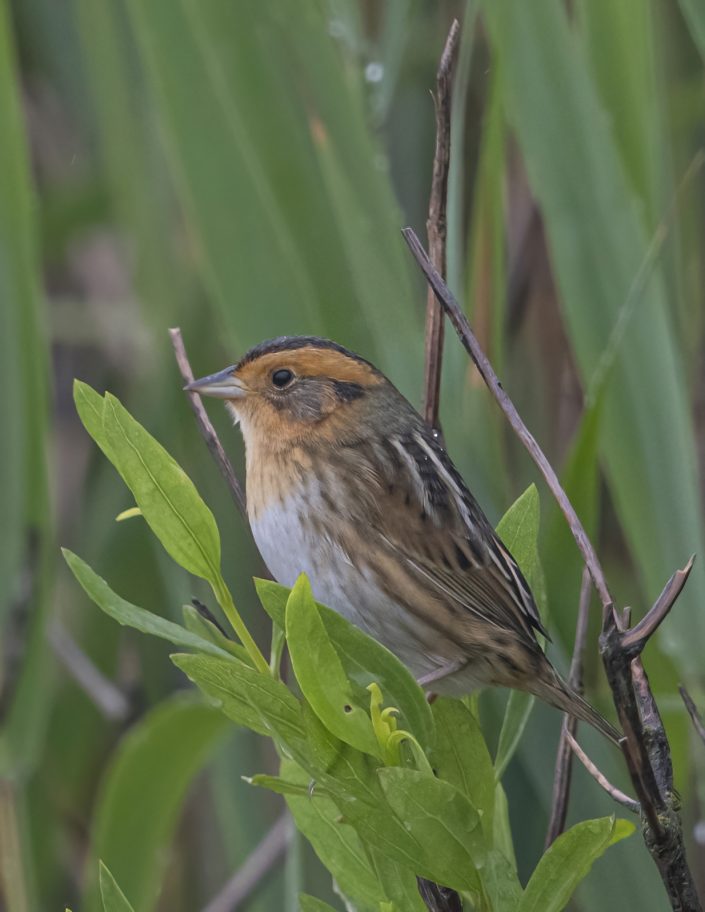
The Conserve Wildlife Foundation of New Jersey is working on a new project starting this winter to restore habitat for two species of imperiled marsh birds, the eastern black rail (Laterallus jamaicensis jamaicensis) and the saltmarsh sparrow (Ammospiza caudacuta).  CWFNJ has partnered with the U.S. Fish and Wildlife Service (USFWS) on a three-year project to identify potential habitat restoration sites, conduct outreach to landowners, and implement conservation practices recommended for the target species.  Outcomes of the project will include at least three habitat management plans and restoration of at least twenty-five acres of wetland and/or salt marsh habitat utilizing techniques in the Black Rail and/or Saltmarsh Sparrow Conservation Plans developed by the USFWS.

Continue reading “Salt Marsh Restoration Project to Benefit Imperiled Marsh Birds”

Build it and they will come

by Ben Wurst, Habitat Program Manager

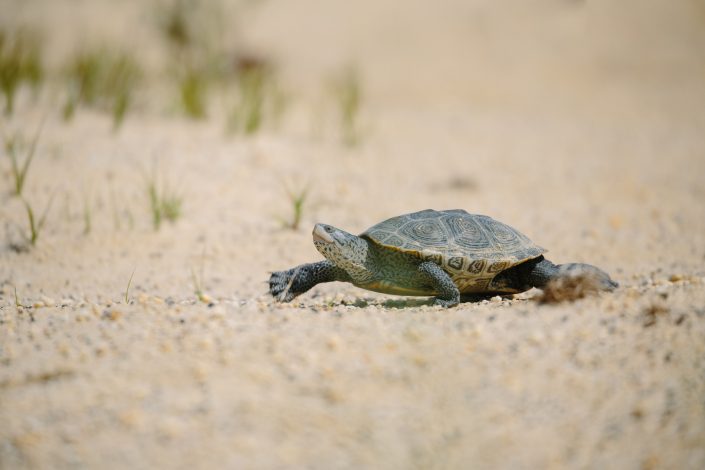
An adult female terrapin treks across our Turtle Garden in Little Egg Harbor, NJ. June 2021. photo by Ben Wurst

As with many of our conservation projects, they are centered around compassion for a species in need. One of which is the northern diamondback terrapin: a coast hugging turtle who inhabits salt marsh habitat from Cape Cod to Cape Hatteras. In New Jersey they range from the Meadowlands south along the coast and in the Delaware Bay. Terrapins are known to have a very small home ranges and some may inhabit the same small creek for their entire lives. During summer months, females leave the protection of their salt marsh habitat to seek out sandy nest sites above the high tide line. Many times, they encounter a roadway and the results can be deadly.

Continue reading “Build it and they will come”

CWF Assists the State with Wintering American Oystercatcher Survey

by Todd Pover, Senior Wildlife Biologist

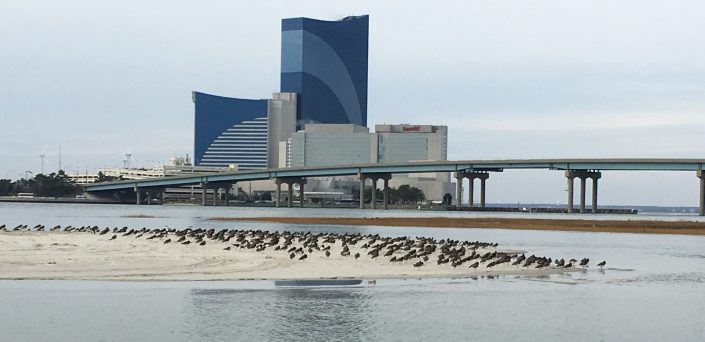
American oystercatcher winter flock.

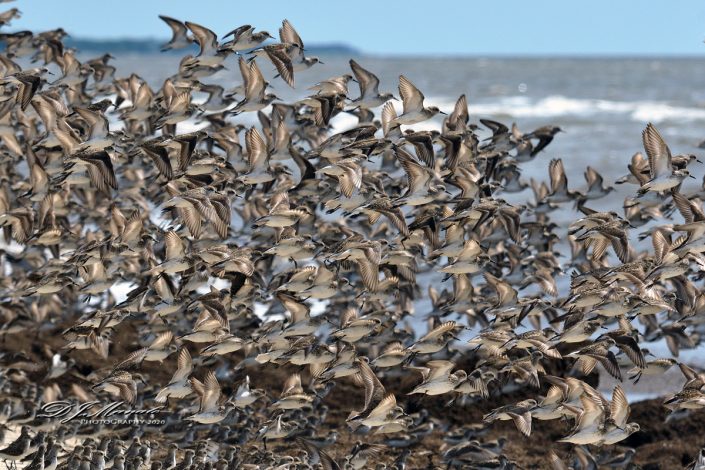
Most people are surprised to hear that American oystercatchers are present in New Jersey in the winter. They usually associate the charismatic shorebird as a breeding species here. Our state’s wintering oystercatchers, a combination of breeders from further north and our own, are at the northern extent of the Atlantic coast wintering range.

Continue reading “CWF Assists the State with Wintering American Oystercatcher Survey”

2021 NJ Bald Eagle Project Report Released

NJDEP & CWF Announce Successful Bald Eagle Nesting Season

by Larissa Smith, CWF biologist

Somerset County pair, by NJ Eagle Project Monitor, Rose Joy

The NJDEP and Conserve Wildlife Foundation of New Jersey have released the annual NJ Bald Eagle Project Report.

The 2021 nesting season was another successful one for New Jersey’s bald eagles, with the statewide population remaining stable at 247 nest sites. Of these nests, 222 were active (with eggs) with 296 young produced. Twenty-seven new eagle pairs were found.

Continue reading “2021 NJ Bald Eagle Project Report Released”

Shorebird Steward’s Photo is a winner

by: Larissa Smith, CWF biologist

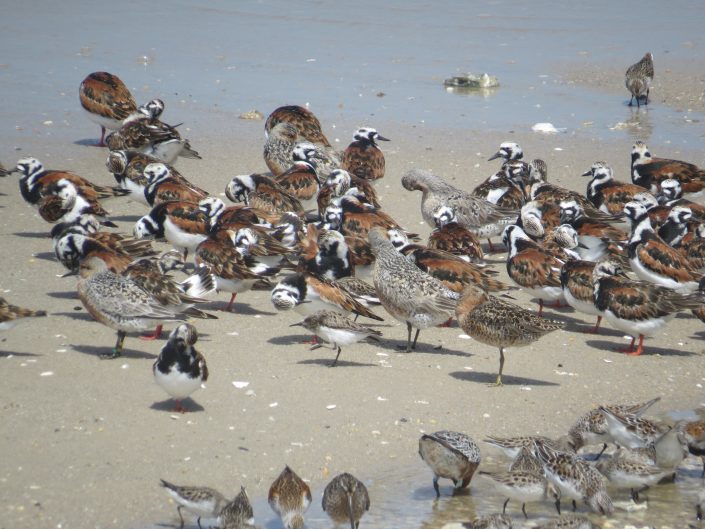
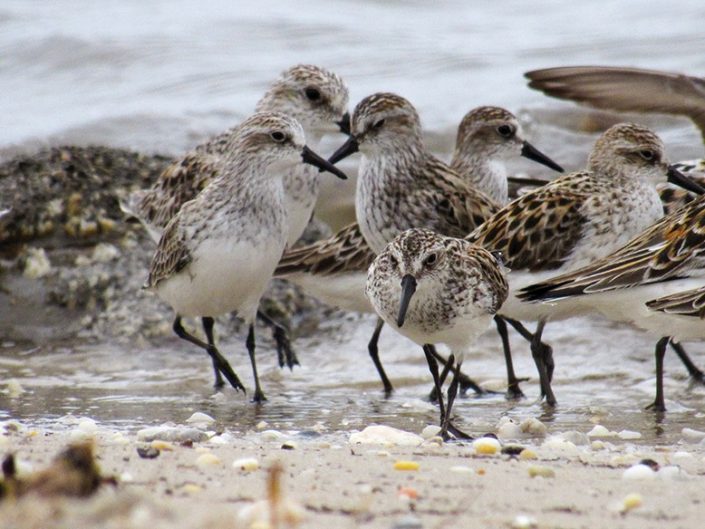
Congratulations to Luke Tan for having his photo Semipalmated Sandpipers Feeding win Runner Up in the Student Category for NJ Monthly’s Cover Search Competition. Luke volunteers as a CWF Shorebird Steward on the Delaware Bay during the spring shorebird migration. He captured this photo while on Reed’s Beach, Cape May County.

Learn more about Luke and the contest:

https://njmonthly.com/articles/jersey-living/the-winners-of-new-jersey-monthly-and-unique-photos-2021-cover-search-contest/

A Certified Wildlife Habitat Restoration in Progress

By Meghan Kolk, Wildlife Biologist

CWF Biologists (left to right) Sherry Tirgrath, Christine Healy, and Ethan Gilardi plant new greenery in the Trailside Nature Center Garden.

This fall CWF worked with the staff at the Trailside Nature and Science Center at Watchung Reservation in Union County, New Jersey to restore their Certified Wildlife Habitat.  A Certified Wildlife Habitat must include sources of food, water, cover and places to raise young, and must be maintained using sustainable practices.  Their garden had suffered from years of neglect and had become overgrown and choked out by weeds.

The first task was to tackle the major cleanup with the goals of opening the garden up to more sunlight, making room for new plantings, and giving the garden a fresh and clean appearance. CWF staff, interns and volunteers joined the Trailside Center’s staff and spent a day pulling weeds, digging up unwanted and overgrown plants, trimming shrubs and trees, clearing vines from trees, and raking and blowing leaves.  Dead, dying, or damaged trees and shrubs were cut down.  We left the healthy and beneficial trees, shrubs and herbaceous plants that will be the backbone of the refreshed garden.  At the end of the day, the result of cleanup was remarkable.  Sunlight can now reach the ground, and the garden became a clean slate to add new plantings that will benefit birds, bees, butterflies, and other wildlife. 

Trailside garden before and after cleanup.

The next step was to install a new deer fence around the garden.  The Trailside Center lies within a wooded area and deer are drawn to the garden to munch on the shrubs and plants.  In order to keep deer from destroying the garden, while allowing birds and other wildlife to utilize it, we installed a new eight-foot-high deer fence around the garden to replace one that had fallen down years ago.  At the same time, we planted some new trees and shrubs in the garden that will be able to grow without the pressure of deer browse.  We planted only native species that will attract birds, hummingbirds, bees, and butterflies to the garden. 

In the spring, we will return to plant native herbaceous perennial plants that will also benefit birds, hummingbirds, bees, and butterflies.  We will be sure to plant some host species for native butterflies, such as milkweed for monarchs.  We plan to make a corner of the garden that caters specifically to hummingbirds.  The garden is already home to a beautiful man-made creek flowing into a pond that draws birds and frogs.  Several types of bird feeders, squirrel feeders and nest boxes are scattered throughout the garden as well.  The restored garden will be unveiled this spring for visitors to observe through the viewing windows inside the Trailside Center.

Trailside staff install deer fencing around the garden with help from CWF staff, interns, and volunteers.

Coastal Barn Owl Project Update

By Meghan Kolk, CWF Wildlife Biologist

The Coastal Barn Owl Project team is gearing up for another round of nest box installations in coastal southern New Jersey.  After a successful fundraising appeal, we can now thank our donors by adding more potential nesting opportunities for barn owls, a species in population decline. 

Our fourth and most recent box was just installed on October 22 in the saltmarshes of Cape May County.  With each install, the team is becoming more efficient, and we hope to get several more boxes up in key locations before early spring when the owls begin their search for suitable nesting sites. 

The newest barn owl nest box with volunteers Kevin Knutsen, Steve Eisenhauer and Mike Lanzone on left.  Team leaders Tricia Miller and Meghan Kolk on right.  Photo by Lisa Ferguson.