Living with ospreys in New Jersey

New document provides guidance to homeowners and landowners with osprey nest issues and focuses on the use of UAVs around active nests

by Ben Wurst, Habitat Program Manager
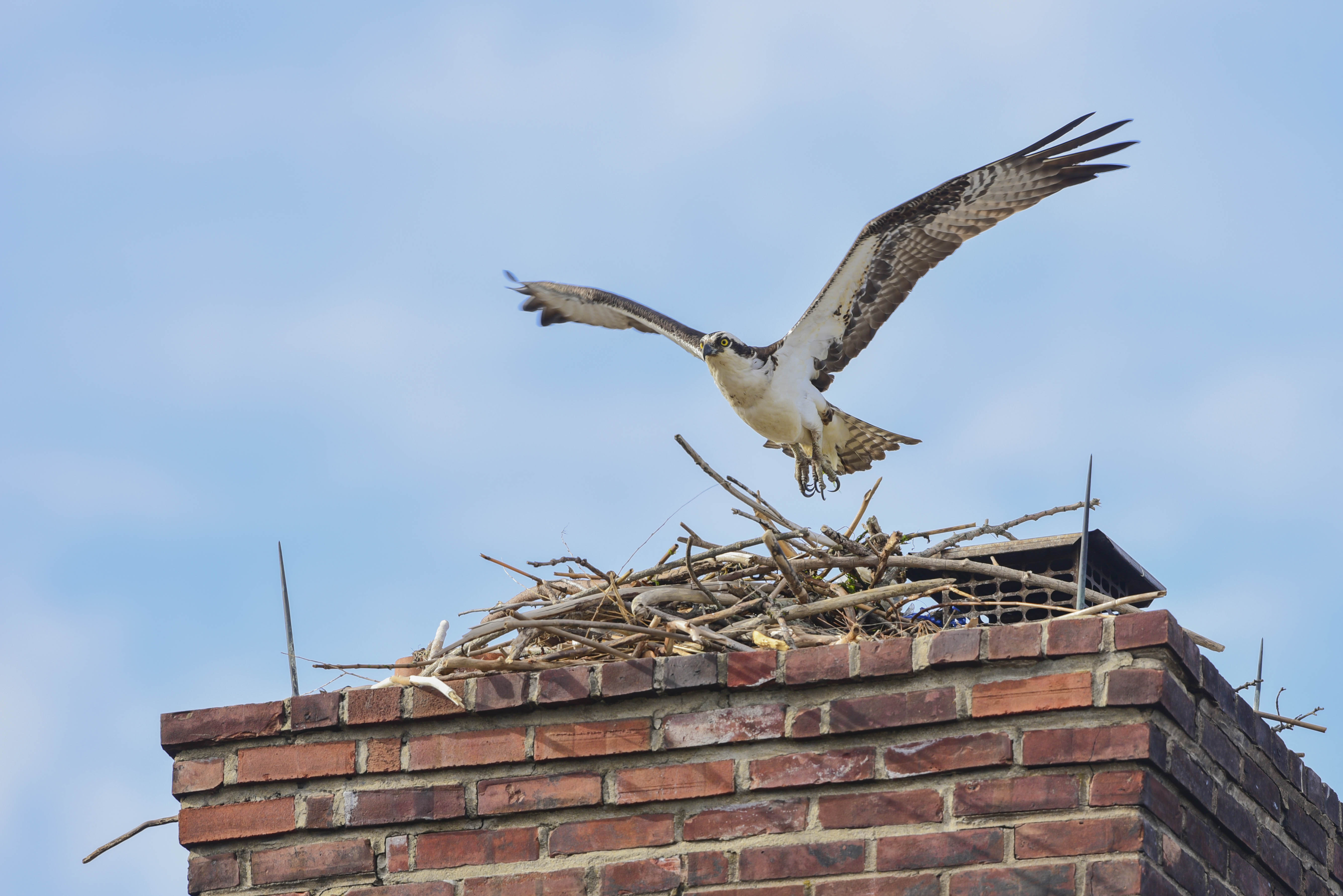
As the osprey population grows, work to identify, protect and remedy problem nests is crucial to their long term survival. Photo by Kevin Knutsen
An osprey prepares to land on its nest on a chimney along the Jersey Shore. Work to identify, protect and remedy problem nests is crucial to their long term survival. Photo by Kevin Knutsen.

In New Jersey, we’ve seen the osprey population grow to an estimated 600 nesting pairs in 2015. As the population continues to grow, work to identify, protect, and remedy problem nests is crucial for their long term survival. Each year many new young adults return to their natal areas to find suitable areas to construct nests. Ospreys have a high level of site fidelity and usually return to the same areas where they originated (females do tend to wander more). A suitable nest site for an osprey is a high structure near water, usually away from human disturbance. However, ospreys can become more tolerant of disturbance if it can be expected and is not too close to their nest, especially for those birds that nest on tall structures.

Ospreys build large nests which can weight up to 200 lbs. They use sticks, grass, muck, seaweed, eelgrass, reeds, and often trash to build up their nests.

Around 75% of the state population nests on man-made platforms that are designed specifically for them. The other 25% is a mixture of nests built on other man-made structures and a few natural nests. Yes, ospreys do still nest in trees! But, trees that are suitable for them are few and far between. A suitable tree for an osprey is a standing dead tree (snag) or a tree with a top that has broken off. As the population continues to grow and there are fewer nest sites available on platforms and few suitable trees, more nests are being built on man-made structures where problems can arise. Ospreys are being pushed to nest in areas that are not always ideal, like on utility poles, stadium lights, emergency sirens, communication towers, boat lifts, docks, and even houses. Nests on utility poles can cause power outages and sometimes the nest might catch on fire or an adult can be electrocuted. Nests on houses, docks and boat lifts often limit use of such structures unless dealt with properly, but active nests cannot be removed without consulting with experts. 
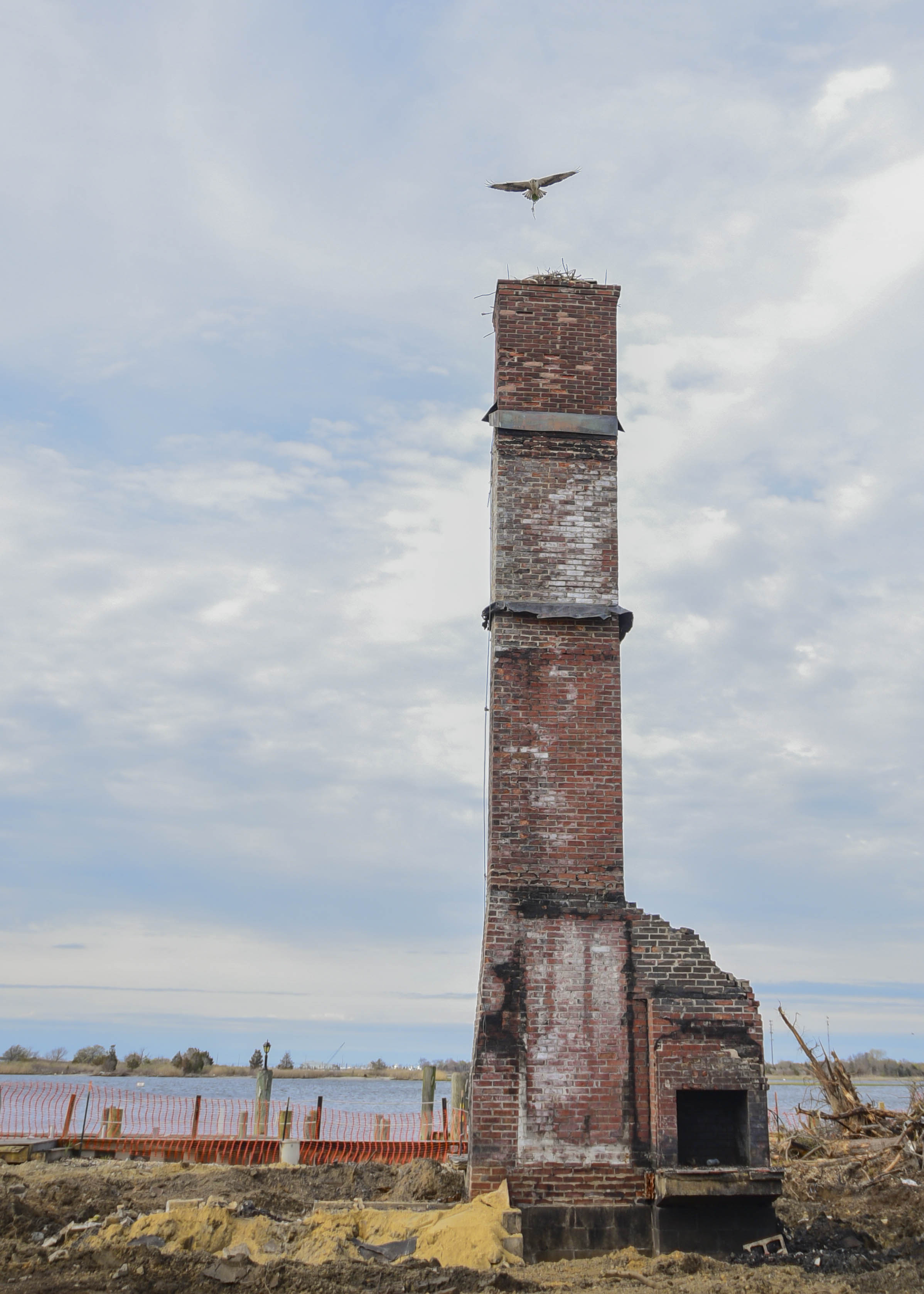
Osprey builds nest on chimney. Photo by Kevin Knutsen.

In partnership with NJ Division of Fish and Wildlife’s Endangered and Nongame Species Program, we developed a new guidance document to help address problem nests. “Living with Ospreys in New Jersey: A guide for the removal, relocation, and placement of osprey nests” addresses the laws protecting ospreys, who are protected both federally under the Migratory Bird Treaty Act of 1918 and statewide under the Endangered Species Conservation Act of 1973. Both of these laws protect the nest, adults and the contents of the nest, eggs and young. It also gives guidance on what actions can be taken to access, remove, or relocate an active or inactive osprey nest on any man-made structure, including communication towers. Also included are directions on how to build and install an osprey nesting platform.
Lastly, it also provides some clear guidance on the use of UAVs near active osprey nests. UAV pilots must follow all FAA guidelines and not fly within 1,000 feet of any active osprey nest. To an osprey, a UAV looks like a potential predator. Ospreys will defend their nests and attack any potential predator at nest sites. Simply flying near a nest can add stress to birds and cause adults to fly off nests where their young are vulnerable to predation. Any pilot who flies within this area and pursues or harms an osprey or its young is in direct violation of the Migratory Bird Treaty Act. We ask that all UAV pilots use caution to protect the safety of our ospreys and other birds.

Science in the Mangroves

Update from Brazil: “We are Going to Have to Science the ‘Heck’ Out of This”

by Dr. Larry Niles, LJ Niles Associates LLC

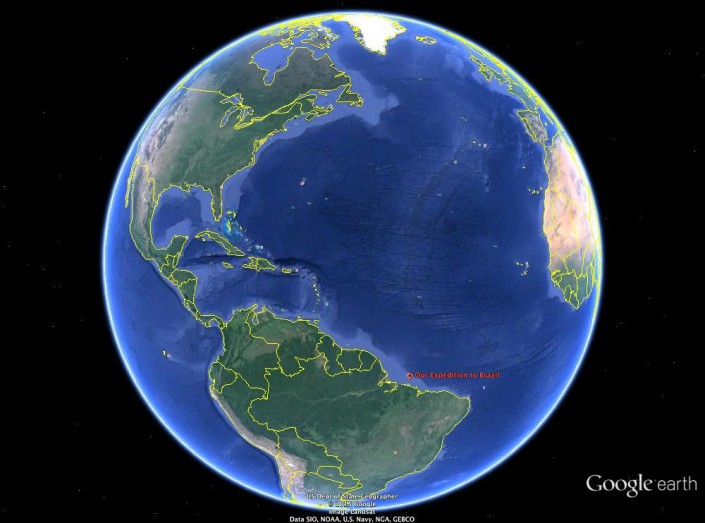
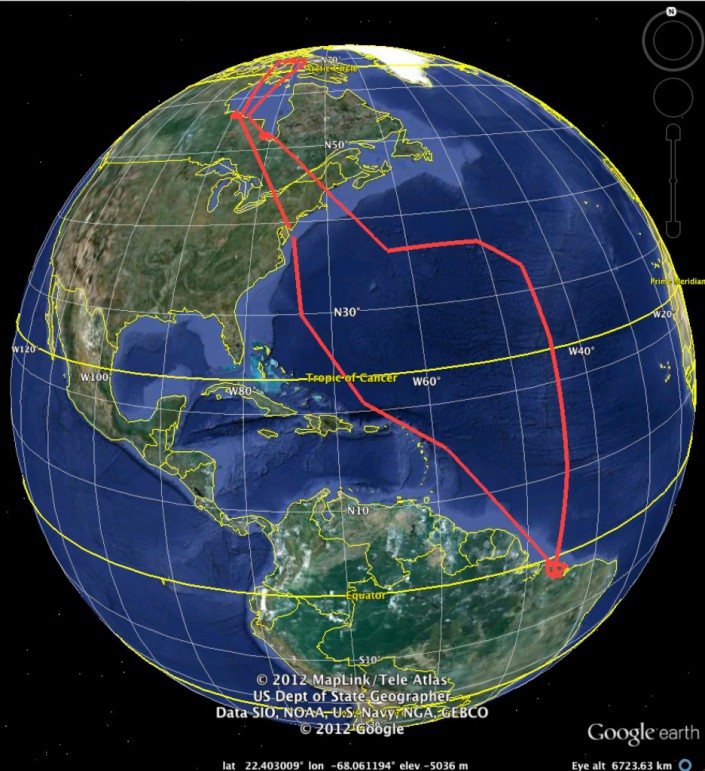
larger view of brazil


We came to Brazil to conduct a rigorous scientific study of the wintering population of shorebirds in a place where the land and sea act against any rigorous protocol. It would be easier to just go out and count birds and identify their habitats and prey, but our charge is more difficult.


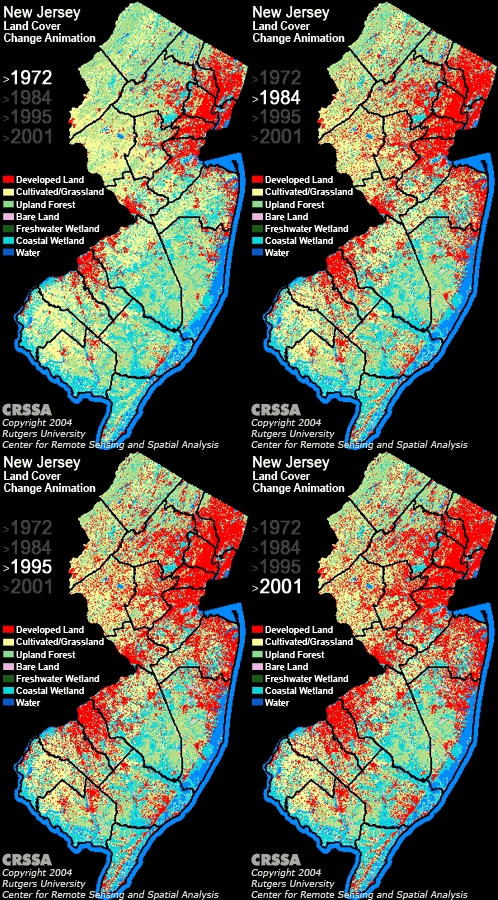
The survey wraps around satellite imagery, strange unintelligible wavelength data coming from satellites hovering over the earth that can be transformed into brilliant and useful maps in the right hands. Those hands belong to Professor Rick Lathrop and his post doc Dan Merchant. Rick leads the Center for Remote Sensing at Rutgers and he and I have collaborated on projects ranging from municipal habitat conservation planning to Arctic red knot habitat mapping. He has created one of the most alarming maps that every person from New Jersey should know about.

nj_landchange450

The mapping of Reentrancias Maranhenses, an internationally recognized site of ecological importance is especially tricky. Our research platform is a 50-foot boat and we will be out of cell and internet contact for much of the time. Our method of collecting data for the mapping was devised by the whole team, but especially with the help Professor David Santos of the University of Maranhao, my colleague Dr. Joe Smith and Humphrey Sitters of the International Wader Study Group.

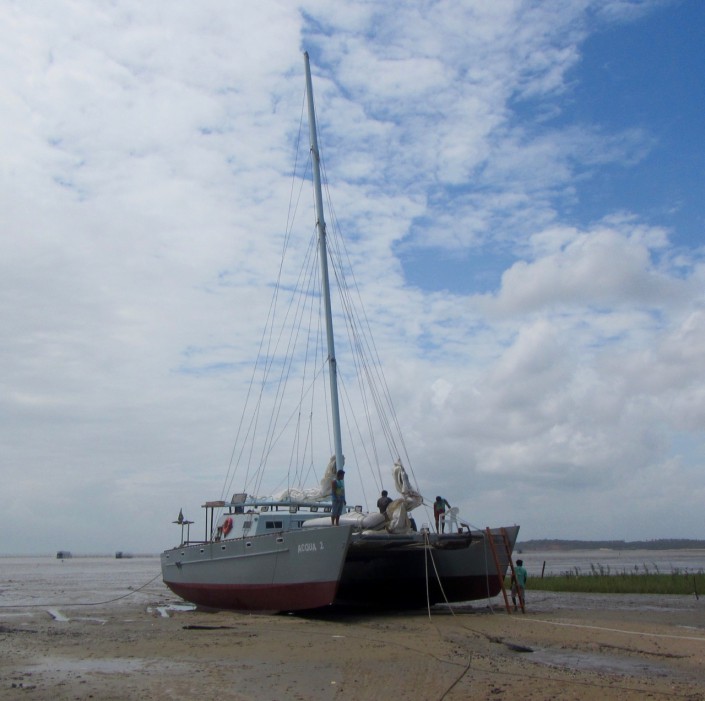
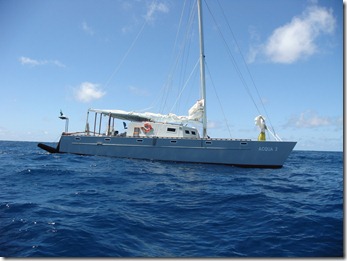
Our 50-foot catamaran

It focuses on collecting bird and habitat information using randomly selected survey points. In other words, we will try to pick places at random to survey so that when we combine them we will have a sample that represents the entire area, not just the places we surveyed. It’s like trying to figure how many different kinds of chocolates are in a valentine. If you take them all from one side then you might have sampled the chocolate covered cherry section leading to believe they are all one kind. But if you choose chocolates at random than you will find the box includes other kinds,  caramel or fruit or nutty chocolates. This is making me hungry, but you get the point.


The area  of our box we is very large, bigger than New Jersey, and it grows and shrinks every day with the tides. So, sampling is tricky business because a sample at low tide, when the tide is out exposing vast areas of intertidal mud and sand flat, is very different than when the tide is high. So we will be classifying habitat, or stratifying it, so we  can focus on limited survey time to get the best sample.


Once collected we can start making maps.  All data will be geo referenced – or located precisely  with GPS units – so it can be accurately mapped. With this, we will train the satellite maps to outline the habitat best for shorebirds.


All this while exploring areas that have received little scientific scrutiny and under tropical conditions, almost daily rain, a persistent 20 mph wind and summer heat.  Add parasites, mosquitoes and diseases like malaria and one can see this a rugged undertaking.


Our crew is up to it.  Besides those mentioned above Mark Peck from Royal Ontario Museum, Danielle Paluto from the Brazilian CEMAVE (a counterpart to our USFWS), Steve Gates a veteran of expedition on other SA trips, shorebird expert Dr. Mandy Dey, Stephanie Feigin from Conserve Wildlife Foundation of New Jersey and the author round out a dream team of bird study in difficult places.

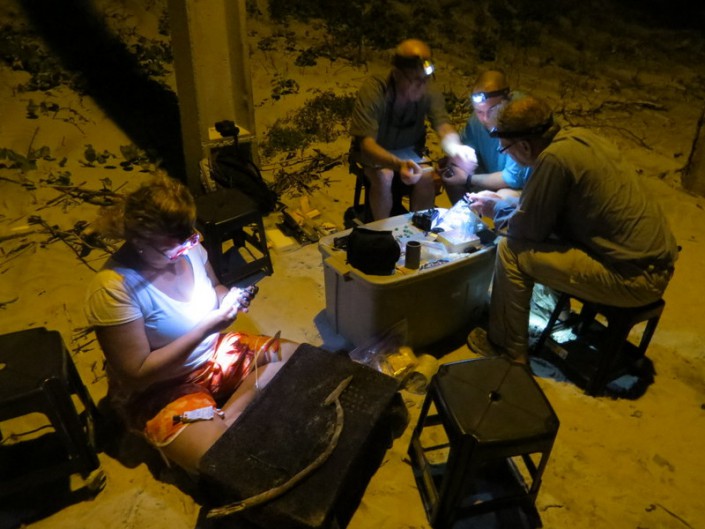
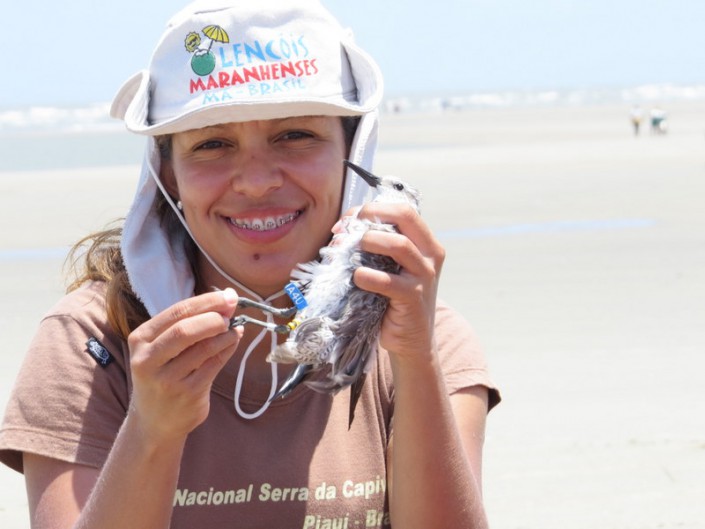
Our crew banding shorebirds in Brazil in 2014.


Learn more:


Dr. Larry Niles has led efforts to protect red knots and horseshoe crabs for over 30 years.


CWF Biologists Travel to Brazil to Study Red Knots

On our Expedition to Study Shorebirds along the Northern Coast of Brazil

By: Dr. Larry Niles, LJ Niles Associates LLC

Ana Paula with Red Knot

The largest mangrove forest in the world covers the Brazilian coastline at the equator near the mouth of the Amazon river. The forest extends out into the Atlantic in long peninsulas tipped by wind swept and mostly inaccessible beaches. The forest, beaches and their long intertidal mud and sandy low tide flats support the largest wintering population of shorebirds in the hemisphere, perhaps the world. The red knot, a listed species in both North and South America, also uses this remote tropical coast.

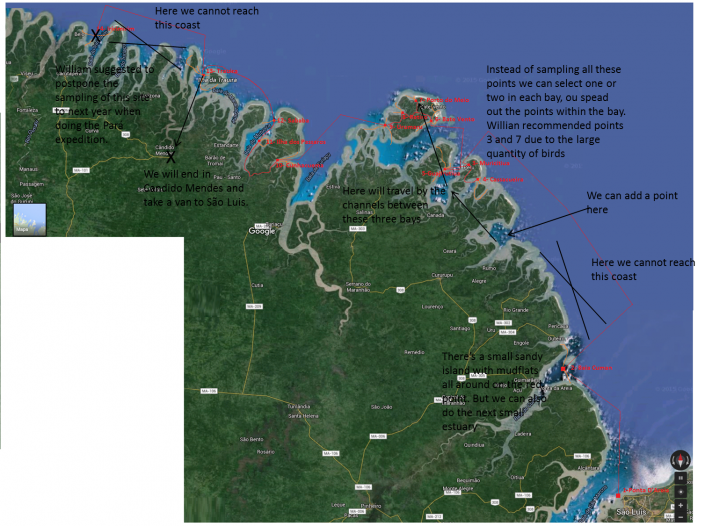
Boat Trip Route
Boat Trip Route
Catamaran
Catamaran


With scientists from the U.S., Canada, England and Brazil, we will attempt a large scale mapping of this important habitat using state-of-the-art satellite mapping. We will do this from a 50-foot catamaran and two zodiacs hopping from one mangrove estuary to another and conducting bird surveys targeting key areas over a 150 mile-section of the coast. We will be the first to survey some areas. Our goal is to figure out the main threats to both bird and habitat.


To understand the importance of this area one has to think about it like a shorebird. Although born in the Arctic they actually spend only a few months there. They spend a few months moving from their nesting area to their wintering area. They spend the rest of their lives, the majority of their year in the wintering area. A threat to the wintering area would be grave.


Most of our survey zone is part of the Reentrancias Maranhenses, a protected area of the state of Maranhao, Brazil. Our catamaran captained by William Thomas will leave from a small town near the city of Sao Luis, Brazil. From there we will sail along the coastline moving in and out of the mangrove islands to survey shorebirds, habitat and marine invertebrates. We will “geo reference” all data, or take detailed coordinates so the data can be reproduced on satellite mapping.

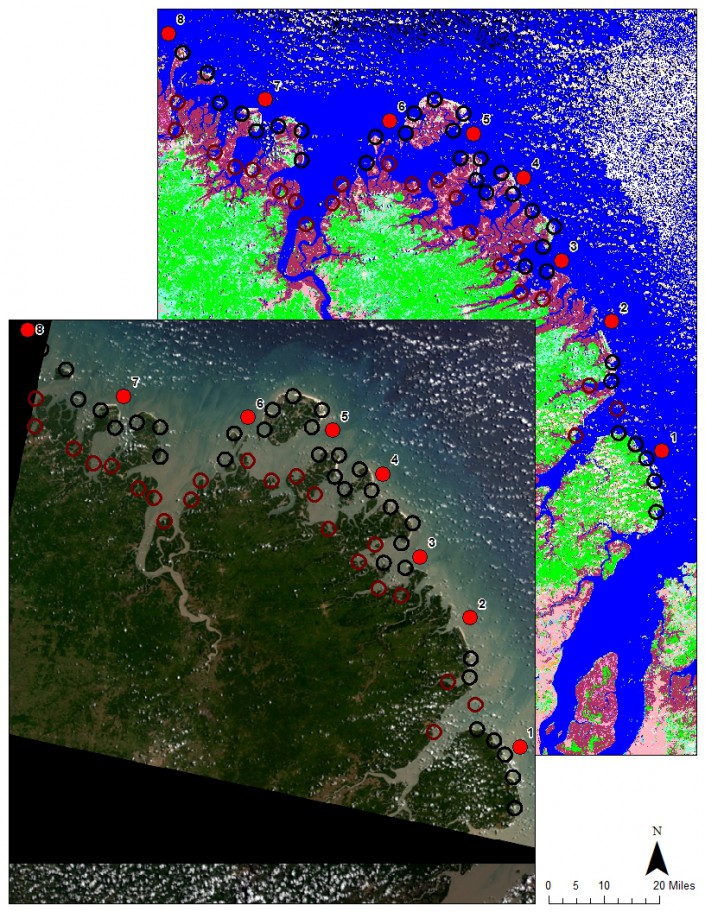
Satellite Map
Satellite Map


Satellite maps aren’t really maps as most people understand — pictures or drawings of a section of the earth — they are digital files of remotely sensed data, they are only wavelengths of light that must be interpreted to represent actual habitat. We will train the satellite data so that each habitat will be represented by a combination of spectral data — colors in sense.

Environmental disturbance. Photo by Mark Peck.

Once completed, we can relate the habitat maps with information on birds, their prey and equally important, the threats to the birds and prey. For example, shrimp farming is growing in this area. Entrepreneurs are stripping the intertidal zone of mangrove forest, diking the area and then growing shrimp. Once the area accumulates too much waste and chemicals, they abandon the site and move on to damage another mangrove forest. We will determine which areas are of importance to the birds and potential targets for shrimp farmers. But there is more: oil spills, disturbance from tourists, water pollution are among many.


Over the next three weeks, we will be reporting on our work on this blog.

Log of Red Knot DbY7 with geolocator.


Learn more:


Dr. Larry Niles has led efforts to protect red knots and horseshoe crabs for over 30 years.

2016: Off to a good start

Jersey City Falcons vocalizing on building ledge

by Ben Wurst, Habitat Program Manager

We’re really excited for the beginning of the peregrine falcon nesting season this year, especially for the pair that calls Jersey City home! We got this great video from Falcon Cam viewer Eric Chandler which shows the pair vocalizing to each other. Peregrine falcons mate for life and this will be the pair’s second nesting season. The first was not productive since they had just paired up and were too busy courting each other to raise any young.

Soon, over the skies of downtown Jersey City, the male will perform bold aerobatic flights over his eyrie (nest site) include loops, tight turns, and swooping dives. He also will provide the female with gifts to show his commitment to her – in the form of food, not a diamond ring. To help strengthen their pair bond (relationship) the male and female perform what is referred to as a “bowing” when they vocalize with a “ee-chupping” call which is seen in this short video.

We are in the process of activating the camera. We will let you know when it begins streaming on our website.

Banding Together: When the Shorebird Met the Biologist

Celebrating World Shorebirds Day, Sunday, September 6

by Lindsay McNamara, Communications Manager

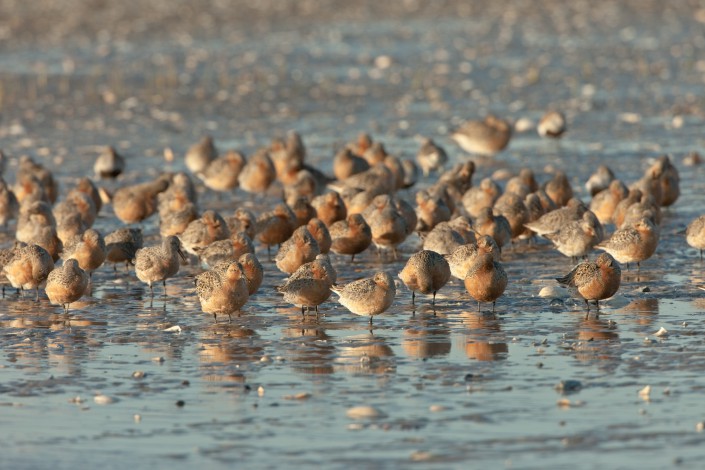
Red Knot Photo by: Jan van der Kam

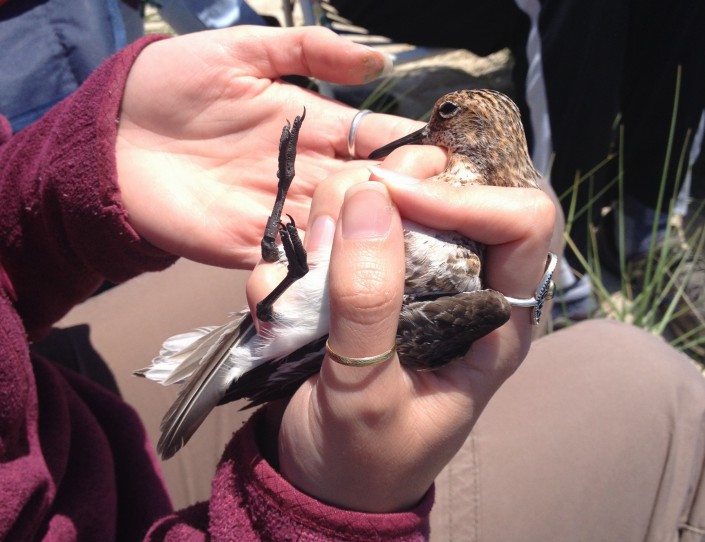
As a bird nerd, I’d often look on enviously at photos of biologists posted online holding shorebirds in their “bander’s grip” – the bird’s head in between their index and middle finger, using their thumb and pinky to steady the bird, while allowing its feet to dangle freely.

 
I always wondered: I wish I could do that! Hold a bird in my hands. Yet I never once thought: Wait, how did the bird end up in their hands in the first place?

 
I certainly hadn’t thought biologists run all over the beach chasing after shorebirds like a farmer chasing chickens – I just never thought the process all the way through.

 
This past summer, I was fortunate enough to become part of that process and learned exactly how a shorebird ends up in a biologist’s bander’s grip. The system may surprise you, but the steps have been mastered over nineteen years of practice, each one with shorebird safety as the top priority.


Conserve Wildlife Foundation (CWF)’s Delaware Bay Shorebird Project celebrated its 19th year this summer. The team members, led by Drs. Larry Niles of CWF working with Amanda Dey of New Jersey Division of Fish and Wildlife, are all extremely passionate about what they do and care deeply for the shorebirds they are studying and protecting.

 
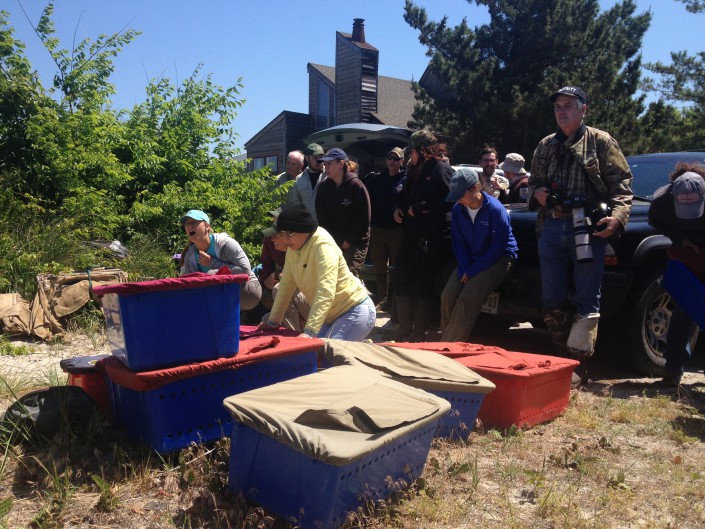
I arrived at the team’s house on Reeds Beach, along the Delaware Bayshore, early in the morning. Dr. Niles was concerned about the wind and had scoped out the safest beach for the banding that day. Our group of scientists, volunteers, supporters, interns and staff caravanned to Villas and joined our partner, American Littoral Society, at the site. We all picked up large, colorful plastic tubs, which had cloth covers that fit securely over the top of the box. The cloth cover had a Velcro pocket. We were told that these boxes would help in the shorebird “catch” that day. Larry and Mandy gave us instructions for how the banding day would go, safety tips and background information on the Delaware Bay Shorebird Project. We all listened intently and couldn’t wait for the day to begin!

The team waiting with our bins. Photo by Lindsay McNamara
The team waiting with our bins. Photo by Lindsay McNamara.

Well, we waited a bit before the day truly started. Dr. Niles and his team had binoculars with them and sat down in the sand, watching the shorebirds from afar for about an hour and a half. We waited by the cars up near the houses along the beach. The reason for the long wait? Dr. Niles and his team were waiting for the perfect moment to fire the net over top of the shorebirds along the coastline.

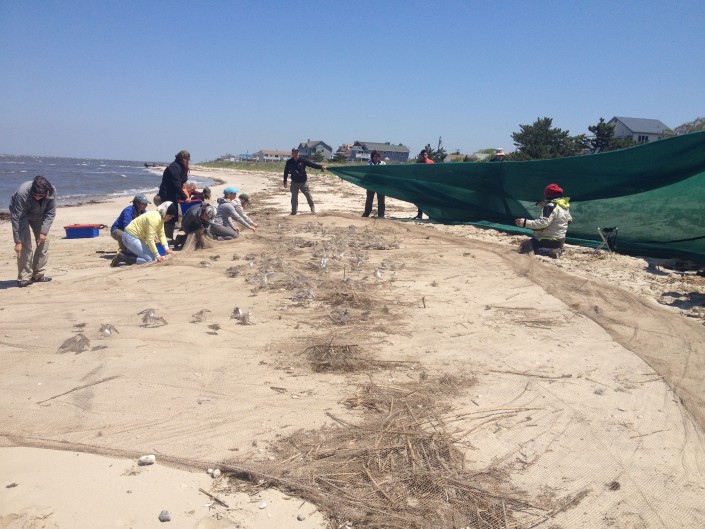
Biologists rolling away the net to reveal more shorebirds. Photo by Lindsay McNamara.

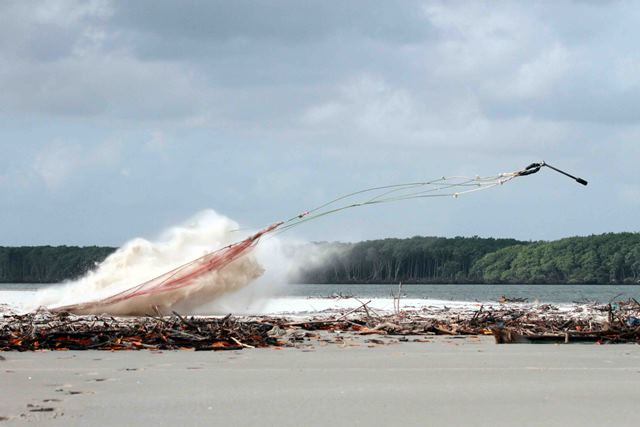
Cannons with gun powder charges fire heavy projectiles that carry the net over the birds only at the perfect moment – when birds are catchable and none in danger. Luckily, it was not a “wet catch,” that day, as the net did not go into the water. As soon as the cannon was shot, we all spirited single file carrying our tubs down the beach, following the biologists. The biologists immediately knelt at the base of the net and started picking up birds and shouting their identification and passing them to us, as they went they rolled the net away to reveal more birds.

 
It was very exciting! The idea was to get the birds out from under the net and into our carrying boxes and sealed in with a Velcro flap, as fast as possible, for the safety of everyone involved.

 
Each bin became devoted to the same bird species, so if the first bird that was handed to us was a sanderling, we kept putting only sanderlings in our bin. Once we had several birds in our bin, our pace completely changed. We walked very slowly away from the net, keeping the bin level at all times, towards the path in the sand at the beginning of the beach, to make the journey as safe for the birds as possible. There, biologists had burlap “keeping cages” for the birds to wait in. Birds were also sorted by species into these cages.

 
When every bird was taken out from under the net, and sitting in their temporary burlap enclosure, we formed “circles.” Each circle was composed of about 6 volunteers led by a core banding team member. Once formed birds were handed to us and finally, I learned how to safely hold a shorebird in my very own bander’s grip!

My very own bander's grip! Lindsay McNamara holding a sanderling.
My very own bander’s grip! Lindsay McNamara holding a sanderling.

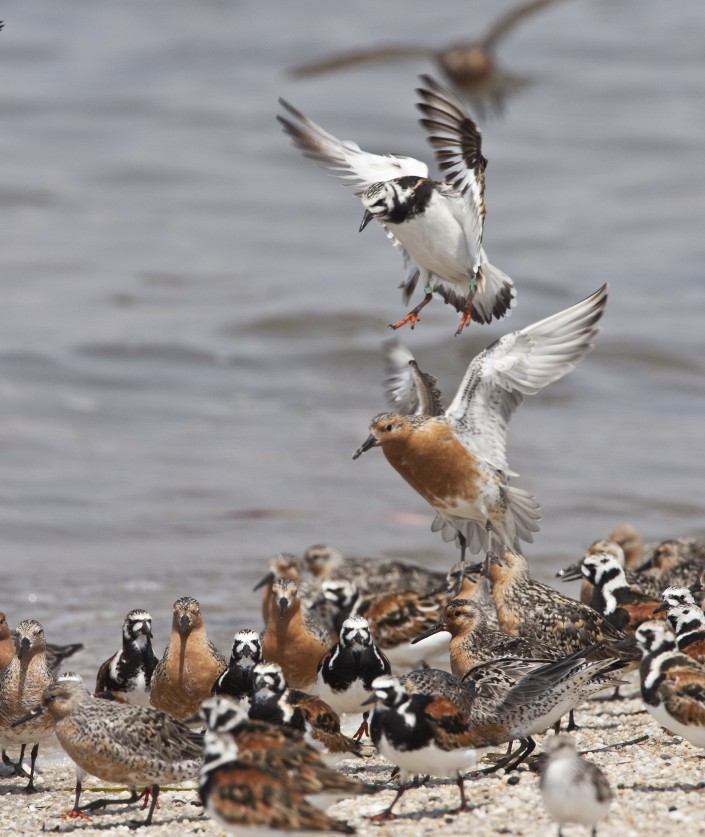
Each bird received a metal band with a federal identification number, and a green tag with a three letter code. One person in the circle put the band on the bird and passed the bird to the next person, who placed the green tag on each birds’ leg and glued them shut. A recorder took notes on the band number and tag letters. Next, the birds’ wingspan and other data points were measured by other members in the circle. Lastly, the bird was weighed before it was released. During my trip with the banding team, we caught a large number of sanderlings and a few ruddy turnstones, federally listed red knots, and semipalmated plovers.

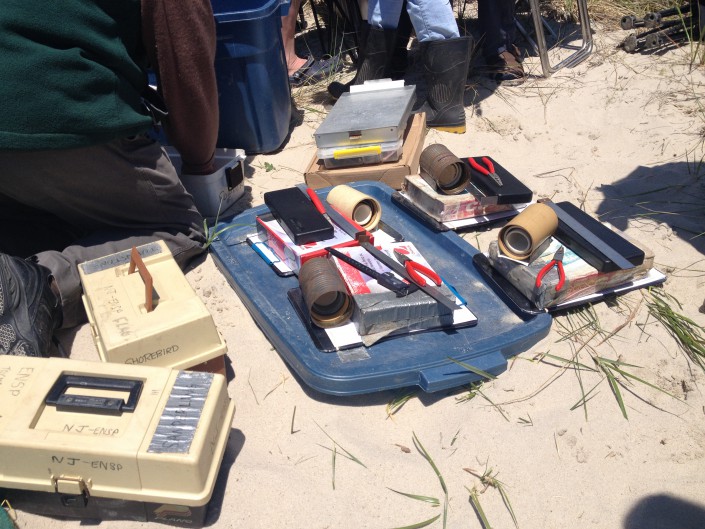
Banding team supplies. Photo by Lindsay McNamara.

Holding a shorebird in my bander’s grip was an amazing experience, but what I enjoyed most of all was taking part in the science of shorebird conservation. I placed the green tags on the shorebirds, which will tell other scientists who may recapture the birds that they once traveled to New Jersey. Our circle helped collect valuable data points, which will be combined with the data from the other years of the Shorebird Project, to assess the health of shorebird populations.

 
I wasn’t just holding a bird, I was helping the bird have a brighter future – and that is the best feeling any bird nerd can have.

 
Today is World Shorebirds Day! You can help shorebirds have a brighter future today by participating in the Global Counting Day Program. Join the hundreds of participants at over 93 locations that will count shorebirds and share their sightings online. Register today!


Learn more:


Lindsay McNamara is the Communications Manager for Conserve Wildlife Foundation of New Jersey.

Project RedBand continues on Barnegat Bay

92 Ospreys Enlisted in Citizen Science Based Re-sighting Project

by Ben Wurst, Habitat Program Manager

A young osprey was banded with a color auxiliary band: 76/C for future tracking at a nest on Long Beach Island.
A young osprey named “Danny” was banded with a color auxiliary band 76/C for future tracking at a nest on Long Beach Island. Photo by Northside Jim.

This is the critical time of year for monitoring our nesting ospreys. Each year biologists and specially trained volunteers, aka Osprey Banders, conduct ground surveys by boat to monitor the state population. They visit or survey the most densely populated colonies of nesting ospreys: Sandy Hook, Barnegat Bay, Great Bay, Absecon, Ventnor-Margate-Ocean City, Great Egg Harbor Watershed, Sea Isle, Avalon-Stone Harbor, Wildwood, Maurice River, and parts of the Delaware Bay. These surveys have been conducted since the early 1970s when ospreys were not so common, with only 50 pairs in 1973.


Their recovery has been quite remarkable. With an estimated 600 nesting pairs throughout the state, our ospreys are in a much better position today. Why put so much time and effort into monitoring a seemingly healthy population? Even though their population is much larger than it was decades ago, ospreys still face a variety of threats that jeopardize their ultimate survival. It’s commonly known that ospreys face very high mortality rates in their first year of life. Before even leaving the nest their young are so vulnerable. They can fall or be blown out of the nest, predated by raccoons, crows, or eagles, killed by their own siblings, or die from starvation. After they fledge, then they need to learn to find and catch prey and avoid power lines and wind turbines. Then they need to learn to migrate south and avoid being shot in the process. Once they find a suitable wintering site, then they remain in the same area for the next two years. Then they return to their natal areas to find a suitable nest site and start their own osprey family!


Today, we need your help! We cannot reach all active nests in New Jersey. There is still plenty of time to help us keep track of the state population. Citizens are encouraged to submit sightings of activity at osprey nests on Osprey Watch, a global osprey watching community. In 2013 all of the known locations for osprey nests was released on Osprey Watch’s website. As a partner with Osprey Watch, we share and use the data collected to help determine the overall health of the population, which is summarized in our annual report.


To help engage our Osprey Watchers, we started Project RedBand, a citizen science based osprey re-sighting project. This is year two of the project. So far we’ve deployed 92 red bands (out of 100) on young produced at nests on Barnegat Bay (62 in 2014 and 30 in 2015). The young that were banded last year will start to return to New Jersey in 2016. Usually young adults return later than older adults, so the red banded birds might not be seen until May or June. That’s when they’ll find areas with high prey availability and suitable nest sites. Usually males don’t stray far from their natal areas but females do. With these red bands, we hope to learn a little more about where our ospreys are dispersing to and at the same time engaging our coastal communities in osprey conservation.


Learn more:


Ben Wurst is the Habitat Program Manager for Conserve Wildlife Foundation of New Jersey.

Impacts from Severe Weather minimal

Nesting ospreys fared well from June 23rd storms on B. Bay

by Ben Wurst, Habitat Program Manager

We had some pretty insane weather blow through on Tuesday evening. I saw it first hand while driving to Long Beach Island to visit some relatives in town. The storm front brought high winds and driving rain to the area. The National Weather Service has even declared that there was even a water spout in Brant Beach (which was right where I was driving on the LBI Blvd. southward). Winds gusted to 70-80mph blowing all sorts of debris (and lawn furniture) across the road. I immediately pulled over to where I was protected from the wind. While I sat there I thought of all the osprey nests out on the bay with young in them…

Photo by Ben Wurst
One is better than none! Photo by Ben Wurst

At this time of year almost all nests have young. They range in age from only hatchlings to 4 week old nestlings. Some can be easily blown from shallow or weakly built nests and can be easily blown from the top of nesting platforms. This has happened in the past (in 2012 when we had a “derecho” blow through the area in late June) and almost half the young present were blown from their nests (in Absecon).

To get a better idea of what we experienced, I asked Jonathan Carr, with Weather NJ, what we saw. This would also give me a better idea of what to expect when conducted post-storm surveys. “What we saw in SNJ on Tuesday was a bow echo as evident by radar signature. A macroburst hit SWNJ which generated substantial straight line winds that fueled the system all the way to the coast. In addition, multiple rotation signatures were picked up via velocity analysis which sparked the tornado warnings in perfect alignment from PA through SWNJ and ultimately the Jersey Shore. The NWS officially ruled the incident near Brant Beach a waterspout but little damage was done from such. All damage across SNJ was again, from straight line wind gusts which reached 80mph in several locations. Harvey Cedars actually clocked a 92mph wind gust. I wasn’t surprised given that instability and wind parameters were screaming for this to happen in the prior 24 hours, especially with the cold front trigger moving through. These type of winds are disastrous for any coastal wildlife or nesting grounds with open exposures.”

With that news on the weather front, I knew we’d have young ospreys on the ground. On Wednesday I got my first report from Osprey watchers Ray and Leslee on Cedar Run Dock Rd. They noticed the adults acting funny, who were now on the ground and not on the nest (where they were before the storm). I gave Leslee permission to walk out to the nest. She found two 3 week old young on the ground. I had plans that day so I couldn’t make it there until 9pm. But when I met Leslee and Ray the nestlings were still on the ground. We picked them up and put them back into the nest (and we also fed a good amount of mosquitoes!!)

Four stripes!! Photo by Ben Wurst

The following day we rallied to get out on our boat to conduct some more “post-storm surveys,” the first of the season. We checked nests from Bonnet Island to Loveladies and Barnegat. A total of 18 active nests were surveyed. At the first nest we checked we found four young (this nest has failed to produce young for the past two years, amazing!)!! The second had two nestlings in the nest and none were found on the ground. GREAT! But, as the clouds moved in the survey took a darker turn… The next nest we checked was empty but had the remains of a very young osprey. Then the next one had two alive in the nest and one dead on the ground (a 14 day old). The next two nests had 2 and 3 young in them and they all looked very healthy. Then at the next nest we saw the whole nest down on the marsh. When we dug through it we found the bodies of two young. They were instantly crushed under the weight of the nest. So sad. The adult female was still sitting on the nest, surely hoping they were found alive. 🙁 It is now too late to get out to other areas to rescue young. I have learned that young are NOT fed when they are grounded. So there is little chance that any young would still be alive if found on the ground. Future surveys will determine how many other areas were affected by the strong storms.

Despite the gloomy outcome, nests in this severely impacted area had overall good results. We counted a total of 27 young from 18 active nests which gives us an average productivity rate of 1.5 young (per active-known-outcome nest). This is almost twice the level needed to sustain the population. Most young were around 17 days old. Only five were banded for future tracking.

It’s too early to tell how the entire population will fare this year. It could be a down year, with reports of no large schools of menhaden that are close to shore. Menhaden (bunker) are one of the most crucial food sources for many coastal species, including osprey.

Photos from the Survey:
Photo by Ben Wurst
Remains of a young osprey. Photo by Ben Wurst
Photo by Ben Wurst
One. Two. Three. All in the nest! Photo by Ben Wurst
Female on her nest. Photo by Ben Wurst
Photo by Ben Wurst
The oldest in this historic nest got a little feisty. Photo by Ben Wurst
Female hovers over her nest to check on her young (3) after we surveyed her nest. This is one of the oldest nests in NJ. Photo by Ben Wurst.
Photo by Ben Wurst
Young that were found on the ground were decomposing very quickly. We moved them out of sight from the adults. Photo by Ben Wurst
Photo by Ben Wurst
An empty nest off Loveladies. Last year this nest was productive. Photo by Ben Wurst
Photo by Ben Wurst
A week old chick and an egg on a channel marker nest of LBI. Photo by Ben Wurst
Photo by Ben Wurst
A four week old nestling that was banded with a red auxiliary band for future tracking. Photo by Ben Wurst

Photos from the Field: Successful Year for Bayside State Prison Falcons

Endangered Falcons are Doing Well this Year!

by Ben Wurst, Habitat Program Manager

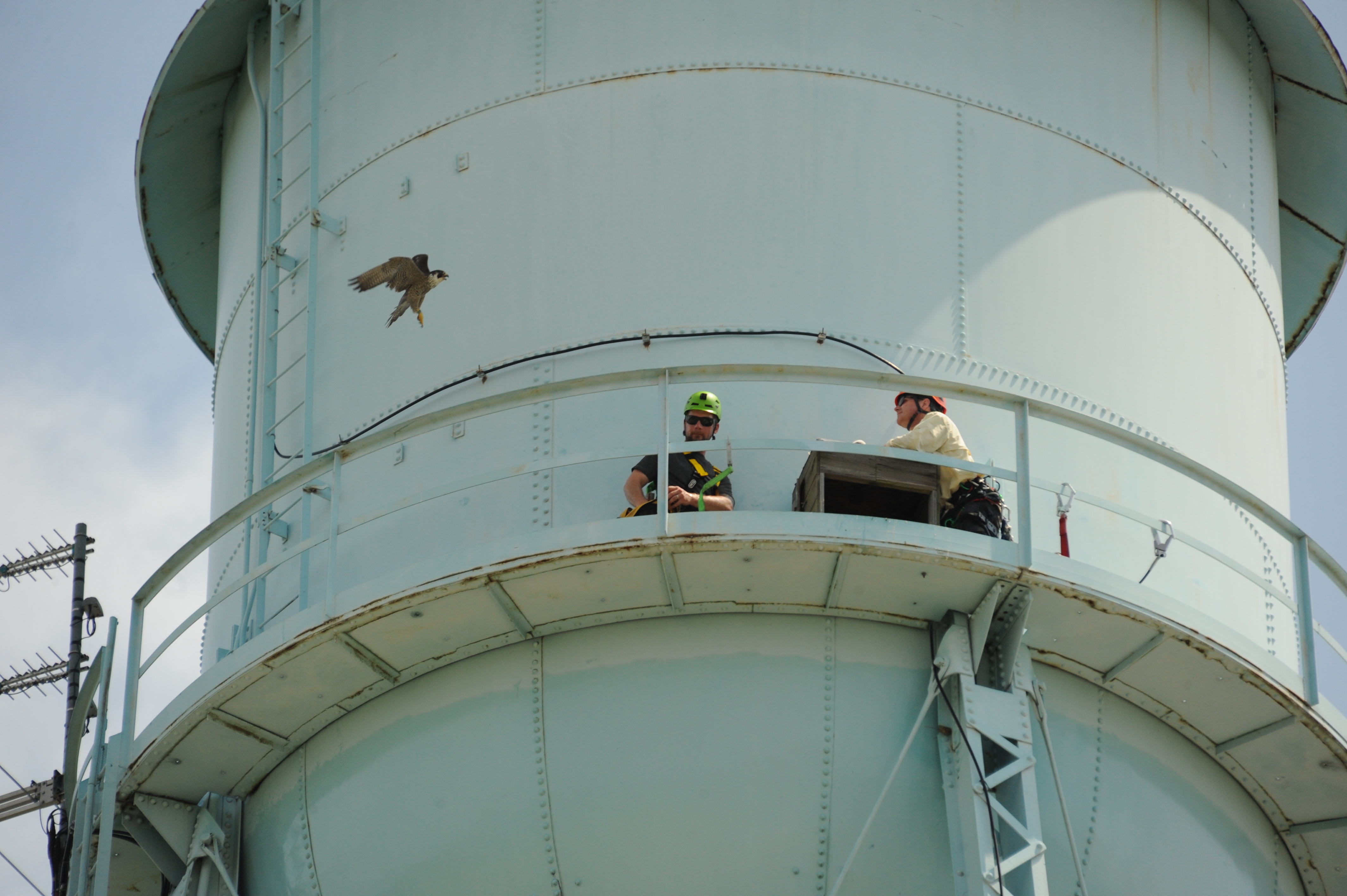
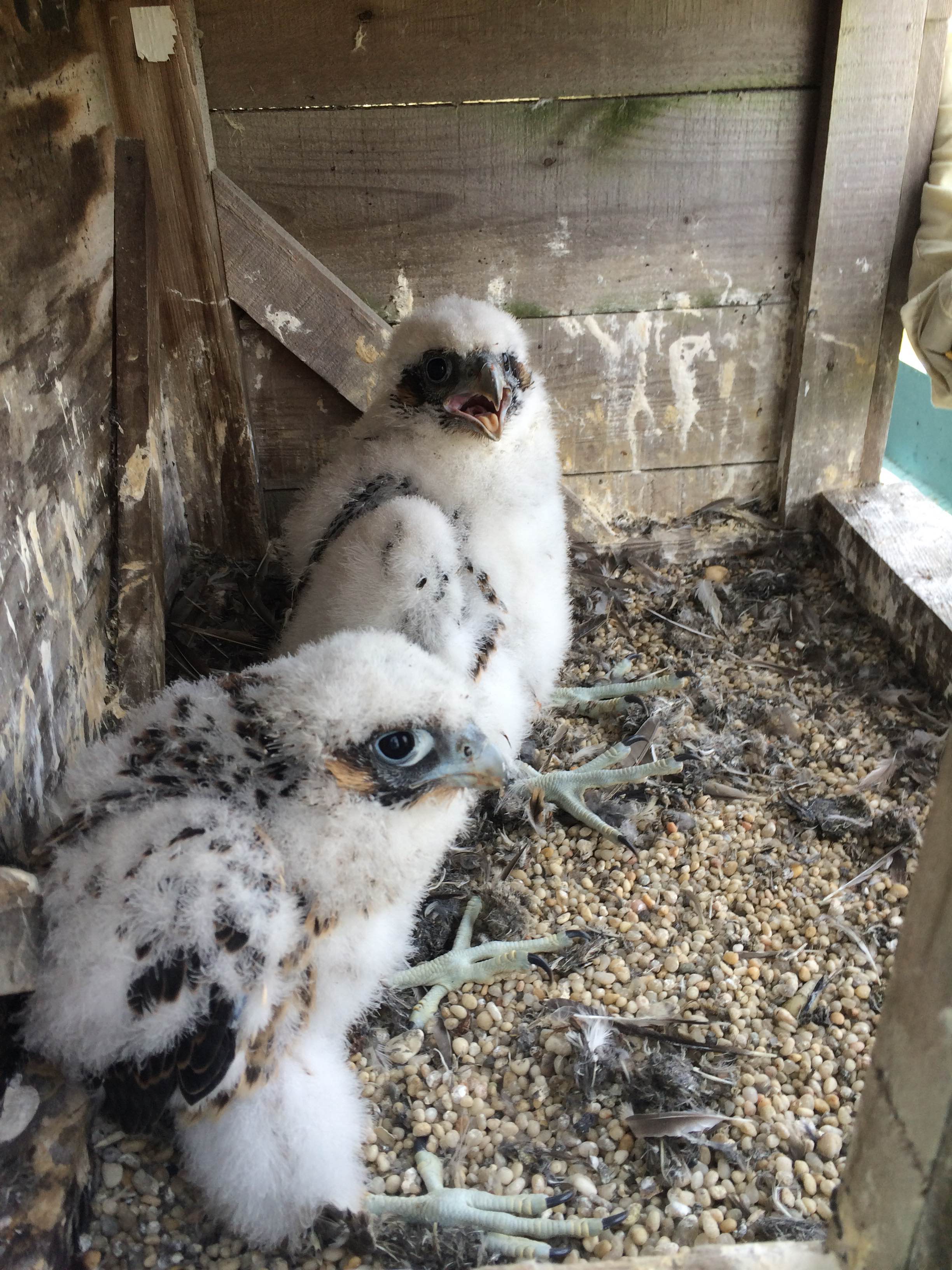
So far this has been a good year for peregrine falcons. Almost all known nest sites have produced young, even the natural nests on the New Jersey Palisades, which are prone to failure from strong winds and driving rain associated with Nor’easters in early spring. One successful site is at Bayside State Prison. The nest there is on top of a 120′ water tower. The pair of falcons nests in a nestbox that was installed several years ago after a old hacking tower was decommissioned on the coastal saltmarshes along the Delaware Bay. For the past two years the site has been active and productive. This year two young eyases were produced (one was produced in 2014). Last week we joined Kathy Clark and John Heilferty with the NJ Fish and Wildlife’s Endangered Species Program to band the two young falcons.

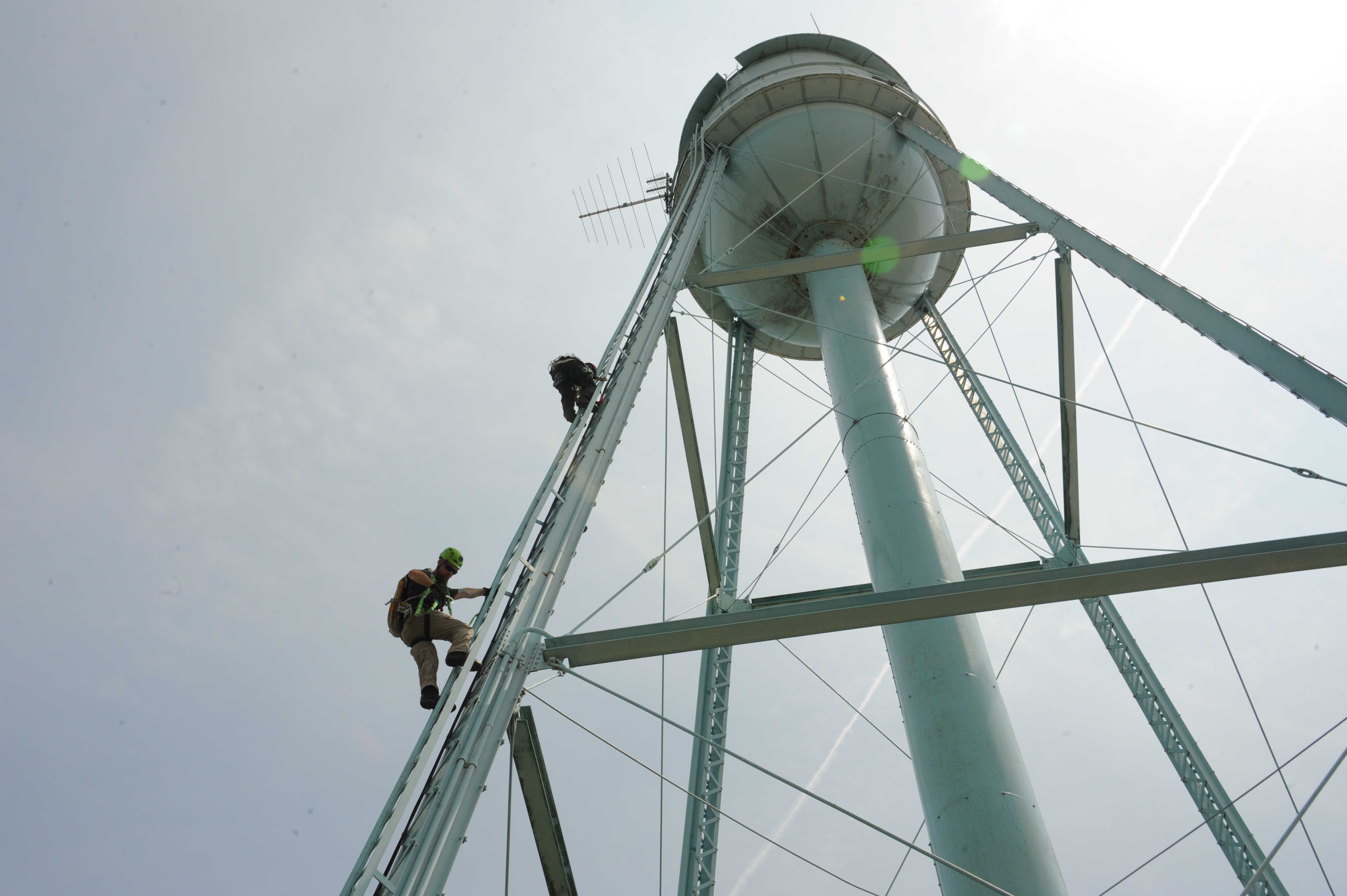
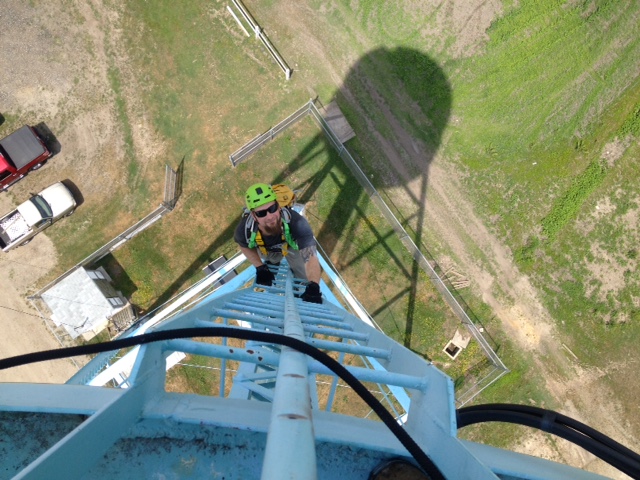
We climbed the 120′ tower to access the nest and band the young. As we climbed the tower the adult female was calm but as we got to the half way point she became aggressive towards us to defend her nest and young. We were wary of her the whole time and spent as little time as possible on the tower while banding the young to minimize the stress to her from constantly flying and dive bombing us, which she did. We were lucky to have a steel railing to protect us (and helmets), as she came very close to us. At times she would perch behind me or John on the railing. Once we were done banding we climbed down and she returned to her nest to find that her young were not harmed.

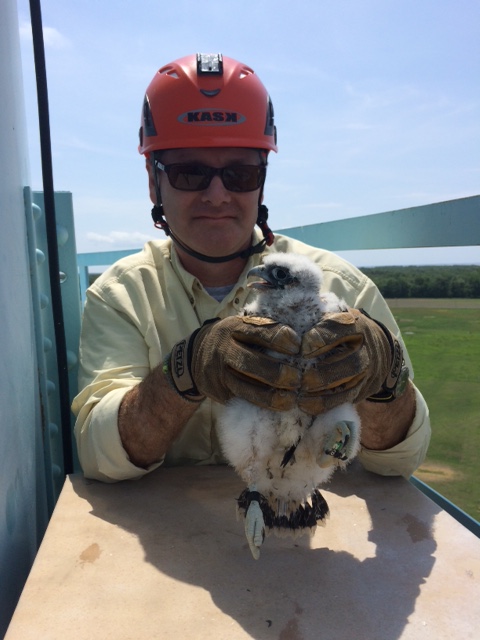
Banding is a critical tool for avian biologists to learn a lot about birds. For New Jersey falcons we tag them with a black USGS federal band and a bi-color / alpha-numeric band, which allows us to be able to identify each individual bird. It also provides more valuable information including nest success, age, site fidelity, and the turnover rate in the population. At all nest sites in New Jersey, after we have successfully identified the breeding pair, we continually monitor each nest or eyrie until the young are old enough to band (approximately 3-4 weeks old). In 2014 there were 29 active nests in New Jersey (up from 26 in 2013). The core of the population continues to nest on towers and buildings throughout the state.

KEC_7594
Ben W. and John H. climbing the 120′ tower. Photo By Kathy Clark/ENSP
Banding
Ben prepares to band a nestling that John holds. Photo by Kathy Clark/ENSP
Dive bombed!
Dive bombed! Yes, the female came very close to us! Photo by Kathy Clark/ENSP
Two 3.5 week old young. One male; one female. Photo by Ben Wurst
John Heilferty holds a 3.5 week old peregrine falcon as it was banded for future tracking.
John Heilferty, ENSP Biologist holds a 3.5 week old peregrine falcon as it was banded for future tracking.
Ben Wurst climbs down the 150' water tower. Photo by John Heilferty/ENSP.
Ben Wurst climbs down the 120′ water tower. Photo by John Heilferty/ENSP.

Learn more:

2015 Delaware Bay Shorebird Banding Season Comes to a Close

Delaware Bay Shorebird Project Team Finishes 2015 Banding Season

By: Dr. Larry Niles, LJ Niles Associates LLC

All our efforts to help shorebirds on Delaware Bay this year couldn’t have been better rewarded – nearly every red knot left the bay in good condition and in one of the earliest departures in the 19 years of the Project. We counted just over 24,000 knots in our aerial count of the entire Bayshore on May 26th. Just two days later, most had left and we could find only a few hundred, feeding on eggs like human shoppers feed on bargains at a half-price sale. By May 31st, virtually all were gone, along with the ruddy turnstones, sanderlings and semipalmated sandpipers. The beaches had an odd, deserted feel after the frenzy of the preceding days.

Photo by Jan van der Kam from Life on Delaware Bay

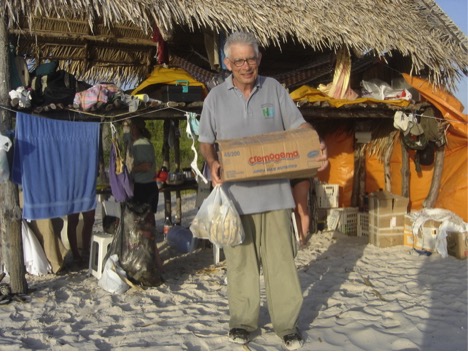
A good thing for birds and all those who love birds. The end of the shorebird stopover season also means the end of our shorebird team – at least for another year. All through the week, we lost team members—the North Americans left by car, those from other continents by air. Those who stayed shifted from research to manual labor: cleaning and storing equipment, closing up the rental houses, and reconnecting lost items to their owners.

Photo by Kevin Karlson

Will our project continue? Now in our 19th year of work on the bay, one must recognize the realities of time’s passage. Clive Minton just cleared 80, and the rest of the original team will soon follow. This author, who started at relatively young 44, is now pushing his mid-sixties. Death visited our team this year with the passing of Allan Baker. Surely the rest of us will start “falling off the perch” as Clive is fond of saying.

Allan Baker, the Senior Curator of Ornithology and Head of the Department of Natural History at Toronto’s Royal Ontario Museum suddenly and unexpectedly died in 2014.  His career included many significant achievements including early work that helped build a scientific case that overharvested horseshoe crabs caused the decline of red knot numbers. Photo from Wader Study.
Allan Baker, the Senior Curator of Ornithology and Head of the Department of Natural History at Toronto’s Royal Ontario Museum suddenly and unexpectedly died in 2014. His career included many significant achievements including early work that helped build a scientific case that overharvested horseshoe crabs caused the decline of red knot numbers. Photo from Wader Study.

And yet, all committed to return for a 20th year. I worry over the fundamentals: our funding remains uncertain, the listing of knots as Threatened in the U.S. creates new regulatory hurdles, and N.J. politics seem to get more fractious every minute. Will there be a 20th year of this project?


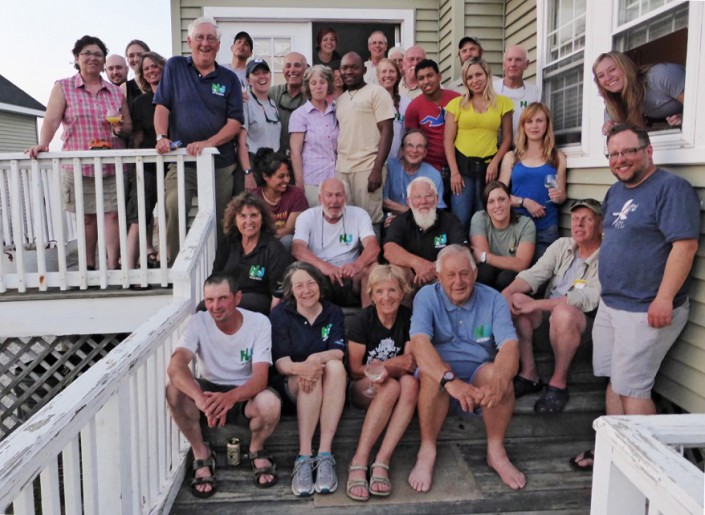
The answer starts and ends with the willingness of our team to do it again. It starts there because good ideas and projects always seem to find support; I know we will find a way. It ends there because this team provides the best chance of a strong scientific underpinning for protection. Our team includes some of the most important shorebird scientists in the world. At our dinner soirees (generously provided by Jane Galetto’s Citizens United team), Ph.D.’s are as common as empty beer bottles. It’s no surprise that conversation drills deep into conservation biology, behavioral ecology, migration physiology, stopover ecology, virology and many other subjects of interest to all our team, both scientists, old and young, and lovers of good science.


In many ways, the lives of our team members revolve around birds. The Delaware Bay Shorebird Project provides us a meaningful excuse to pull together once more. Our team members love birds, and do everything they can to help them. It’s been that way for 19 years, and it is this commitment that has led to this year’s results.

p180 red knots
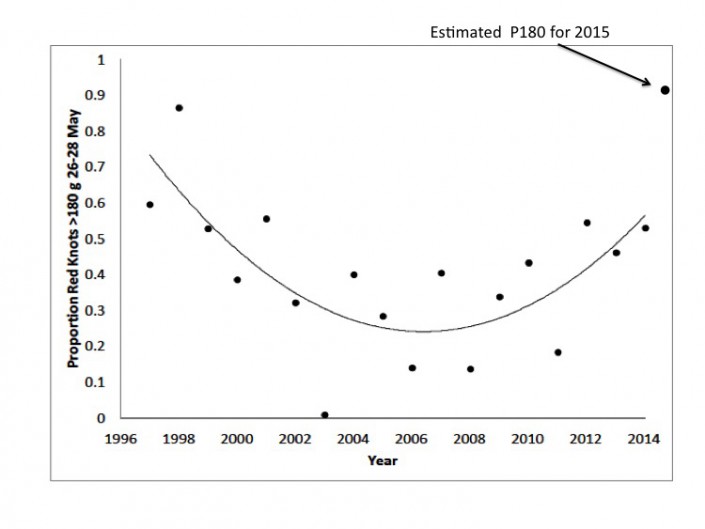
This graph plots the percentage of red knots caught between May 26th and May 28th that have achieved at least 180 grams against the year of the catch. The 2015 result is still an estimate.

For the first time in 19 years, red knots left in a condition similar to the lucky ones migrating through before the fishing industry decimated horseshoe crabs in 1997. After that year, the populations of knots, turnstones, semipalmated sandpipers, and sanderlings fell off a cliff. For the last four years, however, the terribly reduced populations of shorebirds have been in rough balance with equally reduced number of horseshoe crabs breeding on the Bay. Consequently, the percentage of knots reaching the threshold weight of 180 g has climbed. (Knots need at least this weight to reach the Arctic and breed successfully.) From a low of just 5% making weight in 2003, they’ve clawed their way upward 30% in 2010, 50% in 2013 and now this year’s 90%.

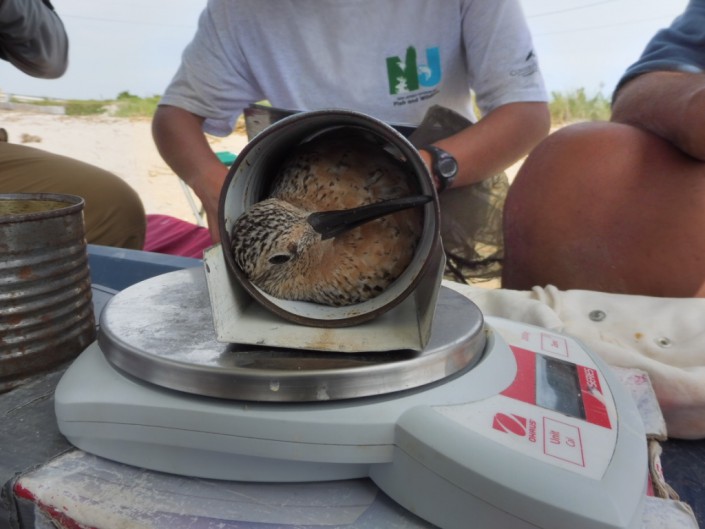
Fat knot on the scale by Philippe Sitters

One must be cautious about the interpretation of this number but the catch of red knots on which it was based were truly fat birds! One weighed 226 grams, nearly 100 grams higher than its fat free weight. Whatever the figure it was a good season for both birds and the people who love them.

Learn more:

Dr. Larry Niles has led efforts to protect red knots and horseshoe crabs for over 30 years.