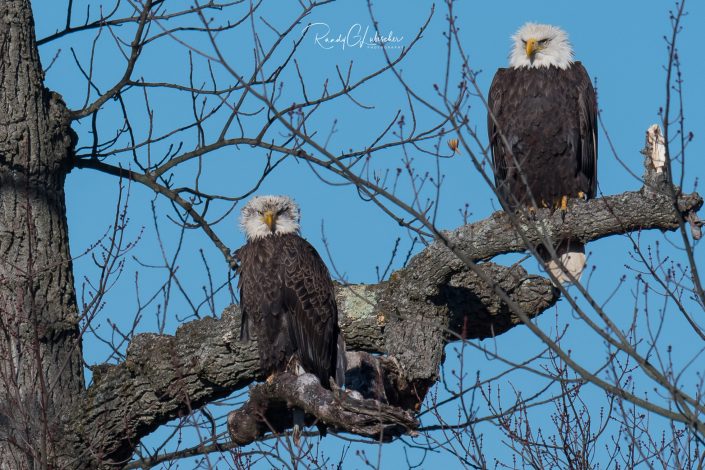
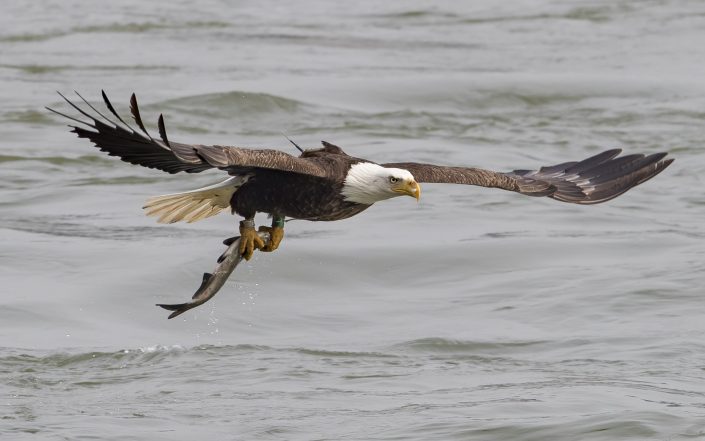
Andrew Drummond captured this image of “Harmony 2” on Memorial Day in Marlboro, VT. She was banded as D/64 and outfitted with a transmitter May 29th, 2012 at Merrill Creek, Warren County. We have since been following her movements on Eagle Trax. She fledged in 2012 and spent her first winter on the lower Chesapeake Bay before traveling to Maine. She has spent the last five years in a 100-mile swath of western Connecticut and Massachusetts, and now into southern Vermont. She is of breeding age so we suspect that she will be nesting in the area next season.
Currently, we are tracking two NJ eagles outfitted with transmitters. One of these,”Haliae” was outfitted with a transmitter on May 31st, 2013, at the Merrill Creek Reservoir. We have been following her movements on NJ EagleTrax. Since 2015 she has spent her time in Maryland and eastern PA along the Susquehanna River. This past November a photo was taken of Haliae at Conowingo Dam, MD. At that time it appeared that one of the straps on her harness had come loose and we expected the transmitter to fall off in the near future, but continue to receive signals.
On April 12, 2018 Keith Opperhauser photographed Haliae along the Susquehanna River in Darlington, MD. The harness strap is clearly loose below her chest, but the transmitter is still attached. Haliae will be five years old this May and reaching breeding age. We don’t know how long the transmitter will stay attached or continue to transmit, but we’re glad to know that she is doing well.
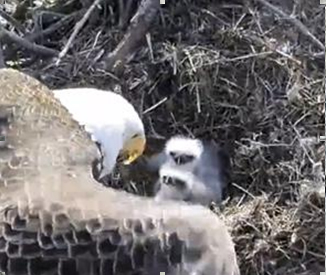
Nature can be awe inspiring and beautiful. Watching a powerful bald eagle gently offer food to a newly hatched chick is amazing. Cheering awkward chicks walking on wobbly legs, and holding your breath when they take that first flight are the events live cam viewers look forward to year after year.
Duke Farms nest-2016
We are reminded of the harsh realities of nature too. Nest fails can and do happen. Many things can go wrong: storms, predators in the nest, or conflicts with other eagles and territorial disputes. Watching it happen live, can be heartbreaking. Every event is a learning experience for us all.
There is a sad ending this year at the Duke Farms nest. It was hard to see the adult pair defending their nest from younger interlopers again. Harder still was actually witnessing the failure of both eggs. Hatching is a complicated business. We’ve been fortunate to have many years of success. As watchers, we must take the good with the bad. This is nature after all.
So what do we do now? My love of nature and the bald eagle will have me seeking out other live cams, but missing my local wild family. I will remember the successes of past years. I will stare in amazement as I look up into the sky to watch a bald eagle soaring overhead.
Duke Farms- 2016
Life will go on. The cycle will continue, if not in “my” nest, in another. Nature will find its balance. Thank you to Duke Farms and Conserve Wildlife Foundation of NJ for bringing us the live cam. Thank you to the state biologists who work every day to preserve and protect the wildlife in our state.
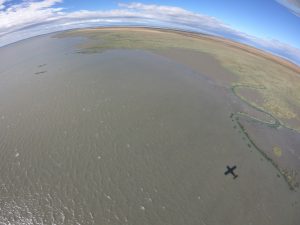
Just above and to the right of the plane shadow, thousands of shorebirds gather. Photo by Joe Smith
CWF scientists recently returned from a trip to Tierra del Fuego where they studied red knots and other migratory shorebirds that spend the month of May at New Jersey’s Delaware Bayshore.
CWF consultant Joe Smith captured some incredible aerial images of the coastline holding a flock of thousands of shorebirds in his blog story. See more photos of the flock and read Joe’s introductory overview about the trip here. Stay tuned for more installments about this vital trip.
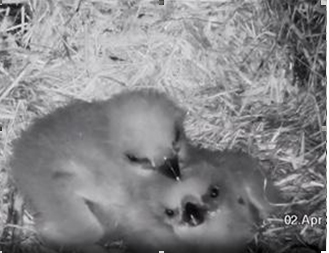
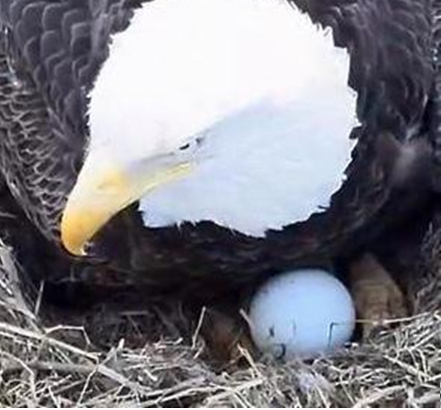
Egg 1 was laid on February 14th this year. Bald Eagle eggs are incubated for about 35 days. That means the first hatch could be next week, Wednesday, March 21st! What are the signs hatching has begun? As an observer for many years, viewing the live cam has taught me much. These are some behaviors I’ve seen in the past to alert me that hatching will soon begin or is already underway.
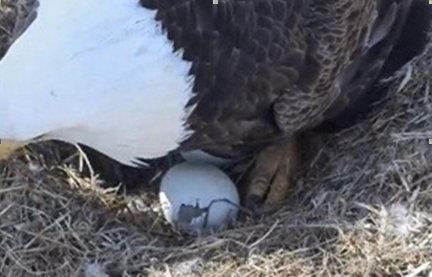
Believe it or not, the adult and chick can “talk” to each other through the shell. Watch for the adults to stand over the eggs with their heads bent closer to them. You may even see movement of the adult’s bill, as it “chirps” to its chick inside the egg.
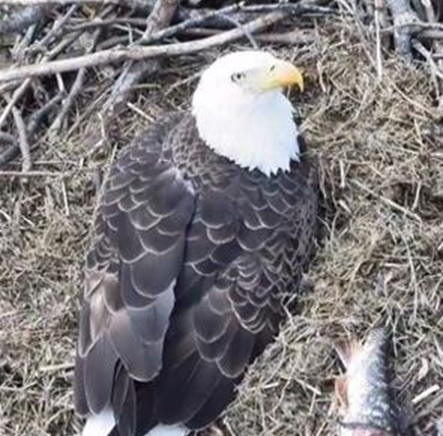
If food begins to show up in the nest, the adults could be preparing for another mouth to feed. They are stocking the “pantry”.
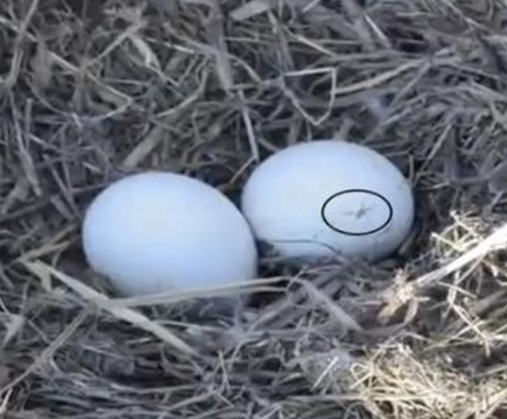
Restless adults, with lots of moving around on the nest, or more frequent egg rolls, is another sign to watch carefully. When you get a clear view of the eggs, look for a tiny hole or a spider web-like cracking. This first hole in the shell is called a pip, and is made by the chick. The chicks do all the work!
Pips can be difficult to spot with protective adults blocking the view. You may wonder if you are looking at a spot of dirt or piece of grass on the egg or a real pip. Trust your eyes and keep watching, that pip will increase in size. This is exhausting and hard work for a little one. The complete hatching process can sometimes takes a day or two.
It is amazing to watch the progress once the first pip has appeared. Get ready for the most eggciting time of year for eagle watchers!
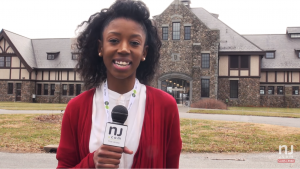
NJ.com reporter Alexis Johnson at Duke Farms in Hillsborough
Conserve Wildlife Foundation has long partnered on the famed Eagle Cam at Duke Farms in Hillsborough, which has thrilled over 13 million viewers since it started.
In this video, NJ.com reporter Alexis Johnson covers the state’s longest running Eagle Cam with an interview with Duke Farms Executive Director Michael Catania.
Bald eagles have nested at Duke Farms since 2005. Currently the pair has laid two eggs in this nest, with the first egg laid on Valentines Day this year.
From just a single nest remaining in the state in the late 1970s and early 1980s, bald eagles have recovered to over 170 nests, thanks largely to scientists and volunteers from the New Jersey Endangered and Nongame Species Program and Conserve Wildlife Foundation.
The Duke Farms Eagle Cam can be found here, and author Jim Wright’s e-book “Duke Farms’ Bald Eagles” provides some fascinating additional information about this nest.
CWF’s Bald Eagle webpage and annual Bald Eagle report details the story of bald eagles in New Jersey, with a number of other helpful links.
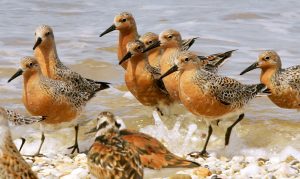
The Press of Atlantic City covered the troubling findings of Conserve Wildlife Foundation’s recent expedition to Tierra del Fuego in Chile to survey wintering red knots.
The numbers of red knots – an endangered migratory shorebird that spends every May along New Jersey’s Delaware Bay coast feasting on horseshoe crab eggs – declined by more than 20 percent between the team’s counts last year and this year.
Each New Year promises an exciting year ahead, and conservation science is no exception! As biologists gear up for the field season, CWF’s amphibian programs are particularly noteworthy.
Our Amphibian Crossing Project has made major strides in protecting the frogs, toads, and salamanders migrating to breeding areas, and we’re launching a new program this year to better document the newly discovered mid-Atlantic coast leopard frog. You can help CWF biologists collect data and save these fragile creatures.
Read below for more details about each program. In the meantime, if you would like to support CWF’s amphibian programs, please visit our YouCaring page here: https://www.youcaring.com/conservewildlifefoundationofnewjersey-1091698 . Your contribution will help us develop training materials and cover research expenses to protect our most vulnerable frogs and salamanders!
Amphibian Crossing: A New Twist on an Old Program
The long-standing Amphibian Crossing Project, established in partnership with the New Jersey Endangered and Nongame Species Program (ENSP) in 2002, has been organizing dedicated volunteers each spring to chauffer migrating amphibians across roads as they trek from their upland hibernation sites to their breeding ponds. This program has saved thousands of frogs, toads, and salamanders from vehicle strikes so that local amphibian population sizes can be maintained, which is especially important for species of concern, such as the Jefferson and spotted salamanders.
Seeking a more long-term solution to the amphibian road mortality problem at the Amphibian Crossing Project’s top site, ENSP has finally secured funding to construct crossing structure system for amphibians to move safely across Waterloo Road in Byram Township, Sussex County. This system, including under-road tunnels and guide fencing, will help amphibians avoid problems on the road all season long. CWF is preparing its second year of monitoring along Waterloo Road to track the changes in amphibian vehicle-caused mortality before and after this system is installed.
Leopard Frogs: A New Program for a New Species
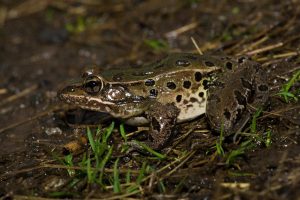
This year marks the launch of CWF’s Kauffeld’s Calling Frogs program. Similar to New Jersey’s Calling Amphibian Monitoring Program (CAMP), volunteers will listen and document frog calls during the breeding season. Kauffeld’s Calling Frogs, however, will focus specifically on the newly discovered mid-Atlantic coast leopard frog. This frog, named after the late avid herpetologist Carl Kauffeld, had been mistaken as a member of the southern leopard frog species for decades. Only recently was it determined to be a separate species with unique habitat requirements.
Despite only being an official species since 2014, it is already considered a Species of Greatest Conservation Need in New York, and may be declining from other portions of its range. CWF biologists are eager to document the current extent of this frog’s range within New Jersey in order to monitor the population for possible declines. Knowing where this species is found is the foundation for future research into its habitat needs and threats.
Getting the Public Involved
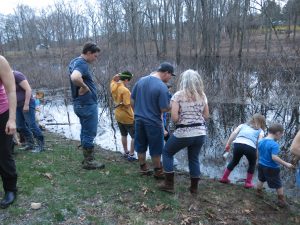
These amphibian programs cannot move forward without the dedication of CWF volunteers. Over 100 volunteers have been involved with the Amphibian Crossing Project, and a dozen more dedicated at least a day a week for months to monitor Waterloo Road amphibian mortality. With the success of CAMP in mind, this first year of Kauffeld’s Calling Frogs promises to be full of new frog population discoveries.
Make sure to follow CWF on Facebook, Twitter, and Instagram for the latest updates on our amphibian programs as the season progresses!
How CWF Is Fighting This Threat to Wildlife in Barnegat Bay
by Emily Heiser, Wildlife Biologist
For many coastal communities in New Jersey, like the Barnegat Bay region, winter is a time for rejuvenation and the preparation of our resources for a busy summer season. It only makes sense that we also start to prepare the coast’s most precious resource – the bay.
Barnegat Bay is approximately 42 miles of brackish marsh and bay bordering Ocean County. The bay and surrounding marshlands are rich in vital resources that directly and indirectly support over 60,000 jobs and have an economic value of $2 to $4 billion dollars annually (Barnegat Bay Partnership Economic Report 2012).
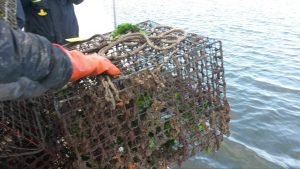
Pots are often heavily encrusted with organisms and can contain several different species of bycatch. @ John Wenk
Part of that economic value is attributed to the tremendous blue claw crab fishery in the bay. The New Jersey Division of Fish and Wildlife estimates that commercial and recreational crabbers harvest around 6 million crabs per year from New Jersey waters. Barnegat Bay, along with Little Egg Harbor and the Maurice River estuary comprise approximately 65-86% of the recreational harvest that occurs annually. Recreational crabbers use a variety of methods, but typically rely on baited pots or hand lines for crabbing. Regulations exist for the use of pots, but their unintentional loss has created an economic and environmental problem for all portions of Barnegat Bay.
CWF, along with our partners, has been diligently organizing and executing what is essentially a cleanup of these pots within Barnegat Bay. In 2015 and 2017, CWF was granted a NOAA Marine Debris Removal Program grant to support the removal of derelict crab pots, also know as ghost pots, from Barnegat Bay. Over the course of the last three years, we have removed over 1,300 crab pots that have become a death trap for a variety of marine organisms, including diamondback terrapins and otherwise fishable blue crabs.
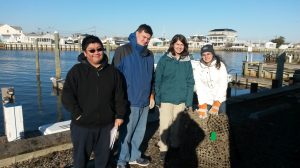
Students from the Marine Academy of Technology and Environmental Science assist in assessing pots after they’ve been pulled from the bay. @John Wenk
All of the fieldwork on this project occurs during the chilling winter months when only the hardiest of fishermen can be found on the water. The blue crab season is open in most parts of the state from March 15th – November 30th leaving the coldest months to head out and collect pots that are not supposed to be actively fishing. Several partners have made this project a possibility – the Marine Academy of Technology and Environmental Science, Stockton University, Monmouth University, ReClam the Bay, American Littoral Society, and through contracts with local fishermen.
Using side-scan sonar units, crews head out in early December to start looking for ghost pots. Once a sufficient number of pots have been marked, waypoints are transferred over to retrieval crews. Retrieving the pots sounds easy in theory, but can be time-consuming and success is dependent on many compounding factors such as substrate, weather, and tidal conditions. Upon relocation of a surveyed pot, the captain must line the boat up to the best of their ability and with as much accuracy as they can, instructs the crew where to throw the grapple line. Often you hear them call out, “Five feet – left center” and amazingly, the crew throws the grapple and hooks into a pot! Depending on the substrate and how long the pot has been on the bay floor, it can be very difficult and dangerous to leverage out. With the use of just the right amount of engine power, sunken pots can be delicately coaxed out of the water and lifted onto the boat by crews. Once a pot is on the boat, a rapid assessment is done to look for unintended bycatch, pot design, and encrusting organisms. Some of the various bycatch that has been found in pots include several species of crabs, lobster, flounder, tautog, and sadly, several diamondback terrapins. One pot contained the remains of more than 17 diamondback terrapins.
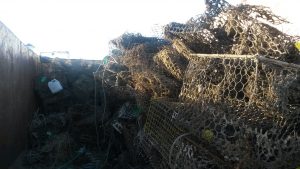
Ghost pots are disposed of by NFWF and Covanta’s Fishing for Energy Program where they will be recycled and turned into energy. @John Wenk
After a day of retrievals, the crew heads back to the marina where pots are placed in a disposal bin. The bins are provided to the project through the successful Fishing for Energy Program run by National Fish and Wildlife Foundation, Covanta Energy, and Schnitzer Steel. Gear collected from our port is stripped for recyclable materials at Schnitzer Steel and then non-recyclable material is turned into energy at Covanta’s facility in Rahway, New Jersey. The holistic nature of this project breathes life into the term, “reduce, reuse, recycle”.
Barnegat Bay’s ghost pots exemplify an overarching issue of our environment, human-wildlife conflicts. The Bay’s vital resources drive the economy and addressing these issues make us better stewards of the Bay and its resources.
CWF will be at the festival on February 3rd. There are presentations, walks, viewing sites and exhibitors. It’s a great way to learn about NJ’s eagles and other raptors.

 The Press of Atlantic City covered the troubling findings of Conserve Wildlife Foundation’s recent expedition to Tierra del Fuego in Chile to survey wintering red knots.
 These amphibian programs cannot move forward without the dedication of CWF volunteers. Over 100 volunteers have been involved with the Amphibian Crossing Project, and a dozen more dedicated at least a day a week for months to monitor Waterloo Road amphibian mortality. With the success of CAMP in mind, this first year of Kauffeld’s Calling Frogs promises to be full of new frog population discoveries.