Complete the lyrics: Nothing else matters in the whole wide world when you’re in love with a…
If you said Jersey Girl, then you’d be correct! Coincidentally, that’s also where volunteers and supporters alike gathered last month to show their love for amphibians. Jersey Girl Brewing in Mount Olive, that is.
Two years ago, we partnered with Jersey Girl to host a trivia event to raise awareness for our Amphibian Crossing Project, an initiative that seeks to reduce mortality among populations of frogs and salamanders whose migratory pathways are bisected by roadways. We chose the location based on its proximity to our largest crossing site, Waterloo Road, in the hopes that many of our hardworking volunteers could attend. We had a great turnout and a lot of fun. Following several requests, we decided to bring it back this year for round two.
Participants, including former CWF intern, Nicole Bergen (who helped write and host our first trivia event) pause during answer deliberation to smile for the camera.
Lots of familiar faces were in the crowd at Jersey Girl, including CWF’s Founder, Linda Tesauro, trustees Steve Neumann, Rick Weiman, and Amy Greene, former amphibian crossing leads MacKenzie Hall and Allegra Mitchell, former CWF intern, Morgan Mark, and many new and seasoned volunteers, like Barb and Rick McKee, without whom, this project could not succeed.
With about 50 pairs of both piping plovers and American oystercatchers nesting this year at Holgate, a unit of the Edwin B. Forsythe NWR, CWF’s seasonal staff that monitors breeding activity for the Refuge has been working at a non-stop pace. We asked them to take a short break from their field tasks to reflect on their season, for some this is their first experience with beach nesting birds. Specifically, they were asked about their favorite and most surprising things about the birds, so far. Read their responses below, including a little twist of the “least favorite” thing in one case.
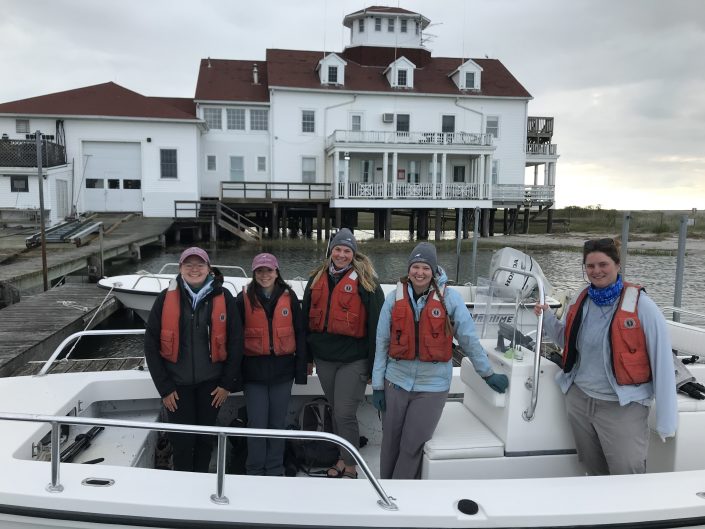
CWF’s 2023 beach nesting bird monitoring crew for Edwin B. Forsythe NWR and Horseshoe Island. Morgan Phillips, Gianna Canale, Audrey Randazzo, Amy Kopec, Dakota Bell (l to r).
Kelly Scott, Resource Interpretive Specialist 3, NJ State Park Service holds Bayley before releasing her into the wild.
This past Monday I joined several partners to release a very special northern diamondback terrapin back into the wild. This adult female terrapin had been illegally collected and sold into the black market pet trade. Over the past couple years we have been working on a plan to get her back the wild.
Each of these partners, including Dr. John Wnek, MATES/Project Terrapin, Kelly Scott, NJ State Park Service, Brian Zarate, NJDEP Fish & Wildlife played an important role in her successful release (you can read about each of their roles in a story by Dr. Wnek below). We gathered in the parking lot of a former marina which CWF & NJDEP Fish & Wildlife converted into suitable nesting habitat for female terrapins. For all of us, I think it’s safe to say that it was bittersweet to see her swim off into the brackish water. She was home.
Princeton eaglets in their new nest; photo by John Heilferty
The Princeton eagle nest collapsed sometime between Friday June 2nd and early Saturday June 3rd. The Princeton pair had two chicks that were ten weeks old and close to fledging. NJ Eagle Project volunteers, Kevin and Karin Buynie monitor this nest and went out as soon as they were notified. When they arrived one chick was perched up in the tree and one was on the ground. The grounded chick was taken to Mercer County Wildlife Center for evaluation. The next day Kevin returned to the nest site and found the second chick now on the ground, so that chick was also captured and taken to MCWC. Both chicks were found to be uninjured and ready to return to the nest. A plan was formed to build a new nest in the tree and renest the two chicks. On June 11th, a group of volunteers and staff from Mercer County Wildlife Center met at the nest site. John Heilferty, retired ENSP Chief, climbed the nest tree and built the nest as volunteers helped to send up the needed materials. Diane Nickerson with the MCWC brought the two chicks, which were banded with Green NJ band H/39 and H/38 and silver federal bands. The chicks were then placed back up in the nest. One of them decided to fledge and the other perched on a branch near the nest. The recently fledged chick did return to the nest that evening and the second chick fledged June 16th. Thank you to Karin and Kevin Buynie, Diane Nickerson and volunteers Daniel and Hope with Mercer County Wildlife, John Heilferty, Kim Korth, and Roger Smith.
Scroll through the slideshow to view photos from the renest.
Princeton nest after collapse
Remains of nest
eaglets at Mercer County Wildlife Center
eaglets at MCWC
Nest tree
nest building materials
John Heilferty climbing tree
John working on nest platform
nest construction
platform finished
adding sticks
finished nest
Kevin Buynie with eaglet
Diane Nickerson, Kevin Buynie and Karin Buynie band the eaglet
In the May 16th blog, Shorebird Stewards On the Bay in May, it’s mentioned that some beaches along the Delaware Bay have restricted access every year from May 7th to June 7th. This is due to the migratory shorebirds that travel thousands of miles and need a place to stop to feed. Our beaches contain excellent food sources to help birds gain weight to continue their journey- horseshoe crab eggs. They are filled with fat and protein. The Delaware Bay is the largest spawning area for horseshoe crabs in the world!
Now what do the Shorebird Stewards, such as myself, do all day? We monitor our assigned beaches and educate the public about this incredible phenomenon! My favorite beaches are Roosevelt Blvd. beach and Cook’s Beach because I see the most active flocks of shorebirds at these locations.
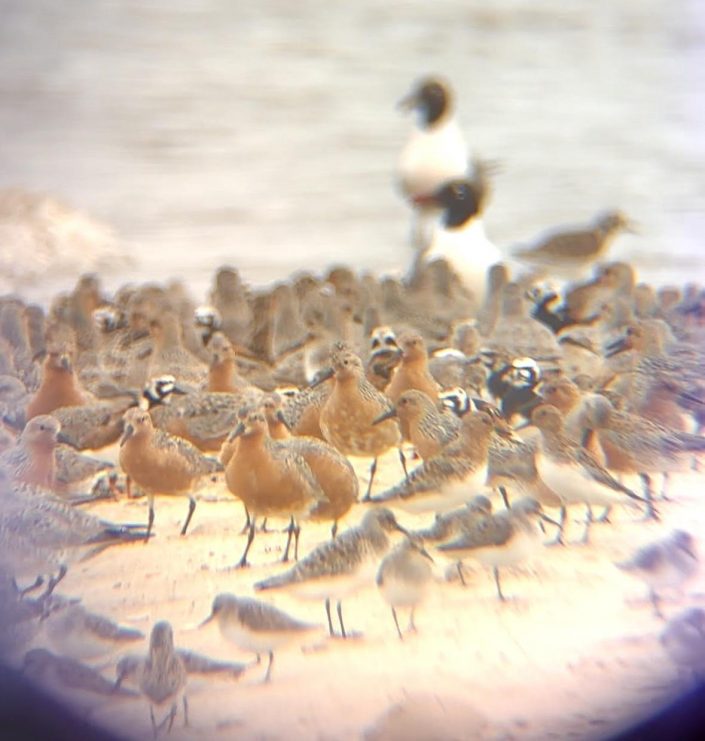
A group of the infamous Red Knots: Calidris canutus, Semipalmated Sandpipers: Calidrus pusilla, and Ruddy Turnstones: Arenaria interpres, at the beach on Roosevelt Blvd., photo: C. Franceschini
On a quiet day with not many people to educate, there are many things for us Stewards to do. Some Stewards read their books, watch movies, listen to music/podcasts, color/paint, take walks, research, etc. I do all of the above! Since we have a love for these special shorebirds, most Stewards also birdwatch! It’s a must to bring your binoculars or scope to observe these beautiful birds. Sometimes, you observe other interesting animals, too!
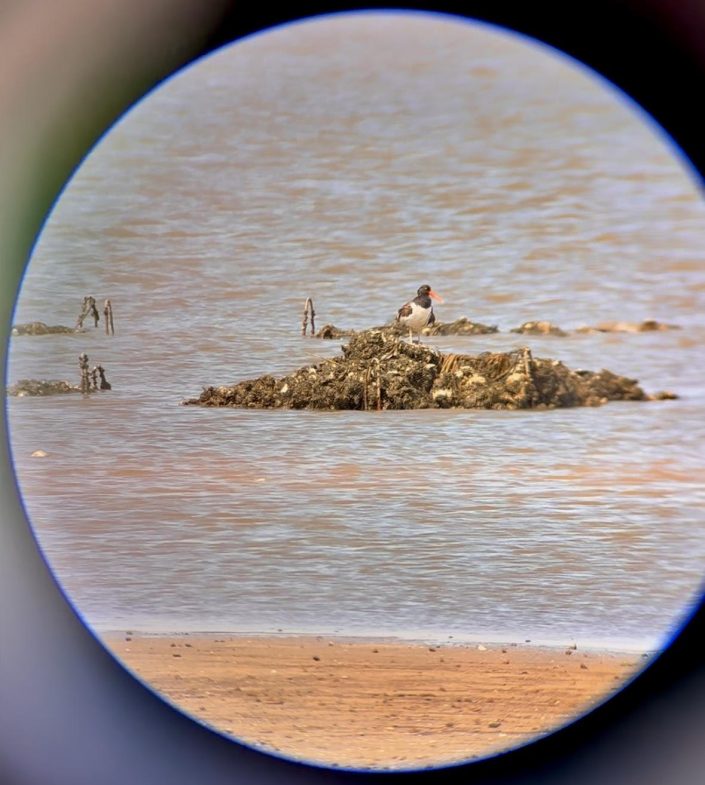
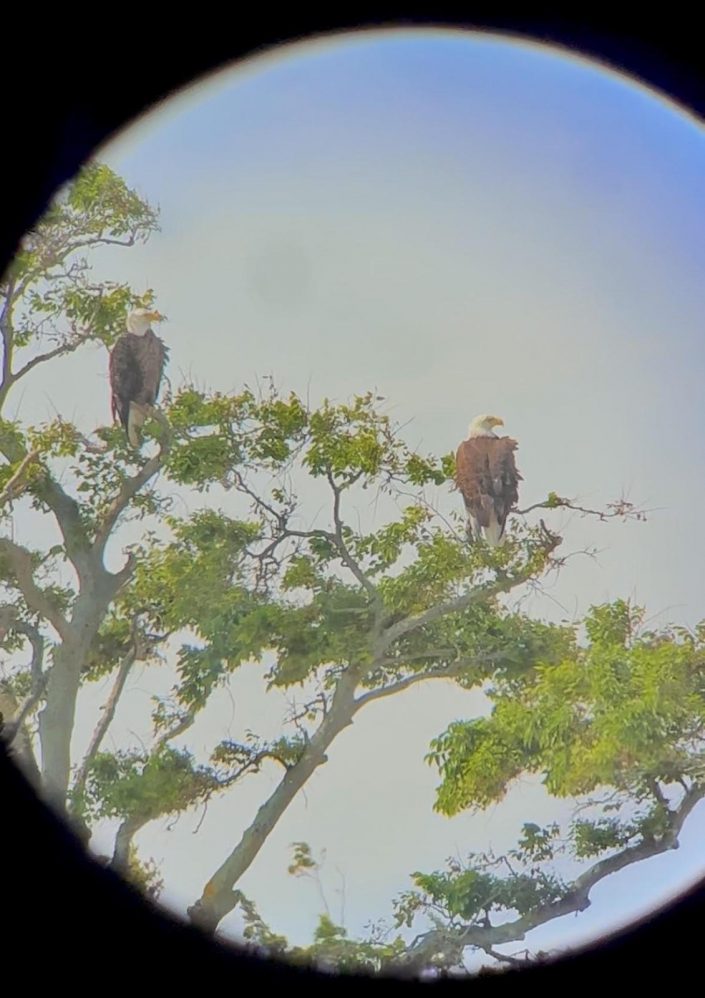
American Oystercatcher at Cook’s beach: Haematopus palliatus photo: C. FranceschiniBald Eagles, Haliaeetus leucocephalus, photo: C. Franceschini
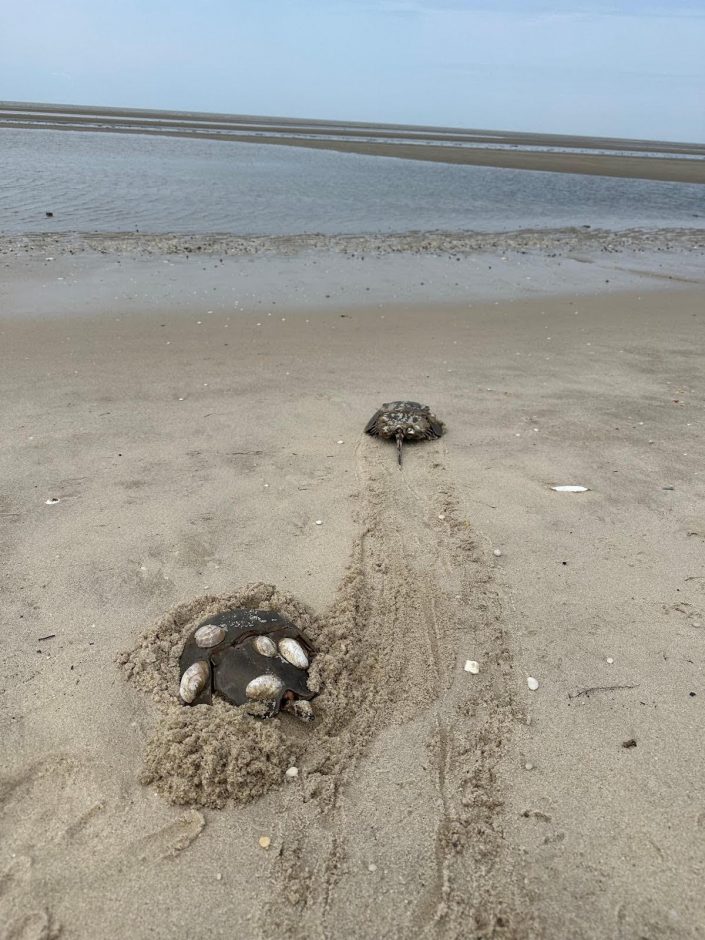
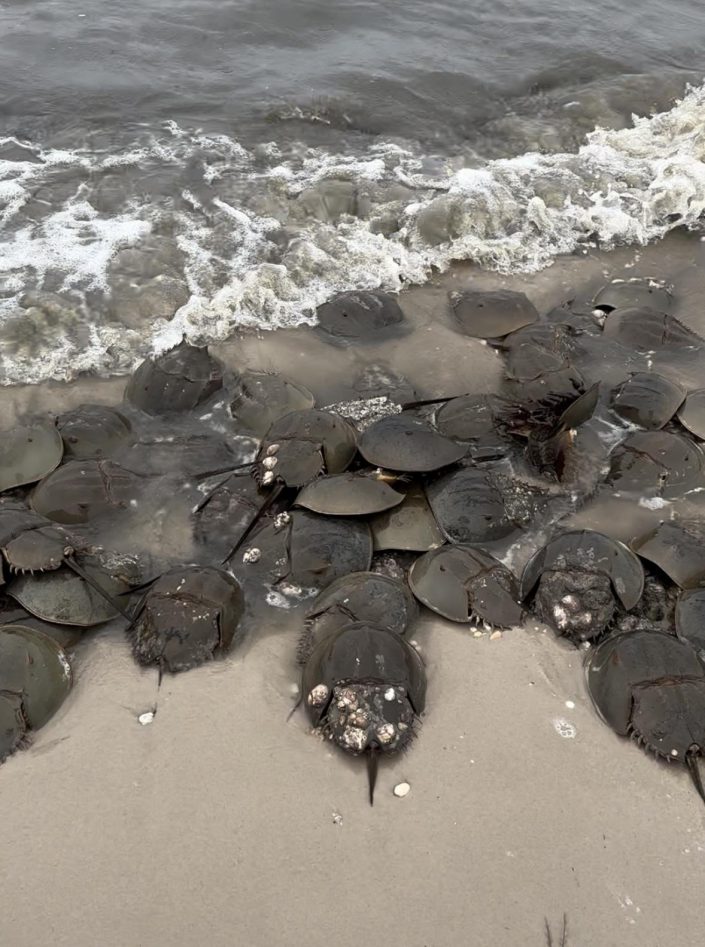
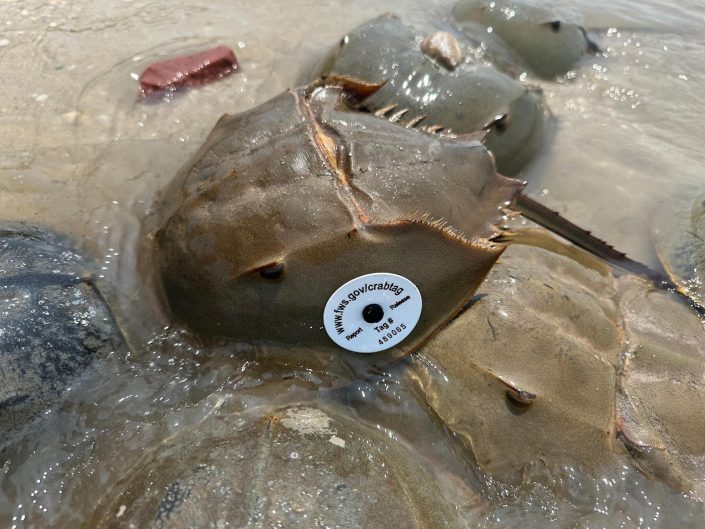
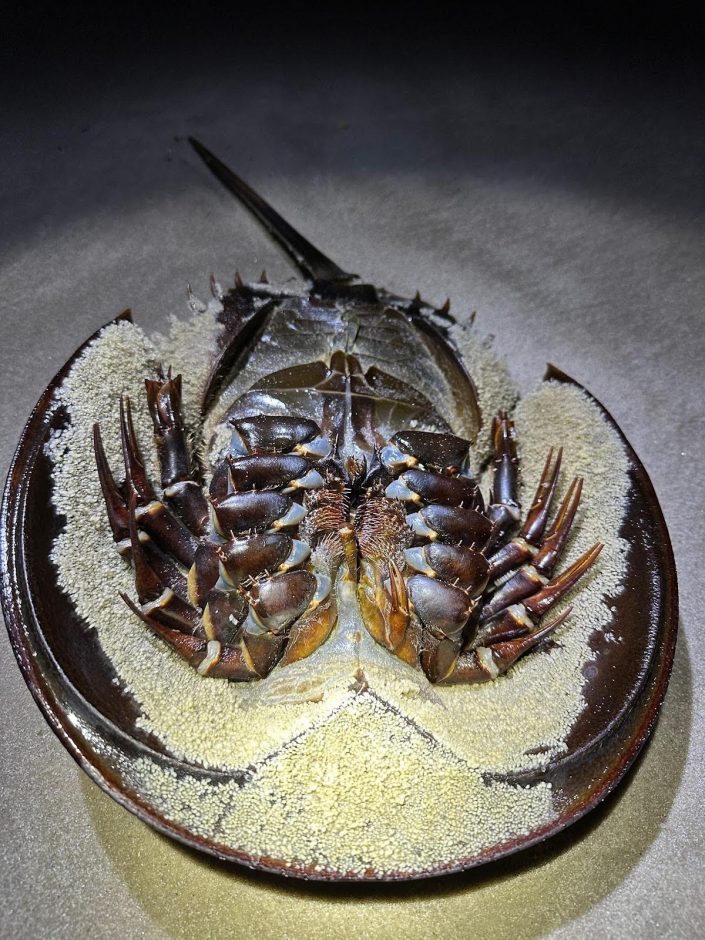
Another activity to do in the down-time is to flip the spawning Atlantic Horseshoe crabs, Limulus polyphemus, back onto their legs so they can crawl back into the bay. When the tide rise, these crabs get overturned by the waves and have no way of returning back to their feet! Personally, this is my favorite activity to do. When you return after your “crab walk”, you get to see the tracks of their feet traveling back into the bay where they belong. Below on the left is a picture of flipped and rescued crabs: the one on the left is a male who decided to bury himself in the sand to preserve water until the tide comes back in, and the one on the right is a male who decided to make the trek back into the bay. When the tide comes in, the horseshoe crabs come up and begin spawning. Pictured below in the middle is an example of how crowded the beaches get with these creatures! On the right, is a photo of a tagged crab I found, and reported it to the US Fish and Wildlife Service so that they can collect data on the tagged crabs.
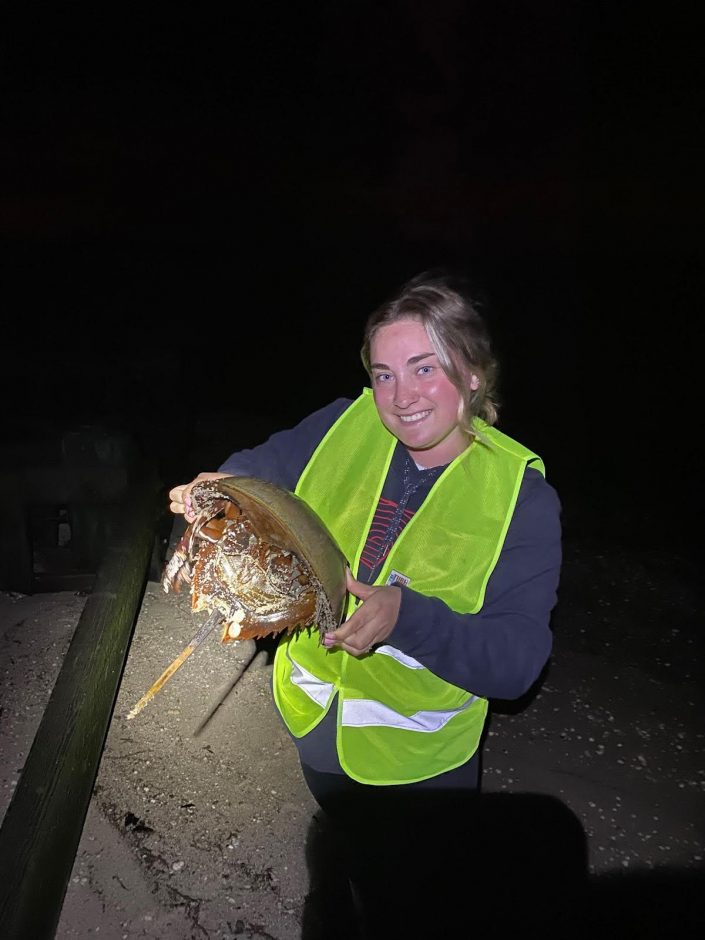
You can also get involved with helping these critters! “Return the Favor” is an organization dedicated to conducting beach walks to flip overturned horseshoe crabs on the NJ beaches of the Delaware Bay. You can join public walks that are held by walk leaders or sign up to be a volunteer and conduct your own walk (until July 15th, 2023 or next year). I am a volunteer and walk leader and it is one of my favorite things to do. Flipping horseshoe crabs is such a special event because that means you’re saving those crabs so they can continue to spawn and produce eggs for the shorebirds. With your help, you could help save hundreds of crabs just by flipping them over! Of course I had to capture this special moment of me flipping a crab (picture below)!
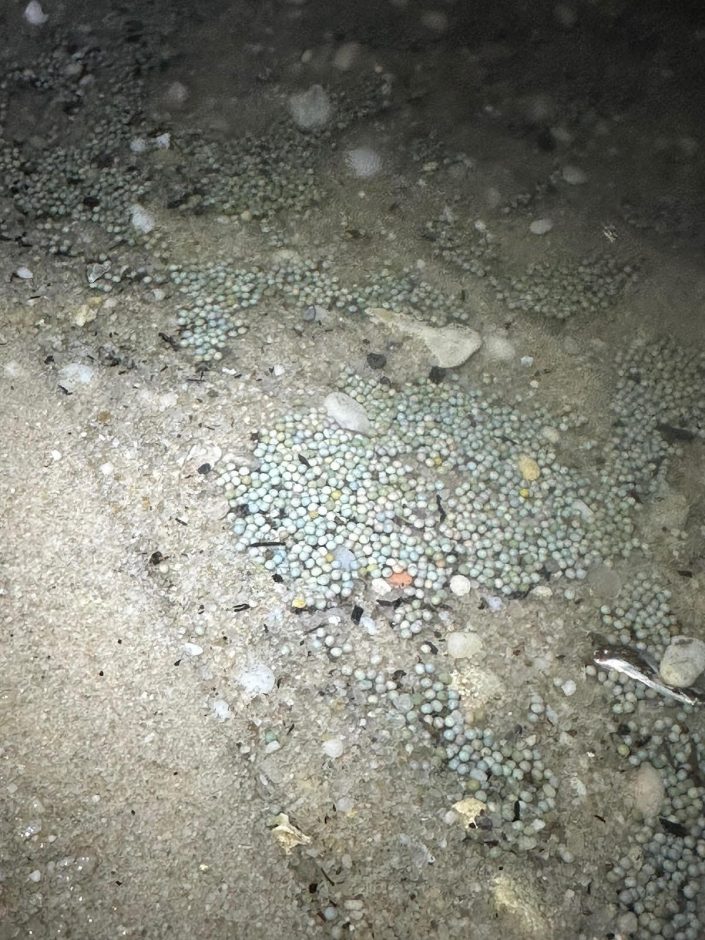
On these walks, you experience much more than just crabs. You get to see other wildlife that emerges during dusk or dawn. You can also go on the closed beaches to save the crabs that can’t be rescued during the day. During my walk, I got to see thousands of horseshoe crab eggs!
C. FranceschiniHorseshoe crab eggs photo: C. FranceschiniFemale horseshoe crab, photo: C. Franceschini
As we approach the official, and unofficial, beginning of summer, many warm-weather loving citizens of New Jersey are pulling out their swimwear, purchasing their SPF and preparing to flock to the Jersey Shore and contribute to some of the worst traffic seen around the country. It’s important, however, to take a step back and remind oneself to be certain that their beach activities will not affect the livelihood of other creatures that are just trying to survive in the only habitat that can support them. Both Memorial Day Weekend and July 4th holidays occur during the season that beach-nesting birds are incubating eggs and raising chicks. This makes for some conflict between beachgoers and coastal wildlife, so it’s necessary to bring more awareness to the presence of the birds and the importance of giving them space.
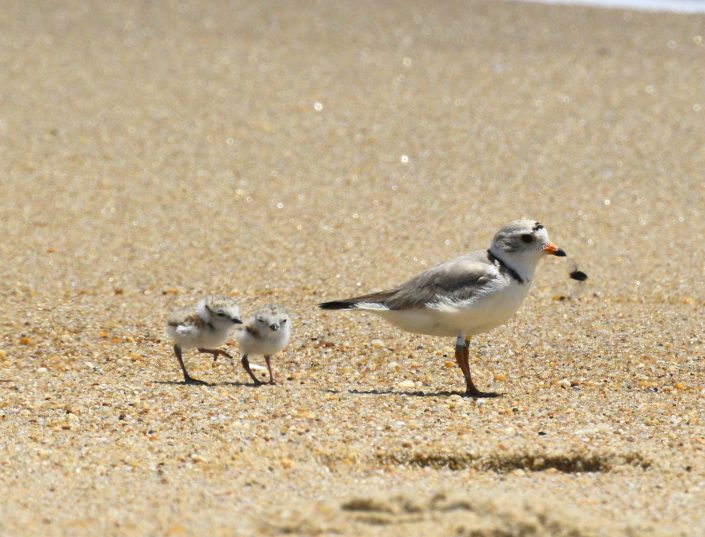
Beach-nesting birds are called just that because they depend on undisturbed, sparsely vegetated, and stabile coastline to breed, lay eggs, and raise their young. They nest directly in the sand and their eggs are sand-colored and camouflaged against predators. This also makes them difficult for people to see, and without proper monitoring and protection measures, they can wind up being run over or stepped on. Small chicks, like those of the piping plover, are tiny and very mobile shortly after hatching. While the parents do their best at corralling their chicks and keeping them away from people, sometimes the chicks wind up under a beachgoer’s umbrella seeking shade or wandering too close to potential danger. Anyone with small children would understand the difficulty in keeping their kids from running off somewhere they’re not supposed to go, especially when they can have up to four of them at once. The chicks must forage to feed themselves, so being very mobile increases the likelihood of them finding small invertebrates to eat.
Piping plover chicks are small but very mobile, allowing them to begin foraging shortly after hatching.
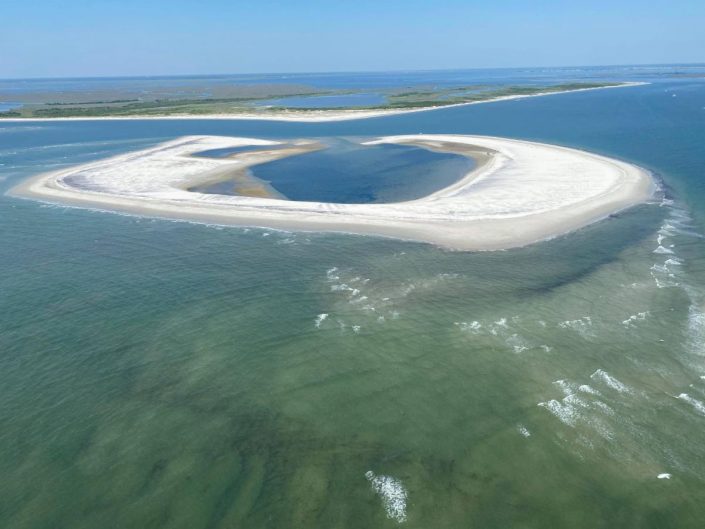
Horseshoe Island, located just offshore of Little Beach on the southern edge of the Little Egg Inlet, is teeming with wildlife again this year. Last year, under a five-year Management Rights Agreement secured from the state’s Tidelands Resource Council, the site was closed to the public from March 1- September 30 to benefit wildlife, in particular endangered and at-risk beach nesting birds and migratory shorebirds. The seasonal public closure of the island and its surrounding tidal areas is in place again this season.
Aerial view of Horseshoe Island Courtesy of New Jersey Fish and Wildlife
If you follow us or any other wildlife organizations on social media, you may have noticed that our posts these last few days have been inundated with amphibians. It may seem like odd timing, given that our early breeders (wood frogs, spotted, and Jefferson salamanders) completed their crossroad migration last month. But the reason is simple – it’s Amphibian Week!
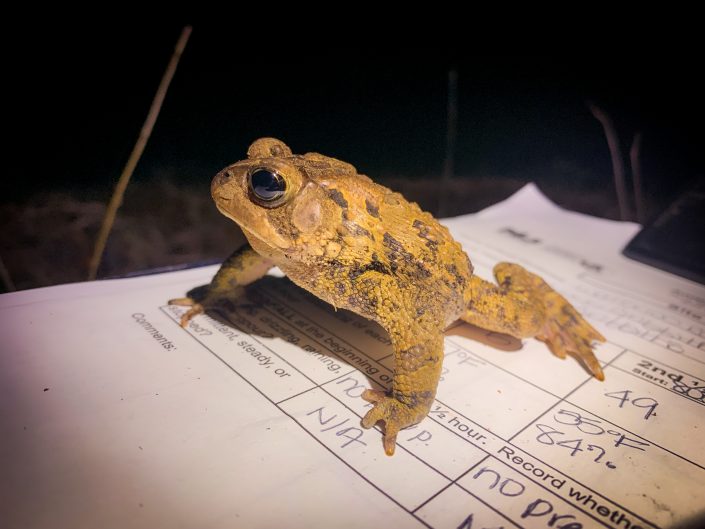
Close up of an American toad that hitched a ride during this year’s crossing. Photo Credit: Nikki Griffiths
Globally, amphibians are disappearing faster than any other vertebrate group. The International Union for the Conservation of Nature (IUCN) estimates that 41% of amphibian species categorized for their Red List are currently facing extinction. That estimate is likely conservative, given that these creatures are often small and difficult to survey, rendering many species data deficient. This is concerning from multiple perspectives. From an ethical standpoint, we don’t want any wildlife to go extinct except maybe, in my extremely biased opinion, certain types of ticks… (I began my career as a moose technician and saw firsthand the terrible consequences that winter ticks have on these behemoths). Beyond that though, amphibians are tasked with a lot of responsibilities and carry out their work efficiently and without complaint. The list is inexhaustive but here are a few things that amphibians are doing for us and our planet as we speak: filtering water, sequestering carbon, eating pests (like mosquitos!), serving as prey for countless predators, helping researchers study regeneration (with hopeful applications to the future of organ transplants), aerating the soil in your garden, indicating where water sources have been contaminated by pollutants, and giving everyone who meets them a reason to smile.
Each year, CWF hosts the Species on the Edge Art & Essay Contest for fifth grade students in New Jersey. Thousands of students submit artwork and essays advocating for the protection of a threatened or endangered New Jersey species of their choice. Winners of this contest attend field trips and events during their winning year and are invited to events for years after to continue learning about wildlife and related careers in New Jersey.
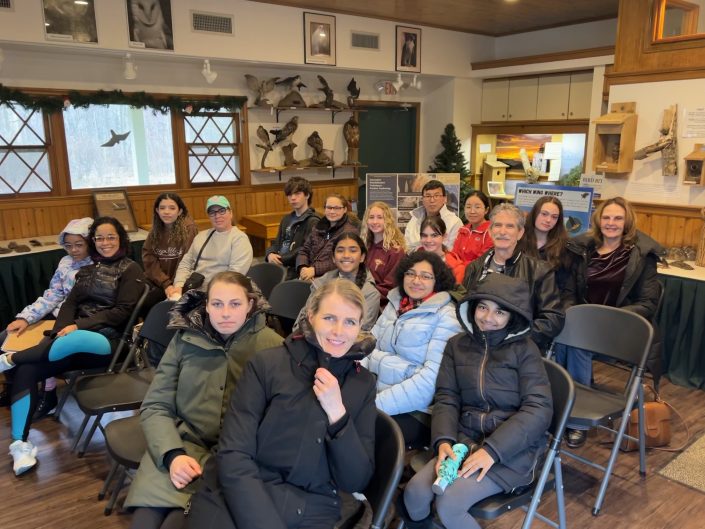
Past contest winners, along with a parent or guardian, gathered at The Raptor Trust’s education center to learn about avian rehabilitation.
Last month, a group of past contest winners braved the rain and cold to attend a special program and tour at The Raptor Trust in Millington, New Jersey. The Raptor Trust provides medical care and rehabilitation to injured and orphaned birds, leads educational programs to benefit native birds, and provides permanent homes to many non-releasable raptors.
Each year in the early spring, piping plovers migrate north to their breeding range, which spans from North Carolina to the Canadian island of Newfoundland. The New Jersey coastline has historically been integral for breeding birds to forage and raise chicks, although suitable habitat is becoming more and more of a rarity in the state. The increase in development, as well as the impact of storms, shoreline erosion and climate change, have permanently altered much of the Jersey shore. Nesting habitat for beach-nesting birds is limited, and predators with exploding populations benefiting from human presence along the coast, make their homes among the beach vegetation and nearby man-made domiciles. Natural beaches with minimal recreational usage are extremely valuable for beach-nesting birds in NJ, with most located along the southern shores. However, some Monmouth County beaches like the National Guard Training Center beach in Sea Girt, are managed to protect the natural resources that are present and continue to host nesting plovers annually.
The NGTC beach is monitored throughout the year by Conserve Wildlife Foundation biologists assigned to the duty as part of the Integrated Natural Resources Management Plan for the site, established by the NJ Department of Military and Veterans Affairs (DMAVA). Included in that plan are various surveys, practices and regulations designed to protect vulnerable species and habitats on the site while still allowing public recreation and beach maintenance to occur. The south half of the beach is a popular bathing beach that is free to military, veterans, police, and their families. The north half is primarily designated as natural beach where recreation is not encouraged. Piping plovers have nested in the Northern Protection Area for the last four years, from 2019 to 2022, with the same resident pair returning each year to reclaim their territory. Piping plovers “Joey” and “Hamlet” had a bitter end to their long-term relationship last year when Hamlet was found deceased, likely killed by an avian predator. Joey attempted to renest with a new female he met later in the season but was unsuccessful. Eventually, both birds moved on. However, given that he survived his winter retreat, Joey may return to the NGTC for 2023 and try to attract a new mate.