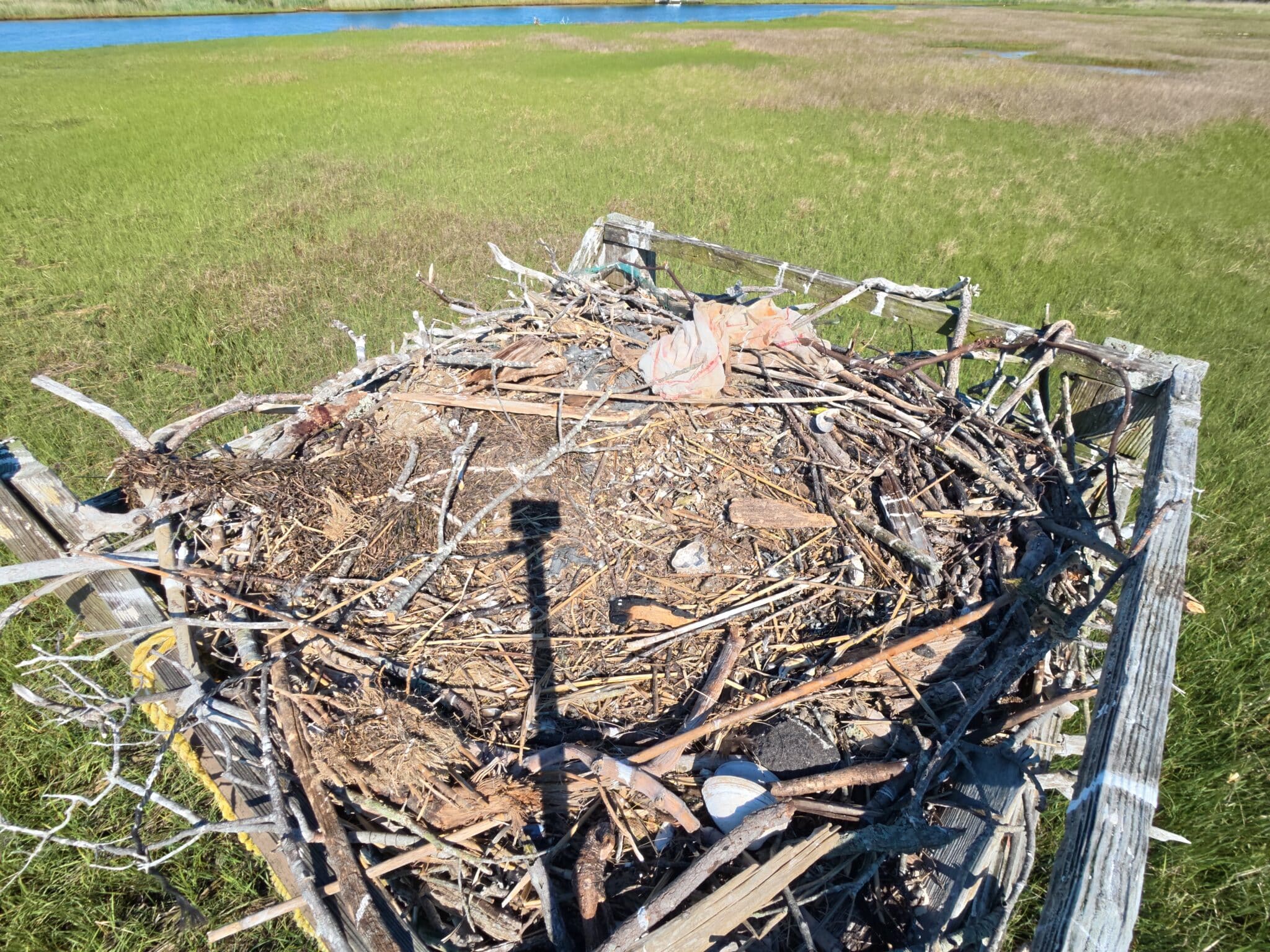
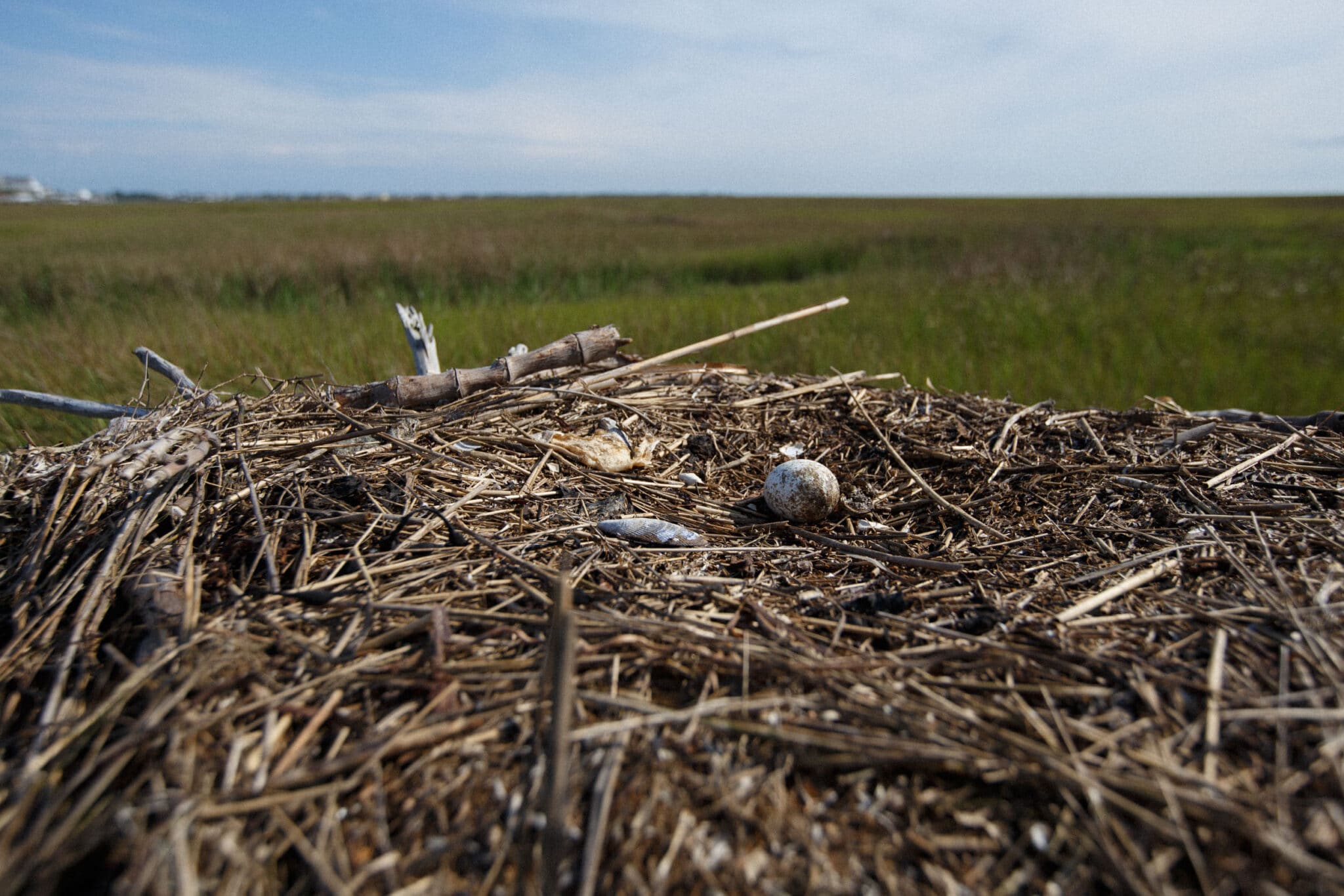
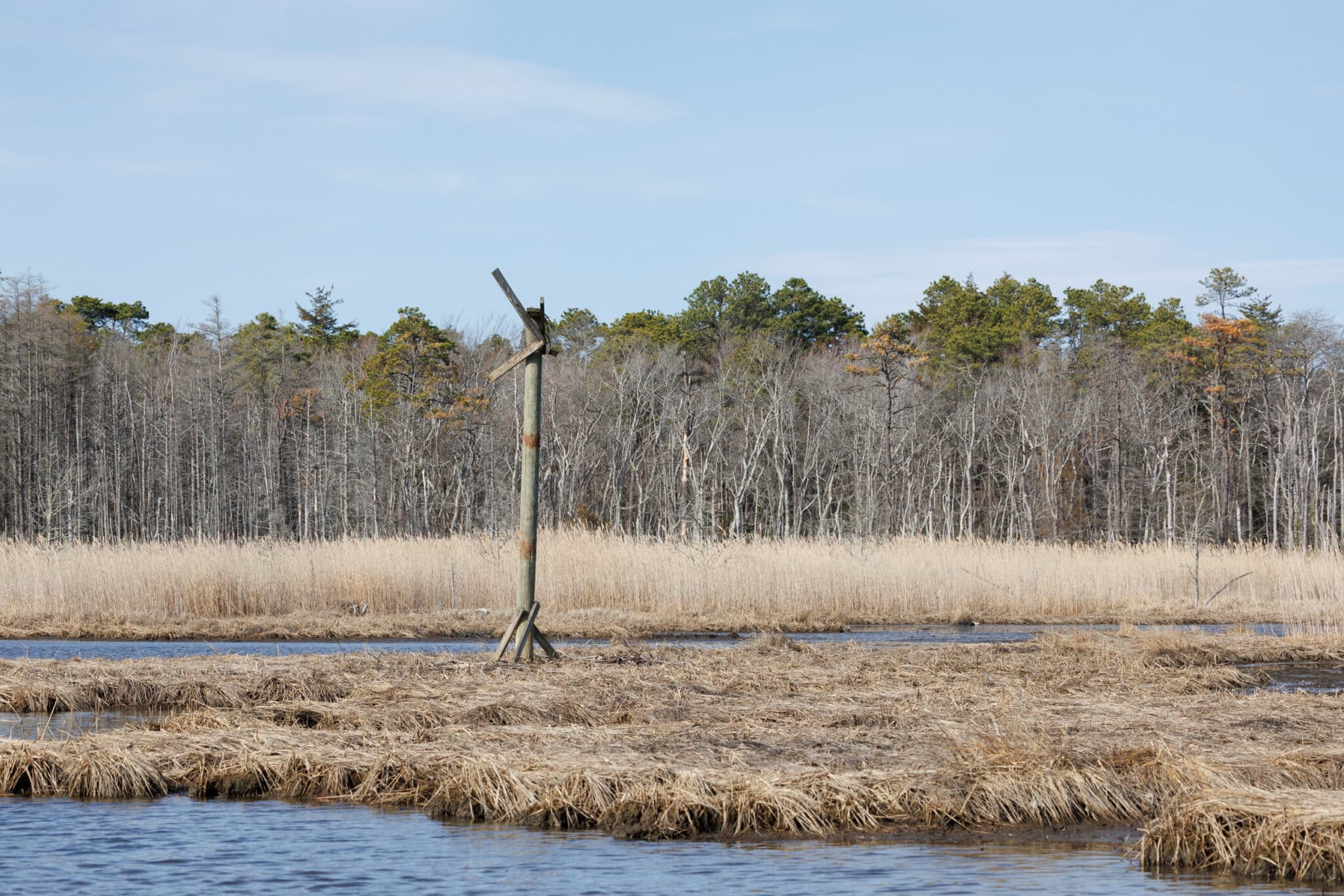
An occupied but empty osprey nest at Sedge Island WMA as viewed by a small action camera.
This spring, we have been conducting osprey nest surveys to better understand nesting outcomes across New Jersey’s coast. These surveys are focused on coastal colonies, where signs of food stress have become increasingly evident in recent years due to the scarcity of Atlantic menhaden, the primary prey of nesting ospreys.
The 2025 nesting season for ospreys in New Jersey began as others. Breeding adults returned to their nests in March and April, pairs reunited, and nesting activity got underway on schedule. But as the season progressed, it became clear that this year would be anything but typical.
A nor’easter in late May marked a turning point. Lasting nearly three days, the storm brought strong winds, heavy rain, and coastal flooding. Conditions that made it extremely difficult for ospreys to find food. As observed in previous years, these types of storms are known to disrupt foraging in the ocean, and in many cases, lead to brood reduction or nest abandonment. However, weather alone does not explain what we observed.
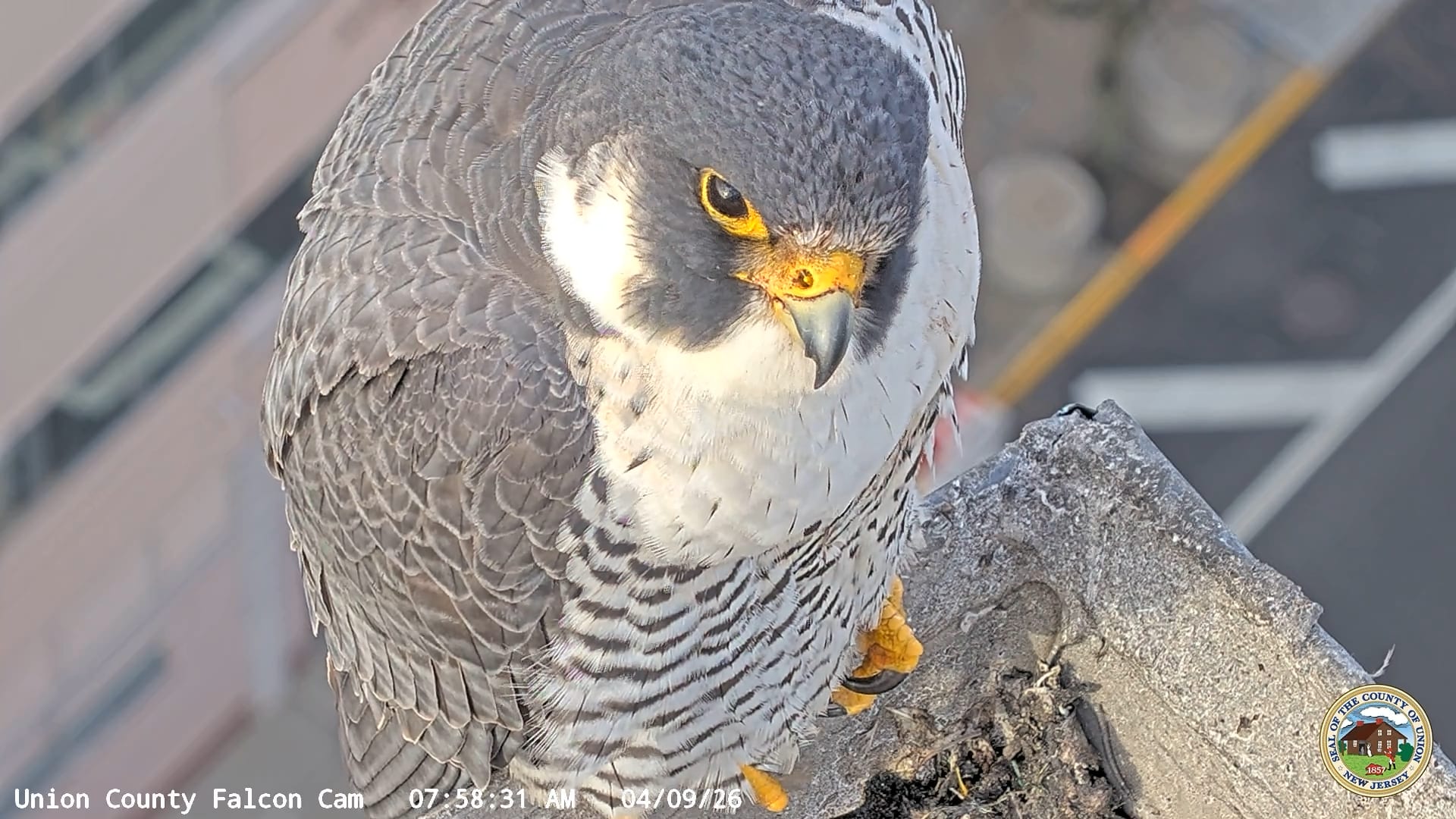
Each spring, wildlife enthusiasts across New Jersey — and beyond — tune in to watch one of the state’s most exciting conservation success stories unfold in real time: the Union County Falcon Cam. This season, viewers witnessed an unusual change when the nesting female was replaced mid-season. What makes this especially remarkable is that the new female is now incubating the five eggs laid by the previous female.
Just yesterday, as February comes to a close, I saw my first pair of American oystercatchers on breeding territory on Long Beach Island. The first piping plover of the season will likely be sighted in New Jersey sometime next week or so. Still, as we remain in the midst of one of the harshest and snowiest winters in a long time here on the New Jersey coast, it’s hard to believe that CWF staff will be back out at Horseshoe Island in just over a month to start biological monitoring for the 2026 beach nesting bird season.
As I finalize our annual report summarizing last year’s data, I often find myself looking back to reflect and compare trends over time. I’ve worked with ospreys long enough to have witnessed their population in New Jersey more than double. Their recovery has long been a clear sign of improving ecological health in our coastal waters.
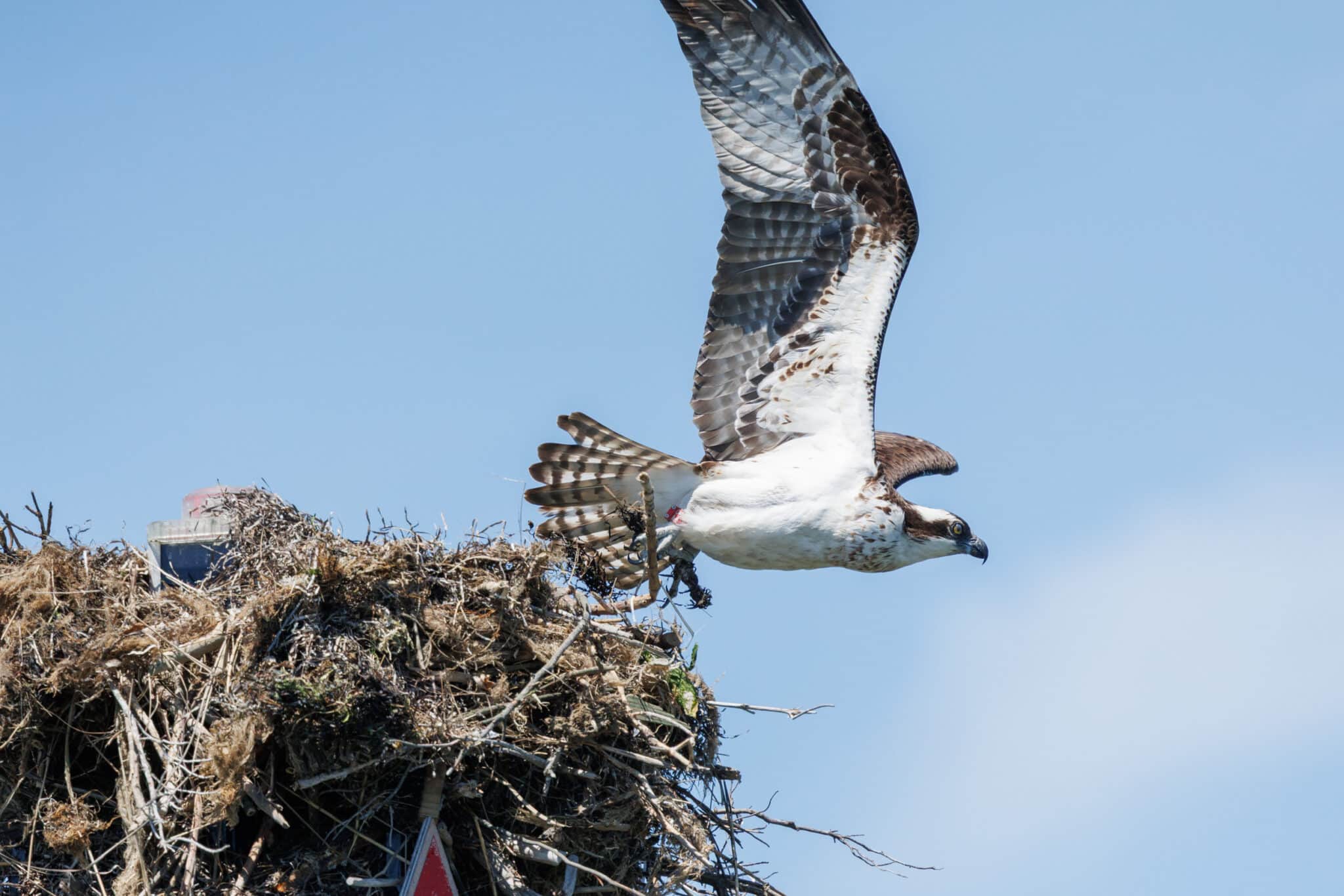
Lift off. 04/M takes off from a channel marker nest on Barnegat Bay.
During our osprey nest surveys we are always looking for auxiliary banded birds. Last summer over 40 red banded ospreys were re-sighted, which is the most ever encountered in a single year. The majority were breeding birds, photographed on their nests and others were photographed in flight or perched, often with prey. Some were even re-sighted several times throughout the year.
Highly pathogenic avian influenza (HPAI) is circulating once again this winter and has already been confirmed in New Jersey in Canada geese, Snow geese, and Bald eagles. This virus primarily affects birds and can spread quickly among species that congregate in large numbers or come into close contact with one another.
Waterfowl and raptors — especially scavengers like bald eagles — are particularly vulnerable. Eagles are often exposed when feeding on infected waterfowl or carcasses, which increases the risk of illness and mortality. Monitoring and reporting cases is critical for tracking the spread of the disease and protecting both wildlife and domestic animals.
Members of the public are urged to report sick or dead birds, especially waterfowl and raptors.
Sick or dead bald eagles should be reported immediately to the NJDEP at 1-877-WARN-DEP (1-877-927-6337).
Please remember that precautions should always be taken when encountering sick or dead birds, particularly during the winter months. Avoid direct contact whenever possible. If handling is unavoidable, wear a face mask and disposable gloves, and be sure to disinfect boots and equipment afterward.
Staying informed and reporting observations helps wildlife agencies respond effectively and protects New Jersey’s birds during this ongoing outbreak. For more information, visit the NJ Department of Agriculture’s HPAI page.
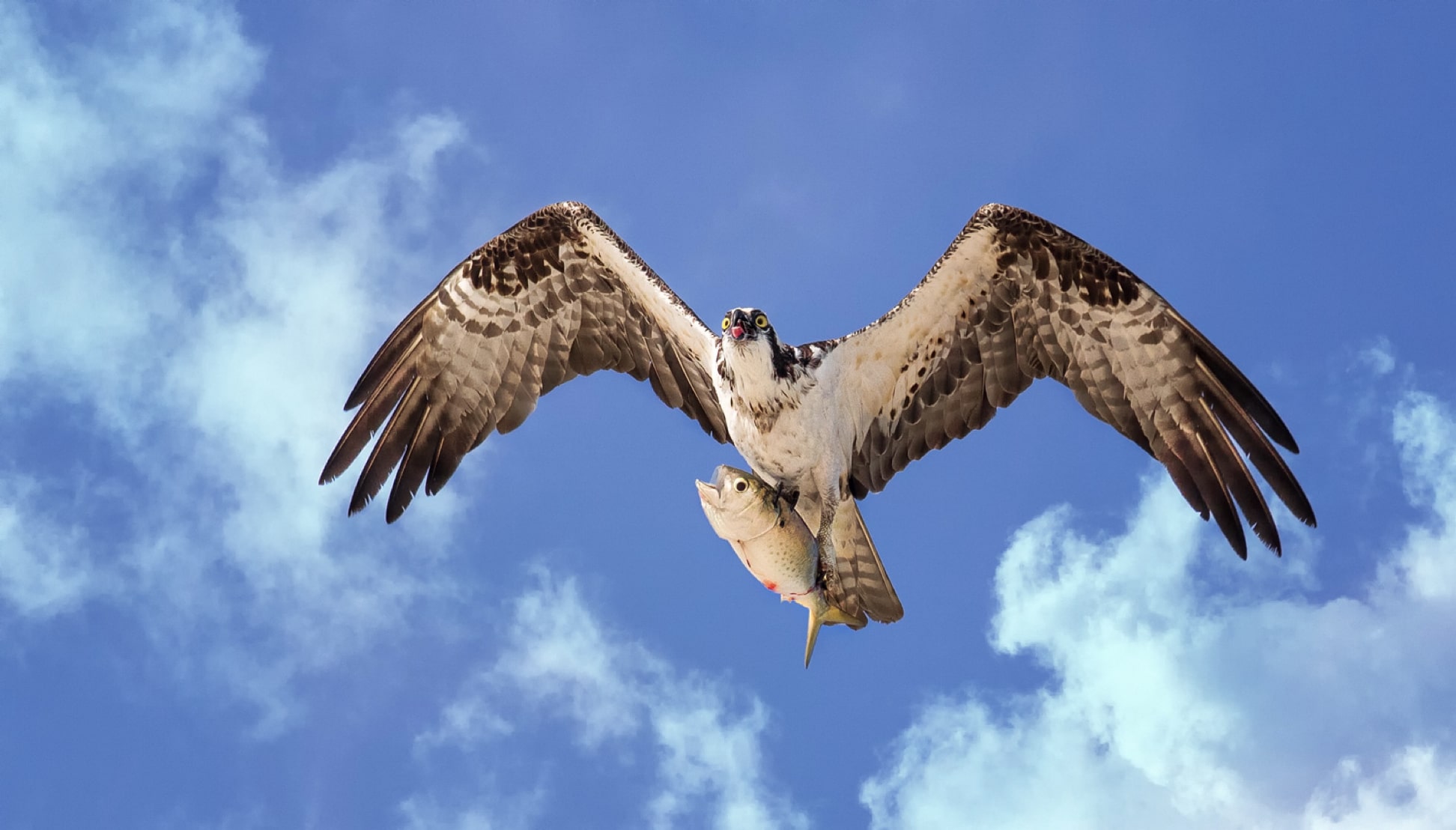
Osprey carrying a large adult menhaden. Long Beach Island. August 14, 2016. Photo by Jim Verhagen.
Over the past twenty years, I’ve had the privilege of watching New Jersey’s osprey population more than double—from roughly 400 nesting pairs to over 800. While our work to protect and expand nesting habitat has played a role in their comeback, the true foundation of their recovery has been a healthy marine ecosystem and an abundance of prey.
Since 2006, the Women & Wildlife Awards have honored powerful voices in conservation—from scientists and educators to policy advocates—who have helped restore bald eagles, brook trout, golden-winged warblers, and more across New Jersey. These leaders have preserved thousands of acres, launched statewide education initiatives, and inspired countless others to act.