Lead poisoning continues to be a serious issue affecting Bald Eagles today. CWF and ENSP biologists produced a brochure to educate hunters about this issue and ask for their help. Below is an excerpt from the brochure. Please view the entire brochure and pass along to anyone you know who is a hunter.
One person can make a difference!
Thank you.
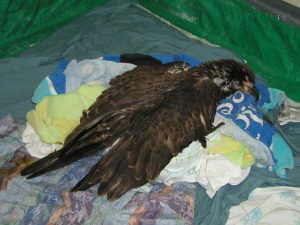
Eagle with lead poisoning at Tri-State Bird Rescue@Erica Miller
“Bald Eagles have made an amazing recovery in NJ since the 1980s. Today the eagle population still faces challenges and one of those is lead poisoning. Lead in the environment is dangerous to eagles as well as humans, and is often deadly. Unintentional poisoning of eagles can occur when they scavenge gut piles from deer or other game species shot with lead ammunition. It takes just a tiny fragment of lead to sicken and kill an eagle. Each year avian rehabilitators receive eagles that are diagnosed with lead poisoning and most will die. There is no good treatment for lead poisoning.”
On a brisk November morning, a couple dedicated NJ Osprey Project volunteers joined myself and CWF Biologist Larissa Smith to install an osprey platform on the coastal saltmarsh of New Jersey. The new platform was installed to replace a very old and unstable platform that fell this summer. The new structure is more than twice the size of the old one and will give the nesting pair, who return in the spring, a much more resilient nest site. As you can see from the video above, it takes a bit of strength to raise up a 16′ tall wood nest platform. We decided to slow it down when WCC Volunteer, Wayne R. gives it a final push. Continue reading “Video from the Field: Osprey Platform Install”
That’s the main takeaway from a new report released earlier this week. The 2018 edition of the Living Planet Report, published by the World Wildlife Fund and the Zoological Society of London, found that the population size of some of the world’s vertebrate species had shrunk by 60 percent between 1970 and 2014.
Though tropical species have suffered the most, according to the report, the rash of wildlife decline hits home in the Garden State.
“It mirrors what we see in New Jersey,” said David Wheeler, the executive director of the Conserve Wildlife Foundation of New Jersey.
On August 20th, 2018 a resident of Monmouth Beach reported a young eagle that had been perching in the neighborhood and was possibly injured. NJ Eagle Project Volunteer Randy Lubischer, was able to respond and check out the situation. The bird was a hatch year eagle, which means it fledged during this nesting season. The eagle was feeding on a swan carcass and though Randy could get fairly close, the bird was able to fly a short distance and appeared to have an injury to its left leg. The eagle had been seen feeding on the swan carcass for the past few days, so it was assumed that its injury was keeping it from hunting and the bird would only get weaker over time.
As a senior zoologist with the New Jersey Division of Fish & Wildlife’s Endangered and Nongame Species Program, 2018 Women & Wildlife Inspiration Honoree, Sharon Petzinger has served as a dedicated champion for stabilizing the Golden-winged warbler (Vermivora chrysoptera), an endangered species which has declined as steeply as nearly any songbird species in America. Sharon works tirelessly, visiting key sites, spending countless early spring mornings completing bird surveys, and promoting the program to the public. Sharon has helped to create contracts with 30 landowners to help stop the decline of this bird and has helped to establish over 350 acres of actual habitat specifically created to promote this species.
The threats are real and these photos should alarm you!
by Ben Wurst, Habitat Program Manager
U.S. Coast Guard assists NJ Fish & Wildlife with recovering an entangled osprey on a channel marker in Cape May Harbor, Summer 2018. photo by Kathy Clark/ENSP
Enriching Learning Experiences while Enhancing Biodiversity
by Ben Wurst, Habitat Program Manager
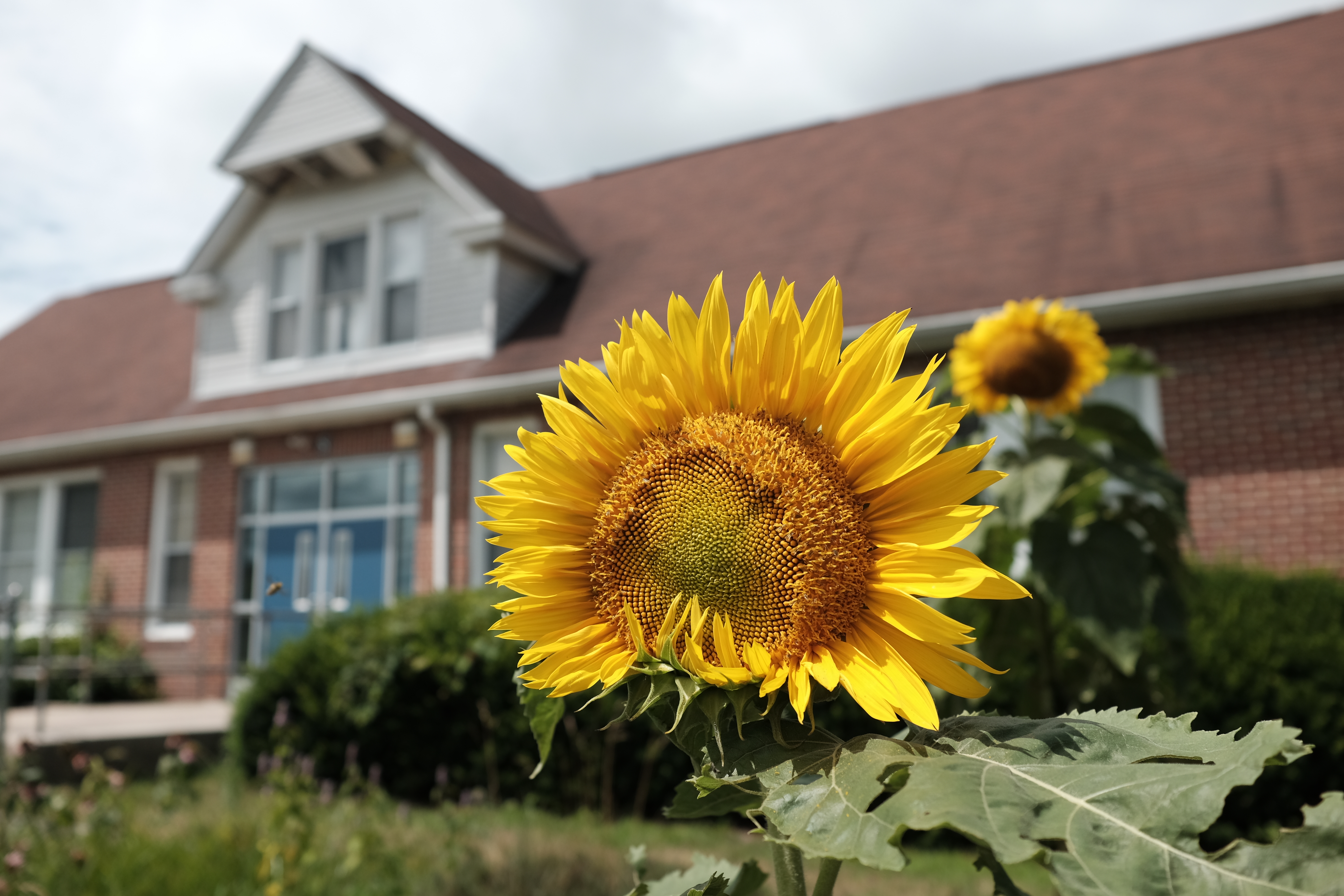
Sunflower in bloom out front of Bass River Elementary School.
Bass River Elementary is a small school located in Bass River Township, Burlington County. Students and faculty are passionate about protecting wildlife and the habitat that’s required to survive. From headstarting hatching N. diamondback terrapins, composting, and raising monarch caterpillars, they know that hands on education is key to engaging future generations to care about our environment. We knew it would be the perfect place to create a wildflower garden to provide food for nectar feeding insects! Continue reading “Bass River Students Enhance Pollinator Habitat”
Last week, Conserve Wildlife joined the American Littoral Society at their annual Parade of Boats event in conjunction with the Operation Oyster program.
Conserve Wildlife, through funding from NOAA’s Marine Debris Program, has spent the last several years in a related effort to clean up Barnegat Bay. Removing derelict crab traps or ghost pots from the bay has been an ongoing initiative. Ghost pots are lost in a variety of ways including improper rigging to buoys and buoy lines cut by passing boat traffic.
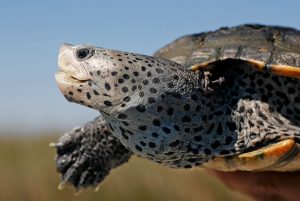
The issue spans not only the commercial crabbing industry, but the recreational industry as well. The longer the pots sit on the bottom of the bay the more likely they are to serve as a deathtrap for a variety of marine species. The more marine life that becomes trapped the more the pots continue to attract other marine life. This is of particular concern for Northern Diamondback Terrapins that frequently investigate these pots looking for a quick meal only to be trapped and quickly drown. Continue reading “Helping oysters recover in Barnegat Bay through our crab pot recycling program”


 Last week, Conserve Wildlife joined the American Littoral Society at their annual Parade of Boats event in conjunction with the Operation Oyster program.