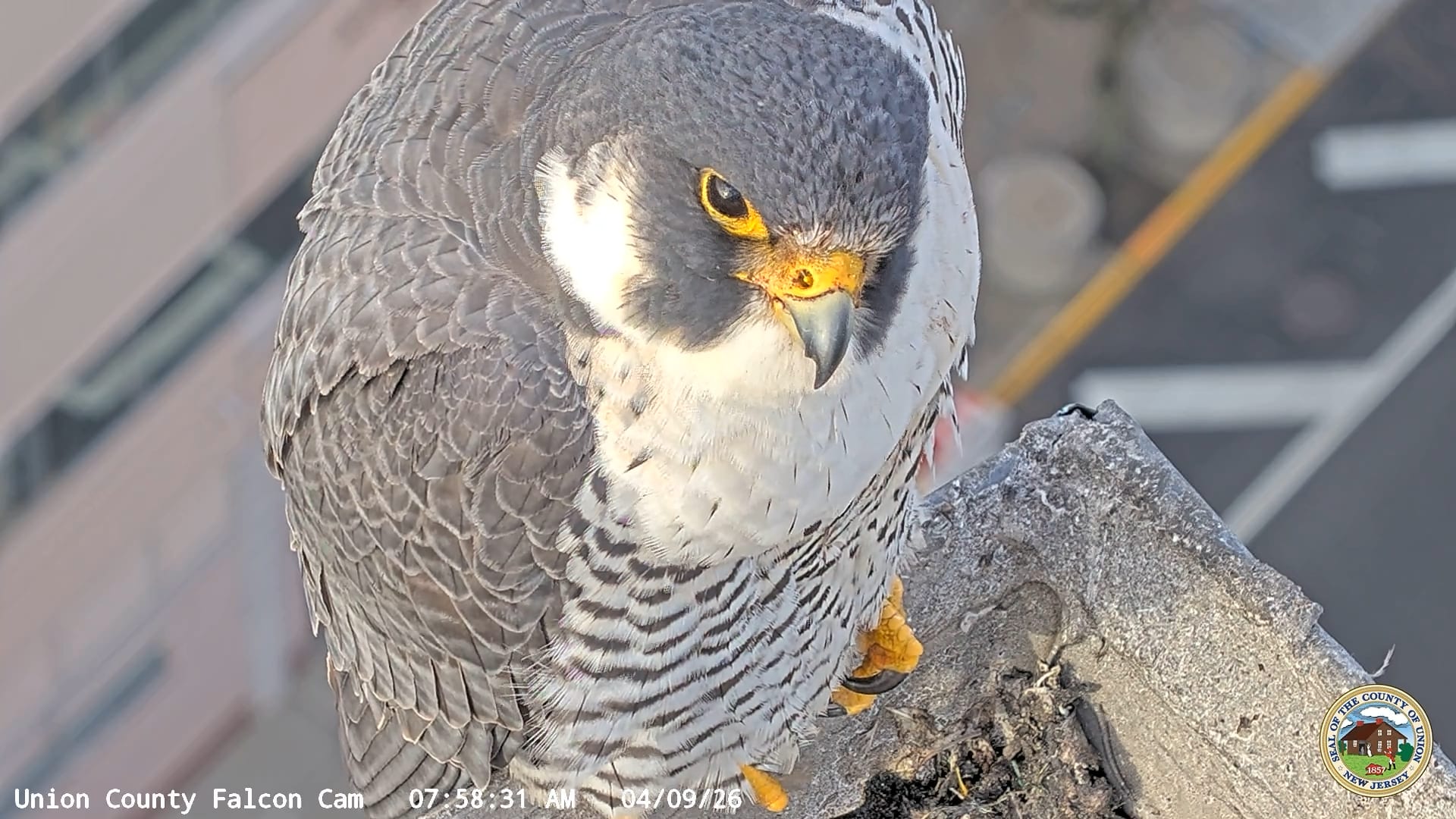
Each spring, wildlife enthusiasts across New Jersey — and beyond — tune in to watch one of the state’s most exciting conservation success stories unfold in real time: the Union County Falcon Cam. This season, viewers witnessed an unusual change when the nesting female was replaced mid-season. What makes this especially remarkable is that the new female is now incubating the five eggs laid by the previous female.
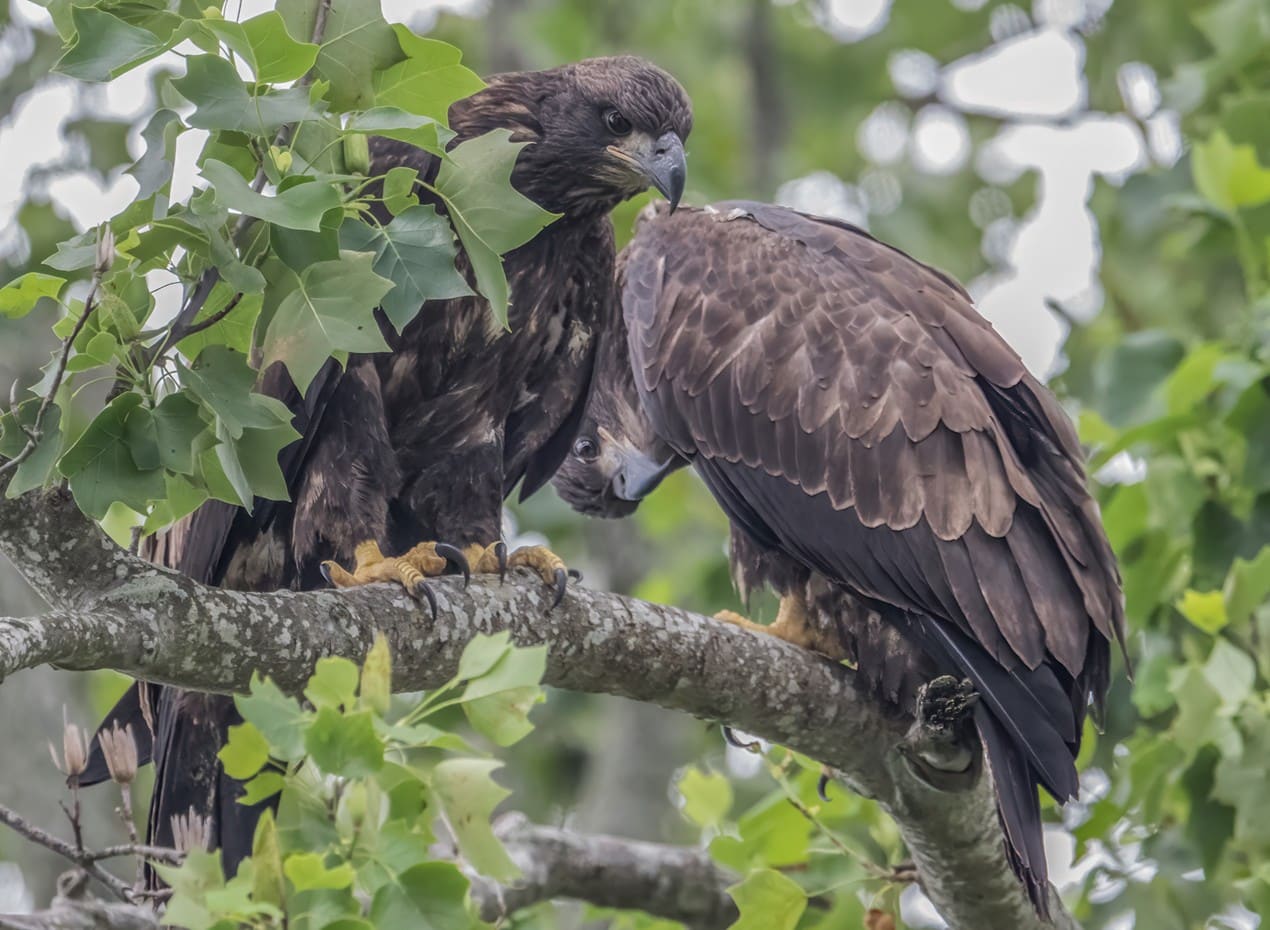
The 2025 NJ Bald Eagle Project report developed by the NJDEP Division of Fish and Wildlife and the Conserve Wildlife Foundation of New Jersey , has been released. In 2025 the NJ eagle population had a decline in the number of active (laid eggs) nest from 264 active nests in 2024 to 251 in 2025. The decline is partly due to the Highly Pathogenic Avian Influenza (HPAI). Testing confirmed that 28 of 56 bald eagle mortalities last year (for which testing was completed) were the result of HPAI.
Just yesterday, as February comes to a close, I saw my first pair of American oystercatchers on breeding territory on Long Beach Island. The first piping plover of the season will likely be sighted in New Jersey sometime next week or so. Still, as we remain in the midst of one of the harshest and snowiest winters in a long time here on the New Jersey coast, it’s hard to believe that CWF staff will be back out at Horseshoe Island in just over a month to start biological monitoring for the 2026 beach nesting bird season.
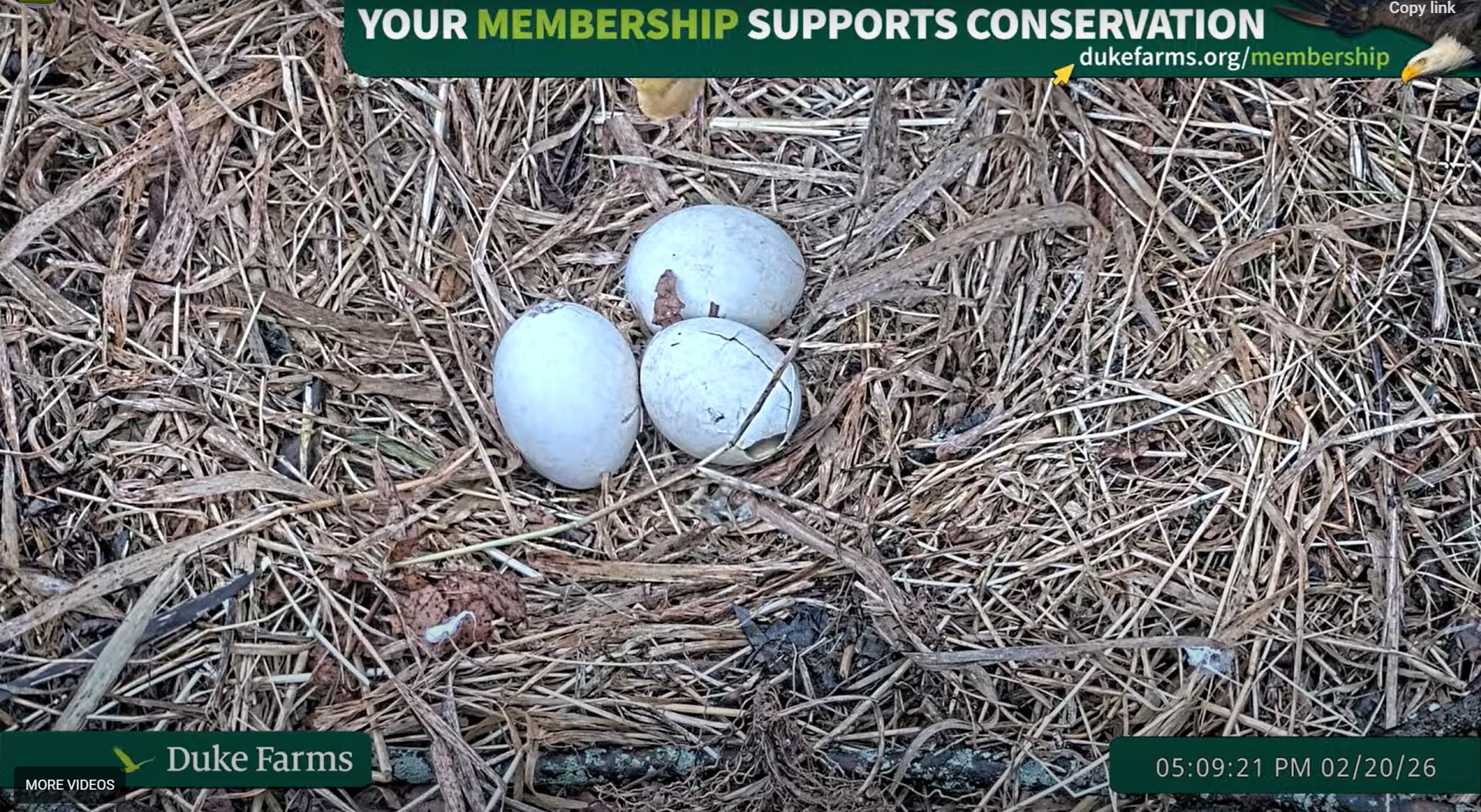
The Duke Farms eagle pair are beloved by cam viewers who watched them lay three eggs in January and incubate during two weeks of freezing cold weather. Unfortunately, one of the eggs prematurely cracked on February 20th and wasn’t viable.
In our last American oystercatcher Re-sight Round Up, we checked in with some NJ breeders on their wintering grounds further south. This time, we’re switching gears to focus on some recent banded bird sightings in New Jersey! New Jersey hosts both staging and wintering oystercatcher flocks, and is generally considered to represent the northernmost boundary of the wintering range for oystercatchers on the East Coast. This fall, CWF biologists and volunteers conducted weekly ground surveys to track locations and numbers of the staging/wintering roost of American oystercatchers at Holgate Unit of Edwin F. Forsythe National Wildlife Refuge (“Holgate”) as part of a new NFWF-funded pilot study that includes researching marsh-nesting oystercatchers in the surrounding back-bay marsh habitats within Great Bay Boulevard Wildlife Management Area.
We identified 25 unique banded individuals throughout the course of the survey period, many of which were recorded in the roost multiple times from October to December. Of the 25 banded individuals, most birds were originally banded in New Jersey and New York (nine birds from each state), five were banded in the South (three in Virginia and two in Georgia), and two were banded in New England states. This Re-sight Roundup highlights just some of the interesting stories we were able to uncover in the band record database.
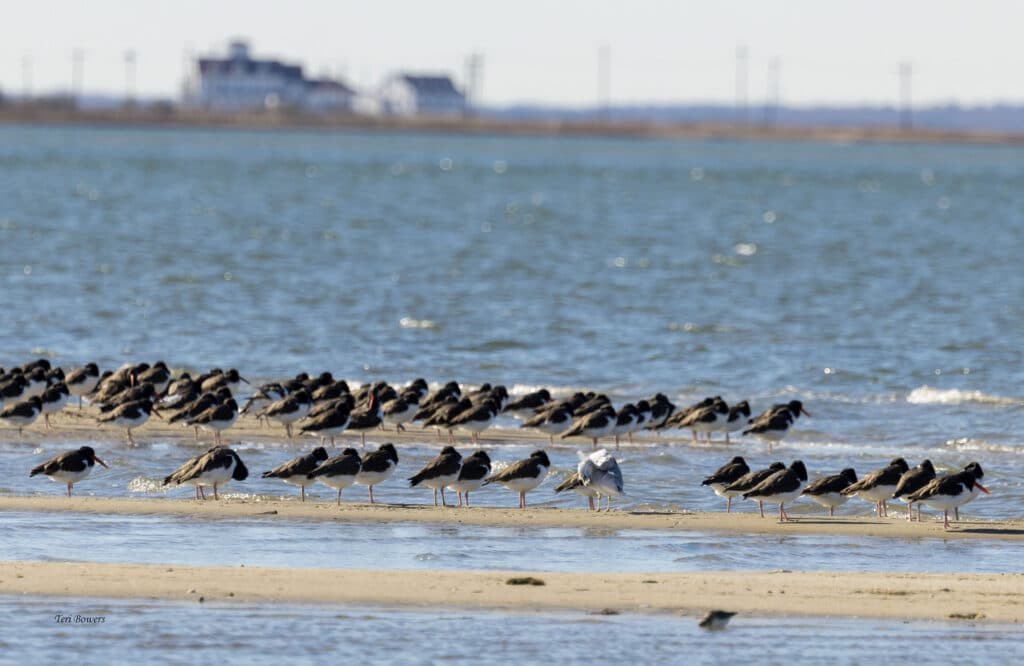
Roosting American oystercatchers during high tide at Holgate Unit of Edwin B. Forsythe National Wildlife Refuge. During low tides, the roost could be seen foraging at nearby marsh habitats like the marsh surrounding Rutgers University Marine Field Station, which can be seen along the horizon in this image. Photo courtesy of Teri Bowers.
As I finalize our annual report summarizing last year’s data, I often find myself looking back to reflect and compare trends over time. I’ve worked with ospreys long enough to have witnessed their population in New Jersey more than double. Their recovery has long been a clear sign of improving ecological health in our coastal waters.
As snowstorms and frigid temperatures take over New Jersey, I’ve been thinking a lot about how our beach nesting birds are doing in their more southern (and hopefully much warmer!) wintering grounds. Thanks to recorded sightings of banded birds, we’ve been able to learn a significant amount about American oystercatcher movement and track birds to their wintering locations. In this Re-sight Round Up, we’re catching up with three of CWF’s recently banded American oystercatchers to see how they’re spending the cold winter months.
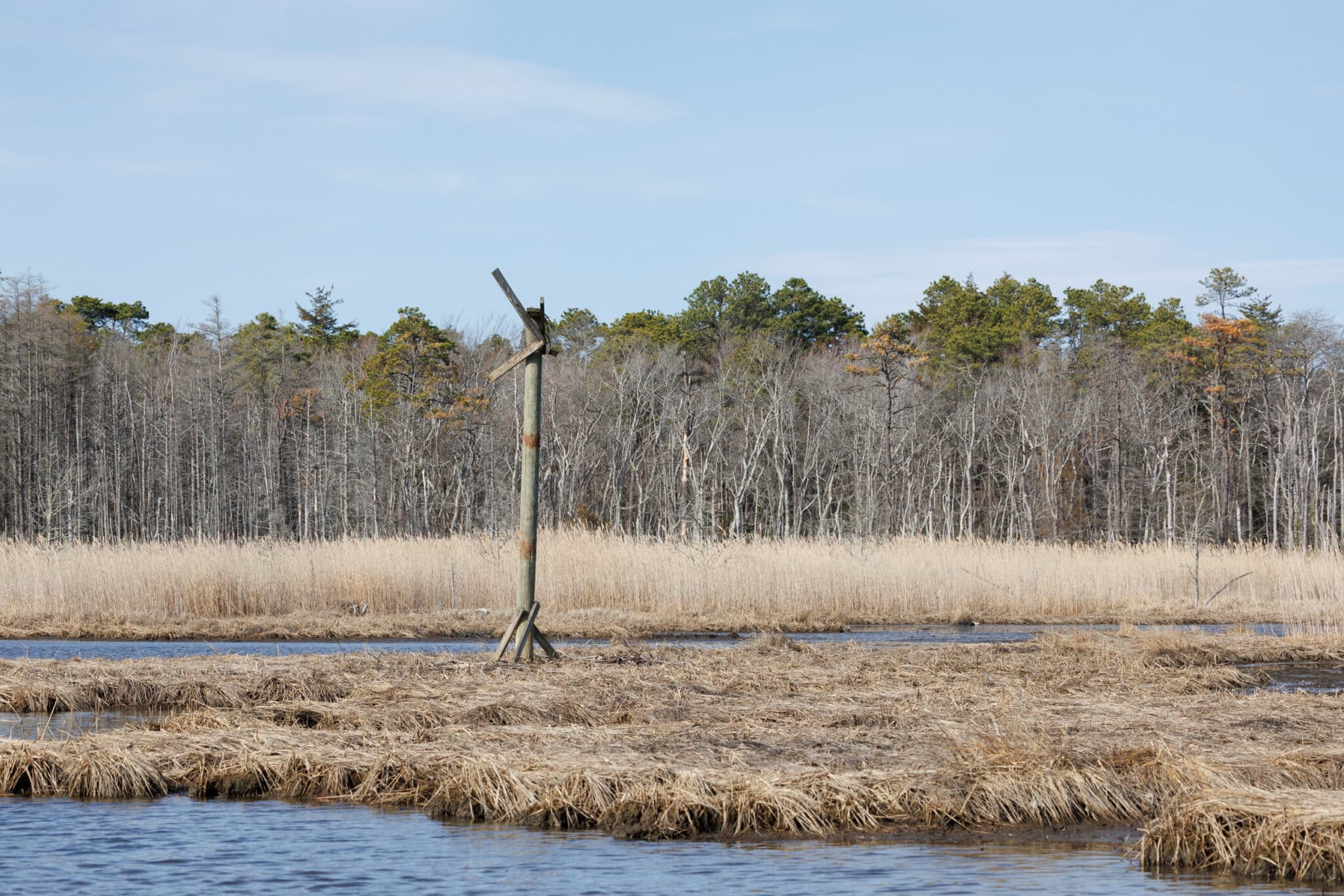
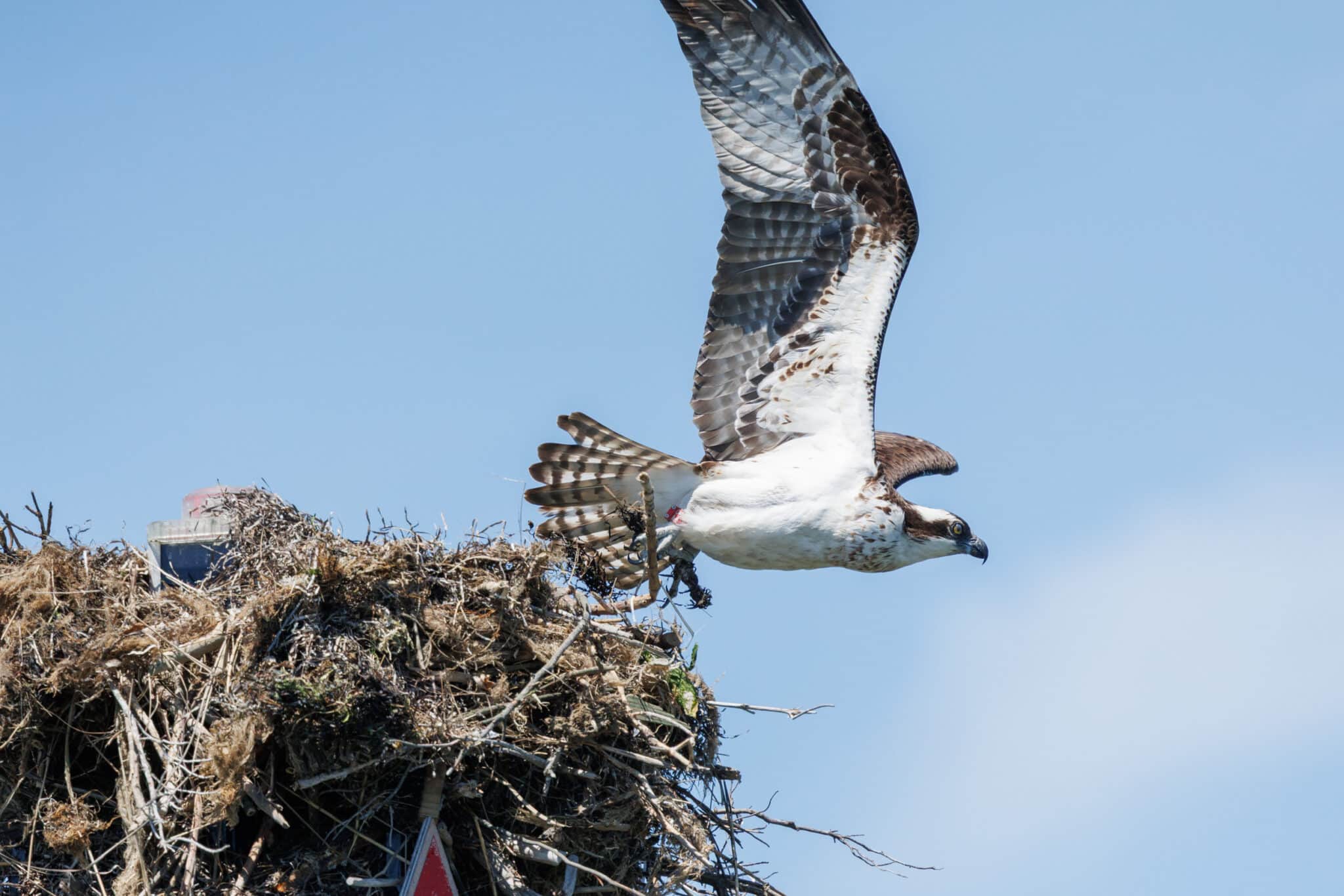
Lift off. 04/M takes off from a channel marker nest on Barnegat Bay.
During our osprey nest surveys we are always looking for auxiliary banded birds. Last summer over 40 red banded ospreys were re-sighted, which is the most ever encountered in a single year. The majority were breeding birds, photographed on their nests and others were photographed in flight or perched, often with prey. Some were even re-sighted several times throughout the year.
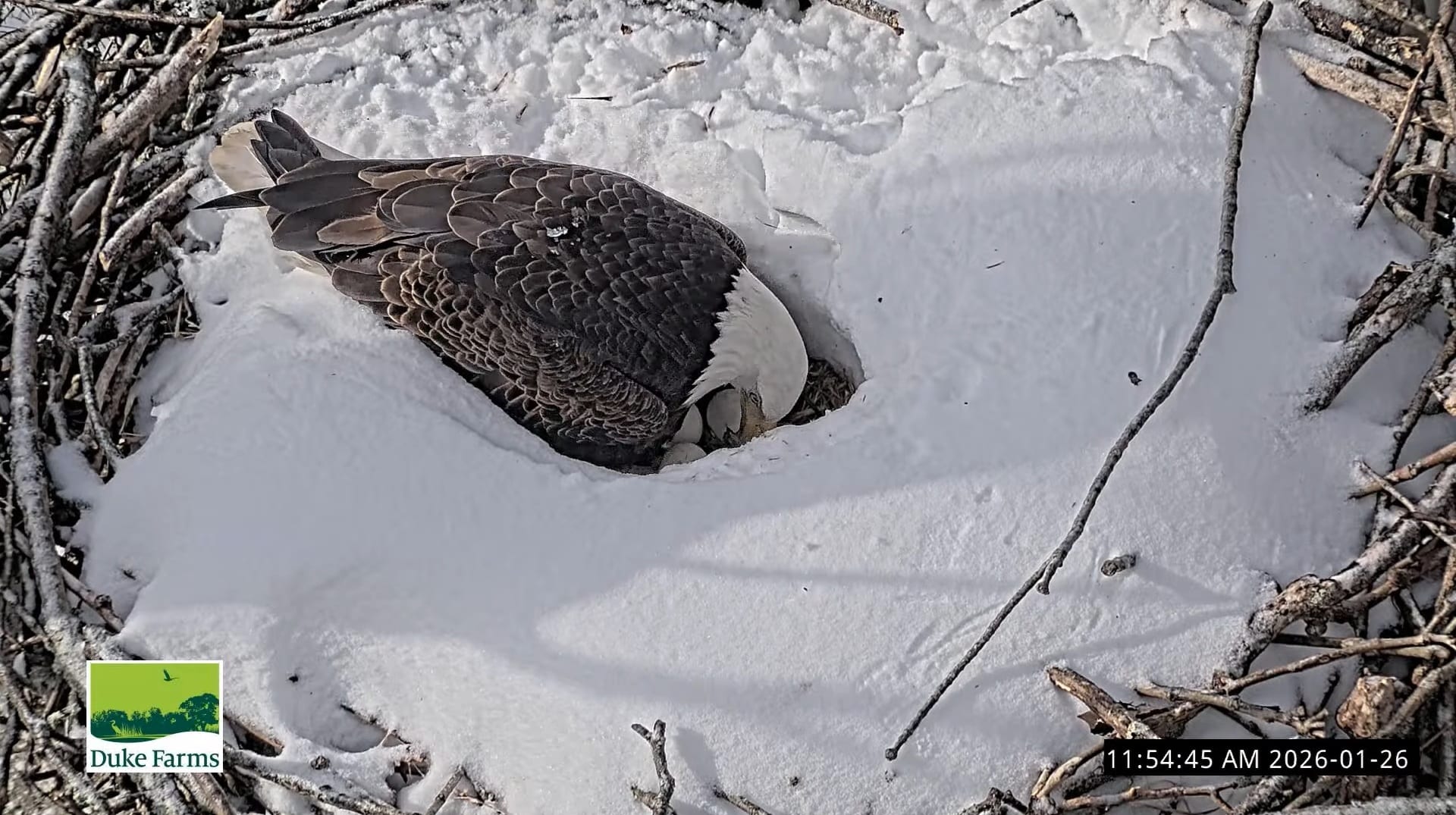
Duke Farms eagle incubates their three egg clutch, despite the snow surrounding the egg bowl 1_26_26
The Duke Farms eagle pair are the stars of their own reality show. The pair has a huge following who tune in each season to watch with anticipation as the pair lays eggs and wait for hatching and fledging. This cam views a pair of eagles on Duke Farms property in Hillsborough, New Jersey. Duke Farms has hosted the cam since 2008. Over the years there has been drama and heartbreak at the nest, but despite this viewers tune in to watch the pair every year. To learn about the history of the cam please see the Conserve Wildlife Foundations Duke Farms webpage and scroll down to Duke Farms Eagle Cam FAQ’s
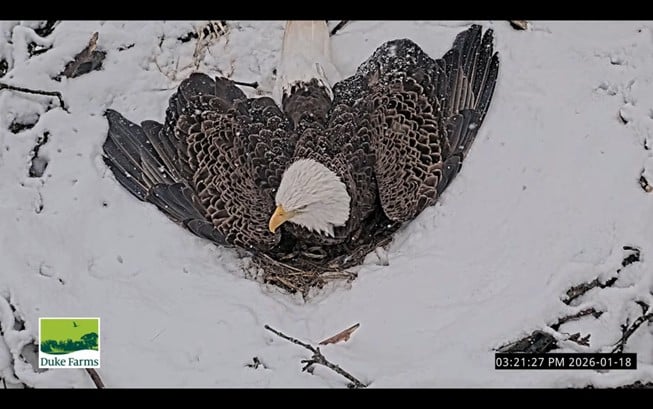
This year the female laid the first egg on January 12th, the earliest for the Duke Farms pair and one of the earliest eagle pairs in NJ in 2026 to begin incubation. The second egg was laid on January 15th and a third egg was laid in the snow on January 18th.
The female laid her third egg during a snowstorm 1-18-2026
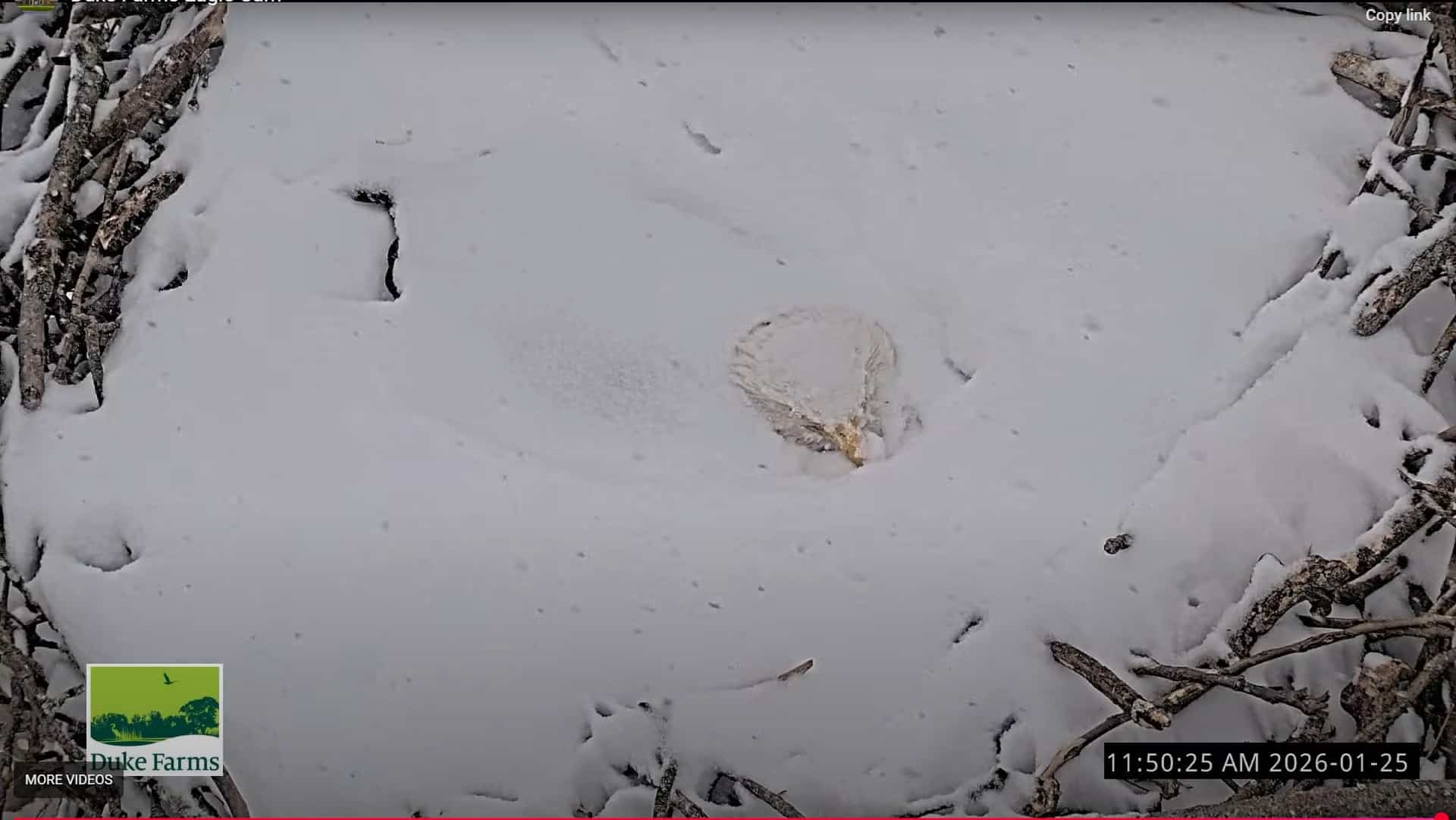
Eagle cam viewers watched in amazement as the pair incubated during the recent snow and ice storm.
Nest monitor, Diane Cook, writes informative and interesting updates on the Duke Farms pair. Some of the updates include, “Eggs and Cold Winter Weather” and “How to tell the male and female apart”. When on the CWF Duke Farms cam scroll down to the 2026 Nest Updates
Eagles incubate the eggs for 35-40 days and the eggs hatch in the order in which they were laid. Cam viewers can start to watch for hatching around February 16th.
When will the first egg hatch contest
Conserve Wildlife Foundation is holding a contest to guess when the first egg will hatch. The person who guesses the closest date and time to when the chick is fully out of the egg shell will win a CWF hat and eagle sticker.
Please email Larissa.Smith@conservewildlifenj.org with your guess of date and time am or pm.
All entries must be submitted by February 13th at 12pm
Thank you to Duke Farms and all the eagle cam viewers.