Meet the 2015 Honorees: Tanya Oznowich, Women & Wildlife Education Award Winner

Ms. Oznowich Recognized for Championing Environmental Education in New Jersey for Over Three Decades

by Lindsay McNamara, Communications Manager
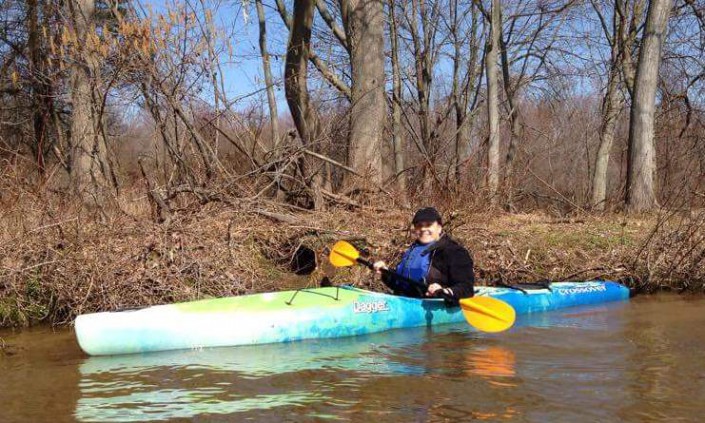
Tanya Oznowich, 2015 Education Award Winner

Schools across New Jersey are incorporating environmental education into their curriculum, a new movement inspired by a growing awareness of environmental issues and our shared role in understanding and resolving them. To a large degree, this growing prominence is thanks to Tanya Oznowich, Environmental Education Supervisor of the New Jersey Department of Environmental Protection, who has championed environmental education for over three decades.


Ms. Oznowich earned her Bachelor’s degree in Parks and Recreation/Interpretive Sciences from Slippery Rock University in 1981 and her Master’s in Educational Leadership from Delaware Valley College in 2004. She has been engaging the public in natural resources since 1979. Since beginning her tenure with the NJDEP in 1988, she has dedicated herself to integrating environmental science into New Jersey’s classrooms, from kindergarten to college.


In addition to her role as a program developer, Ms. Oznowich is also a workshop facilitator, public speaker, environmental educator, and a grant writer. For her accomplishments in bringing environmental education to so many classrooms and communities, she has been honored by numerous state and non-profit agencies, including the New Jersey Education Association, New Jersey Audubon Society, and the New Jersey Chapter of the Society for Women in Environmental Professions.


Join us to honor Tanya and the two other 2015 Women & Wildlife Award Winners on Wednesday, October 28 beginning at 6pm. Purchase events tickets and find more information.


We asked Tanya a few questions about what working in environmental education means to her:


Name one thing you can’t live without.

I cannot live without experiencing nature. To see and smell it, listen to it, explore it in different seasons, different types of weather and different times of day and night; to walk, drive, paddle, sit or sleep in it. It is soothing, intriguing and invigorating. In it I find my God and my truest self.


What do you find most challenging about your profession?

In social studies elementary students learn about home, community and responsibility. In science they learn about the basic needs of animals and plants and the life-sustaining connections that we have with water, air, shelter, energy and land; then, the depth and breadth of what students must know and be able to do swallow these up. We each have an intimate relationship with our surroundings – we each are part of the Earth’s natural systems. This is our common ground and it beckons us to act as “we” societies instead of “me” individuals. I am grateful that green practices and sustainability have entered our worlds of education, business, development and government; our relationship with Earth systems must be considered and understood in all we do.


What motivates you to get out of bed each morning and go to work?

I have always been driven by passion and commitment but this is now fueled by excitement. I believe that education about the environment is a necessity. Is it becoming more common in New Jersey schools? Yes! There are increasing examples of it to being woven into science, social studies, health, the arts – all subjects and all grades. Many schools offer specialized courses and utilize outdoor classrooms, gardens, stewardship and citizen science projects. We have growing programs for green schools, eco-schools, healthy schools, urban schools and sustainable schools. Colleges and universities are pursuing similar initiatives and sustainability programs for businesses, municipalities and faith-based organizations are on the rise; and, nature-based pursuits are doing battle with our uses of technology. Do we still have barriers, challenges and needs to confront? Yes; but our environmental education efforts are taking hold and producing results, and the push for sustainability is strong.


Number one piece of advice you would give to someone who wants to change the world.

Embrace the value of what you believe in, determine a course of action, and then begin; as Nike says, “Just Do It.”


What interests you the most about New Jersey wildlife?

Watching wildlife fascinates me and I love to sit still and quiet in nature to wait, watch and listen for the wildlife that eventually creeps, crawls, flies or swims by me. I love to look under rocks and logs and collect bugs from streams; to examine nests and tracks and turn over the soil to see what moves. What interests me most about wildlife is that wildlife captivates people of all ages. For many of us, they are the ambassadors to nature. I admire and appreciate the work of New Jersey’s wildlife experts who have the passion and commitment to study, protect and manage our diverse wildlife populations.


Please join us on Wednesday, October 28, 2015, from 6:00 – 9:00 p.m. at Duke Farms in Hillsborough, New Jersey to honor the contributions that Tanya Oznowich, Pat Hamilton, and MacKenzie Hall have made to wildlife in New Jersey.


This year’s very special event will feature keynote speaker Governor Christine Todd Whitman. The event will also celebrate CWF’s past decade of honoring women for their success in protecting, managing, restoring, and raising awareness for the Garden State’s endangered and threatened wildlife species.


Learn more:


Lindsay McNamara is the Communications Manager for Conserve Wildlife Foundation of New Jersey.
A Tale of Two Colonies

An Insider’s View of New Jersey’s Skimmer Nation

by Laura Hardy and Pam Prichard, Beach Nesting Bird Field Technicians

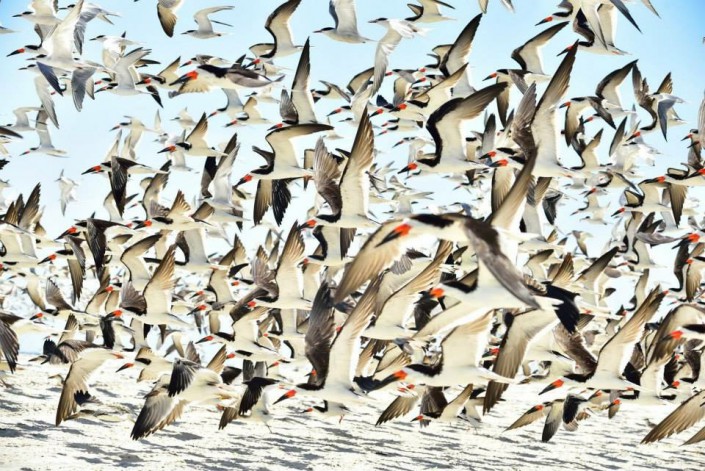
"Where's Waldo" - Black Skimmer Edition, as the colony takes flight. Photo by Sushanth Allapalli.
“Where’s Waldo” – Black Skimmer Edition, as the colony takes flight. Photo by Sushanth Allapalli.


by Laura Hardy:

New Jersey’s largest breeding colony of black skimmers is an uncommon joy. I’ve stood many hours this season totally bemused by these boisterous barking birds. I’m thrilled when, en masse, the colony takes flight right over my head, in the purest National Geographic moment I might ever experience. However, as the colony’s primary monitor, my job isn’t to be dazzled by the birds – those candy-corn bills, the funny barking calls, the gorgeous choreography of their flight – instead it’s to conduct biweekly counts of the birds in order to monitor the colony’s size and productivity.


Every summer for the past several years, about 1,000 black skimmer pairs have nested on the little stretch of beach known as Seaview Harbor Marina; nearly 2,600 birds at its peak this season. Black skimmers, plus least and common terns, gather there in an incredibly noisy colony. Piping plovers and American oystercatchers nest on site also.

Laura Hardy, one of the blog authors, pauses as she attempts to count a colony of several thousand black skimmers. Photo by Donna L. Schulman.

Have you ever tried to count thousands of raucous swirling birds while being dive-bombed by hot-tempered terns? The first time I tried, I didn’t know how or where to start. I started over at least eleven times that first day just to be sure I was right. Even still, my boss saw my number and said I had probably underestimated the size of the colony. Argh!


During the next count, I briefly considered multiplying my tally by some random number like 1.4297363 in order to accurately reflect the number of birds my boss thought I should be seeing. Instead, he bought me a step stool that made seeing the birds much easier. Nesting adults had become obscured by growing vegetation in the colony — but the stool made me even more of a target for the dive-bombing terns.


During the next couple of count periods, as the colony continued to grow, I worried that I was compensating for the natural tendency to underestimate by over-estimating. The last two or three counts, with the colony at its peak and chicks all over the beach, I thought for sure I was hallucinating – there simply could not be that many birds!


Finally, all kidding aside, I’ve come to believe there is some art to the task but, for the most part, I approach counting as methodically as possible. I count individual birds in the colony, by species, and then check my accuracy by counting in groups of five or ten birds, then 50 or 100. It takes some practice to be able to visualize what 100 or 500 birds look like, but it’s useful to be able to estimate the number of birds you see in a quick glance because the colony will flush any number of times during a typical count day.


Counting is further complicated by the need to estimate the number of birds on nests, and then later in the season, the number of chicks that are near-fledging or already fledged (able to fly). I also had the opportunity to test my accuracy against aerial photos of the colony and was pleasantly surprised with the accuracy of my on-the-ground count.


All of this counting and recounting is important because it allows us to measure the reproductive success of the colony. Black skimmers, and all of our beach-nesting birds, put a huge amount of effort into breeding and the numbers show the Seaview colony had a very productive season with a minimum of 1,000 fledglings so far, but likely as many as 1,500… and still counting!

A recently fledged black skimmer chick stands out against the colony. Photo by Laura Hardy.


by Pam Prichard:

To those of us that monitor beach nesting birds in Monmouth County, black skimmers were known only by a simple drawing on our AREA CLOSED signs that are attached to the fencing erected each spring to help protect endangered piping plovers and least terns. This season, however, held an exciting surprise as we witnessed the formation of a significant new back skimmer colony in New Jersey. Sandwiched between two immensely popular and busy beaches (Belmar and Avon),  the portion of Belmar’s beach along the Shark River Inlet played host to hundreds of least terns, common terns, a pair of American oystercatchers –  and our very own celebrity skimmers.


The skimmers quietly started arriving in mid-June, a few at a time. Were they just hanging out? Or were they actually going to start laying eggs? As more appeared day by day before our incredulous eyes, the reality became undeniable. The skimmers were nesting, for the first time since this habitat was set aside to be “natural.” And wow, what a colony it became, with nearly 200 adult Skimmers!


The nests were somewhat hidden among sea rocket and seaside goldenrod in the middle of the site, and didn’t attract too much attention at first. It wasn’t until the chicks began to hatch and grow that the real show began. The adults brought the chicks out to the front of the beach and their fan base began to form.

Black skimmer fledglings executing their "infamous" sand flop. Photo by Pamela Jo Capone.
Black skimmer fledglings executing their “infamous” sand flop. Photo by Pamela Jo Capone.

In the early mornings, the bird paparazzi (photographers) would arrive. Word had spread about the appearance of these strange looking, charismatic, comical yet majestic, and very photogenic birds. Everyone wanted a photo of adults skimming the water for fish or the tide line for crustaceans. They wanted to capture that moment when a chick was being brooded or fed. When the colony would all fly up at once, swooping and circling, making their distinctive barking puppy sounds, it was a stunning sight to see and hear. And let’s not forget the distinctive way they kick up sand, or flop down, as if their bill was just too heavy to hold up for one second longer. More than one person asked me if they were dead, and I admit, I would often hold my breath, until I thankfully saw some movement!


In addition to the steady stream of photographers, beachgoers visited the site every day to check on the busy colony and find out the latest news. People gathered in front of the fence to watch, enraptured, and to talk about what was going on. They returned day after day, bringing friends, and forging new friendships. Children looked through the scope to see the littlest of chicks, camouflaged so well in the sand. Many people told me they had never seen anything like this in Belmar. The black skimmers were the talk of the town!


A resident told me of growing up and playing behind a truck as it sprayed DDT. He said it has been wonderful to see so many species rebound in New Jersey, species like the osprey, eagle and now black skimmers right in Belmar. As of this date (they are not quite done yet), we have had nearly 150 skimmer chicks make it to the fledgling (flying) stage, no small accomplishment. The beach loving public here truly embraced the black skimmers, giving us lots of positive feedback. We all look forward to the return of our “celebrities” again next year.


Learn more:


Laura Hardy and Pam Prichard are Beach Nesting Bird Field Technicians working in partnership with Conserve Wildlife Foundation of New Jersey.


Providing a Safe Haven for Diamondback Terrapins

A Closer Look at Project Terrapin, a Growing Initiative that Focuses on Diamondback Terrapin Conservation

by Kiran Sinha, 2015 Project Terrapin Field Team Member and Wildlife Conservation Intern

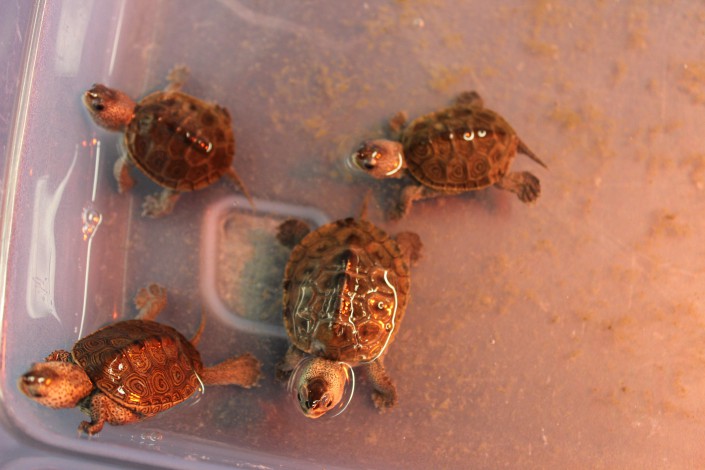
Terrapin Hatchlings by Kiran Sinah
Terrapin Hatchlings by Kiran Sinha

Diamondback Terrapins are a species native to coastal marsh areas in New Jersey. Terrapins are an interesting species, in part because they are the only native New Jersey turtle that has adapted to marsh habitats. Diamondbacks have been spotted all over the Great Bay area, increasingly so in the Manahawkin-Long Beach Island area. Although their shells are extravagant and beautiful, sometimes it is hard to notice them in the water, especially when it is dark and murky. Terrapins can travel by water and land; neither is safer than the other in the busy water and road ways of Barnegat Bay.


Diamondbacks in New Jersey have had a high mortality rate due to impact from cars and boats. In fact, only one in fifty hatchlings survive to a full-grown adult. One teacher and terrapin conservationist is trying to change that. Dr. John Wnek is a teacher at M.A.T.E.S High School in Manahawkin. Dr. Wnek is an avid terrapin conservationist and he incorporates it into his schoolwork as much as possible. For the past few years he has been rescuing terrapins in the Barnegat Bay area. Whether they are hit by a boat, a car, or trapped in a net, Dr. Wnek is there to help. He has many terrapins in his classroom, mostly those that he rescues. He introduced his love for terrapins to his students and they have joined in to help with a growing initiative, Project Terrapin.


For this project, Dr. Wnek and his students distribute over one hundred terrapin hatchlings to coastal high schools and colleges in New Jersey. These students and teachers keep their turtles in the classroom and take care of them for almost a full school year. At the end of May every year, the students and teachers from each school join at Island Beach State Park to release the hatchlings into the Barnegat Bay. When the turtles are hatched in the wild, they sometimes do not even make it to the marsh water or bay. Predators, such as seagulls, can pick them up easily when they are so small.


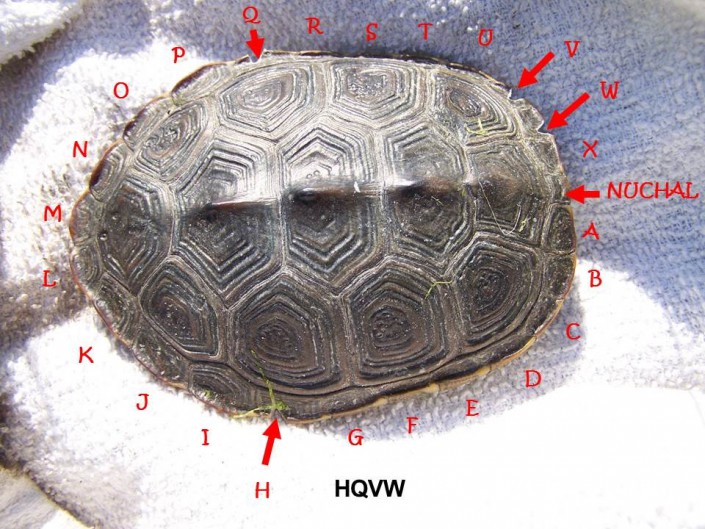
With the help from the schools, the terrapins are well fed and kept clean from diseases so they can finally be set free in their new homes. A very important part of maintaining the hatchlings while in the classroom is keeping track of them after they are released. Since the little turtles are too small to tag, we perform a procedure called notching. This process is like filing a human finger nail; it is quick, simple and painless. To notch a turtle shell, we use a filer to leave indents in the shell. As you can see from the pictures below, turtles have keratin plates that make up the shell, called scutes. In order to mark them accordingly to the year, we correlate each scute with the letter of the alphabet. This year we used the letters N and O, you can see the scutes that are marked on the hatchling and turtle. Once this process is complete, we finally set our little buddies go to where they can thrive and reproduce. The goal of this project is to help replenish the diamondback terrapin population, with the help of Dr. Wnek and his students, the next generation of terrapin conservationists.

Photo by Kiran Sinah
Photo by Kiran Sinha

Learn more:


Kiran Sinha is a summer 2015 Wildlife Conservation Intern with Conserve Wildlife Foundation of New Jersey and a 2015 field team member for Project Terrapin.

“Scout Central” at the 2015 New Jersey WILD Outdoor Expo

CWF to serve as “Scout Central” and Host Bat House and Rain Barrel Workshops at this year’s WILD Expo

by Lindsay McNamara, Communications Manager

2015 New Jersey WILD Outdoor Expo


The 2015 New Jersey WILD Outdoor Expoa free event designed for visitors to discover ways to appreciate and enjoy the outdoors, will be held on Saturday, September 12 and Sunday, September 13, 2015 from 10 a.m. to 5 p.m. daily at the Colliers Mills Wildlife Management Area in Jackson Township, Ocean County.


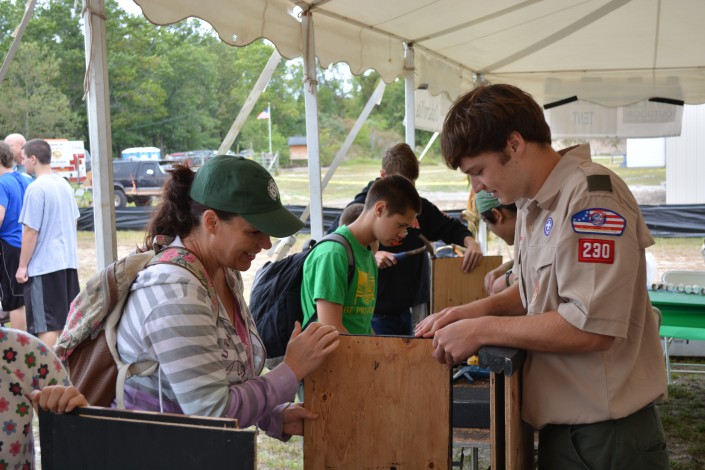
This year, Conserve Wildlife Foundation will be holding two exciting and worth-while workshops, “Build a Bat House” and “Make a Rain Barrel.” Help us provide safe roosting and maternity sites for bats being evicted from buildings through our “Build a Bat House” workshop! The bat houses built at the Expo will become part of an Eagle Scout Service Project benefiting Conserve Wildlife Foundation.

expo20144
Eagle Scout Dan Silvernail assists a 2014 Expo attendee in the building of a bat house.

Join us in our activity tent for Conserve Wildlife Foundation merchandise, discounts on membership and activities for Boy and Girl Scouts. The Conserve Wildlife Foundation tent will serve as “Scout Central” at this year’s event. Stop by for important scout information, handouts and activities. For a list of Boy and Girl Scout activities at this year’s Expo, visit our website.


expo20141
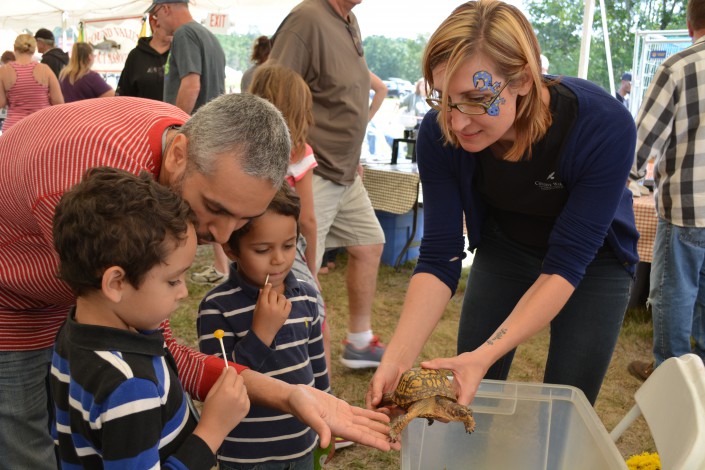
Wildlife biologist Stephanie Egger educating 2014 Expo attendees about New Jersey’s box turtles.

Learn more:


Lindsay McNamara is the Communications Manager for Conserve Wildlife Foundation of New Jersey.
 

Lights, Camera, Action: Conserve Wildlife Foundation Releases New Video

New Video Showcases CWF’s Work to Protect the Garden State’s Wildlife

By: Lindsay McNamara, Communications Manager

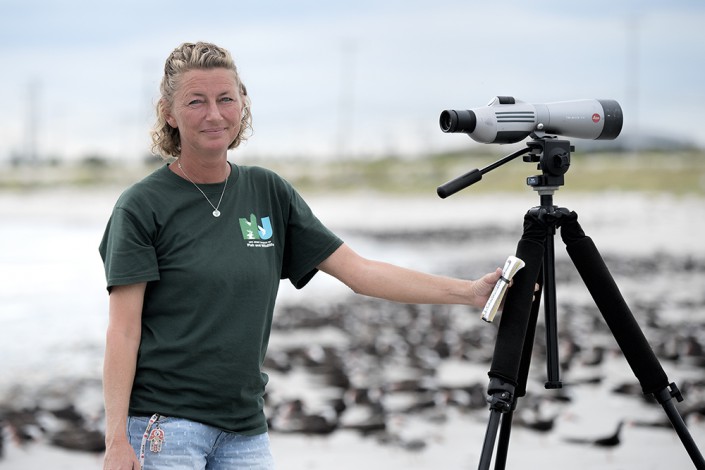
Conserve Wildlife Foundation is thrilled to release a new video as an “introduction” to our work, keeping New Jersey’s wildlife in our future! We are a private, non-profit organization dedicated to the protection and preservation of New Jersey’s endangered and threatened wildlife and the habitats they depend on.


As the video demonstrates, we utilize science, research, wildlife management, habitat restoration, education and volunteer stewardship to help conserve and protect a variety of at-risk species of wildlife in New Jersey, the most densely populated state in the nation.


The video was produced by Tyler Grimm, a video intern with Conserve Wildlife Foundation.


Want to get involved? Learn more about Conserve Wildlife Foundation on our website.


Lindsay McNamara is the Communications Manager for Conserve Wildlife Foundation of New Jersey.


First Trip to the Beach for Newark Students

50 Fifth Grade Students from Ann Street School in Newark Visit Island Beach State Park

by Lindsay McNamara, Communications Manager 

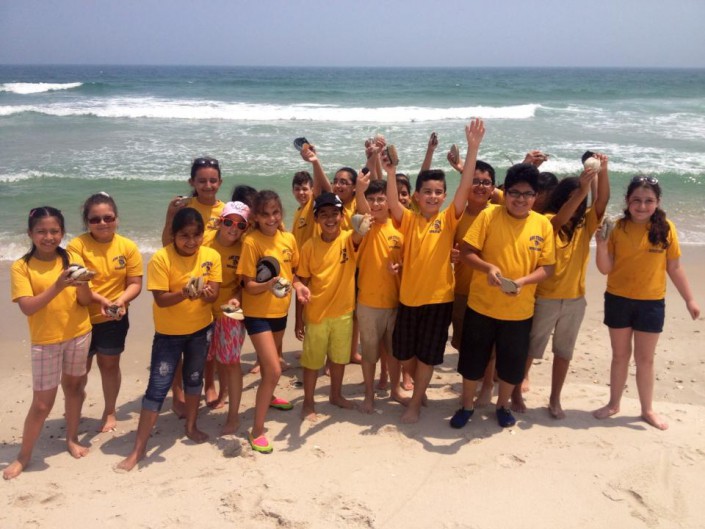
Ann Street School students taking a "shellfie" on the beach.
Ann Street School students taking a “shellfie” on the beach.

Remember the awe and wonder of your first visit to the beach? For many fifth graders from Newark, they experienced just that feeling this summer thanks to Conserve Wildlife Foundation (CWF) and PSEG.


Through CWF’s WILDCHILD program, over 50 fifth grade students from Ann Street School in Newark spent a day at Island Beach State Park and learned more about nature and human impact on New Jersey’s wildlife and environment.


The Ann Street School students were thrilled at the sight of an active osprey nest, observed through a spotting scope, as CWF’s Habitat Program Manager and osprey expert Ben Wurst detailed the amazing ongoing recovery of New Jersey’s osprey population. The students also went on guided maritime forest hikes, toured the Island Beach State Park Nature Center, and connected their everyday actions to the larger environment.


“There is nothing quite as evocative and inspiring for a child as spending a day at the seashore, feeling the sand under your feet with the tangy fragrances of salt marsh and surf,” said David Wheeler, CWF Executive Director. “This connection with nature, and chance to experience the abundant wildlife of Island Beach — from red foxes to horseshoe crabs to black skimmers — can help our next generation of outdoor leaders become engaged with the natural world around us.”


Island Beach State Park interpretive staff led enlightening programs on the beach, where many students collected shells and walked in the sand for the first time in their lives. Interpretive staff also took the Ann Street School students seining on Barnegat Bay, where they dragged a large seine net out into the bay. Students got to hold mud snails, minnows and hermit crabs, and microorganisms in learning firsthand about the marine life in Barnegat Bay.


“The visit to Island Beach State Park is a culminating experience for my students. They spend the year researching and learning more about wildlife for the Species on the Edge Art and Essay Contest, and then the trip brings it all together. The trip is where they can see the different ecosystems and animals that we have talked about throughout the year,” stated Sharon Cardoso, Ann Street School Teacher. “The students look forward to WILDCHILD, it is an incentive for them and they are motivated to keep their grades up so they can attend.”


The WILDCHILD program is made possible by generous support from PSEG.


“The students involved in WILDCHILD traditionally do not have the opportunity to have access to green space. PSEG works with organizations like Conserve Wildlife Foundation to help engage children in environmental education,” said Russ Furnari, Manager, Environmental policy, PSEG. “Through the support of the PSEG Foundation, we work with Conserve Wildlife Foundation to help get kids out into nature to learn about endangered species and that teach them to protect nature and protect the environment.”


Learn more:


Lindsay McNamara is the Communications Manager for Conserve Wildlife Foundation of New Jersey.
Project RedBand continues on Barnegat Bay

92 Ospreys Enlisted in Citizen Science Based Re-sighting Project

by Ben Wurst, Habitat Program Manager

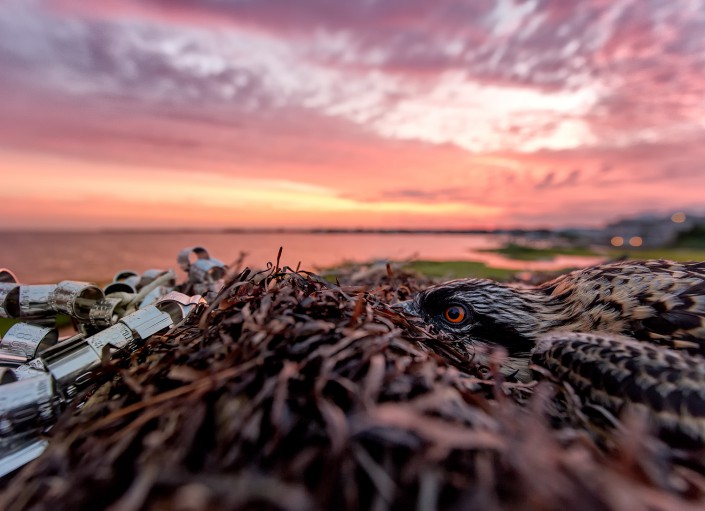
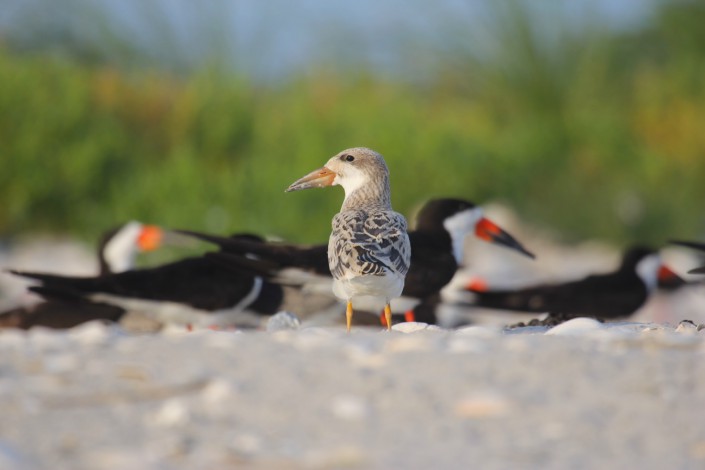
A young osprey was banded with a color auxiliary band: 76/C for future tracking at a nest on Long Beach Island.
A young osprey named “Danny” was banded with a color auxiliary band 76/C for future tracking at a nest on Long Beach Island. Photo by Northside Jim.

This is the critical time of year for monitoring our nesting ospreys. Each year biologists and specially trained volunteers, aka Osprey Banders, conduct ground surveys by boat to monitor the state population. They visit or survey the most densely populated colonies of nesting ospreys: Sandy Hook, Barnegat Bay, Great Bay, Absecon, Ventnor-Margate-Ocean City, Great Egg Harbor Watershed, Sea Isle, Avalon-Stone Harbor, Wildwood, Maurice River, and parts of the Delaware Bay. These surveys have been conducted since the early 1970s when ospreys were not so common, with only 50 pairs in 1973.


Their recovery has been quite remarkable. With an estimated 600 nesting pairs throughout the state, our ospreys are in a much better position today. Why put so much time and effort into monitoring a seemingly healthy population? Even though their population is much larger than it was decades ago, ospreys still face a variety of threats that jeopardize their ultimate survival. It’s commonly known that ospreys face very high mortality rates in their first year of life. Before even leaving the nest their young are so vulnerable. They can fall or be blown out of the nest, predated by raccoons, crows, or eagles, killed by their own siblings, or die from starvation. After they fledge, then they need to learn to find and catch prey and avoid power lines and wind turbines. Then they need to learn to migrate south and avoid being shot in the process. Once they find a suitable wintering site, then they remain in the same area for the next two years. Then they return to their natal areas to find a suitable nest site and start their own osprey family!


Today, we need your help! We cannot reach all active nests in New Jersey. There is still plenty of time to help us keep track of the state population. Citizens are encouraged to submit sightings of activity at osprey nests on Osprey Watch, a global osprey watching community. In 2013 all of the known locations for osprey nests was released on Osprey Watch’s website. As a partner with Osprey Watch, we share and use the data collected to help determine the overall health of the population, which is summarized in our annual report.


To help engage our Osprey Watchers, we started Project RedBand, a citizen science based osprey re-sighting project. This is year two of the project. So far we’ve deployed 92 red bands (out of 100) on young produced at nests on Barnegat Bay (62 in 2014 and 30 in 2015). The young that were banded last year will start to return to New Jersey in 2016. Usually young adults return later than older adults, so the red banded birds might not be seen until May or June. That’s when they’ll find areas with high prey availability and suitable nest sites. Usually males don’t stray far from their natal areas but females do. With these red bands, we hope to learn a little more about where our ospreys are dispersing to and at the same time engaging our coastal communities in osprey conservation.


Learn more:


Ben Wurst is the Habitat Program Manager for Conserve Wildlife Foundation of New Jersey.

Bill Proposed to Encourage Homeowners to Create and Maintain Wildlife-Friendly Yards

Native Species Habitat Bill Passes in the Assembly

By: McKenzie Cloutier, Special Events and Fundraising Intern

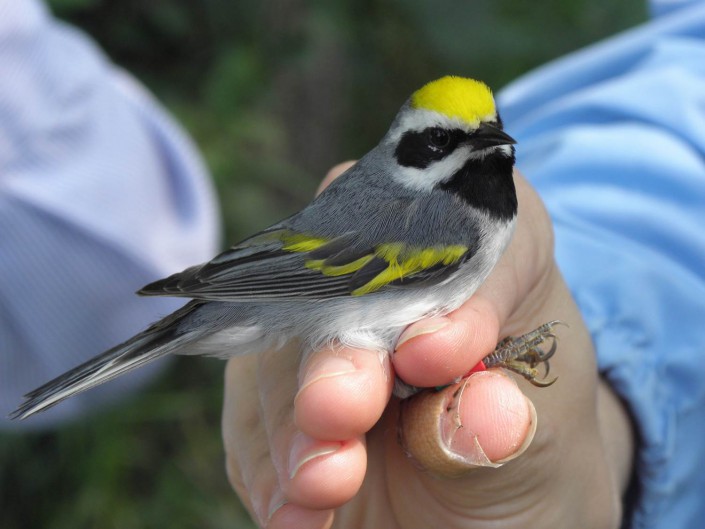
Warbler
Golden-winged warbler. Photograph by Evan Madlinger

Of great interest to New Jersey homeowners, the Garden State’s General Assembly recently passed a native species habitat bill. This bill, pending further action in the Senate, encourages homeowners to create and maintain more wildlife-friendly yards. In hopes of creating more livable habitats for New Jersey’s wildlife, this bill includes a certificate program that promotes the growth of native plant species in landowners’ yards.


Under the provisions of this bill, landowners would be encouraged to grow and preserve native plant species that provide natural habitats for New Jersey’s other important species. In addition, this bill would also defend certified landowners against any municipal ordinances. For example, the bill would defend a landowner from an ordinance that calls for the removal of certain native plants or “weeds.”
The native species habitat bill not only benefits New Jersey’s wildlife, but homeowners as well, by reducing maintenance and chemical treatment costs. Under this program, yards will require less mowing and maintenance, and pesticide use is discouraged. With such changes, landowners could experience significant reductions in their usual yard maintenance costs, while helping to conserve local wildlife.


The native species habitat bill encourages New Jersey residents to become active participants in the preservation of wildlife. At the Conserve Wildlife Foundation, we encourage landowners to create wildlife-friendly backyards, and we are involved in helping private landowners to do so. Our wildlife biologist Kelly Triece works in partnership with United States Department of Agriculture’s Natural Resource Conservation Service (USDA-NRCS) to assist private landowners in managing existing cropland, forestland, and pastureland to best meet wildlife habitat needs or in establishing new wildlife habitat areas. Depending on the goal of the landowner, these programs can either help create or preserve pollinator, woodland, wetland and grassland habitats for many different wildlife species.

 
In particular, CWF biologists work with forest landowners to enhance young forest habitats on private lands. Young forest habitats are imperative for many birds, especially the Golden-winged warbler, a species of particular concern in New Jersey. The open canopy of a young forest also provides food such as berries, insects and small mammals to newly fledged birds, wild turkey, ruffed grouse, reptiles, black bears, bobcats, and butterflies.


Since 2008, CWF, NRCS and other partners have collaborated with landowners to create or restore over 225 acres of Golden-winged warbler habitat in New Jersey!

 
Want to get involved and help conserve wildlife on your property? Here are ten tips on how to create a wildlife-friendly habitat in your own backyard:

  • Allow native plants to grow.
  • Create a brush pile for ground nesting birds or small mammals such as chipmunks or mice.
  • Install a pond to benefit birds, frogs, salamanders, and aquatic vegetation.
  • Create a meadow for wildlife by choosing not to mow a section of your yard.
  • Plants trees and shrubs to provide food and cover for wildlife.
  • Buy a bird bath.
  • Remove invasive or non-native plants.
  • Refrain from using pesticides. Try composting!
  • Hang bird feeders.
  • Obtain a bird house.


Visit our website for more tips on how to create a wildlife-friendly backyard.


McKenzie Cloutier is the Special Events and Fundraising Intern for Conserve Wildlife Foundation of New Jersey.
Video Showcases EagleCam Lesson Plan Contest Winner Diane Cook

New Video Highlights Diane Cook’s Eagle Banding Experience and Classroom

By: Kathleen Wadiak, Wildlife Conservation Intern


This year, Conserve Wildlife Foundation of New Jersey and Duke Farms worked together to organize a contest in which educators could submit lesson plans based on the Duke Farms EagleCam, a webcam providing a live stream of a bald eagle nest. The winner, computer literacy teacher Diane Cook, had the opportunity to assist biologists in banding the eagle chicks from a nest in Hunterdon County. The new video showcasing Diane gives an up close and personal view into her story and her experience!


Diane has been incorporating the EagleCam into her lessons since the cam first went online in 2008, helping to inspire a respect for the animals and environment in her students from kindergarten to fourth grade. Diane also teaches her students about internet safety, web forums, and writing.


The Duke Farms EagleCam allows educators to connect their lessons to important environmental issues in a way that is interesting to their students. Teachers like Diane Cook are making a difference by encouraging children to care about their impact on local ecosystems and wildlife.


Learn more:


Kathleen Wadiak is a Wildlife Conservation Intern with the Conserve Wildlife Foundation of New Jersey.
Researching Beach Nesting Birds at Edwin B. Forsythe National Wildlife Refuge

Conserve Wildlife Foundation Partners with National Wildlife Refuge to Collect Data on Beach Nesting Birds

Posted by: Lindsay McNamara, Communications Manager


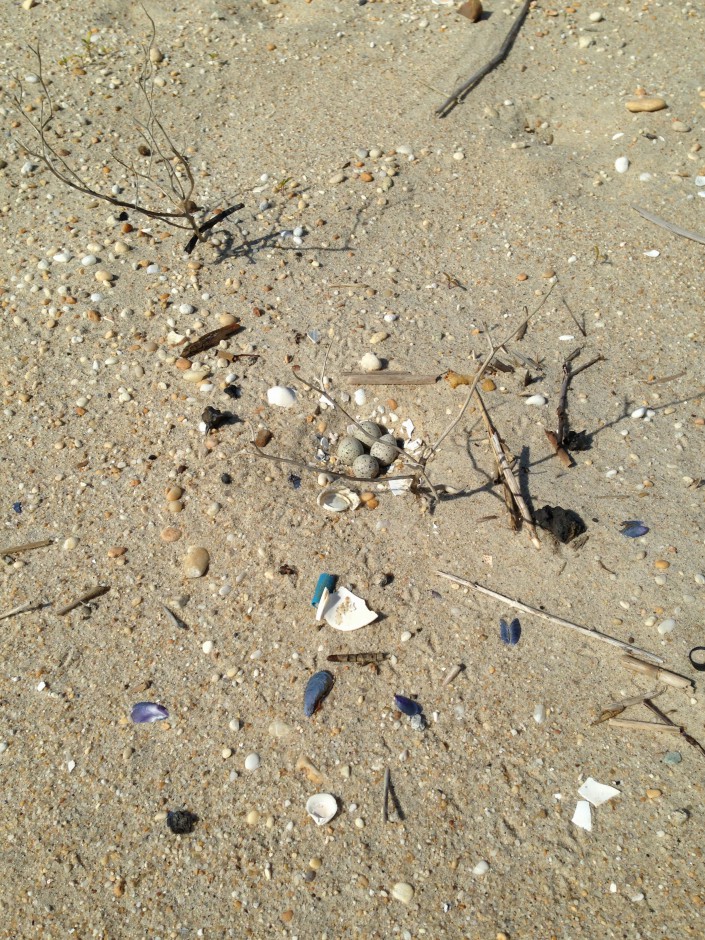
Piping Plover Nest
Piping Plover Nest

Did you know barrier island beach makes up approximately 2% of the Edwin B. Forsythe National Wildlife Refuge? This area is the most productive for beach nesting birds. The federally threatened piping plover and other species such as least tern, black skimmer, and a species of special concern, the American oystercatcher, nest on Holgate Beach. The refuge closes the Holgate unit from April 1st to September 1st every year to provide undisturbed nesting habitat for these important species.


Not only is it important to protect nesting habitat for the birds, but it is also important to provide education opportunities to the public. Each summer, the refuge relies on volunteers during the summer months to talk to the public about the beach closure and bird management, and answer any general questions about Forsythe Refuge.


This year, Conserve Wildlife Foundation of New Jersey partnered with the refuge to assist in the collection of nesting data. “In the past, refuge staff has done all the beach nesting bird monitoring,” said Refuge Manager Virginia Rettig. “This year we are very excited to be working with our partners to monitor the population status of these birds. The work they are doing, combined with the data they collect, will improve our understanding of beach nesting birds on Forsythe Refuge.”


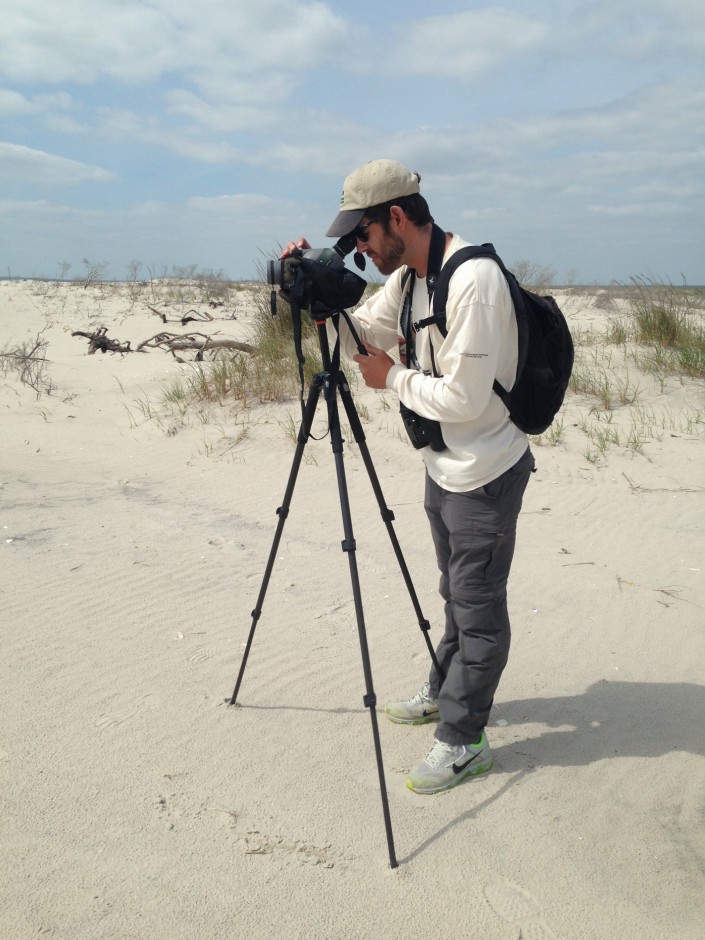
CWF Field Technician Jesse Amesbury tracking piping plovers at Holgate with his scope.

“Holgate provides highly suitable undisturbed natural habitat for at-risk beach nesting birds, especially piping plover – a rarity along the otherwise highly developed and recreated New Jersey Coast,” said Todd Pover, CWF Beach Nesting Bird Project Manager. “Maximizing productivity at this site is a high priority for regional and range-wide recovery efforts.”


Edwin B. Forsythe National Wildlife Refuge protects more than 47,000 acres of sensitive wetlands, marshes, and coastal habitats along the New Jersey shore. It is one of the most important habitats for migrating waterfowl and shorebirds east of the Mississippi River.

Learn more:

Conserve Wildlife Foundation’s Beach Nesting Bird Project
Edwin B. Forsythe National Wildlife Refuge


Lindsay McNamara is the Communications Manager for Conserve Wildlife Foundation of New Jersey.