“For the Love of Wildlife” Photo Contest: First Place Winners

CONGRATULATIONS, FRANCESCA BUCHALSKI AND BILL DALTON!

by Lindsay McNamara, Communications Manager

Earlier in 2016, Conserve Wildlife Foundation launched the “For the Love of Wildlife” Photo Contest. Our photography contest was meant to showcase the love for and need to protect the endangered and threatened wildlife that call New Jersey home. We encouraged youth and adult photographers across the Garden State to submit photographs in the following categories:

  • New Jersey’s Rarest Residents: Endangered, Threatened, and Special Concern Wildlife Species Only
  • The Garden State: New Jersey Landscapes
  • Experiencing Nature: People Enjoying the Outdoors
  • Wild New Jersey: All Animals in the Garden State

We were blown away by the amount of submissions we received! Over 1,470 entries were counted! New Jersey wildlife photographers, CWF board members and staff poured over the entries to choose our winners. Today, we are thrilled to announce both first place winners.


First Place: Francesca Buchalski
Allentown, New Jersey
Praying Mantis

Praying Mantis on Lens
Praying Mantis on Lens, youth first place winner Francesca Buchalski

Francesca was so happy to have won our contest! She shared more about the image and her passion for photography with CWF: “I took that photo at the Cape May Meadow during last year’s fall hawk migration festival. My mom and I are avid birders, and we love going to the migrations in Cape May! We were bringing up the rear on a guided walk, and just as we started walking down the path through the reeds, I heard ‘Wows!’ and ‘Cools!’ up ahead. As we caught up, we saw that everyone was looking at a praying mantis perched on a man’s telephoto lens! I had my camera with me to photograph birds, but that was an opportunity that couldn’t be missed! I thought it was pretty interesting and ironic that the man couldn’t photograph the praying mantis, even though it was on his camera (he couldn’t stop laughing), and it posed there for a long time. It was a great way to start the walk!


“I’ve only been photographing wildlife for about 3 years, just for fun. I started off by taking pictures of the birds that came to our feeders, and now I bring my camera on all of my birding adventures. As for my favorite New Jersey species…that’s a tough one! I think I would have to go with the osprey; they’re so charismatic in their coloring, hunting habits, and cool ‘opposable’ talon. I also really enjoy how easy it is to observe them by boat; whenever I think about the wetlands or the back bays of New Jersey, I automatically think ‘osprey.’ They also have such a great comeback story, its almost impossible not to love them!


“A close second would be the horseshoe crab; I find it simply incredible that they have remained unchanged for millions of years, and that so many migrating shorebirds depend on them. And who can forget their incredible immune system and blue blood! I also love how you can learn about and help horseshoe crabs by participating in hands on counting, tagging, and flipping walks (my mom and I have done some of those, and they’re such great experiences!)


“New Jersey has such an amazing array of wildlife, and sadly, so many people miss it amid all of the big cities; big thanks to everyone at Conserve Wildlife [Foundation] for helping to promote New Jersey’s wildlife and keep them around for years to come!”


First Place: Bill Dalton
Interlaken, New Jersey
Black Skimmer

Sky Skimmer Bill Dalton
Sky Skimmer, adult first place winner Bill Dalton

Bill was so pleased to have won our contest. He said he is “truly honored to have [his] ‘Sky Skimmer’ photo selected as the grand prize winner from such a prestigious organization.”


Bill explained to CWF, “I once read that a photographer’s definition of luck is: Preparedness over opportunity = LUCK! That was certainly the case when I photographed the skimmers at Forsythe on a early spring morning. On a previous visit, I saw a mature peregrine falcon perched at sunrise not far from the observation tower. I returned a day or two later with the proper equipment for low light, high speed photography, with hopes to get early light shots of the peregrine. The falcon was there but I noticed 6 to 10 black skimmers feeding about 50 yards from my location. The light from the predawn sky and clouds reflected perfectly on the windless water’s surface. I took about 50 shots but one shot caught the skimmer in exactly the right position. The line between sky and water vanished! The camera should get all the credit, I just pushed a button! I’ve been a nature photographer (hobby) for decades. My first camera back in the 70’s was a Minolta SRT 101. Boy has photography come a long way since the days of only film!


“I love to kid people by telling them I’m an endangered species. By that, I mean, I was born and raised in Monmouth County. One of the most important goals in [CWF]’s mission statement is, ‘educating everyone who lives in New Jersey about our shared wild heritage and our shared responsibility to protect it.’ We’ve come a long way in accomplishing those goals but so much more has to be done.


“I must admit being a born and raised Jersey Shore boy that my favorite species is the osprey. I vividly remember back in the 1950’s asking my dad while driving down a shore road in Monmouth County, why the power company men were knocking down bird’s nests that were atop of the poles! Those nests were ospreys and the nests on the poles were considered a nuisance! Years later I am proud to have been partly responsible for one of the first osprey nesting programs in Monmouth County. I convinced the company I worked for to enter into an agreement with the NJDEP to relocate a nest from the Keansburg pier to our location in Union Beach. At that time ospreys were on the threatened and endangered species list.


“The transfer of the nest was successful and at that time (1987) it was the most northern osprey nest in Monmouth County. Now I see nests in dozens of locations throughout the county! The osprey is truly an example (along with many other species) on how educating the public about our wildlife heritage worked!


“My work has been wildly published over the years including leading magazines, books and educational publications. National Geographic has published my work several times, most recently in their book, ‘Sublime Nature: Photographs That Awe and Inspire.’ Once again, thanks to the judges and staff of the Foundation for this wonderful award.”


Lindsay McNamara is the Communications Manager for Conserve Wildlife Foundation of New Jersey.
Shark & Ray Conservation Week (Part 1 of a 6-part series)

This story marks the first of six blog stories spotlighting New Jersey’s shark species – and educating people about why shark populations are in danger throughout the world.


CONSERVE WILDLIFE FOUNDATION IS INITIATING CONSERVATION EFFORTS DIRECTED AT THE SHARKS, RAYS, AND SKATES WHICH OCCUR IN NEW JERSEY WATERS.

By Michael Davenport, Wildlife Biologist & GIS Manager

Sharks, rays, and skates are cartilaginous fish within the subclass Elasmobranchii. Elasmobranchs predate the dinosaurs by hundreds of millions years, having first appeared in the fossil record during the Devonian Period approximately 400 million years ago. They are a very diverse group, with over 350 species of sharks and over 500 species of rays and skates currently existing worldwide.

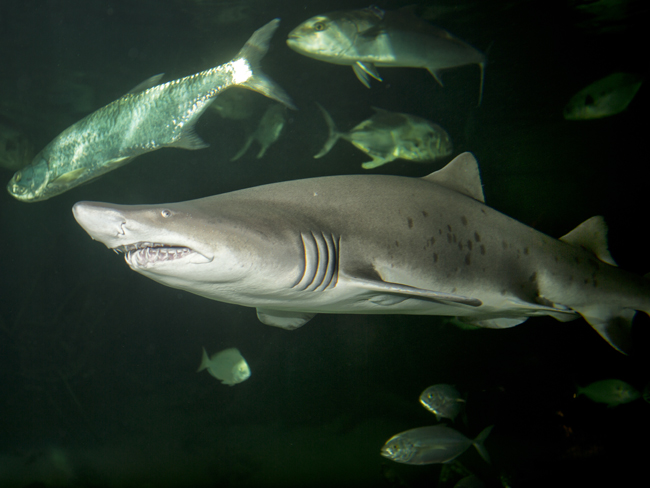
A sand tiger shark. Photo courtesy of Gerald Walters & Jenkinson's Aquarium.
A sand tiger shark. Photo courtesy of Gerald Walters & Jenkinson’s Aquarium.

Sharks and rays are highly specialized and occupy a wide variety of habitats. Some species are slow-moving bottom feeders which prey on crustaceans while others are fast-swimming predators of marine mammals. Many shark and ray species are apex predators, at the top of many food chains. They play a critical function within the marine (and occasionally freshwater) ecosystem preying on the weak, sick, or injured and maintaining a balance within their environment.

Sharks and rays are frequently misunderstood and feared as a result. Sharks have been portrayed in movies as man-eating monsters which target humans as a meal. Rays are also feared due to their appearance and because many species do, in fact, carry defensive barbs on their tail which have been known to injure or even kill people.

Because of their bad reputation, sharks are often targeted by recreational fishermen as trophy catches. However, the greatest threat to sharks and rays comes from commercial fishing for several reasons: (1) directed fishing for sharks, especially for their fins; (2) capture as bycatch during other fishing activities; and (3) overfishing of prey species.

Degradation of habitat is another threat to sharks and rays. Many species give birth within inshore coastal waters and those same areas are a nursery for the young. Pollution and/or development of those areas represent a threat to those species during a critical stage of their life. Climate change and its impact on food resources of sharks and rays is another potential major threat to sharks and rays which is poorly understood at this time.

Due to the biology of sharks and rays, these many threats are worsened by the fact that fewer individuals are replaced than are killed. Sharks and rays are generally long-lived species which don’t reach sexual maturity often until they’re in their teens or older. Then, they may give birth to as few as two young every two or three years.

Follow our blog posts throughout the week to learn more about some of the shark species which occur in New Jersey waters.


New Jersey’s Hidden Coast — After the Storm

New Jersey’s Hidden Coast — Episode 3

by Lindsay McNamara, Communications Manager

At 8:00 PM on October 29th, 2012, Hurricane Sandy made landfall in Brigantine, New Jersey, only about 30 miles from New Jersey’s Hidden Coast – the Delaware Bayshore. The storm was devastating for the people of the area, many of whom lost their homes and livelihoods. It was equally hard on the area’s wildlife, bringing many species, including the famous horseshoe crab and red knot, perilously close to extinction.


What happened? Watch the story unfold in the third episode of our video series.


A new episode of our video series “New Jersey’s Hidden Coast” will air every two weeks throughout the summer! Catch a glimpse of the bay, the horseshoe crab at the center of the bay’s system, and the incredible relationship between horseshoe crabs and migratory birds, like the red knot. We will reveal the real value of horseshoe crabs, the challenges to the ecosystem, and the potential for a thriving regional economy along the Bayshore. We will show Hurricane Sandy as a catalyst for decisive action and the work being done to rebuild the area for both people and wildlife.


Over the next several weeks, we will explore the use of “living shorelines” instead of bulkheads and the central importance of marshes to the marine ecosystem. We will discover the on-the-ground, grassroots efforts of the community to build oyster reefs alongside veterans. And we will examine the future of the Bay and the work that needs to be done to preserve our conservation successes thus far.


Discover Delaware Bay:


Lindsay McNamara is the Communications Manager for Conserve Wildlife Foundation of New Jersey.
 

“For the Love of Wildlife” Photo Contest: Second Place Winners

CONGRATULATIONS, KAYLEIGH YOUNG AND HOWIE WILLIAMS!

by Lindsay McNamara, Communications Manager

Earlier in 2016, Conserve Wildlife Foundation launched the “For the Love of Wildlife” Photo Contest. Our photography contest was meant to showcase the love for and need to protect the endangered and threatened wildlife that call New Jersey home. We encouraged youth and adult photographers across the Garden State to submit photographs in the following categories:

  • New Jersey’s Rarest Residents: Endangered, Threatened, and Special Concern Wildlife Species Only
  • The Garden State: New Jersey Landscapes
  • Experiencing Nature: People Enjoying the Outdoors
  • Wild New Jersey: All Animals in the Garden State

We were blown away by the amount of submissions we received! Over 1,470 entries were counted! New Jersey wildlife photographers, CWF board members and staff poured over the entries to choose our winners. Today, we are thrilled to announce both second place winners.


Youth Photographer: Kayleigh Young
Cresskill, New Jersey
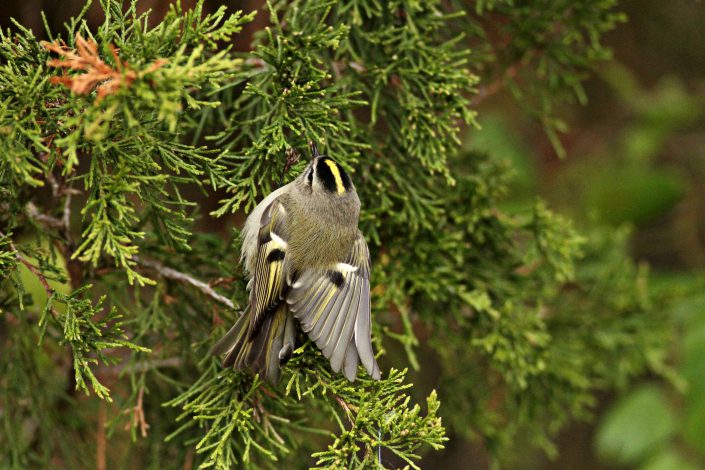
Golden-crowned kinglet

Youth second place winner Kayleigh Young.
Golden-crowned kinglet, youth second place winner Kayleigh Young.

Kayleigh was happy to share more about her image with us! She said, “after placing third in CWF’s 2015 Species on the Edge 2.0 Multimedia Contest, I was invited to join a birding trip on which I took this picture. I’ve always loved photographing wildlife, because I absolutely love nature, hiking, and the outdoors. I don’t think I can choose a single favorite species because I truly do love all animals; if I had to, I would say a fox maybe.”


Howie Williams: Adult Photographer
Oceanville, New Jersey
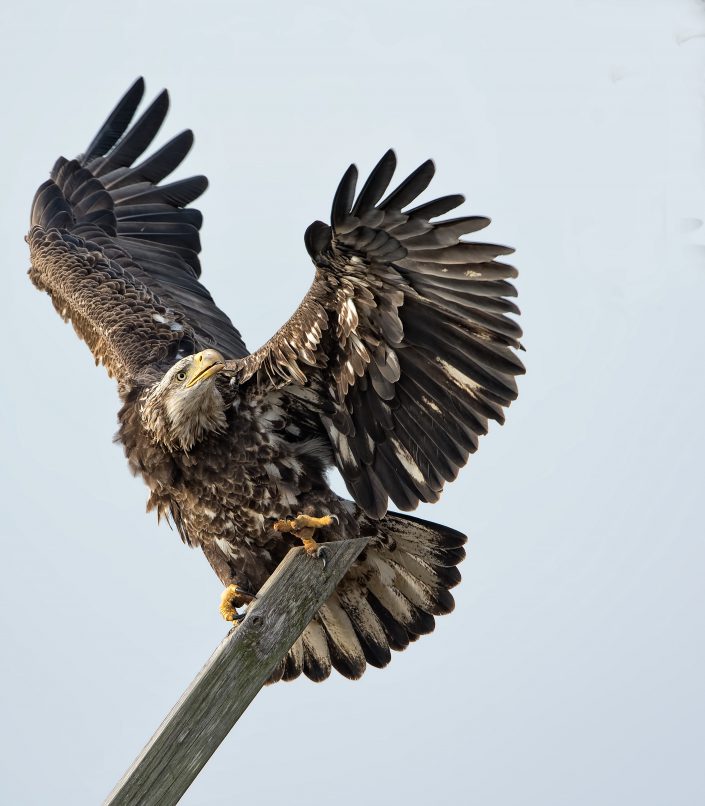
Mobbed Eagle

Mobbed eagle, adult second place winner Howie Williams.

Howie Williams has been photographing nature, especially raptors, for over 8 years. Peregrine falcons are his favorite bird (because of their raw speed), followed by ospreys, and eagles are a close third. Howie was hooked on photography after watching an osprey family at Edwin B. Forsythe National Wildlife Refuge (NWR) several years ago. He watched the chicks grow from when they were two weeks old to their first flight!


Howie frequents Forsythe NWR, which is where his winning photograph was taken. A juvenile eagle was sitting on an osprey nest platform. Howie heard a screech and a yell, looked up and saw another juvenile eagle fly in and land on the platform too. He took the above photograph at that moment! Howie couldn’t get both eagles in the frame. In the original shot, you can see just the talons from the other eagle, but he cropped them out for the image he submitted for our contest.


Howie is retired and spends five days a week photographing raptors. He often posts his photographs in the “visitor post” section of our Facebook page. Howie told CWF, “what’s the point of taking pictures without sharing them with people? Where’s the fun in that?”


Stay tuned as we announce the second place winners of the “For the Love of Wildlife” Photo Contest over the next few days!


Lindsay McNamara is the Communications Manager for Conserve Wildlife Foundation of New Jersey.
Photos from the Field: Red Bat, Brown Bat, Flying Squirrel!

Update on the Second Year of CWF’s Northern Long-eared Bat Study

by Lindsay McNamara, Communications Manager

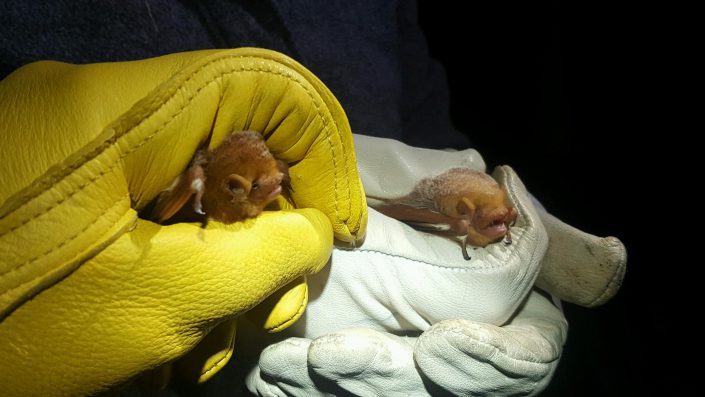
Female (right) and male (left) eastern red bats after being removed from the same net. Photo by MacKenzie Hall.

In early June, CWF, in partnership with NJ Division of Fish and Wildlife, began the second year of the Northern long-eared bat mist netting and radio telemetry study. The team will be focusing efforts in Southern and Coastal New Jersey this year. The goal of the mist netting and radio telemetry project to learn more about the summer distribution and habitat selection of the federally listed Northern long-eared bat; an important project that can shed light on a species we know all too little about.


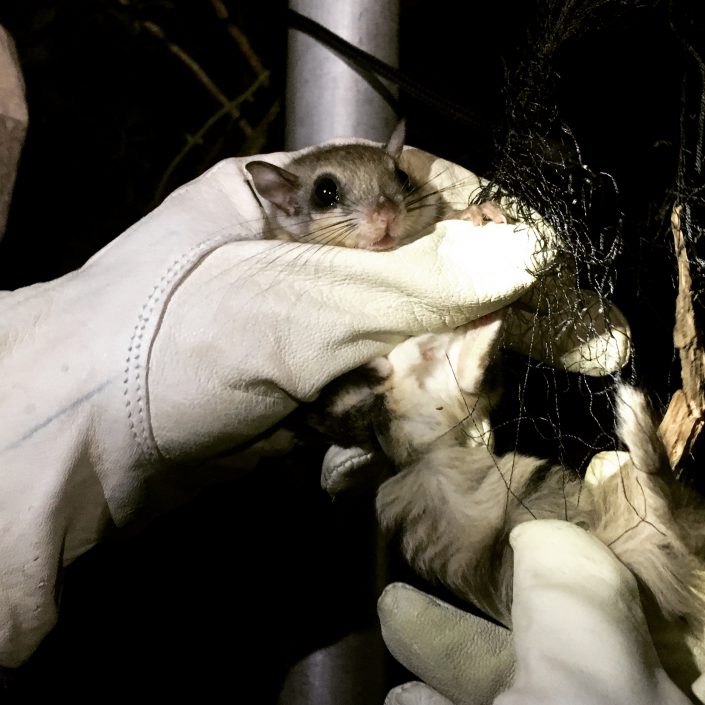
To date, the team has completed its second week of mist netting. So far, our team has caught 6 eastern red bats, 3 big brown bats and accidentally caught 2 flying squirrels in two different sites in southern New Jersey. Though a myotis bat has not been caught yet, the team did get acoustic detection of a tricolored bat (Perimyotis subflavus) foraging near the net site in Colliers Mills Wildlife Management Area in Jackson, New Jersey!

IMG_1210
Flying squirrel being removed from a mist net. Photo by Stephanie Feigin.

Stay tuned for more updates as the season progresses!


Learn more:


Lindsay McNamara is the Communications Manager for Conserve Wildlife Foundation of New Jersey.
“For the Love of Wildlife” Photo Contest: Third Place Winners

Congratulations, Edana Lobsco and Matthew Sullivan!

by Lindsay McNamara, Communications Manager

Earlier in 2016, Conserve Wildlife Foundation launched the “For the Love of Wildlife” Photo Contest. Our photography contest was meant to showcase the love for and need to protect the endangered and threatened wildlife that call New Jersey home. We encouraged youth and adult photographers across the Garden State to submit photographs in the following categories:

  • New Jersey’s Rarest Residents: Endangered, Threatened, and Special Concern Wildlife Species Only
  • The Garden State: New Jersey Landscapes
  • Experiencing Nature: People Enjoying the Outdoors
  • Wild New Jersey: All Animals in the Garden State

We were blown away by the amount of submissions we received! Over 1,470 entries were counted! New Jersey wildlife photographers, CWF board members and staff poured over the entries to choose our winners. Today, we are thrilled to announce both third place winners.


Edana Lobosco: Youth Photographer
Highland Lakes, New Jersey
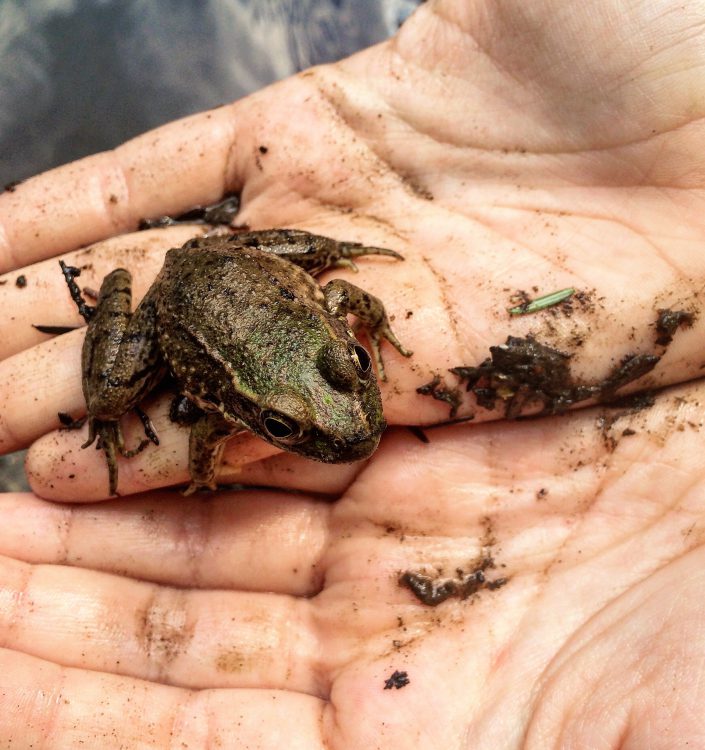
“Frog in Hands”

Youth Third Place Winner Edana Lobosco "Frog in Hands"
Youth Third Place Winner Edana Lobosco “Frog in Hands”

In an interview with CWF, Edana said, “Thank you so much for picking my photo and giving me a chance to show off my photography!! I took this photo on the Appalachian Trail in Vernon, New Jersey, my friend scooped him up and it was a perfect photo op! I’ve been taking nature photos since the first time I ever picked up a camera. It started with just my mom’s flowers in her garden, and now whenever I’m outside I never forget my camera. There’s so many beautiful creatures in New Jersey, I don’t know if I can choose a favorite! I love watching the painted turtles in my lake sunbathe, and I love the variety of wildflowers that grow around the Garden State!”


Matthew Sullivan: Adult Photographer
Lambertville, New Jersey
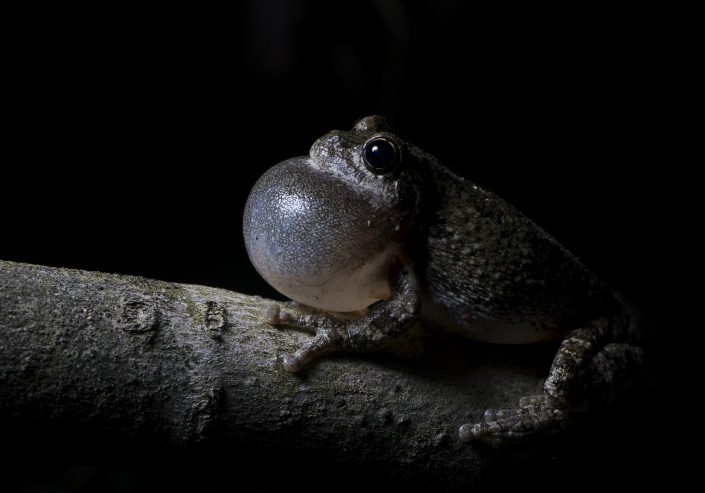
Northern Gray Treefrog

Third Place Winner Matthew Sullivan Northern Gray Treefrog

Matthew says, “Treefrog breeding season is one of my favorite times of year in New Jersey. I was out looking to get this shot of a Pine Barrens Treefrog instead, but none of the ones I found would call no matter how long I sat there. This gray treefrog though was more than willing to sing loudly for me, I just had to time it right and after a few tries, I got my shot. I’ve been seriously photographing nature for 6 or 7 years now, but have been outside looking for wildlife since I was old enough to walk. My personal favorite animals in New Jersey are the reptiles and amphibians, even more specifically, Pine Barrens Treefrogs, Timber Rattlesnakes, and Eastern Hognoses.”


Stay Tuned as we announce the second place winners of the “For the Love of Wildlife” Photo Contest over the next few days!


Lindsay McNamara is the Communications Manager for Conserve Wildlife Foundation of New Jersey.
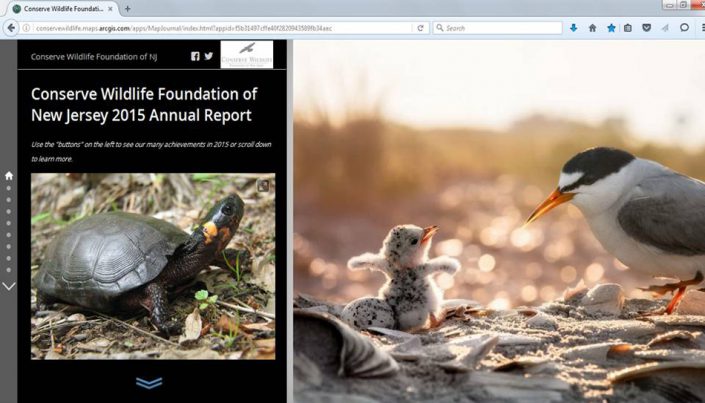
Conserve Wildlife Foundation of New Jersey “2015 Annual Report” Released

CWF Releases its Second Annual Report Using a Story Map Format:

2015 Annual Report


Technology has proven to be vital to Conserve Wildlife Foundation’s work protecting rare wildlife species over the years. Our biologists depend greatly on modern technologies to band, track, and share online the journeys of wildlife. Our webcams broadcast the most intimate behaviors of nesting birds and bats across the web. And we seek out ever-evolving communications technologies to spread the word about the inspiring stories of wildlife, from social media and infographs to e-books and Story Maps. These technologies offer newfound abilities to share complex data on multiple levels, while still incorporating the awe-inspiring photography and videos that bring wildlife’s stories to life.

Conserve Wildlife Foundation of New Jersey is excited to offer our 2015 Annual Report in a unique format that utilizes one of those technologies – Story Maps. In the past year, we have explored the lives of seals, eagles, and freshwater mussels with Story Maps – and the annual report allows all of our projects to be highlighted in this interactive format as well.

2015 Conserve Wildlife Foundation Annual Report.

Visit the multiple pages within this Story Map to learn about Conserve Wildlife Foundation’s many projects and partnerships in 2015, and the imperiled wildlife species in need of our help. Find examples of the innovative and dedicated leadership of our biologists and volunteers. And take an online journey across the state to learn how our projects made a difference in all corners of New Jersey in 2015 – a great year for wildlife in the Garden State!


A Tribute to Elmer Clegg, Eagle Project Volunteer

Loyal Eagle Project Volunteer Contributes to Conservation for over Two Decades

by Dr. Larry Niles, LJ Niles Associates LLC

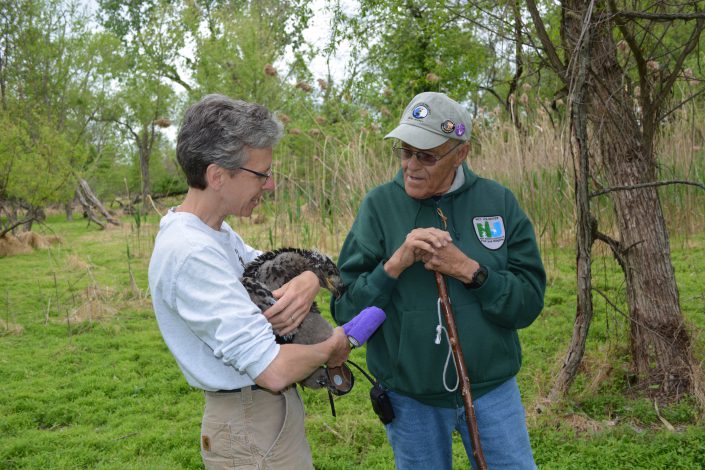
Dr. Erica Miller and Elmer Clegg.

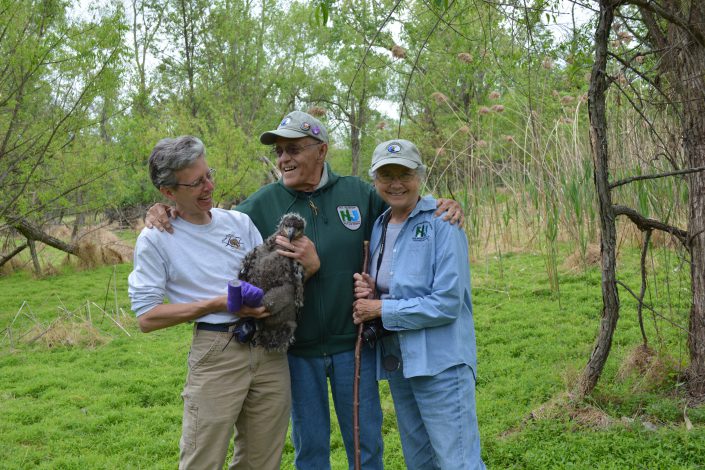
In the early days of the Bald Eagle project, when we really didn’t know whether the species could be restored back to New Jersey, there were a few people that offered their help without reservation to help the birds. Elmer Clegg and his wife Bunny were two and among the most dedicated. Elmer died May 20th at 79 years old. He was a loyal eagle volunteer for more than two decades.


To understand Elmer and Bunny’s contribution its important to remember the circumstances in which the eagles found themselves. The historic population of eagles, about 22 in 1950 but probably much higher in history, had been whittled down to just one unproductive pair by 1981. Biologists at the newly formed Endangered Species Program, including me, worked hard to restore the Delaware Bayshore population with new projects, like hacking young birds into the wild. By the early 2000’s, we had new nests but in places that had not known eagles for decades. In many places they were unwelcome because they thwarted sprawl development or short sighted resource use. They had to be defended, but then we couldn’t afford staff.

Dr. Erica Miller and Elmer and Bunny Clegg.

Into that breach stood Elmer and Bunny and others like them, John and Sheryl Healy and Red and Mary Jane Horner. They were stalwart defenders of wildlife that brooked no insult to the birds by watching the nest throughout the nesting period until the young birds fledged. It was rewarding but difficult work trying to persuade farmers, businessmen, irate suburbanites and many others that the eagles deserved to be where they were. A few times our conservation officers had to step in, or DEP had to drop the regulatory hammer, but mostly it was the calm persuasion of people, like Elmer, who’s true love for these birds spoke convincingly to those against the bird.


Elmer helped me understand that the future of wildlife doesn’t lie in the agencies or their staff, but in the hearts of people who care for wildlife. People like Elmer deserve to return to this earth as the species they loved so much.


Dr. Larry Niles has led conservation efforts for over 30 years.

Thank You, Shorebird Stewards!

CWF’s Shorebird Stewards Protect Delaware Bay Shorebirds and Educate the Public

by Larissa Smith, wildlife biologist

Shorebirds at Reed's Beach @ Bob Bocci
Shorebirds at Reed’s Beach Photo by Bob Bocci

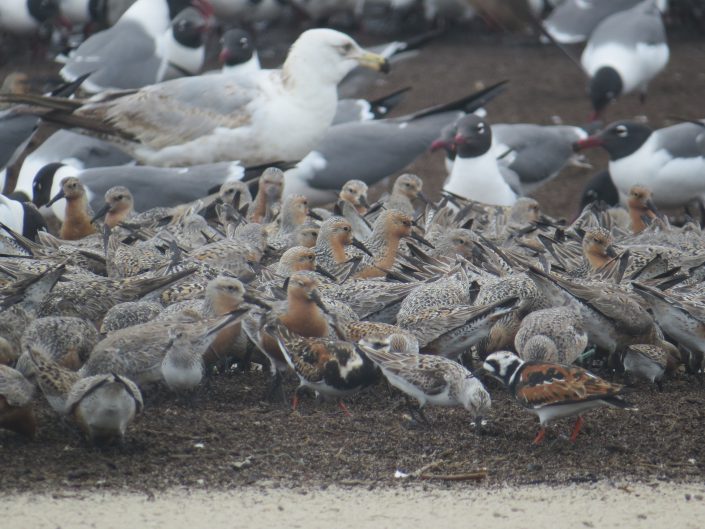
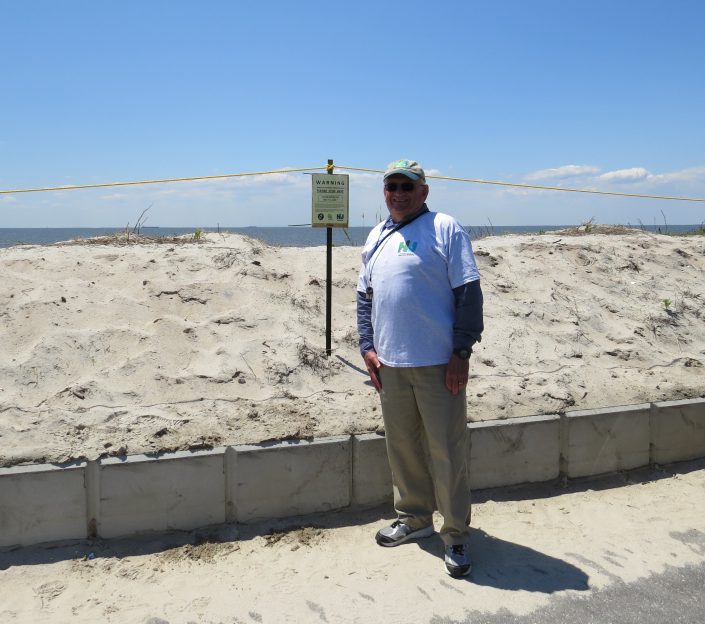
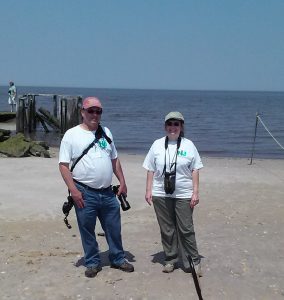
This shorebird season, twenty-one stewards helped to patrol the closed shorebird beaches in Cape May and Cumberland Counties. Stewards not only make sure that no one is entering the closed areas but also educate beach goers about the shorebirds and horseshoe crabs.

Thank you to all Shorebird Stewards!

Steward Bob Bocci at Fortescue @M. Tribulski
Steward Bob Bocci at Fortescue Photo by M. Tribulski
Stewards Dan & Cheryl Alexander at Cook's Beach
Stewards Dan & Cheryl Alexander at Cook’s Beach

Learn More:


Larissa Smith is the volunteer manager/wildlife biologist for Conserve Wildlife Foundation of New Jersey.
The Real Value of Horseshoe Crabs

New Jersey’s Hidden Coast – Episode 2

by Lindsay McNamara, Communications Manager

Horseshoe crabs may be one of the most unusual animals in the world, but they’re also one of the most extraordinary. They’ve been around for hundreds of millions of years, and we’re only now starting to understand just how important they are – not just to the natural world, but also to the world of medicine. Discover the real value of horseshoe crabs, found throughout New Jersey’s Hidden Coast – the Delaware Bayshore.


A new episode of our video series “New Jersey’s Hidden Coast” will air every two weeks throughout the summer! Catch a glimpse of the bay, the horseshoe crab at the center of the bay’s system, and the incredible relationship between horseshoe crabs and migratory birds, like the red knot. We will reveal the real value of horseshoe crabs, the challenges to the ecosystem, and the potential for a thriving regional economy along the Bayshore. We will show Hurricane Sandy as a catalyst for decisive action and the work being done to rebuild the area for both people and wildlife.


Over the next several weeks, we will explore the use of “living shorelines” instead of bulkheads and the central importance of marshes to the marine ecosystem. We will discover the on-the-ground, grassroots efforts of the community to build oyster reefs alongside veterans. And we will examine the future of the Bay and the work that needs to be done to preserve our conservation successes thus far.


Discover Delaware Bay:


Lindsay McNamara is the Communications Manager for Conserve Wildlife Foundation of New Jersey.