The Pitter-Patter of Tiny Plover Feet!

An update on the 2015 Piping Plover Chick Mortality study

By: Emily Heiser, Biological Assistant


Summer is once again flying by and we find ourselves more than halfway through the beach nesting bird season. New Jersey’s piping plovers are almost done incubating their nests and most already have chicks running around!
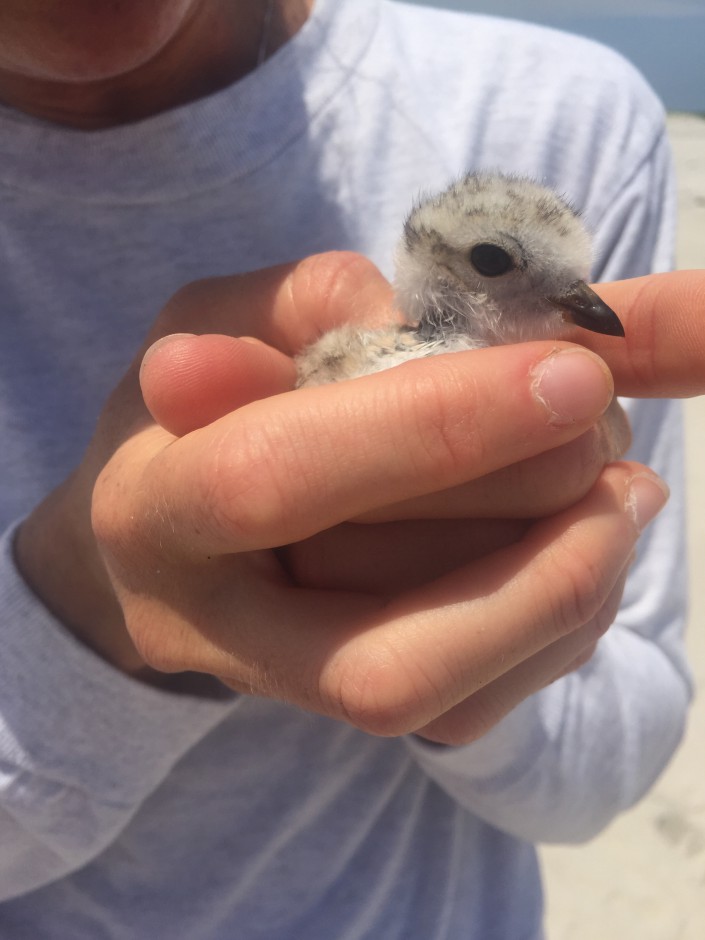
 

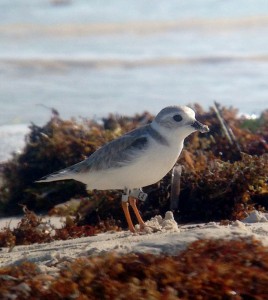
Two and a half week old piping plover chick, in hand for mid development "check-up" on weight and wing growth.
Two and a half week old piping plover chick, in hand for mid development “check-up” on weight and wing growth.

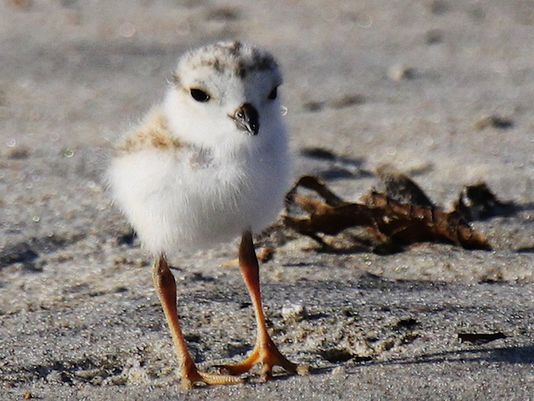
I would argue that there is nothing cuter than a piping plover chick. Covered in downy feathers, they simply look like little cotton balls with toothpicks for legs. Piping plover chicks are precocial, which means they hatch in an advanced state and are able to feed themselves almost immediately. The adults stay with their young to protect them from predators until they are able to fly, which takes about 25-35 days.


New Jersey plovers have a very difficult time getting their chicks to that 25-day mark. Unfortunately, chicks perish for various reasons. Determining the causes of chick loss in is the main driver behind the New Jersey piping plover chick mortality study being conducted by the State University of New York – College of Environmental Science and Forestry this year.
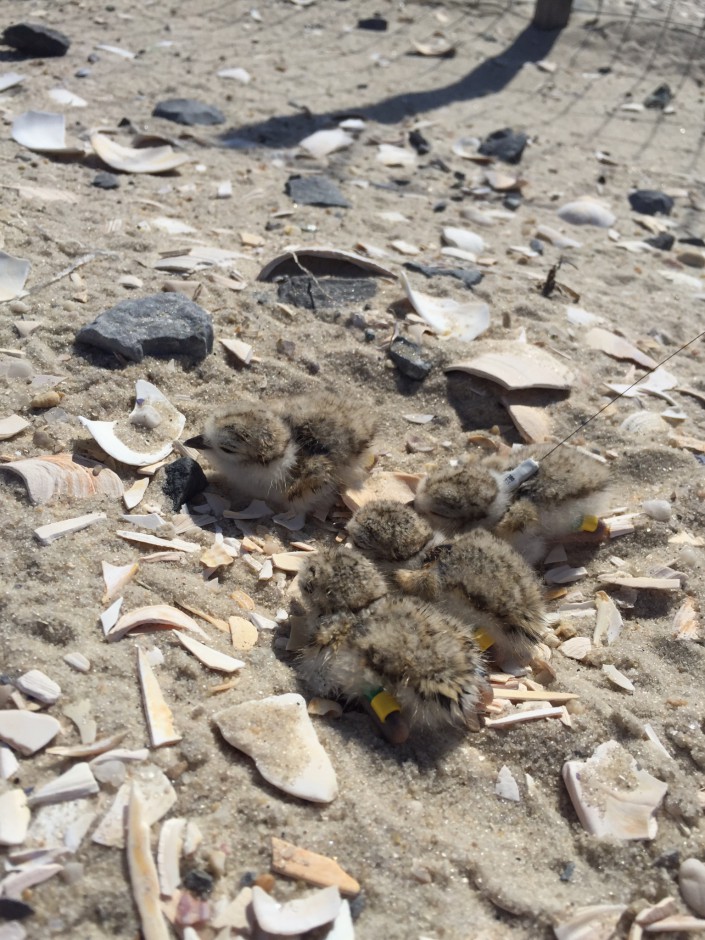
 

Just hatched piping plover chicks sporting their color bands, which will help researchers track them.


Michelle Stantial and I have been visiting sites up and down the coast to check on the status of the study broods. To date, we have been able to band 46 chicks from 14 different broods.


The small color bands that we place on the upper legs of the chicks help us to identify each chick as an individual and also helps us know which individual was lost. Every five to seven days we recapture the chicks to weigh and measure them. We hope to correlate chick growth to habitat quality and likelihood of survival. Some exciting preliminary observations have already been made between the sites!


Plover chicks all hatch at around the same weight. During incubation, the embryo gets all of its food from an egg sac. The chicks weigh around six to seven grams when they hatch. Over the next five days, growth rates begin to spike.
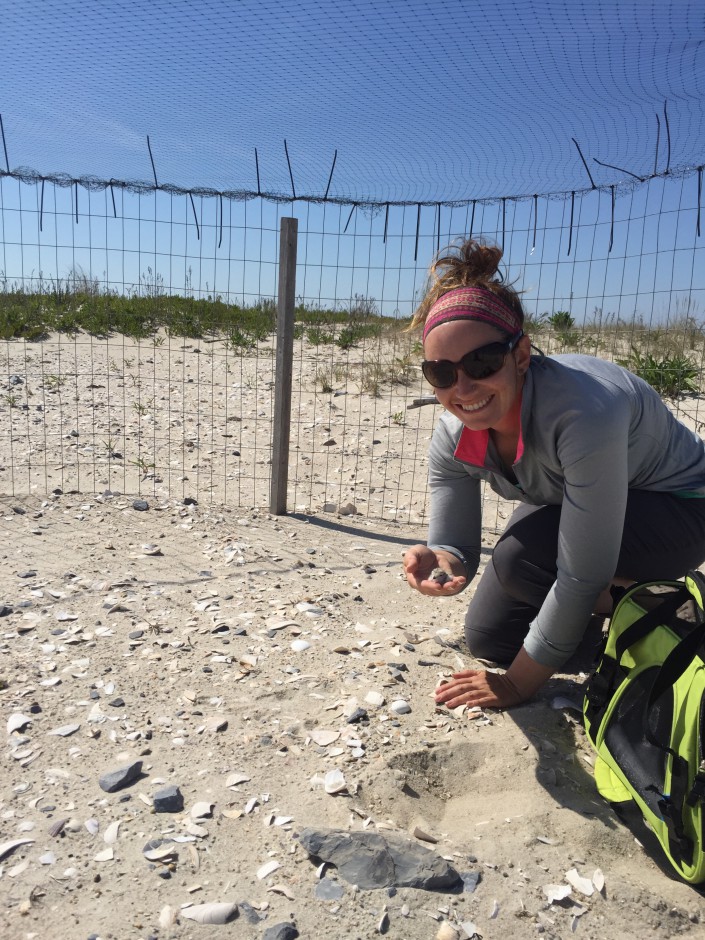
CWF Biological Assistant Emily Heiser places newly hatched piping plover chicks back into nest bowl after banding.


By simply looking at some of the chick weights, you can determine where foraging quality is likely going to be greatest. Lower weights could also be attributed to human disturbance levels. Chicks disturbed on a regular basis, may not be able to spend as much time foraging as chicks that are not disturbed as often.


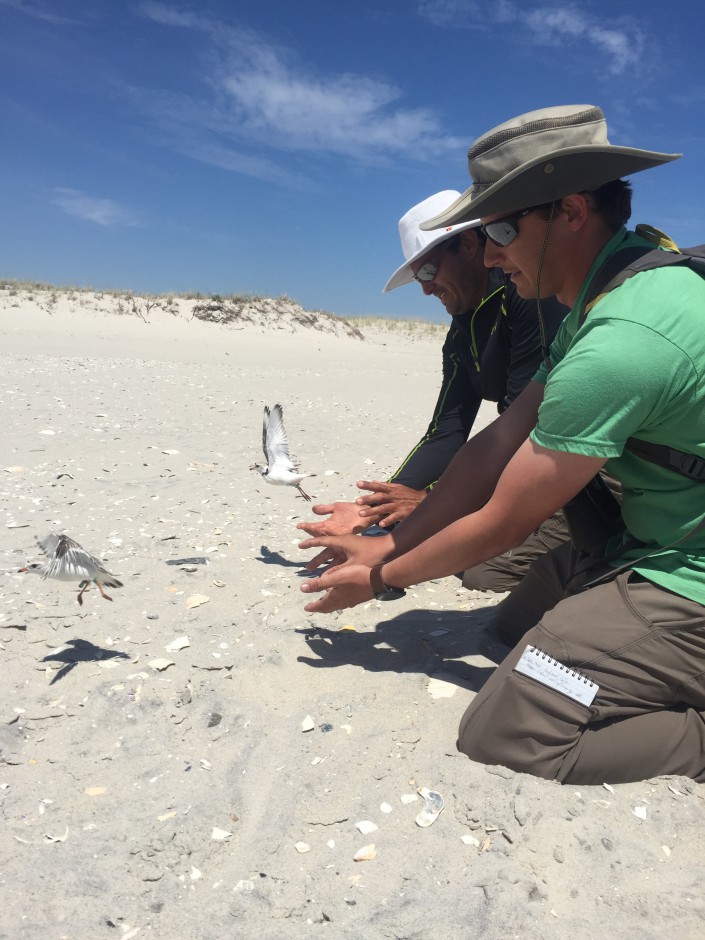
One of the true highlights of this season has been overseeing so many chicks across all of our study sites! Twenty-seven of our study chicks have made it to fledge so far. There is nothing quite so satisfying as watching them spread their wings for the first time. It never ceases to bring a smile to my face as their tiny feet pitter-patter across the sand (and my heart), their perfect wings open up, and suddenly…lift off!


There is still some time left in the season for some more tiny miracles to happen on our beaches, so keep your fingers crossed and send them lots of luck as they finish up their breeding season here in New Jersey!


Learn more:


Emily Heiser is the Biological Assistant for Conserve Wildlife Foundation of New Jersey.
 

Researching Beach Nesting Birds at Edwin B. Forsythe National Wildlife Refuge

Conserve Wildlife Foundation Partners with National Wildlife Refuge to Collect Data on Beach Nesting Birds

Posted by: Lindsay McNamara, Communications Manager


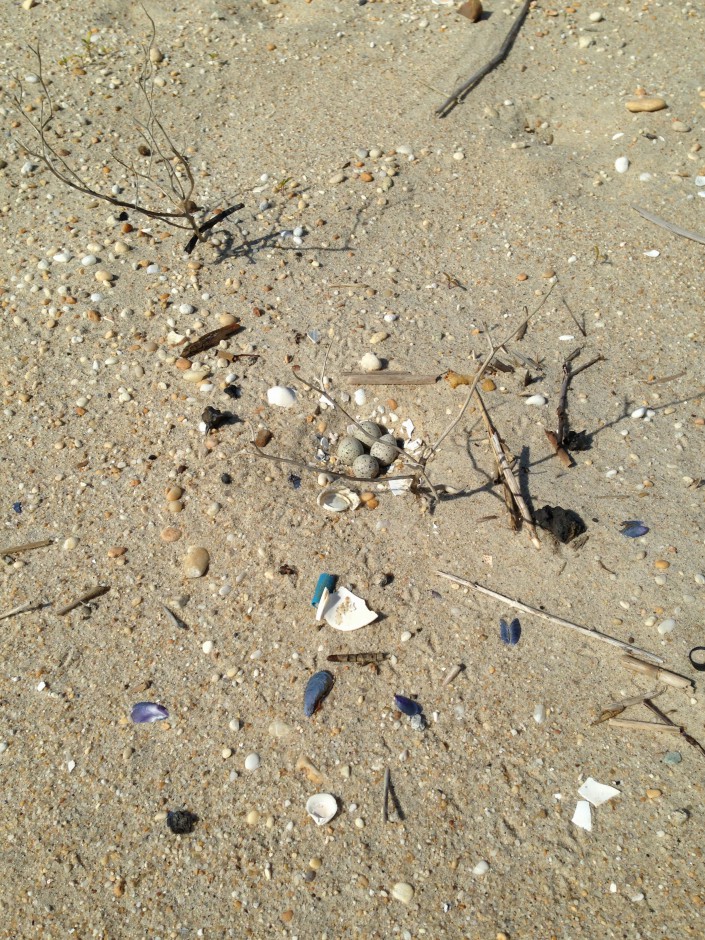
Piping Plover Nest
Piping Plover Nest

Did you know barrier island beach makes up approximately 2% of the Edwin B. Forsythe National Wildlife Refuge? This area is the most productive for beach nesting birds. The federally threatened piping plover and other species such as least tern, black skimmer, and a species of special concern, the American oystercatcher, nest on Holgate Beach. The refuge closes the Holgate unit from April 1st to September 1st every year to provide undisturbed nesting habitat for these important species.


Not only is it important to protect nesting habitat for the birds, but it is also important to provide education opportunities to the public. Each summer, the refuge relies on volunteers during the summer months to talk to the public about the beach closure and bird management, and answer any general questions about Forsythe Refuge.


This year, Conserve Wildlife Foundation of New Jersey partnered with the refuge to assist in the collection of nesting data. “In the past, refuge staff has done all the beach nesting bird monitoring,” said Refuge Manager Virginia Rettig. “This year we are very excited to be working with our partners to monitor the population status of these birds. The work they are doing, combined with the data they collect, will improve our understanding of beach nesting birds on Forsythe Refuge.”


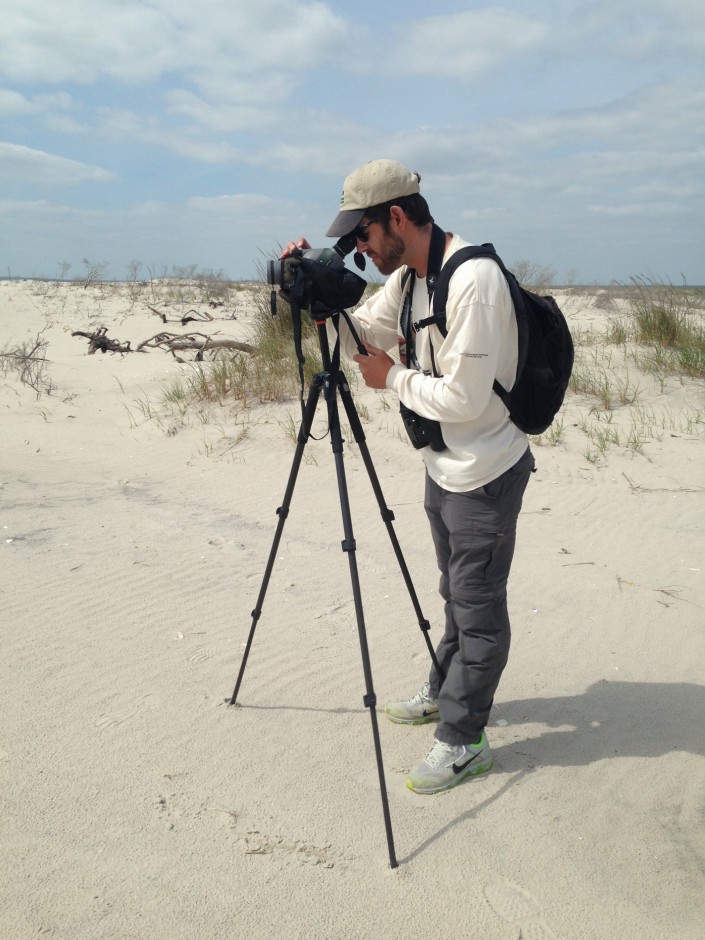
CWF Field Technician Jesse Amesbury tracking piping plovers at Holgate with his scope.

“Holgate provides highly suitable undisturbed natural habitat for at-risk beach nesting birds, especially piping plover – a rarity along the otherwise highly developed and recreated New Jersey Coast,” said Todd Pover, CWF Beach Nesting Bird Project Manager. “Maximizing productivity at this site is a high priority for regional and range-wide recovery efforts.”


Edwin B. Forsythe National Wildlife Refuge protects more than 47,000 acres of sensitive wetlands, marshes, and coastal habitats along the New Jersey shore. It is one of the most important habitats for migrating waterfowl and shorebirds east of the Mississippi River.

Learn more:

Conserve Wildlife Foundation’s Beach Nesting Bird Project
Edwin B. Forsythe National Wildlife Refuge


Lindsay McNamara is the Communications Manager for Conserve Wildlife Foundation of New Jersey.
Pondering the Plovers

Researching the Causes of Chick Loss in Piping Plovers

By: Emily Heiser, Biological Assistant

Double the fun! We were able to capture both birds in one try at this nest!

I often find myself contemplating the lives of Piping Plovers. What happened to that nest? Why did they choose that exact spot to lay their eggs? Why did those chicks disappear? Where will they go for the winter? As wildlife biologists and conservationists who spend hours and hours each summer watching them, we tend to question every aspect of the Piping Plover’s life cycle. These questions also push us to work harder and do more for this species, which is so imperiled throughout its range.


This summer, thanks to the extraordinary support of the US Fish and Wildlife Service, the New Jersey Division of Fish and Wildlife, and along with the blessings of Conserve Wildlife Foundations’s own Beach Nesting Bird Project Manager Todd Pover, the State University of New York College of Environmental Science and Forestry (SUNY-ESF) received the green light to proceed with a chick mortality study of Piping Plovers along New Jersey’s coast.


Funded by the National Fish and Wildlife Foundation, SUNY-ESF’s Jonathan Cohen and Michelle Stantial have teamed up once again to make some plover magic happen here in New Jersey. Having had the great privilege of working for this dynamic duo in the past, I am over the moon to be able to assist them once again.


Nest camera being readied so it can keep a watchful eye on the nest for predators at all times.

The big question of this study is simple on the surface: what are the causes of chick mortality? The methods of finding those answers are much more complex. On April 15th, we kicked off another fantastic field season collecting data from Barnegat Light to Cape May. In order to determine the causes of chick loss we first need to locate nests, determine nest fate, track the adults, and then finally track the chicks. We hit the ground running and so far there are 26 active nests between all of our study sites! One of the most interesting parts of this study pertains to the cameras we are placing at a number of nests.


Our high tech plovers are now enjoying a 24/7 monitor that never bothers them, but is always watching. On more occasions than I can count, I have come across a nest that was lost in the past 10-24 hours.


We make our best guess as to what happened based on the evidence…Was it a flood? An avian predator? A mammalian predator? What happened?! It’s frustrating, but now we can know with certainty and we can learn much more about the threats Piping Plovers face on their breeding grounds.

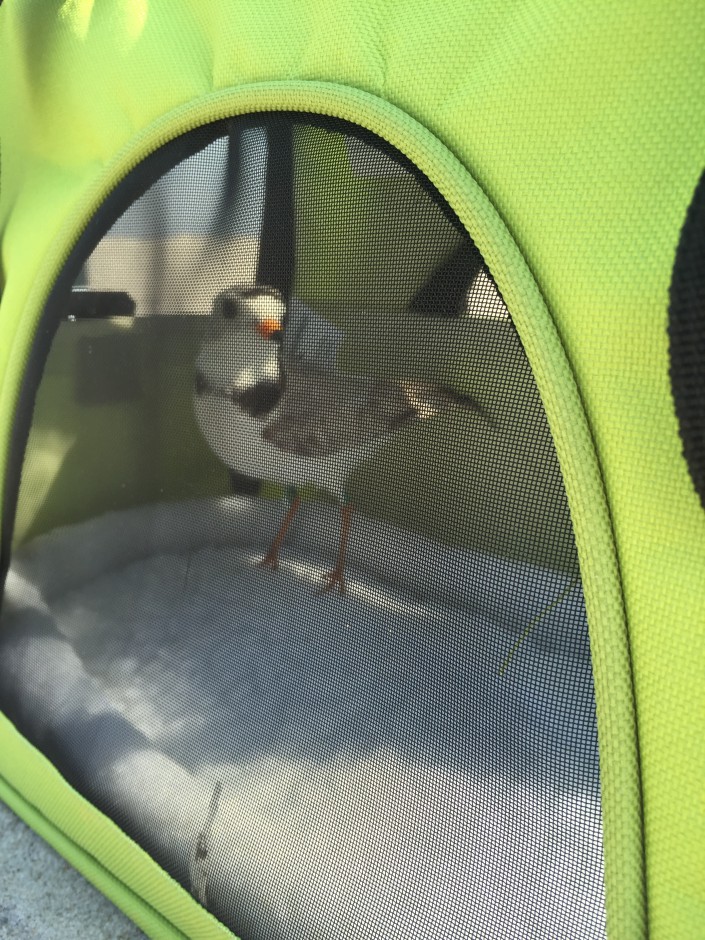
A male piping plover in "holding pen" awaiting his debut sporting his new bands and transmitter to be used for tracking.
A male piping plover in “holding pen” awaiting his debut sporting his new bands and transmitter to be used for tracking.


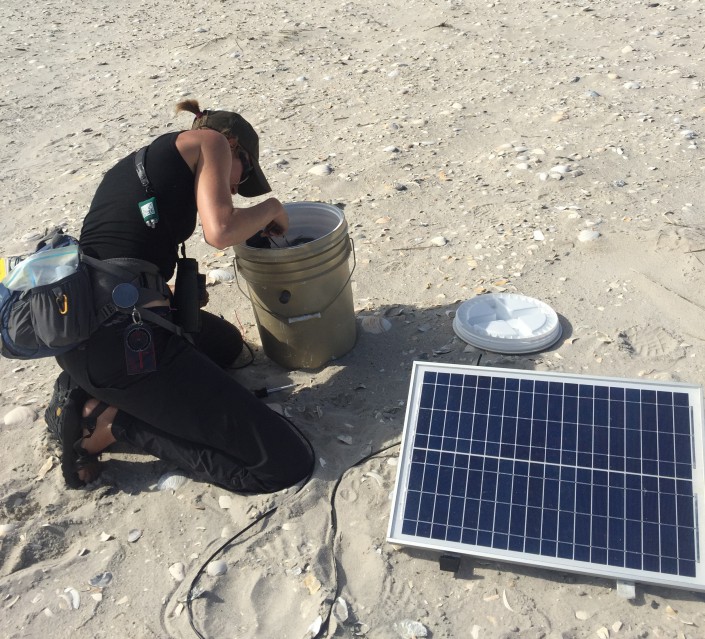
Another important component of this project revolves around the banding and nano-tagging the adults. It is essential to the study that we are able to determine survival and movement of the adults. So far we have been able to band 24 adults, with 10 of those also receiving a transmitter. There are two telemetry towers between our study sites. These towers are able to pick up multiple radio-tagged birds and track of them day and night.


Interestingly, in a previous study developed by SUNY-ESF adult female Piping Plovers spent much of the evening away from the nest and leave the males to do all of the nocturnal incubating! The most advantageous part of these towers will, in theory, be able to tell us what happens to the chicks. Each chick will receive a tiny transmitter and as depressing as it may seem, those towers can tell us the speed and trajectory a chick was carried away from the site by a predator.


My vote was to give the chicks an iPhone and shoot me a text when they were in danger, but that doesn’t seem to be possible…yet.


I am not sure there will ever come a day when I am not pondering the lives of Piping Plovers, but I believe that science and research will continue to supply more answers. I believe that this particular study will contribute to a greater understanding of these birds, and on a personal level, I believe it will enable me to become a better steward and manager of all New Jersey’s beach nesting birds.


We look forward to bringing spectacular photos and updates whenever we can, so stayed tuned for more pondering of plovers!

Learn more:

Emily Heiser is the Biological Assistant for Conserve Wildlife Foundation of New Jersey.
 

Traveling the Flyway in Search of Piping Plovers

CWF BIOLOGIST HEADS NORTH TO CANADA ON CONSERVATION MISSION

By: Todd Pover, Beach Nesting Bird Project Manager


Grey Flag EP, a marked Canadian piping plover  and one of the stars of the weekend.
Grey Flag EP, a marked Canadian piping plover and one of the stars of the weekend.


My trip to Canada this past weekend, completed a circle of sorts for me. Over the course of my two decade career studying and protecting Atlantic Coast piping plovers, I have traveled to nearly all of the breeding states in the U.S. More recently, I have expanded my work to their wintering grounds, visiting states in the southeast U.S. and extensively in the Bahamas. But there was one big gap in my piping plover conservation work beyond New Jersey – Atlantic Canada, which, by itself represents an entire recovery unit in the federal recovery plan.

 
“So you chase plovers around the world,” someone said to me in Canada this weekend. Well, not for the sake of just seeing them in different locations. What I am “chasing” is knowledge and partners. I am seeking information about to how we can improve our breeding program in New Jersey by observing what works (and doesn’t work) in other parts of the range and developing partners to help further conservation across the range.

 
The story of how I finally ended up in Canada illustrates just how connected piping plover conservation is on an international scale. This past winter, CWF’s Stephanie Egger and I resighted a number of marked piping plovers in the Bahamas. Among those were plovers with engraved flags indicating they bred in Atlantic Canada, marked as part of a long-term research project to try to determine survival, site fidelity, and wintering distribution, among other things. One of the plovers we observed was Grey E4, seen on a small quiet beach on Spanish Wells, Eleuthera. I dutifully reported the band the same evening we observed it and in a few hours the researchers responded it was banded as a chick the previous season in Liverpool, Nova Scotia. When I returned from field work the next day, I had an inquiry about the sighting from a small newspaper back in Nova Scotia, an unusual occurrence, especially so soon after reporting the band. A nice article resulted, a little excitement was generated, and that was the end of story for us on that banded bird.

 
At least it would normally be the end of the story. Over the course of the next few days and then weeks, I noticed that White Point Beach Resort, the breeding site where “E4” originated from, was frequently posting about the Bahamas resighting and in general about their plovers. After sleeping on it awhile, I finally decided to reach out to them; my curiosity was peeked about what was driving their enthusiasm. What I found out was that they genuinely love their plovers (of course, they do), but they are also interested in marrying conservation and commerce. Instead of it being an adversarial situation as often happens, a fear that having an endangered species would limit activities on their beach, the resort viewed the plovers as “value added” – something their guests would be interested in and maybe even come to the resort to experience.

The beach at White Point Beach Resort, a piping plover breeding site in Atlantic Canada, and host of International Piping Plover Day
The beach at White Point Beach Resort, a piping plover breeding site in Atlantic Canada, and host of International Piping Plover Day.

 
And they recognized the bands as a way to tell and sell the story. I couldn’t agree more, the bands provide a means to promote piping plover conservation on a personal level through storytelling. Piping plover banding projects are never undertaken lightly; trapping and marking birds involves some risk, and the prime motive for banding always has to be in the name of research to aid management and recovery. But once the birds are marked, we have an opportunity to use them for other purposes as well.


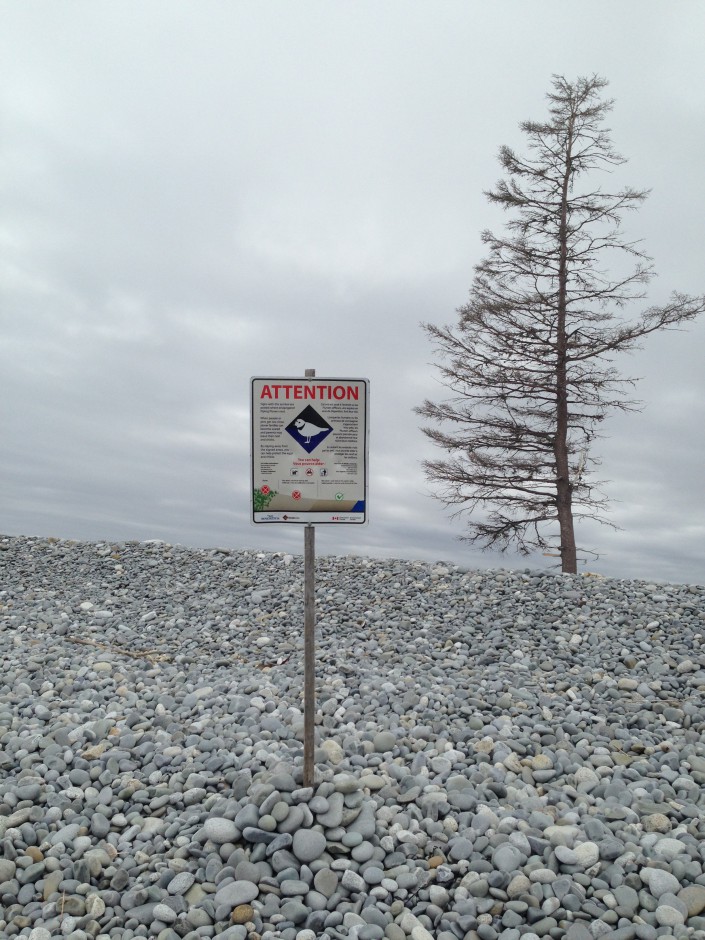
Post and sign designating a piping plover breeding sites in Canada.

Having instantly bonded over our shared connection to E4, one thing led to another, and we decided to try to partner…in Canada, no less. It started small, but White Point Beach Resort reached out to the local piping plover community and research network, and eventually a whole weekend of activities was planned. May 3 was declared International Piping Plover Day and billed as a day for “banding together to celebrate partnerships.” Working in coordination with Bird Studies Canada, which oversees and implements the piping conservation and research projects in this region, an informative program, including updates on the Canadian banding project and breeding success in Nova Scotia, was presented as part of the weekend.


My role was to tell a little more of E4’s “story” and provide a big picture perspective that included the wintering and migratory portions of the piping plover’s life-cycle. Other highlights for attendees (and me) was a chance to view White Point’s resident pair of piping plovers, including Grey EP, who had just returned to the site to nest once again this year and is the “father” of E4. We even posted and fenced the nesting area of the resort’s beach.


Now that I have completed my travels across the piping plover’s entire Atlantic coast range, I have a flyway scale perspective of the conservation efforts and the challenges we all share. Ironically, the wider my view has become, the more I realize that in the end it comes back to the local view. Conservation works most effectively at the local level, the “stories” connect us on the local level, and we care most passionately about our local piping plovers. Another way of saying Think Globally, Act Locally.


It was an honor to be part of International Piping Plover Day in Nova Scotia this past weekend. I consider it something of a piping plover “diplomatic mission.” A special thanks to Donna Hatt and Wendy Coolen of White Point Beach Resort for organizing and hosting the event and to Sue Abbott of Bird Studies Canada for her coordination, as well as everything she does for piping plover conservation in Atlantic Canada.


Todd Pover is the Beach Nesting Bird Project Manager with Conserve Wildlife Foundation of New Jersey.
A Resilient Shoreline in Stone Harbor for Birds and People

Conservation Partners Collaborate to Improve Beach Habitat for Birds and Provide Flood Protection for Stone Harbor Residents

By: Lindsay McNamara, Communications Coordinator

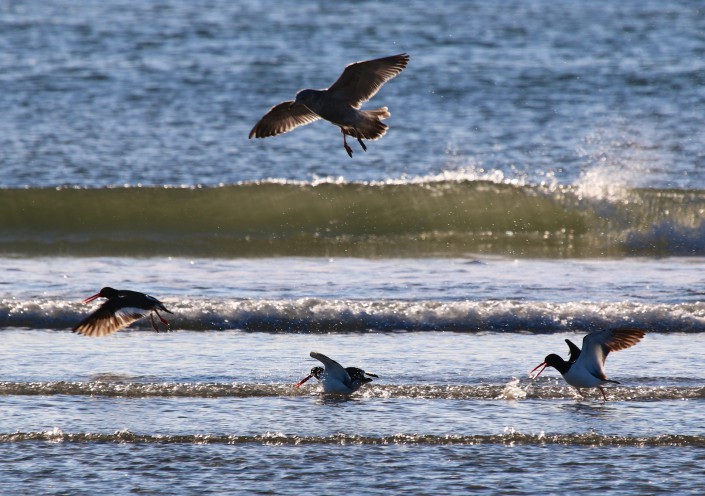
Oystercatchers © Dr. Larry Niles

Beach nesting birds and New Jerseyans who live along the coast both depend on a resilient shoreline — and plenty of sand.


This season, thanks to a grant from the National Fish and Wildlife Foundation (through their Hurricane Sandy Coastal Resiliency Grants Program), a team led by New Jersey Audubon worked with Conserve Wildlife Foundation of New Jersey, The Wetlands Institute, New Jersey Division of Environmental Protection, and the US Fish and Wildlife Service to make the beach community of Stone Harbor Point more resilient for birds and people alike.


Conserve Wildlife Foundation of New Jersey collaborated with New Jersey Audubon to improve beach habitat for Piping Plovers (endangered in New Jersey), American Oystercatchers and the colonially nesting Least Terns and Black Skimmers. Sand from the southernmost tip of the point was moved to create three areas of higher elevation. The new landscape is expected to benefit Red Knots, Semipalmated Sandpipers, Sanderlings, Semipalmated Plovers, Black-bellied Plovers and others.


Stone Harbor, a small beach town along the New Jersey shoreline will see added coastal resiliency benefits and flood protection due to this innovative project that combined the needs for shorebirds with the needs for shore residents. The Stone Harbor project also included the construction of a wide berm of sand near the beachfront parking lot at the far south end of the town. This aspect of the projects aims to increase flood protection for the residents on the developed area of the island.


Learn more about this project on New Jersey Audubon’s blog and in the ShoreNewsToday.com article “Working for the Birds.”


The National Fish and Wildlife Foundation (NFWF) is a non-profit organization created by Congress to preserve and restore our nation’s native wildlife species and habitats. NFWF is one of the largest funders of wildlife conservation in the world. They fund science-based projects and community-driven solutions.


Lindsay McNamara is the Communications Coordinator for Conserve Wildlife Foundation of New Jersey.
Conserve Wildlife Foundation of New Jersey “2014 Annual Report” Released

CWF Releases its First Annual Report Ever Using a Story Map Format: “2014 Annual Report

By David Wheeler, Executive Director

Technology has proven to be vital to Conserve Wildlife Foundation’s work protecting rare wildlife species over the years. Our biologists depend greatly on modern technologies to band, track, and share online the journeys of wildlife. Our webcams broadcast the most intimate behaviors of nesting birds and bats across the web. And we seek out ever-evolving communications technologies to spread the word about the inspiring stories of wildlife, from social media and infographs to e-books and Story Maps. These technologies offer newfound abilities to share complex data on multiple levels, while still incorporating the awe-inspiring photography and videos that bring wildlife’s stories to life.

Conserve Wildlife Foundation of New Jersey is excited to offer our 2014 Annual Report in a unique format that utilizes one of those technologies – Story Maps. In the past year, we have explored the wonders of American oystercatchers with our first Story Map – and now the annual report allows all of our projects to be highlighted in this interactive format.

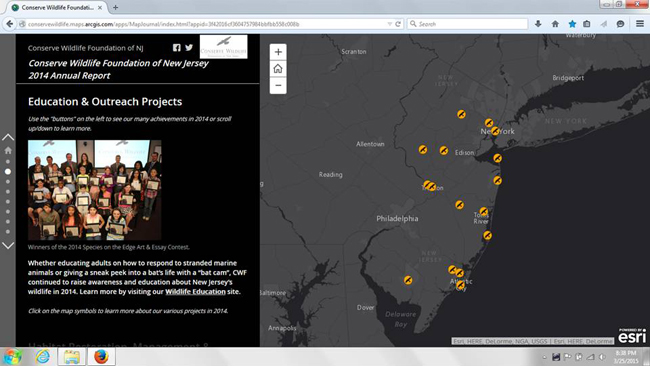
A screen capture of one of the pages of the CWF 2014 Annual Report Story Map.

Visit the multiple pages within this Story Map to learn about Conserve Wildlife Foundation’s many projects and partnerships in 2014, and the imperiled wildlife species in need of our help. Find examples of the innovative and dedicated leadership of our biologists and volunteers. And take an online journey across the state to learn how our projects made a difference in all corners of New Jersey in 2014 – a great year for wildlife in the Garden State!


PIPING PLOVER RESEARCHERS – THE NEXT GENERATION

CWFNJ AND MONMOUTH UNIVERSITY PARTNER IN THE BAHAMAS

By Todd Pover, Beach Nesting Bird Project Manager and Stephanie Egger, Wildlife Biologist

Monmouth University student digging the sediment cores on tidal flat in the Bahamas.
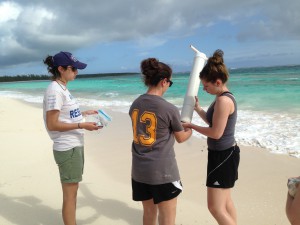
Monmouth University student using a pvc push core to collect sediments on a tidal flat in The Bahamas.

We totally shifted gears for the second half of our week here on Eleuthera, The Bahamas. Piping Plover surveys took a back seat as we focused on working with 20 students from Monmouth University (MU), who were taking part of in a two-week Tropical Island Ecology course during their winter break.

We settled into the Cape Eleuthera Institute, who hosted the students at their world class facilities for an intense (but fun) regimen of hands-on science research, typically marine based, but a Piping Plover unit was added for the MU students. It was particularly exciting to work with the MU students here in the Bahamas because back in New Jersey we have partnered with MU for over ten years on a beach nesting bird internship program during the summer months.

First up was an evening primer for the students on Piping Plovers, including a brief summary of our efforts in NJ on the breeding grounds and recent work by CWFNJ and others on the wintering grounds in the Bahamas. The next morning we were up early to kick off our trial research project; benthic macro-invertebrate sampling at Piping Plover wintering sites in the Bahamas to try to develop an inventory of their potential prey items, and eventually determine what constitutes a highly suitable foraging site. This was spurred, in part, by field observations of tidal flats that appear to be highly suitable, but have no piping plovers present, whereas similar adjacent flats are covered with shorebirds. Perhaps not all flats are created equal and prey availability is the key.

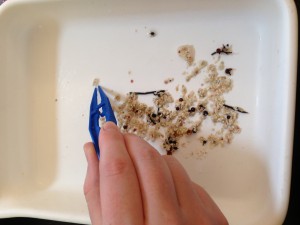
Students collecting and processing the sediment samples as part of research to assess foraging quality.
Students collecting and processing the sediment samples as part of the research to assess foraging quality.

For our field work with the students we chose two sites in Eleuthera where Piping Plovers have been observed; Savannah Sound, a classic low-tide flat in a sheltered area, and Winding Bay, an oceanfront, high-energy beach. The students extracted core sediment samples (20 cm deep) at each site along prescribed transects (10 samples per transect) for two consecutive days. Then it was back to the lab to sift the sand, sort the samples, and identify any invertebrates found. As part of the analysis, the students compared the species abundance and diversity between the two different sites, as well as between different transects within a site.

The results are yet to come and this was just a preliminary test of the methods and logistics involved. We were learning along with the students and while we were happy with the overall outcome, many questions were raised that will have to be addressed if we decide to develop a larger more robust study moving forward. In the meantime, the students got to learn a bit about Piping Plovers in the context of a research project, and inaugurate what we hope is another long-term partnership in the Bahamas.

Back in the lab to identify benthic macro-invertebrates from a Piping Plover foraging site in The Bahamas.

A special thanks to the staff at Cape Eleuthera Institute for their hospitality and for letting us be part of their innovative learning experience. Thanks to John Tiedemann and Pedram Daneshgar at Monmouth University for setting the wheels in motion and now helping us implement this partnership. And finally,  “shout-out” to Taylor Rodenberg for stepping up to assist us with the field work – Taylor was one of our MU interns in New Jersey last summer and happened to be one of the students visiting the Bahamas this winter, so she is part of a small group of lucky people to see (and work with) Piping Plovers on both their breeding and wintering grounds!

In Search Of Piping Plovers On Eleuthera

CWF RESEARCHERS EXPAND SURVEYS TO ANOTHER ISLAND IN THE BAHAMAS

By Todd Pover, Beach Nesting Bird Project Manager and Stephanie Egger, Wildlife Biologist

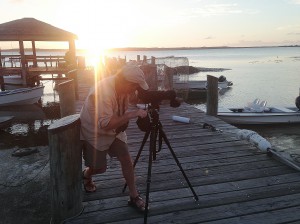
Todd Pover, CWFNJ Biologist,surveying for Piping Plovers during the last bits of daylight.
Todd Pover, CWF Biologist, surveying for Piping Plovers using the final minutes of daylight.

Our experience so far this week in Eleuthera is a reminder why we do so much pre-trip “recon” for our Bahamas Piping Plover Project. Prior to the trip, we poured over Google Earth maps to try to identify the most suitable habitat for plovers. We read (and reread) the report from the 2011 International Piping Plover Census, the last time any significant surveys were conducted here. Finally, we “huddled” with our partners from Monmouth University so they could help us with logistics, as they have a history of marine-based research here.

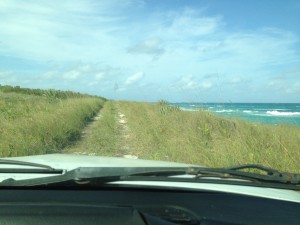
Without this preparation we would have been ill prepared, of course, but we still faced many challenges right out of the gate. First and foremost, Eleuthera is more than 100 miles long, with two coasts, so covering even a small portion of the island is difficult in a short period of time. Once we decided which sites were the top priority, we quickly found out that reaching those locations is difficult. There are few official signs to the shoreline on the Atlantic side along the one main “highway”, and many of the “roads” are difficult to traverse, even with a 4WD. A number of turnoffs ended as dead ends or too overgrown to continue.

Piping Plover "Gry E4" was banded as a chick at White Point Beach, in Southern Novia.  Scotia in June 2014. Resighted on Spanish Wells and the first time reported after the breeding season.
Piping Plover “Gry E4” was banded as a chick at White Point Beach, southern Nova Scotia in June 2014. Resighted on Spanish Wells and the first time reported after the breeding season.

It also quickly became apparent that Eleuthera’s rocky coast, especially along the western side is not nearly as suitable for piping plovers as we had experienced on earlier trips to Abaco and Grand Bahama. And some of the beaches on the Atlantic side were too narrow to likely support piping plovers. Not surprisingly, the initial day of surveys ended with a lot of lessons learned, but NO piping plovers.

Day Two we took an entirely different tack. We left our vehicle on the mainland and headed out on small ferries to two islands off the northern coast of Eleuthera; Spanish Wells, a residential community with a commercial lobster port and Harbor Island, a resort town known for its famous Pink Sands Beach. Our luck turned around, as we observed 20 piping plovers (with relative ease) including four that were marked with engraved flags that denoted they were Canadian breeders. This was one of the highlights of all our Bahamas trips to date.

We were also able to track the movement of 18 plovers from a high tide roost on the ocean side beach to a low tide flat on the other side of the island as the sun set. From what we learned on Abaco on previous trips to the Bahamas, this type of information is some of the most critical we can collect to help inform future surveys. We definitely earned our celebratory Kaliks that evening!

On the road to nowhere - locating piping plover sites on Eleuthera was a logistic challenge at times.
On the road to nowhere – locating piping plover sites on Eleuthera was a logistic challenge at times.

Our goals for the surveys this week are modest. We are trying to confirm some of the site information our colleagues Pat and Doris Leary gathered during the 2011 International Census, as well as add some additional sites to the survey inventory. We also are trying to visit high value sites, such as Savannah Sound, to determine which tide or portion of the tide is most productive for the surveys. With this information in hand, we hope to do our small part to help make the 2016 International Census next winter the most productive and accurate to date.

Piping Plovers and Researchers Return to The Bahamas

PROTECTING PIPING PLOVER HABITAT CRITICAL PART OF CONSERVE WILDLIFE FOUNDATION’S WORK

By: Todd Pover, Beach Nesting Bird Project Manager and Stephanie Egger, Wildlife Biologist

We talk quite a bit about “site fidelity” in connection with our beach nesting bird project. And for good reason, whether it be on the breeding or wintering grounds, these birds, like most wildlife, are strongly connected to specific places and types of habitats. Not just in the general sense; many piping plovers return to the same precise site year after year.

Aerial view of one of several hundred Bahamas islands and cays, with tidal flats, highly suitable piping plover habitat, visible stretching around the island.


We were reminded of this the last several days as we made our way around Abaco, The Bahamas, in search of wintering piping plovers. Having made a number of trips to Abaco since 2011, we have started to narrow down where it is likely we will be able to find them: the Green Turtle Cay Gillam Bay flat at low tide or the adjacent upper beach hummocks at high tide, Casuarina Point to forage at low tide, a number of the main island’s southern oceanfront beaches for roosting, to name a few. We are still finding new sites, not previously surveyed or documented, but we now have a much better idea of what to look for and on what tide or wind condition.


The catch is, this only works if the habitat remains intact and suitable. Back in New Jersey, we know this well, as many of the formerly suitable sites for beach nesting birds are lost forever to development or are highly disturbed by recreational activities so the likelihood of reproductive success is low even if they do choose to nest at those locations. Sadly, our breeding pairs of piping plover are relegated to a limited number of suitable sites, which is not a good recipe for recovery of this endangered shorebird.


With its hundreds of islands and cays, many undeveloped or lightly settled, we may be inclined to think this is less of an issue on the wintering grounds in the Bahamas. And relatively speaking, this might be true to some extent, but it would be unwise to believe this will always be the case. Economic forces are a driving factor there, as in anywhere in the world, so the lure of development and commercial use of resources is strong in the Bahamas as well.

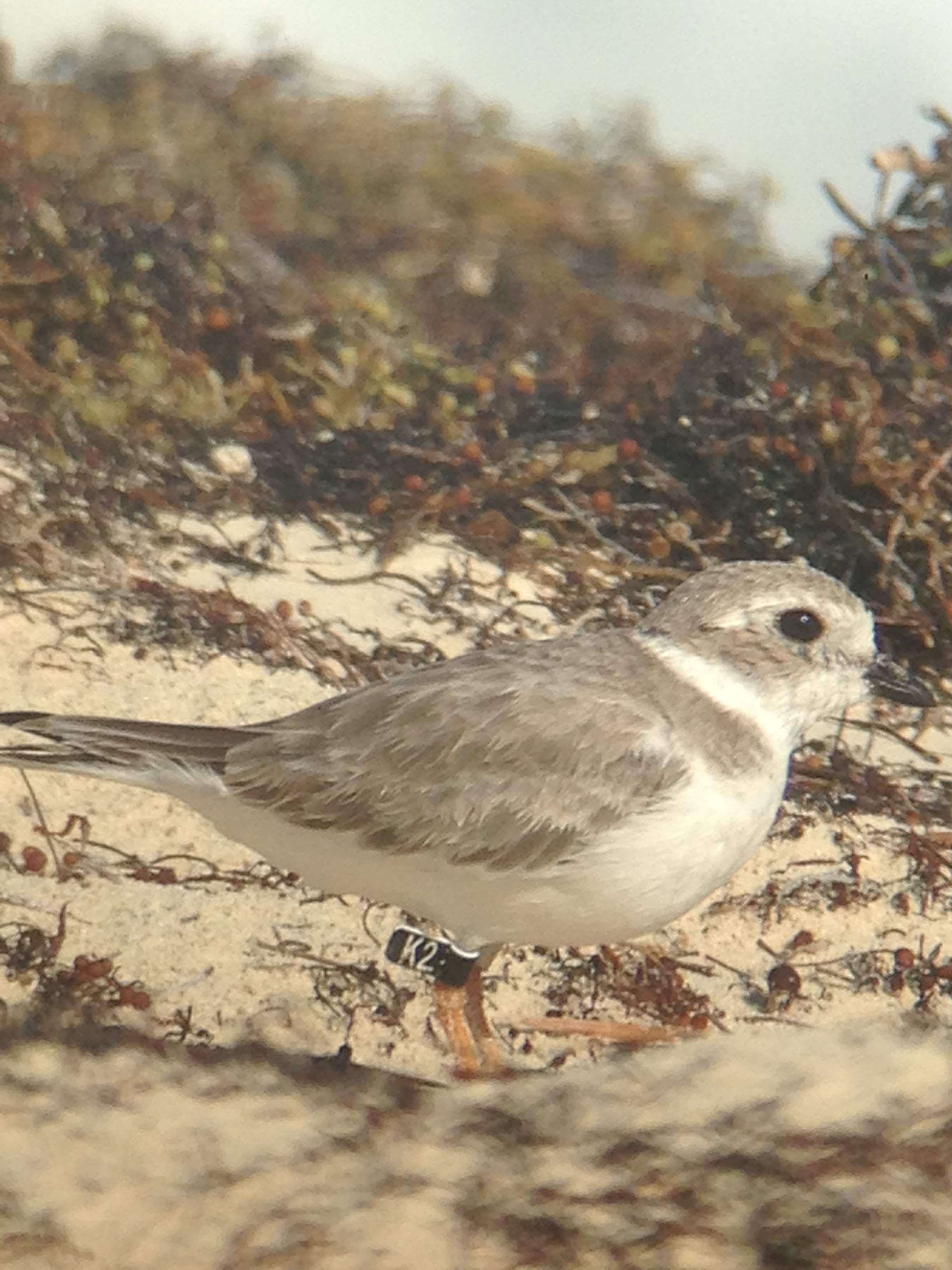
Black Flag "K2", a Canadian breeder and one of six color marked piping plovers observed on wintering grounds on Abaco, The Bahamas, this past week by CWFNJ's Todd Pover and Stephanie Egger.
Black Flag “K2”, a Canadian breeder and one of six color marked piping plovers observed on wintering grounds on Abaco, The Bahamas, this past week by CWFNJ’s Todd Pover and Stephanie Egger.


Fortunately, there is also a strong incentive to protect shorebirds in the Bahamas. The tidal flats and shallow water habitats that shorebirds use are also important for bonefish, conch, and other fisheries that are important to the local economy and provide jobs. Furthermore, birding and wildlife-based activities are increasing an important part of the tourist sector. However, In order to sustain those activities and opportunities, ecosystems must remain intact and pristine.


A number of organizations, local and from abroad, are diligently working to designate more protected areas in the Bahamas. One of the top priorities now, an effort being led by the Bahamas National Trust and National Audubon Society, is to protect the vast flats area in the Joulter Cays, Andros, which are especially important for shorebirds such as the piping plover. On Abaco, where we have been focusing our piping plover work, Friends of the Environment  is strongly advocating for protection of East Abaco Creeks, Cross Harbour, and more recently The Marls.


During a survey this past week on Man-O-War, one of Abaco’s offshore cays, we were able to locate a banded piping plover that had originally been marked on its breeding grounds in Canada. In discussing the bird with a local resident who had first spotted it, she was surprised that the bird was remaining in the same spot ever since she saw it two months ago. This was site fidelity illustrated in its truest sense, and in the same vein, the researchers in Canada are already anticipating it will return to the same site to nest next spring. From what we know about piping plovers that is highly likely…as long as we remain committed to protecting the habitat they use.


Piping Plovers Plunge to Record Low in NJ

By: Lindsay McNamara, Communications Coordinator

Photo Credit: Asbury Park Press/Nancy A. Smith

Pairs of piping plovers — small, critically endangered shorebirds that dart along the sand in search for food — dropped to a record low in New Jersey this year. Just 92 pairs nested in the Garden State, down from 108 last year, BUT the beach-nesting birds spawned a high number of fledged chicks — 1.36 per pair, the third-highest figure since 1986 and above what’s needed to grow and maintain their population in the long-run.

Last week, Asbury Park Press Reporter Todd B. Bates discussed the issue with Conserve Wildlife Foundation’s Beach Nesting Bird Project Manager Todd Pover.

Lindsay McNamara is the Communications Coordinator for Conserve Wildlife Foundation of New Jersey.