US Biologist Wendy Walsh Honored for her Conservation Leadership

By Mara Cige

wendy_walsh
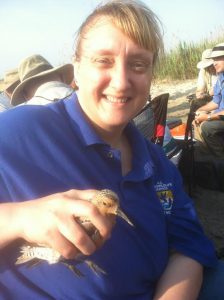
Wendy Walsh, 2016 Leadership Award Winner

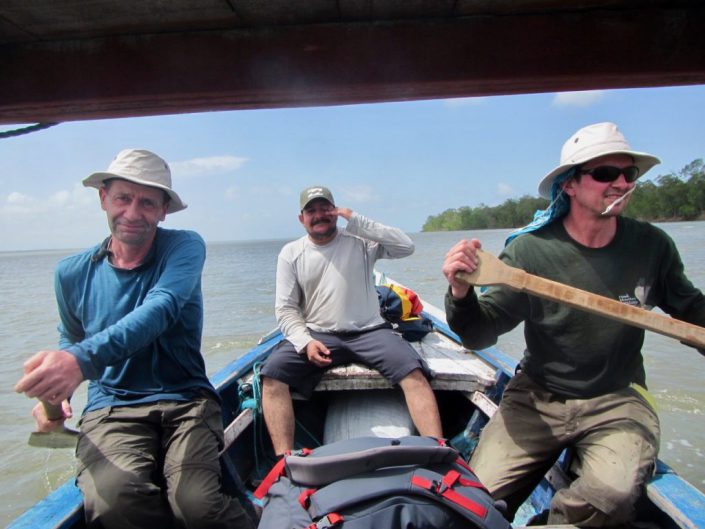
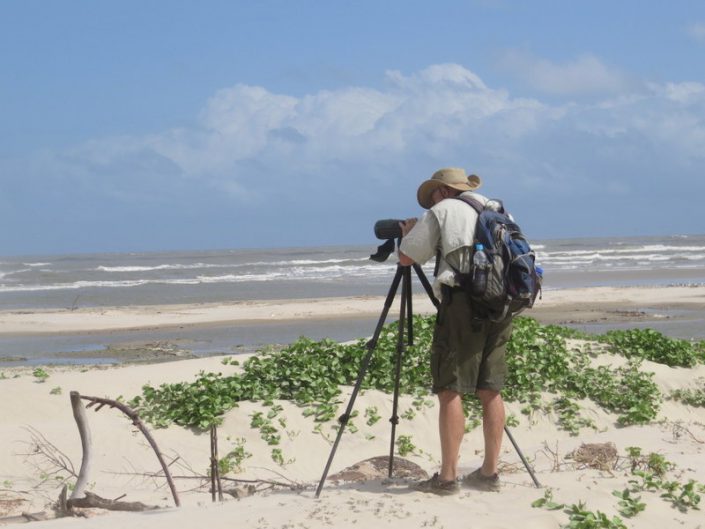
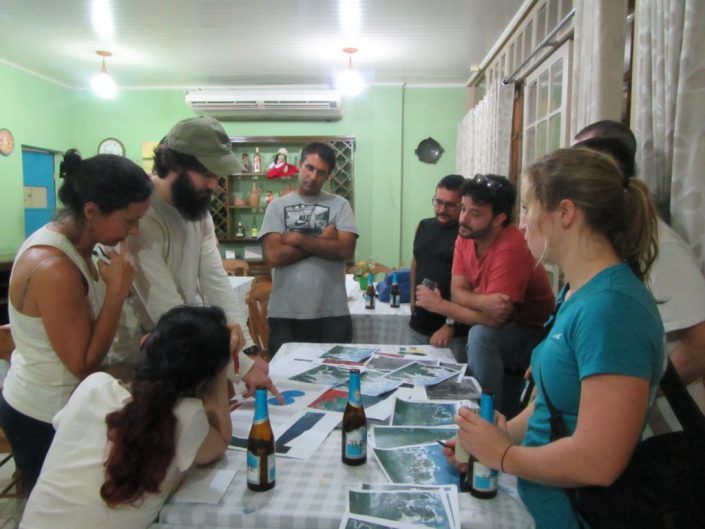
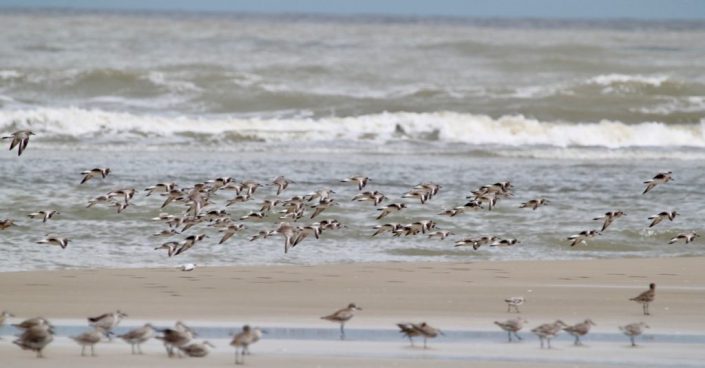
As a Senior Fish and Wildlife Biologist at the United States Fish and Wildlife Service, 2016 Women & Wildlife Leadership Award Winner  Wendy Walsh has proven herself invaluable in the endangered species field for her work with wildlife such as the piping plover, swamp pink, and seabeach amaranth. Her most notable work is with the red knot. Ms. Walsh took the species lead in the middle of the federal listing process. Her tireless efforts coordinating, analyzing and interpreting data, particularly detailing the effects of changing climate on these long-distance migrant shorebirds has made her work widely acclaimed as the final rule. From biology to policy, she has an uncanny ability to grasp important information and translate it for any species she finds herself working with. She has created partnerships with additional organizations to accelerate conservation efforts. In such collaborations, Ms. Walsh’s open-mindedness to others’ expertise makes for effective planning and implementation of the vision she has to one day recover all threatened and endangered species.

Join us to honor Wendy and the two other 2016 Women & Wildlife Award Winners on Wednesday, November 30th beginning at 6pm. Purchase events tickets and find more information.


CWF asked Wendy a few questions about what working in wildlife rehabilitation means to her:


What motivates you to get out of bed each morning and go to work?

“Engagement with the work. Of course there are those mundane tasks we all have, but in general I find my work highly engaging. Sometimes when I’m at home, I’ll think of some new resource or approach to a conservation problem I’ve been working on — then I can’t wait to bring that idea to the office and try to apply it. When it works, my job can also be very rewarding.”


What is your favorite thing about your job?

“I love that I’m constantly learning something new. Over the years, I’ve had the chance to learn about and observe so many species, and I’ve had the chance to really get to know a few in particular — piping plovers, seabeach amaranth, bog turtles, swamp pink, and red knots. And I’ve had the opportunity to work on such a wide range of issues — utility lines, transportation, mitigation, stormwater, beach nourishment, bird collision, volunteer programs, restoration, fishery management, listing, and most recently aquaculture. I’m very fortunate to have a job where there is always a new learning opportunity on the horizon.”


Do you have a New Jersey wildlife species that you like best? Why?

“From a non-scientific point of view, I love watching dragonflies and wading birds with my kids, and taking the family to count and tag horseshoe crabs. But professionally, I’m partial to the beach species I’ve worked on — piping plovers, red knots, seabeach amaranth. I enjoy the beach ecosystem, and I feel a responsibility to these beach-dependent species that face so many challenges along New Jersey’s human-dominated coast.”


What interests you the most about New Jersey’s wildlife?

“I’m fascinated at the contrast between New Jersey’s really remarkable habitats and ecosystems in the context of our equally remarkable human population density. Generations of pioneering conservationists from past decades have allowed our State’s wildlife to persist even with so many people. I view our generation — and my kids’ — as stewards of that conservation legacy.”


 What is your favorite thing to do when you aren’t working?

“I love spending time with my family, such as taking trips with my husband, Mac, and two daughters, as well as time with extended family — Mom, brothers, cousins. I enjoy working with my kids’ Girls Scout troops and helping at their schools.”


Please join us on Wednesday November 30, 2016 from 6:00 – 8:30 p.m. at the Duke Farms’ Coach Barn to honor the contributions that Wendy Walsh, Martha Maxwell-Doyle, and Tanya Sulikowski have made to wildlife in New Jersey.

We are excited to recognize the leadership and inspiration they provide for those working to protect wildlife in New Jersey. Women & Wildlife will also celebrate the timeless and inspiring journeys of wildlife migration in New Jersey and beyond.


Reef dedication, seining to help celebrate Veterans Day on Delaware Bay

Oyster reef to be dedicated to New Jersey Veterans at second annual event

By Emily Hofmann, Project Coordinator

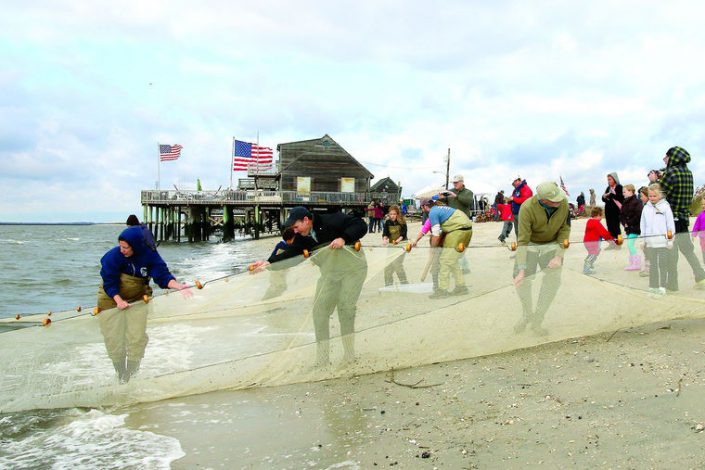
a-seine-net-about-75-feet-long-is-dredged-in-the-bay-and-brought-up-on-the-beach-to-collect-the-species-for-study
A seine net about 75 feet long is dredged in the bay and brought up on the beach to collect the species for study. Photo courtesy of Middle Township Gazette.

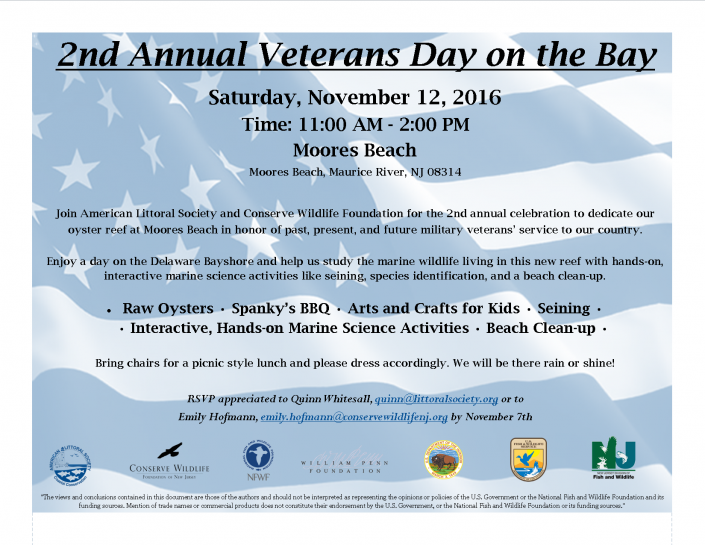
You and your family are “whelk-come” to join American Littoral Society and Conserve Wildlife Foundation and for our 2nd Annual Veterans Day on the Bay on Saturday, November 12 from 11:00 AM -2:00 PM at Moores Beach on the Delaware Bayshore! In April, we held our 2nd Annual Shell-A-Bration where proud volunteers braved the elements and helped build an oyster reef at Moores Beach.

2ndannualveteransdayflyer_v1

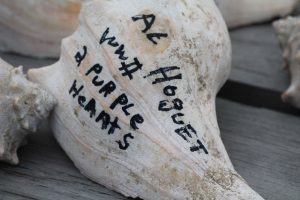
The 1st Annual Veterans Day on the Bay was held on November 11, 2015 at South Reeds Beach. The oyster reef was dedicated to all veterans and highlighted veteran involvement in the effort to restore New Jersey’s Delaware Bayshore. Event attendees honored their own military veterans by inscribing that special person’s name on a shell and placing that shell on “Veterans Reef.”


This year we’d like to continue to show our appreciation and mark the progress we’ve made by dedicating another reef to a specific military branch.


Please join us for the 2nd Annual Veterans Day on the Bay, which will feature:

  • Raw oysters and fare from Spanky’s BBQ
  • Beach Clean-up
  • Seining and marine wildlife study
  • Arts and crafts for children
davidbensonshells1
Photo courtesy of David Benson.

Help us study the wildlife living in this new reef with hands-on, interactive marine science activities like seining and species identification!


The highlight of the event will be the dedication of Moores Beach oyster reef in honor of our military veterans. Attendees are invited to honor their own military veterans by inscribing that special person’s name on a shell and placing that shell on the reef.


This family fun day and volunteer event will be held from 11:00 AM – 2:00 PM; with the reef dedication ceremony taking place at 12:30 PM. Veterans Day on the Bay is rain or shine. The celebration will be a picnic-style event, so please bring blankets and chairs.


Join us at Moores Beach, at the end of Moores Beach Road (which intersects with NJ Route 47 near Delmont United Methodist Church) Maurice River, New Jersey, 08314.


RSVP appreciated to Quinn Whitesall, quinn@littoralsociety.org or Emily Hofmann, emily.hofmann@conservewildlifenj.org by November 7.


LEARN MORE:


Emily Hofmann is a Project Coordinator with Conserve Wildlife Foundation.


Volunteers and biologists add the next oyster reef to Dyers Cove

Team works through threat of downpour to strengthen Delaware Bay’s resiliency and ecology

By Emily Hofmann, Project Coordinator


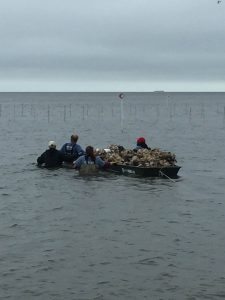
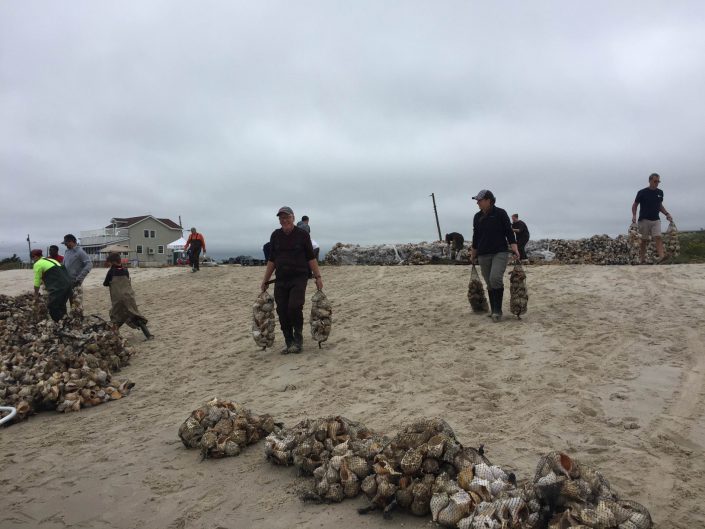
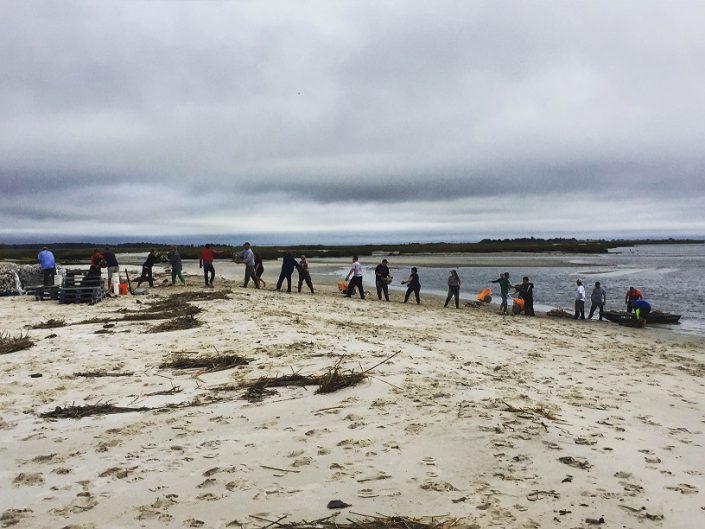
Although the weather was on the brink of being rainy and bleak, that did not stop a team of dedicated biologists and volunteers from building an oyster reef on the Delaware Bayshore this past Saturday. Committed volunteers and young people braved the weather to work alongside American Littoral Society and Conserve Wildlife Foundation to build a near-shore oyster reef at Dyers Cove, at the end of Dyers Creek Road in Newport, Cumberland County, New Jersey.


oyster-reef-2

This reef – like the one at South Reeds Beach – was built to protect restoration work done after Hurricane Sandy and provide habitat. Constructed to prevent sand loss from wind-driven waves and create calmer water for spawning horseshoe crabs, this is the third of five such reefs that have been built by the Littoral Society and CWF. The conservation organizations will continue to monitor whether the reef breakwaters help reduce beach erosion and create calmer water for spawning horseshoe crabs.


Due to the heavy rain over the course of the week, the conditions were not ideal. Low-tide never went below waist deep, so it was hard to construct the reef accordingly. But that did not stop the team!oyster-reef-build_5


“Every oyster reef we’ve built so far on the Delaware Bay incorporated a different restoration strategy. We have had to adapt new strategies with what has worked best in the past and with what will realistically work based on site conditions. By blending the successes from the previous reefs with innovative approaches, we have been able to construct three reefs to date,” said Capt. Al Modjeski, Habitat Restoration Program Director for the American Littoral Society.


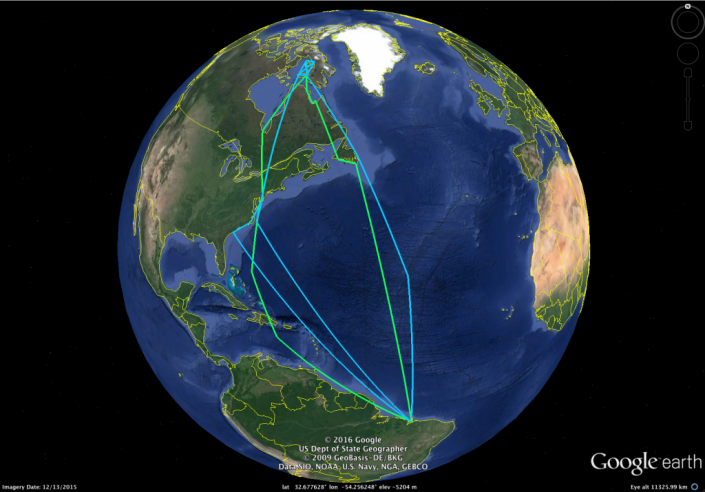
The bayshore beaches need restoration and improved resiliency so that horseshoe crabs have proper breeding grounds. Crab eggs feed migratory shorebirds, like the Red Knot, which stops in New Jersey each spring on its long journey from South America to the Arctic Circle. The Red Knot and other shorebirds help bring $11 million in tourist dollars to New Jersey’s Delaware Bayshore region each year.


“New Jersey’s Delaware Bayshore hosts an annual wildlife spectacle of global significance – the time-honored migration of Red Knots to reach the eggs of these ancient horseshoe crabs,” said David Wheeler, Conserve Wildlife Foundation of New Jersey Executive Director. “Volunteer projects like this help connect the people of New Jersey with these endangered shorebirds and the largest population of horseshoe crabs in the world.”


“Originally, this event was a bare-bones volunteer effort of placing shell bags off the Dyers Cove eastern beach,” said Capt. Al. “But thanks to a donation from Betancourt, Van Hemmen, Greco & Kenyon, we will have a ‘shell-a-bration’ that celebrates the ecology and community of the Delaware Bayshore.”

oyster-reef

In 2015, over 130 volunteers and veterans built an oyster reef at South Reeds Beach in the first annual Shell-a-Bration. That same year, Veterans Day on the Bay dedicated the reef to all veterans and highlighted veteran involvement in the effort to restore New Jersey’s Delaware Bayshore. The second annual Shell-a-Bration, held in April 2016, saw a handful of dedicated volunteers brave a blizzard to build a reef at Moore’s Beach. The third annual Shell-Bration will be held this coming Spring 2017.


“There are many strategies to defend our Delaware Bayshore, but one of the best and most productive are these oyster reefs,” stated Dr. Larry Niles, a biologist with the American Littoral Society and Conserve Wildlife Foundation of New Jersey. “They not only replicate a lost but important habitat on Delaware Bay – reefs once covered much of the bayshore – but they provide just enough protection to make a difference in how long our beaches persist against the unrelenting forces of nature. In a way, we are fighting nature with nature.”

oyster-reef-4

The projects are being funded by National Fish and Wildlife Foundation (NFWF) through their Hurricane Sandy Coastal Resiliency Grants Program, and are being developed in partnership with U.S. Fish and Wildlife Service and New Jersey Division of Fish and Wildlife.


Emily Hofmann is a project coordinator for Conserve Wildlife Foundation


LEARN MORE


Beachnester Buzz: A Day in the Life of a Beachnester

NEW, WEEKLY UPDATES FROM NEW JERSEY’S BEACH NESTING BIRD PROJECT TEAM

by Todd Pover, Beach Nesting Bird Project Manager


For this week’s installment, I thought it would be fun to have you tag along with me on a day in the field, so you can get a sampling of what goes into our beach nesting bird program. Let’s call it, “A Day in the Life of a Beachnester.”


skimmer
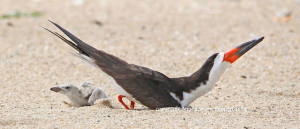
Black skimmer and chicks at our Belmar colony where we recently banded the young before they could fly. Photo courtesy of Jersey Shore Photography.

Today it is an early 4 am rise to beat the beach crowds and heat, as we are banding black skimmers at our Belmar colony. This is the first time our program has banded skimmers –  it is a collaborative effort with other organizations/agencies in both New York and New Jersey – we hope to find out more about their survival, longevity, and movement, both local and long distance. Everything goes well, we are able to corral and band about 35 chicks in less than an hour. This part of the day represents the science portion of the beach nesting bird project, science for the sake of study and a better understanding of our birds, but more importantly to gather information to help us manage and recover endangered species.


With no time to spare, it is now off to Leonardo along Sandy Hook Bay where CWF is hosting a summer wildlife experience for kids. No surprise, I am the guest today to teach the kids about beach nesting birds. I explain why piping plovers and American oystercatchers are at risk, and then give them a chance to use a high powered birding scope to try to read bands I have placed on decoy birds. We definitely have some budding biologists in the mix. Education is key to our project, unlike other endangered species that mostly live out of sight or reach, beachnesters spend the breeding season on the same beaches visited by millions of tourists and residents. If they are going to learn to “share the shore” with our endangered birds, outreach is essential.


beachnester buzz plant
Sea beach amaranth, a rare plant, that shares the beach with our nesting shorebirds and also is protected.

Next up is a stop at Seven Presidents Oceanfront Park, one of our important nesting areas in Monmouth County. For most of the season we are erecting and adjusting fence to protect nesting areas, but today we are working with the park to reduce the fence, as many of our birds have successfully nested and started to leave the area. First we count and locate any remaining least terns – these surveys are the base of our project – we need this data to track population trends and seasonal productivity as metrics of progress towards recovery. Before we remove any fence at this site, we also conduct surveys of sea beach amaranth, an endangered plant that shares the beach with our nesting birds. We locate a few plants and that dictates how we readjust the fence, the plants need protection from trampling by beachgoers or vehicles used by the park to maintain their beach.


Coordination with municipalities or other land owners that host beach nesting birds is a critical part of our project, as their activities can impact nesting success as much as beachgoer’s recreational use of the beach. So there is one more stop today to assess whether a maintenance request can be granted in a way that won’t put birds at risk. That done, it is time to start the two hour drive back to our office in Cape May County. I am ready for a nap, but no luck, as the truck becomes a mobile office to take care of other unattended business (while someone else drives of course). There are calls with several other towns, check-ins with our seasonal staff members that are spread out all along the coast, and finally dealing with a broken down vehicle (not ours fortunately) and a person who refused to take their dog off a nesting site.


Back at the office, it is one last check of email, entering a little bit of the data we collected today, and finally time to head home. Every day is a little different, but this day has been a good cross-section of the range of things we do on the project. It is tempting to think we just pop up fence and signs and hope the birds do well, but protection and recovery of our endangered beach nesting birds requires a comprehensive strategy addressing all the factors that impact nesting success.


LEARN MORE


New Jersey’s Hidden Coast – The Final Episode

NEW JERSEY’S HIDDEN COAST – EPISODE 6

by Emily Hofmann, Assistant Communications Manager


“Our work on the bayshore is not just about wildlife, it’s about people, and how keeping nature strong keeps us all strong in the face of disasters like hurricanes.”


We want to ensure that New Jersey’s Hidden Coast remains a vital part of our livelihood for generations to come.


This is the final episode to our video series, “New Jersey’s Hidden Coast.” Catch a glimpse of the Bay, the horseshoe crab at the center of the bay’s system, and the incredible relationship between horseshoe crabs and migratory birds, like the red knot. We reveal the real value of horseshoe crabs, the challenges to the ecosystem, and the potential for thriving regional economy along the bayshore. We will show Hurricane Sandy as a catalyst for decisive action and the work being done to rebuild the area for both people and wildlife.


Catch up on the previous episodes, here on our blog or on YouTube. Explore the use of “living shorelines” instead of bulkheads and the importance of marshes to the marine ecosystem. Discover the on-the-ground, grassroots efforts of the community to build oyster reeds alongside veterans. And examine the future of the Bay and the work that needs to be done to preserve our conservation successes year after year.


Discover Delaware Bay:


Beachnester Buzz: Post-nesting Season Migration Begins

NEW, WEEKLY UPDATES FROM NEW JERSEY’S BEACH NESTING BIRD PROJECT TEAM

by Todd Pover, Beach Nesting Bird Project Manager

Up until now the focus of our weekly reports has been on breeding activities – for good reason as that is the main purpose of our beachnesting bird management and recovery program here in New Jersey. However, the past two weeks have been a good reminder that piping plover migration is already well under way.

The idea of “fall” migration is a bit of a misnomer for piping plovers and other shorebirds since they begin moving south for the “winter” as soon as nesting is complete. For piping plovers that can be in early July. In fact, last week we had our first report of piping plovers already back on their wintering grounds in the Bahamas. And yesterday we received word of 164 piping plovers in Ocracoke, North Carolina, many of them individuals that had bred in states further north. We know that from the bands and flags placed on the birds as part of various research projects.

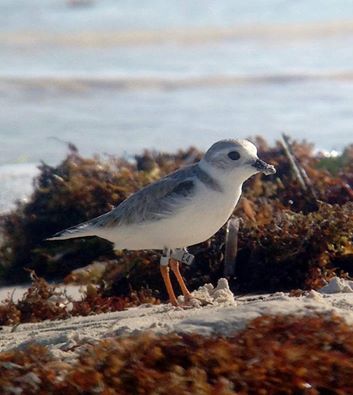
Piping Plover E4, spotted by CWF staff in the Bahamas and Canada, and last week it made a stop in New Jersey during migration. Photo courtesy of Stephanie Egger.

Meanwhile, back in New Jersey we resighted our first Canadian piping plover on July 12. Then last week we had another very exciting visitor from Canada – a flagged bird with the alpha/numeric code of E4. CWF’s very own Todd Pover had spotted this bird on its wintering ground in January 2014 in Spanish Wells, Eleuthera, the Bahamas. In the spring of 2014 Todd traveled up to this bird’s breeding location at White Point Resort in Nova Scotia, Canada, where he was able to spy the bird with its mate as they started to set up their nest. Having it now show up during migration in New Jersey completed the circle.

Although Todd didn’t see it himself in New Jersey this time, there is some pretty amazing “dots being connected” with this individual bird. One of the important issues brought up by the resightings of E4 is just how connected the sites are all along the flyway. It is important that we focus on breeding success here in New Jersey, but we also play an important role in protecting shorebirds during different phases of their lives as well. Long term survival and recovery of piping plovers depends on full life cycle conservation, not just during the breeding season. And with many shorebirds moving thousands of miles annually, that is an effort that needs to reach across partners and even countries.


LEARN MORE


New Jersey’s Hidden Coast – Strengthening Bayshore Beaches

NEW JERSEY’S HIDDEN COAST – EPISODE 5

By Emily Hofmann, Assistant Communications Manager


Like all ecosystems, Delaware Bay is amazingly complex, and there’s no one way to fix it. Between climate change, sea level rise, and the growing risk of major storms, there’s a lot to consider.


We’ve learned that restoring healthy marsh habitat is a key component in rebuilding Delaware Bay beaches; however, we’re also trying to further strengthen bayshore beaches by building reefs – living underwater infrastructure. By creating some reef structures we can keep the sand where we’re putting it.


Learn more about strengthening New Jersey’s Hidden Coast – the Delaware Bayshore in our fifth episode to our series.


A new episode of our video series “New Jersey’s Hidden Coast” will air every two weeks throughout the summer! Catch a glimpse of the bay, the horseshoe crab at the center of the bay’s system, and the incredible relationship between horseshoe crabs and migratory birds, like the red knot. We will reveal the real value of horseshoe crabs, the challenges to the ecosystem, and the potential for a thriving regional economy along the Bayshore. We will show Hurricane Sandy as a catalyst for decisive action and the work being done to rebuild the area for both people and wildlife.


Over the next several weeks, we will explore the use of “living shorelines” instead of bulkheads and the central importance of marshes to the marine ecosystem. We will discover the on-the-ground, grassroots efforts of the community to build oyster reefs alongside veterans. And we will examine the future of the Bay and the work that needs to be done to preserve our conservation successes thus far.


Discover Delaware Bay:


Healthy Marshes, Healthy Beaches

NEW JERSEY’S HIDDEN COAST – EPISODE 4

By Emily Hofmann, Assistant Communications Manager

Periodic storms are an unavoidable fact of life when you live along the coast. In rebuilding after Hurricane Sandy, we realized we needed a new way of thinking about beach restoration on New Jersey’s Hidden Coast – the Delaware Bayshore. Storms like Sandy and Katrina have shown us that the most effective way to control storm surge is to follow Mother Nature’s lead. The restoration of tidal wetlands, or marshes, will help absorb the brunt of coastal storms, acting as a buffer between the beaches and the mainland.


Learn more about marsh restoration – one of the key components to rebuilding coastal beaches – in the fourth episode of our video series.


A new episode of our video series “New Jersey’s Hidden Coast” will air every two weeks throughout the summer! Catch a glimpse of the bay, the horseshoe crab at the center of the bay’s system, and the incredible relationship between horseshoe crabs and migratory birds, like the red knot. We will reveal the real value of horseshoe crabs, the challenges to the ecosystem, and the potential for a thriving regional economy along the Bayshore. We will show Hurricane Sandy as a catalyst for decisive action and the work being done to rebuild the area for both people and wildlife.


Over the next several weeks, we will explore the use of “living shorelines” instead of bulkheads and the central importance of marshes to the marine ecosystem. We will discover the on-the-ground, grassroots efforts of the community to build oyster reefs alongside veterans. And we will examine the future of the Bay and the work that needs to be done to preserve our conservation successes thus far.


Discover Delaware Bay:


Beachnester Buzz: Piping Plover Fledglings

NEW, WEEKLY UPDATES FROM NEW JERSEY’S BEACH NESTING BIRD PROJECT TEAM

by Todd Pover, Beach Nesting Bird Project Manager

Amazing transformation of a piping plover from tiny chick to fledgling in just 25 days. Both photos by Northside Jim.


The highlight of this past week was our first piping plover fledglings of the season. This means the first group of chicks has reached the stage where they can fly, which is our metric for success. Hatching the chicks is always great, but our goal is population recovery and the primary way we can increase our low population in New Jersey is to produce more fledglings to come back in future years to breed here.


The doubly exciting news is ALL four of the chicks that hatched at Barnegat Light reached the flying stage. This is notable because typically, on average, we only fledge about one chick per pair in New Jersey. This is not enough to grow or sustain our long-term population. Population modeling tells us we need to fledge about 1.5 chicks per pair range-wide to grow the population and about 1.25 chicks per pair to sustain it.


Of course, not all our piping plover pairs will fledge four chicks, in fact, some may not fledge any. So the Barnegat Light news was a good way to kick off our fledgling season and hopefully it is a sign of above average productivity this year.


Learn More:


Todd Pover is the Beach Nesting Bird Project Manager for Conserve Wildlife Foundation of New Jersey.

Beachnester Buzz: Least Terns Chicks Starting to Hatch

NEW, WEEKLY UPDATES FROM NEW JERSEY’S BEACH NESTING BIRD PROJECT TEAM

by Todd Pover, Beach Nesting Bird Project Manager

Least tern photo by Northside Jim.

The beach nesting bird field staff is firing on all cylinders now, frantically trying to keep up with nesting activity. In some regions of the New Jersey coast, piping plovers and American oystercatchers are still laying eggs, while at other sites there are chicks on the beach, even one site (Barnegat Light) where the chicks are already approaching their “fledgling” stage when they will be able to fly.

CWF Field Technician Jesse Amesbury busy conducting annual piping plover census at Edwin B. Forsythe NWR.

Most of the least tern and black skimmer colonies are now established, with least terns starting to hatch chicks and black skimmers just laying eggs. Counting the colonies is one of the most challenging parts of the job, imagine trying to count 1,000-1,500 birds at a time in some instances!

After helping with the winter segment of the International Piping Plover Census in the Bahamas, CWF switched gears this week to help conduct the breeding portion in New Jersey.

All the normal beachnester tasks are keeping us busy, but the main focus this past week was the annual piping plover “window” census, where field biologists all along the Atlantic coast count the number of birds present between June 1-9, so we can get a range-wide breeding population estimate. As for New Jersey, it looks like our population will go up, at least slightly, for the second year in a row. Although this is still a very preliminary estimate, it looks like we have weathered the statewide low in breeding pairs we recorded in 2014, thanks to good productivity the past two years.

Of special note is a spike in Monmouth County (outside Sandy Hook), where we have gone from 2 pairs the past several years to 12 pairs this year. Although a smaller bump, we also went from 1 pair to 4 pairs within Barnegat Inlet, an area we have long hoped for more pairs. It takes a tremendous effort to realize even small gains in our piping plover recovery effort, so we are especially excited about this news!

Our work is never done...CWF Wildlife Biologist Emily Heiser posting a new nesting area for endangered least terns.
Our work is never done…CWF Wildlife Biologist Emily Heiser posting a new nesting area for endangered least terns.

Learn More:


Todd Pover is the Beach Nesting Bird Project Manager for Conserve Wildlife Foundation of New Jersey.