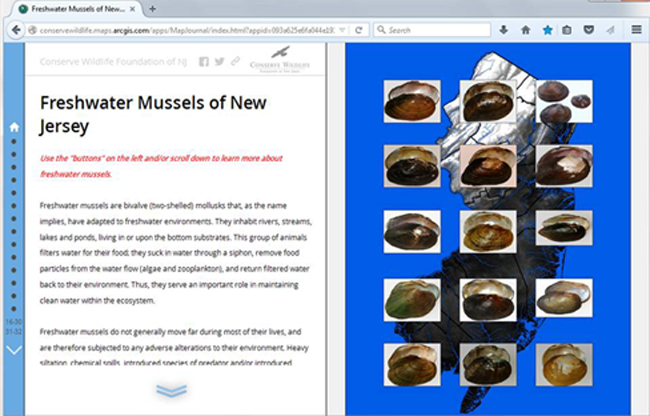
Freshwater mussels are distant relatives of marine mussels with a life cycle which includes a larval stage where they hitch a ride on fish as a parasite. There are a dozen species native to New Jersey and some species are known to live for over 100 years. This is an often overlooked group of species which deserves greater attention since many species are imperiled and because they are indicator species of water quality.
Conserve Wildlife Foundation of New Jersey (CWF) has partnered with the NJ Endangered and Nongame Species Program to create and release our latest Story Map, “Freshwater Mussels of New Jersey.”
This Story Map is a web-based field guide to New Jersey’s freshwater mussel species. The field guide explores the diversity of this group of species, how to identify them, their life history, threats and conservation measures, as well as providing range maps for each species. This is the only freshwater mussel field guide specific to the state of New Jersey and developed by state biologists.
Photos and interactive range maps are available for all 12 of New Jersey’s native species as well as several non-native species found within the state. Several short videos are also included which demonstrate different methods of surveying for freshwater mussels.
Funding for the creation of this Story Map was provided in part through a New Jersey Division of Fish & Wildlife grant.
Conserve Wildlife Foundation of New Jersey releases 2015 report
by Todd Pover, Beach Nesting Bird Project Manager
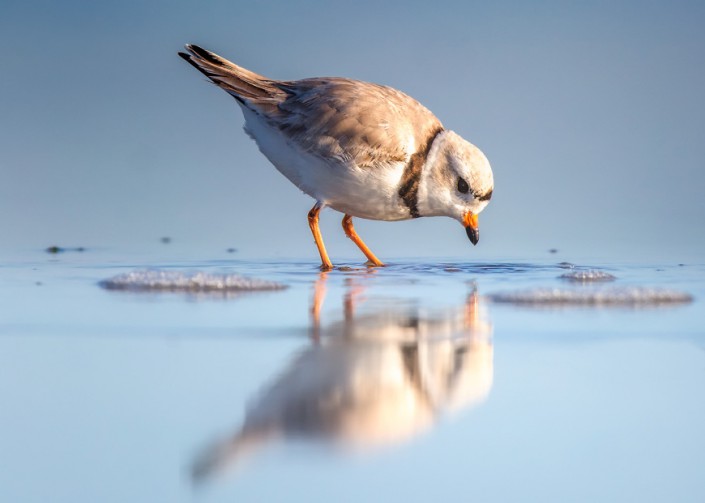
Photo by Northside Jim
Conserve Wildlife Foundation today released the 2015 Piping Plover Breeding Report, highlighting the number of nesting pairs, pair productivity, and coast-wide distribution for this endangered shorebird, from data collected by New Jersey Division of Fish and Wildlife (NJDFW) biologists, CWF biologists, and other partners.
“The rebound in New Jersey’s piping plover breeding population and a second consecutive year of robust chick productivity was a much needed outcome,” said Conserve Wildlife Foundation Beach Nesting Bird Project Manager Todd Pover. “We need to continue our intensive management for a number of years to sustain any recovery, but we were very pleased to have finally broken the recent cycle of low nesting success and the record low number of nesting pairs in 2014.”
The piping plover – a small sand-colored shorebird that nests in New Jersey as part of its Atlantic Coast range from North Carolina up to Eastern Canada – face a number of threats, including intensive human recreational activity on beaches where they nest, high density of predators, and a shortage of highly suitable habitat due to development and extreme habitat alteration.
Federally listed as a threatened species in 1986, piping plovers have since recovered in some areas of the breeding range. Yet piping plovers continue to struggle in New Jersey, where they are listed by the state as endangered.
“As a species dependent on natural beach habitat, piping plovers face a particularly daunting challenge along New Jersey’s heavily developed and dynamic coast,” said Conserve Wildlife Foundation Executive Director David Wheeler. “Our dedicated scientists, partners, and volunteers are working tirelessly to ensure piping plovers remain a beloved and healthy presence along the Jersey Shore and beyond.”
CWF, in close coordination with NJDFW’s Endangered and Nongame Species Program, oversees piping plover conservation throughout New Jersey. Staff and volunteers help erect fence and signage to protect nesting sites, monitor breeding pairs frequently throughout the entire nesting season from March to August, and work with public and municipalities to educate them on ways to minimize impacts. Although conservation efforts on the breeding ground remain the primary focus, in recent years, CWF has also begun to work with partners all along the flyway, in particular on the winter grounds in the Bahamas, to better protect the at-risk species during its entire life-cycle.
2015 Report Highlights:
The population of breeding piping plovers increased 17% to 108 pairs in 2015, as compared to 2014. Despite the increase, the population still remains below the long-term average (118 pairs) since federal listing in 1986 and well below the peak.
The statewide fledgling rate, which includes data collected by partners at 19 active nesting sites throughout the state, was 1.29 fledglings per pair, down slightly from 2014 (1.36 fledglings/pair), but still one of the highest statewide levels since federal listing. Furthermore, both years were above the 1.25 fledgling rate believed necessary to maintain the range-wide Atlantic Coast population of piping plovers.
Statewide pair-nest success, the percentage of pairs that successfully hatch at least one nest, was high at 79%, well above the average since federal listing. Although population and productivity are ultimately the most important measures of recovery success, hatch success is an important metric to demonstrate the effectiveness of on-the-ground management.
Northern Monmouth County, as a region, continued to account for the largest percentage of pairs in the state (55 pairs or 51%), with Gateway National Recreation Area – Sandy Hook Unit accounting for most of those pairs.
The region comprised of North Brigantine Natural Area and the Holgate and Little Beach Units of the Edwin B. Forsythe National Wildlife Refuge accounted for the other significant concentration of breeding pairs in the state (43 pairs or 40% of the statewide total).
Holgate had the largest jump in abundance for any individual site, doubling its breeding pairs to 24 in 2015 (up from 12 in 2014). This increase was the result of highly suitable overwash habitat created at the site by Hurricane Sandy and the high breeding success that helped spur.
Cape May County, the southernmost region of the state, consisting of Ocean City to Cape May Point, continued its long-term downward trend, accounting for just 8 pairs in 2015, compared to 11 pairs in 2014 and 43 pairs in 2004 at its peak.
“Veterans Day on the Bay” brings families, volunteers and veterans to South Reeds Beach on New Jersey’s Delaware Bayshore
by: Lindsay McNamara, Communications Manager
[slideshow]
Conservation organizations leading the efforts to restore New Jersey’s Delaware Bay beaches today organized “Veterans Day on the Bay,” a celebration to dedicate the oyster reef at South Reeds Beach in honor of military veterans’ service to our country.
“We want to dedicate this work to our nation’s armed forces veterans to give them well deserved recognition for their service to all Americans,” stated Dr. Larry Niles, a biologist with American Littoral Society and Conserve Wildlife Foundation of New Jersey who has studied federally-listed Red Knots for three decades. “We also hope to give them an intimate experience of successful wildlife conservation to spark their interest and encourage them and their families to take part in future work.”
Veterans Day on the Bay dedicated the South Reeds Beach oyster reef to all veterans and highlighted veteran involvement in the effort to restore New Jersey’s Delaware Bayshore. Event attendees honored their own military veterans by inscribing that special person’s name on a shell and placing that shell on “Veterans Reef.” Guests also helped study the wildlife living in this new reef with hands-on, interactive marine science activities like seining, trapping, trawling, and species identification.
“Delaware Bay has been so vital to this community for generations, and through this project we hope to strengthen the connections that young and old feel to this incredible natural resource that is home to wildlife of global importance,” said David Wheeler, Executive Director for Conserve Wildlife Foundation of New Jersey. “The living construction of Veterans Reef is a small but meaningful embodiment of all that our military veterans have done in building a strong American defense to give us security and protect the many freedoms we hold dear.”
Volunteers and veterans worked alongside American Littoral Society and Conserve Wildlife Foundation of New Jersey to establish a near-shore oyster reef at South Reeds Beach in Cape May Court House on the Delaware Bayshore in April 2015. The reef was built to prevent sand loss from wind-driven waves. Conservation groups will continue to monitor whether the reef bars help reduce beach erosion and create calmer water for spawning horseshoe crabs.
The South Reeds Beach Oyster Reef is one of the many projects that American Littoral Society and Conserve Wildlife Foundation are working on to restore the ecology and economy of the Delaware Bayshore.
“We are rebuilding habitats along Delaware Bay in order to strengthen the ecology, communities and economy of that area. Grants for the project enabled hiring several military veterans, and they continue to play a valuable role in the work. It is in recognition of the service veterans provide to their country and communities, that we are dedicating the reef at Reeds Beach to them,” said Tim Dillingham, Executive Director for American Littoral Society.
“Congratulations to the American Littoral Society, the Conserve Wildlife Foundation of New Jersey, and the veterans who helped build this oyster reef,” said Amanda Bassow, Northeastern Regional Director for the National Fish and Wildlife Foundation, which helped fund the project in partnership with the Department of Interior. “This project will help Reeds Beach be more resilient to the impact of future storms, while also providing important habitat in Delaware Bay.”
Shorebirds, like the federally listed Red Knot, depend on an uninterrupted supply of horseshoe crab eggs when they stopover in Delaware Bay during their migration. In recent years, countless horseshoe crab eggs have been lost because of the devastating storms that swept away the beach habitat they depend on.
“Restoring beach habitat on the Delaware Bay benefits Red Knots because it provides important feeding habitat for a bird threatened with extinction. The restored beach and oyster reef also protects the local community by providing increased resilience to future storms. Projects like these that help fish and wildlife, in addition to supporting local communities, are a priority for the U.S. Fish and Wildlife Service,” explained Eric Schrading, Field Supervisor for the New Jersey Field Office of the U.S. Fish and Wildlife Service.
The new oyster reef will attenuate waves but still allow for horseshoe crab breeding. In existing areas where crabs can breed without interruption, egg densities can exceed ten times the egg densities on unprotected beaches.
Projects like the South Reeds Beach oyster reef are being funded by National Fish and Wildlife Foundation through their Hurricane Sandy Coastal Resiliency Grants Program, and are being developed in partnership with U.S. Fish and Wildlife Service and New Jersey Division of Fish and Wildlife.
It’s that time of year again, the days are getting shorter, temperatures are dropping, and creatures of the night are lurking behind shadowy corners. As Halloween approaches one animal comes to the forefront of everyone’s mind – bats.
For most people, the connection between the spookiness of Halloween and bats is a natural fit. Bats are elusive creatures of the night that hide in dark spaces, and they live secretive lives leaving us in fear of their actions.
Bats have been misunderstood by humans for many years, and are still among the most persecuted animals on earth. In many parts of the world, bats are killed due to fear or harmful myths that make them seem scary or even dangerous.
To me, however, that connection does not seem like a natural fit. Bats are one of the most beneficial animals to humans. They can eat thousands of insects in one night, protecting our crops and forests from insect destruction. They pollinate many important foods that we love and are worth millions of dollars to U.S. agriculture alone.
Though tying bats with the Halloween season gets the general public thinking about bats for almost a full month, I prefer to think of bats every day. I like to think about them on a warm summer night when I am outside not being bit by mosquitoes, or when I am eating some of my favorite foods, like chocolate and bananas, that are pollinated by bats.
Sadly, however, due to the many threats that bats face today, we have lost a significant amount of our bat population nationwide. The continued loss of these animals will have drastic effects, including increasing the demand for chemical pesticides, and we will be losing a key link in our ecosystems that is irreplaceable.
This is why it is important that we work to love the bats we still have for all of the benefits they provide. We need to remove the spooky stigmas that surround bats and show them off in a new light, because to me the scariest thing would be a world without bats.
Oyster Reef in Delaware Bay to be Dedicated to New Jersey Veterans
by Lindsay McNamara, Communications Manager
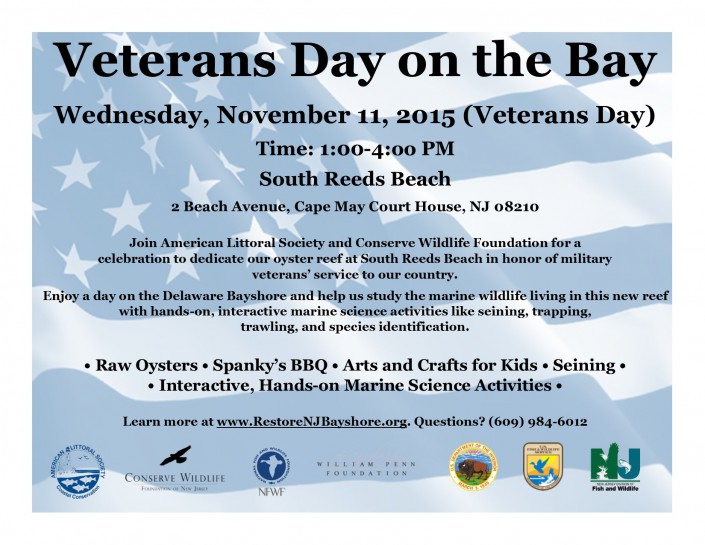
You and your family are “whelk-come” to join Conserve Wildlife Foundation and American Littoral Society for our Veterans Day on the Bay on Wednesday, November 11 (Veterans Day) from 1-4 PM at South Reeds Beach on the Delaware Bayshore! In April, we held a Shell-a-Bration where over 100 volunteers helped build an oyster reef at South Reeds Beach. Since its creation, we have been monitoring this living shoreline’s ability to help keep sand on the beach and provide habitat for marine wildlife.
On Veterans Day, Wednesday, November 11, we’d like to mark the progress we’ve made and dedicate the reef to all veterans.
Please join us for Veterans Day on the Bay, which will feature:
Raw oysters and fare from Spanky’s BBQ
Bonfire on the beach
S’mores
Arts and crafts for children
Help us study the wildlife living in this new reef with hands-on, interactive marine science activities like seining, trapping, trawling, and species identification!
The highlight of the event will be the dedication of “Veteran’s Reef” in honor of our military veterans. Attendees are invited to honor their own military veterans by inscribing that special person’s name on a shell and placing that shell on Veterans Reef.
This family fun day and volunteer event will be held from 1:00-4:00 PM, with the reef dedication ceremony taking place at 2:30 PM. Veterans Day on the Bay is rain or shine. Please park along Beach Drive, but be mindful of local residents’ driveways. The celebration will be a picnic-style event, so please bring blankets and chairs.
Join us at 2 Beach Avenue, South Reeds Beach, Cape May Court House, New Jersey.
Students created videos, websites and social media channels to promote New Jersey’s wildlife
by Lindsay McNamara, Communications Manager
First Place Winner David Tattoni’s video “Plover Biologist”
On Thursday, October 1, Conserve Wildlife Foundation of New Jersey and sponsor PSEG celebrated and recognized the winners of the 2015 Species on the Edge 2.0 Multimedia Contest, a statewide educational contest with a S.T.E.M. (Science, Technology, Engineering, and Mathematics) focus for New Jersey high school students.
“Too often, we worry that technology has made the youngest generation lose touch with the world around them. Yet these four promising individuals are instead connecting all of us with nature through their expertise with modern technology,” said David Wheeler, Executive Director, Conserve Wildlife Foundation. “Their innate skills, boundless creativity, and inspiring enthusiasm help make the wonders of New Jersey’s wildlife come to life online – and help so many others understand why it’s so vital to protect that wildlife.”
The Species on the Edge 2.0 Multimedia Contestinvited students to submit an original video, digital graphic design, webpage, or other multimedia project showing why wildlife protection is important in New Jersey. The contest showcased high school students’ interest in new media technologies, as well as their talent, creativity, and love of nature.
David Tattoni, a senior at Peddie School from Princeton won first place in the contest and was awarded a $1,000 scholarship for his YouTube channel featuring rare wildlife, like piping plovers, a state endangered beach nesting bird, and wild places in New Jersey.
Victoria Momyer and Priyanshi Jain, both seniors at Biotechnology High School in Freehold shared second place and the $500 scholarship prize for the development of the website “New Jersey Wilds” and their accompanying Facebook page.
Kayleigh Young, a junior at Cresskill High School in Cresskill was awarded a $250 scholarship for her Vimeo video “Endangered in New Jersey.”
The Species on the Edge 2.0 Multimedia Contest scholarships were made possible by sponsor PSEG.
“PSEG is proud to support our next generation of leaders in using modern technology to better connect with the environment around us,” said Lisa Gleason, program officer, PSEG Foundation. “Through projects like Species on the Edge 2.0, PSEG’s corporate sustainability leadership continues to benefit innovative educational and environmental programs across New Jersey.”
“My career goal is to be a wildlife biologist. I love birding, herping [studying reptiles and amphibians], and looking for rare plants. I like to photograph and film wildlife. I also really enjoy doing conservation work,” explained first place winner David Tattoni. “As you could tell from my video I spent a lot of time this summer working with piping plovers and I would love to do similar work protecting endangered birds for the rest of my life.”
Since 2003, over 10,000 children from across New Jersey have entered Conserve Wildlife Foundation’s Species on the Edge educational contests. The contests are a great way to engage and excite students into learning about New Jersey’s over 80 endangered and threatened wildlife species.
Celebrating World Shorebirds Day, Sunday, September 6
by Lindsay McNamara, Communications Manager
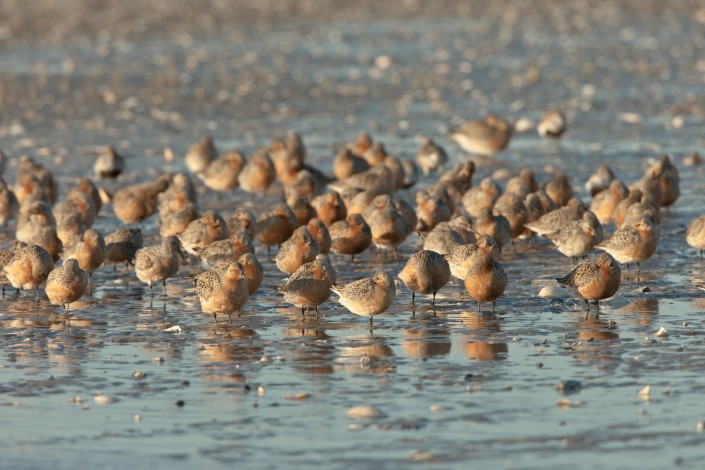
Red Knot Photo by: Jan van der Kam
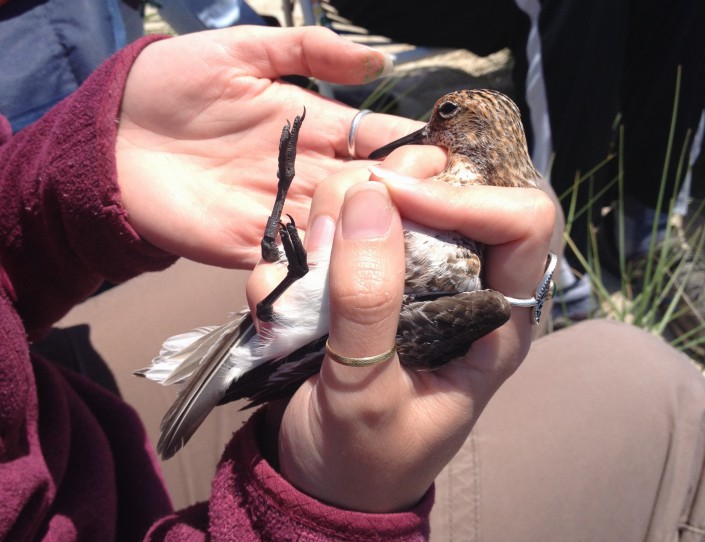
As a bird nerd, I’d often look on enviously at photos of biologists posted online holding shorebirds in their “bander’s grip” – the bird’s head in between their index and middle finger, using their thumb and pinky to steady the bird, while allowing its feet to dangle freely.
I always wondered: I wish I could do that! Hold a bird in my hands. Yet I never once thought: Wait, how did the bird end up in their hands in the first place?
I certainly hadn’t thought biologists run all over the beach chasing after shorebirds like a farmer chasing chickens – I just never thought the process all the way through.
This past summer, I was fortunate enough to become part of that process and learned exactly how a shorebird ends up in a biologist’s bander’s grip. The system may surprise you, but the steps have been mastered over nineteen years of practice, each one with shorebird safety as the top priority.
Conserve Wildlife Foundation (CWF)’s Delaware Bay Shorebird Project celebrated its 19th year this summer. The team members, led by Drs. Larry Niles of CWF working with Amanda Dey of New Jersey Division of Fish and Wildlife, are all extremely passionate about what they do and care deeply for the shorebirds they are studying and protecting.
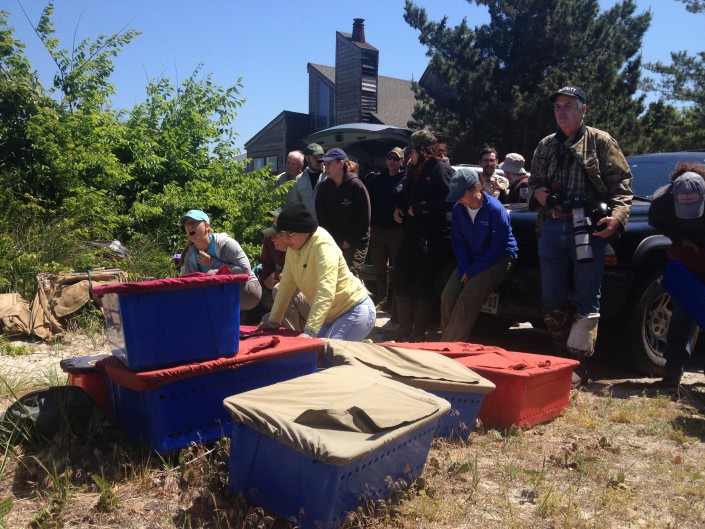
I arrived at the team’s house on Reeds Beach, along the Delaware Bayshore, early in the morning. Dr. Niles was concerned about the wind and had scoped out the safest beach for the banding that day. Our group of scientists, volunteers, supporters, interns and staff caravanned to Villas and joined our partner, American Littoral Society, at the site. We all picked up large, colorful plastic tubs, which had cloth covers that fit securely over the top of the box. The cloth cover had a Velcro pocket. We were told that these boxes would help in the shorebird “catch” that day. Larry and Mandy gave us instructions for how the banding day would go, safety tips and background information on the Delaware Bay Shorebird Project. We all listened intently and couldn’t wait for the day to begin!
The team waiting with our bins. Photo by Lindsay McNamara.
Well, we waited a bit before the day truly started. Dr. Niles and his team had binoculars with them and sat down in the sand, watching the shorebirds from afar for about an hour and a half. We waited by the cars up near the houses along the beach. The reason for the long wait? Dr. Niles and his team were waiting for the perfect moment to fire the net over top of the shorebirds along the coastline.
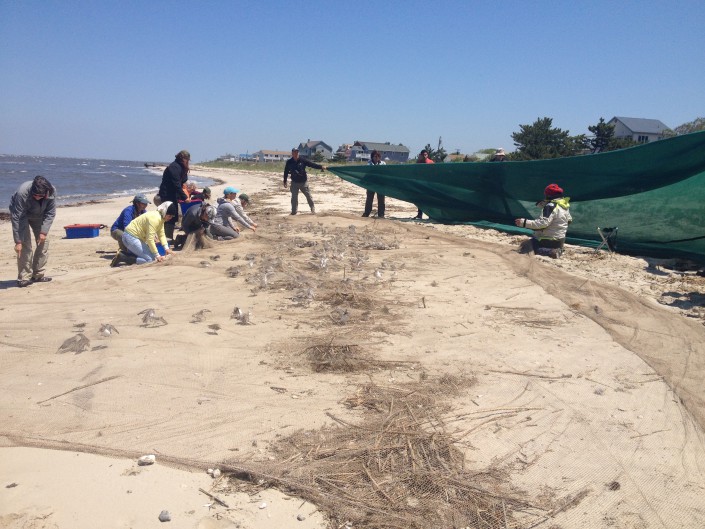
Biologists rolling away the net to reveal more shorebirds. Photo by Lindsay McNamara.
Cannons with gun powder charges fire heavy projectiles that carry the net over the birds only at the perfect moment – when birds are catchable and none in danger. Luckily, it was not a “wet catch,” that day, as the net did not go into the water. As soon as the cannon was shot, we all spirited single file carrying our tubs down the beach, following the biologists. The biologists immediately knelt at the base of the net and started picking up birds and shouting their identification and passing them to us, as they went they rolled the net away to reveal more birds.
It was very exciting! The idea was to get the birds out from under the net and into our carrying boxes and sealed in with a Velcro flap, as fast as possible, for the safety of everyone involved.
Each bin became devoted to the same bird species, so if the first bird that was handed to us was a sanderling, we kept putting only sanderlings in our bin. Once we had several birds in our bin, our pace completely changed. We walked very slowly away from the net, keeping the bin level at all times, towards the path in the sand at the beginning of the beach, to make the journey as safe for the birds as possible. There, biologists had burlap “keeping cages” for the birds to wait in. Birds were also sorted by species into these cages.
When every bird was taken out from under the net, and sitting in their temporary burlap enclosure, we formed “circles.” Each circle was composed of about 6 volunteers led by a core banding team member. Once formed birds were handed to us and finally, I learned how to safely hold a shorebird in my very own bander’s grip!
My very own bander’s grip! Lindsay McNamara holding a sanderling.
Each bird received a metal band with a federal identification number, and a green tag with a three letter code. One person in the circle put the band on the bird and passed the bird to the next person, who placed the green tag on each birds’ leg and glued them shut. A recorder took notes on the band number and tag letters. Next, the birds’ wingspan and other data points were measured by other members in the circle. Lastly, the bird was weighed before it was released. During my trip with the banding team, we caught a large number of sanderlings and a few ruddy turnstones, federally listed red knots, and semipalmated plovers.
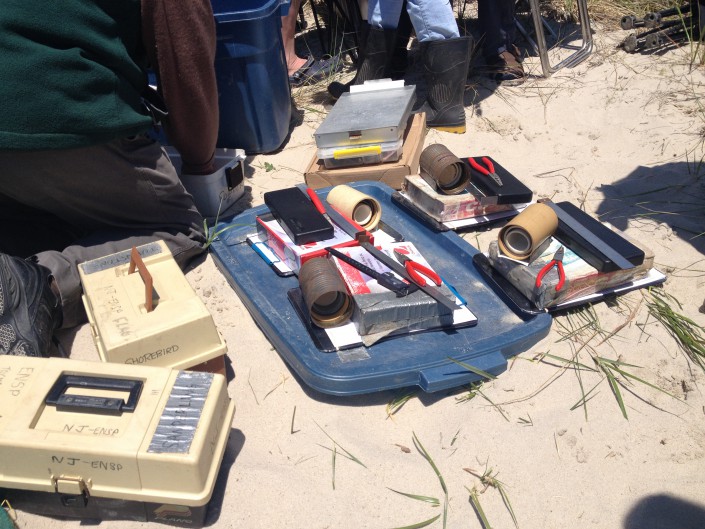
Banding team supplies. Photo by Lindsay McNamara.
Holding a shorebird in my bander’s grip was an amazing experience, but what I enjoyed most of all was taking part in the science of shorebird conservation. I placed the green tags on the shorebirds, which will tell other scientists who may recapture the birds that they once traveled to New Jersey. Our circle helped collect valuable data points, which will be combined with the data from the other years of the Shorebird Project, to assess the health of shorebird populations.
I wasn’t just holding a bird, I was helping the bird have a brighter future – and that is the best feeling any bird nerd can have.
Today is World Shorebirds Day! You can help shorebirds have a brighter future today by participating in the Global Counting Day Program. Join the hundreds of participants at over 93 locations that will count shorebirds and share their sightings online. Register today!
by: McKenzie Cloutier, Special Events and Fundraising Intern
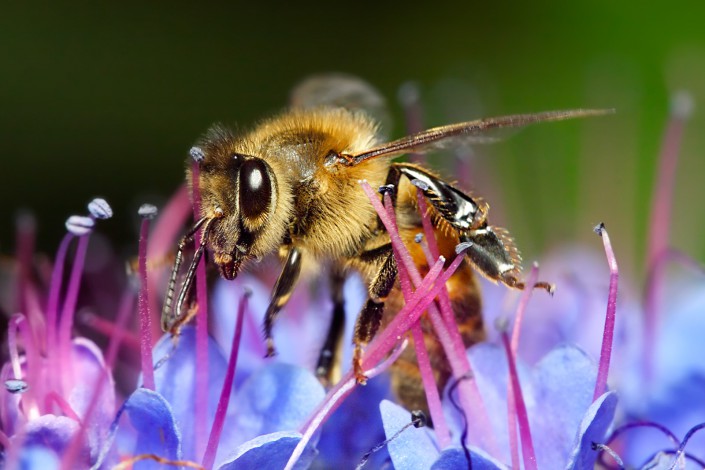
Bees are essential members of our community. Some organizations estimate that we rely on pollinators to produce about 75% of the food we eat including vegetables, fruits, herbs, nuts and even coffee and chocolate! Nearly all of earth’s plants rely on bees. Conserving bees will help ensure food security.
Despite their importance, bees are currently threatened worldwide and as a result, their numbers are declining rapidly. The most prominent threats to bees include pesticide use, loss of habitat due to construction and human development, and an increase in invasive or nonnative plant species.
Thankfully, there is a lot that can be done to help bees regain their numbers, starting in your very own back yard:
First, reduce pesticide usage in your yard. Pesticides are harmful because they affect the nectar that bees consume. Ideally, go pesticide-free!
Next, create a habitat for bees in your backyard. Plant a garden with a variety of plants for bees to pollinate. Choose plants that flower at different times so that the bees will always have food accessible to them. Native plants are the most beneficial to bees. Bees will pollinate a countless number of different plant species, but they are more attracted to certain colors such as blue, purple yellow, white and violet. A few examples of their favorites include:
Foxglove
Heliotrope
Blueberry
Sunflower
Lavender
Squash
Next, construct homes for bees. Different structures are beneficial for different types of bees, so you can research ways to help house the various types. For example, you could purchase a mason bee house to benefit mason bees. You can also build your own bee house! Start with a milk carton or wooden box and paint it a bright color, making sure to use a zero-VOC (volatile organic compound) or low-VOC paint. Insert and layer piles of brown paper nest tubes; you can find these at a garden store or construct them yourself.
You can also build a bee bath. Bee baths should be shallow with landing spots available for bees. For example, use a plate or bowl and line it with rocks. Add only enough water that the rocks stay dry to serve as landing spots for the bees. Be sure to position the bath at ground level and to change the water on a daily basis.
A few last tips include choosing to mow meadow areas of your lawn less frequently and leaving an area of dirt in your yard for ground-nesting bees’ tunneling.
CWF to serve as “Scout Central” and Host Bat House and Rain Barrel Workshops at this year’s WILD Expo
by Lindsay McNamara, Communications Manager
The 2015 New Jersey WILD Outdoor Expo, a free event designed for visitors to discover ways to appreciate and enjoy the outdoors, will be held on Saturday, September 12 and Sunday, September 13, 2015 from 10 a.m. to 5 p.m. daily at the Colliers Mills Wildlife Management Area in Jackson Township, Ocean County.
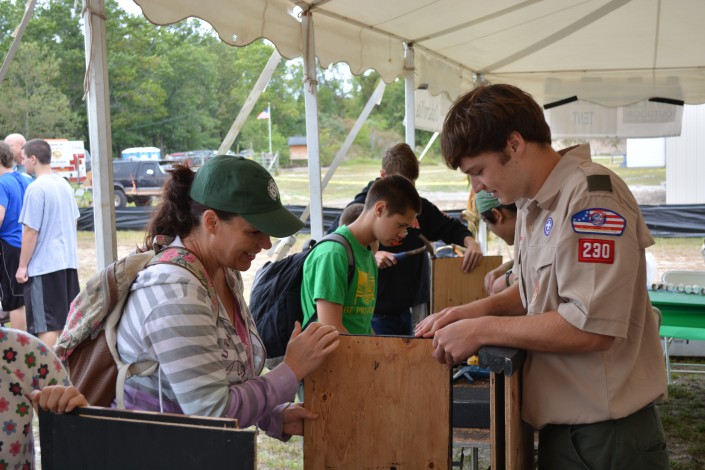
This year, Conserve Wildlife Foundation will be holding two exciting and worth-while workshops, “Build a Bat House” and “Make a Rain Barrel.” Help us provide safe roosting and maternity sites for bats being evicted from buildings through our “Build a Bat House” workshop! The bat houses built at the Expo will become part of an Eagle Scout Service Project benefiting Conserve Wildlife Foundation.
Eagle Scout Dan Silvernail assists a 2014 Expo attendee in the building of a bat house.
Join us in our activity tent for Conserve Wildlife Foundation merchandise, discounts on membership and activities for Boy and Girl Scouts. The Conserve Wildlife Foundation tent will serve as “Scout Central” at this year’s event. Stop by for important scout information, handouts and activities. For a list of Boy and Girl Scout activities at this year’s Expo, visit our website.
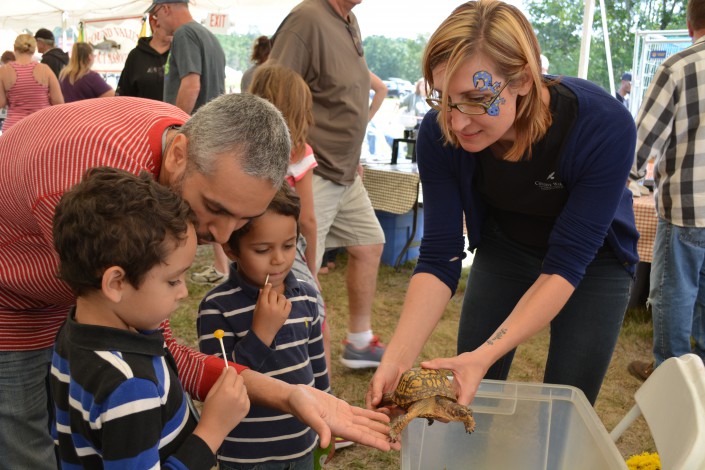
Wildlife biologist Stephanie Egger educating 2014 Expo attendees about New Jersey’s box turtles.
An Update on CWF’s Northern long-eared Bat Statewide Mist Netting Surveys
by Stephanie Feigin, Wildlife Ecologist
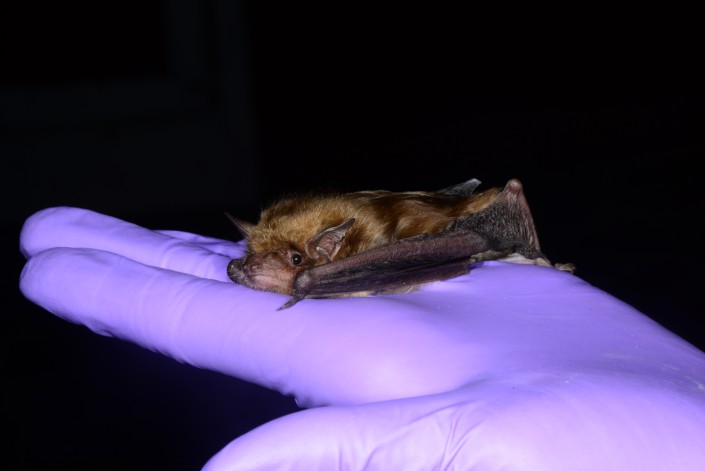
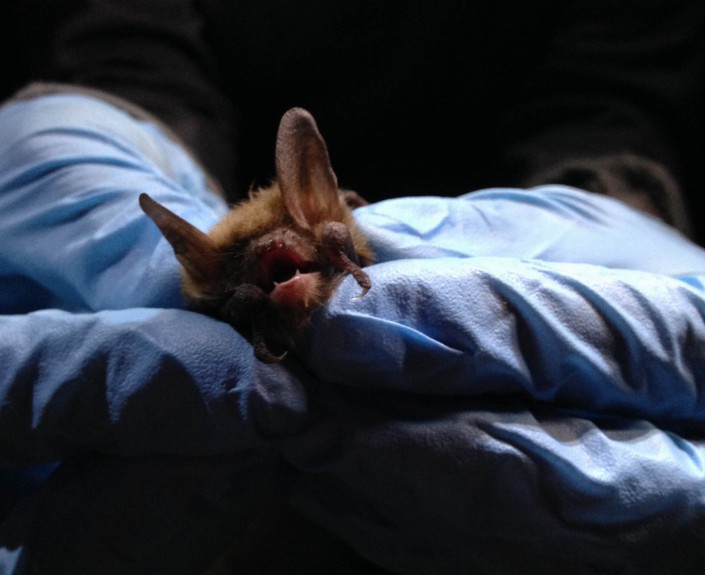
Female Northern long eared bat (c) Ethan Gilardi
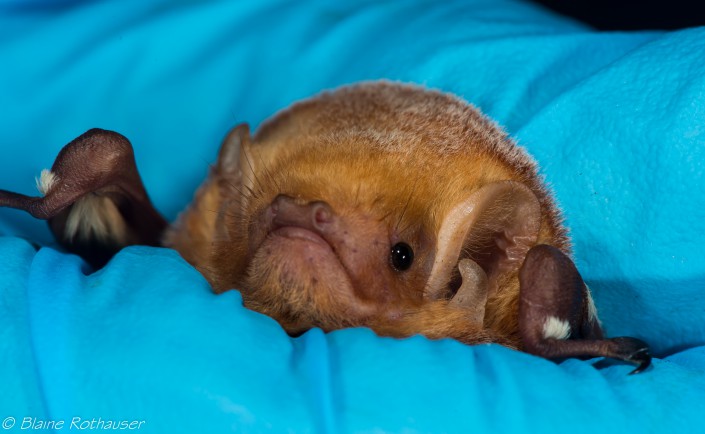
White-nose Syndrome (WNS), a fungal disease, has devastated bat populations across the country. Over six million bats have been killed by the disease, which has spread to over 25 states and five Canadian provinces. The Northern long-eared bat is one of the species most affected by WNS, suffering from an overwhelming 99% reduction in numbers in WNS-affected areas.
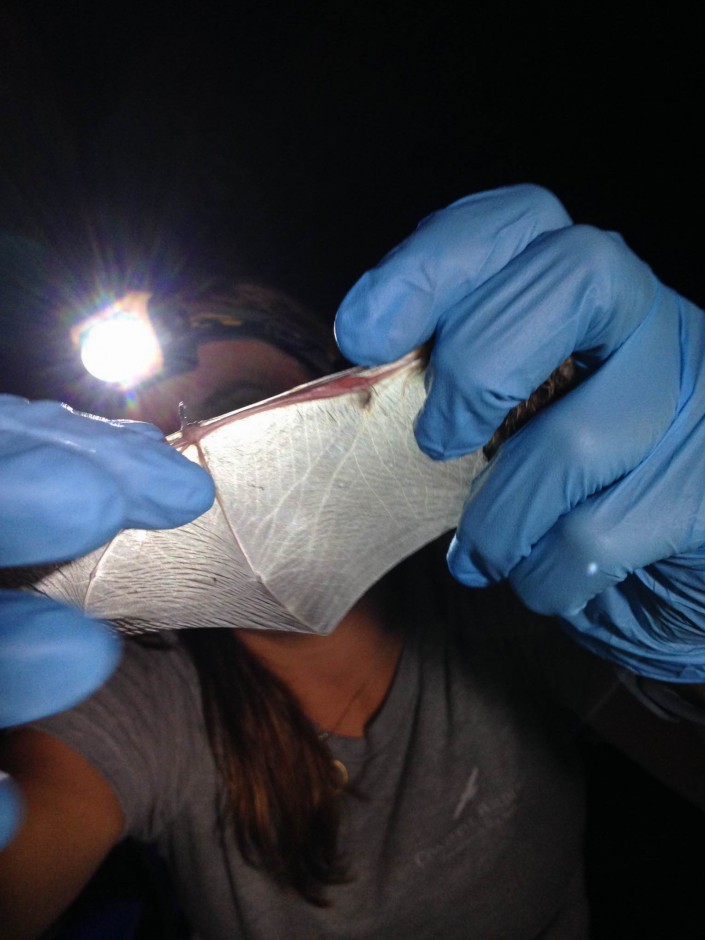
Stephanie Feigin checks wing of a Northern long-eared bat for signs of white nose syndrome scarring. (c) Ethan Gilardi
This summer, CWF Wildlife Ecologist Stephanie Feigin teamed up with NJDEP Division of Fish and Wildlife and Rutgers University to conduct a statewide mist netting and radio telemetry project to learn more about the summer distribution and habitat selection of Northern long-eared bats; an important project that can shed light on a species we know all too little about.
Mist-netting surveys began the week of June 1 and continued through the beginning of August. Survey sites included five state parks and Wildlife Management Areas across the state:
Sparta Mountain Wildlife Management Area
Rockaway River Wildlife Management Area
Washington Crossing State Park/Alexauken Creek Wildlife Management Area
Brendan Byrne State Forest
Wharton State Forest
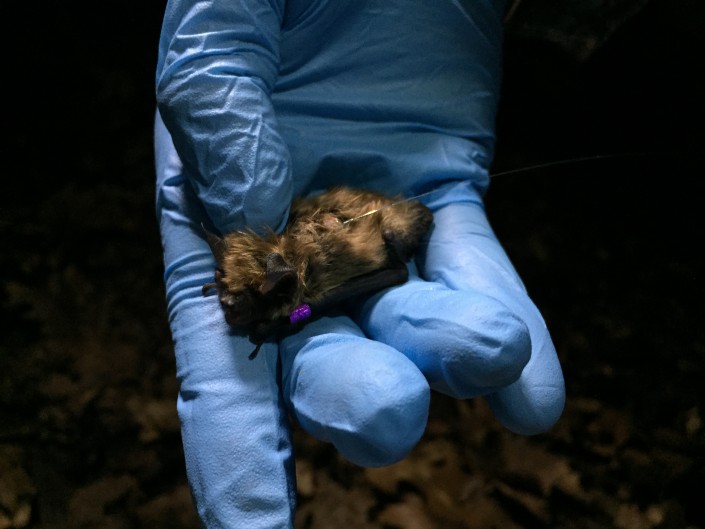
The team, directed by Feigin, conducted a total of 19 netting nights and 10 tracking days, leading to a total of 63 bats caught, four of which were Northern long-eared bats. All four of the Northern long-eared bats received radio transmitters and were tracked everyday until the transmitter fell off.
Female Northern long-eared bat with transmitter attached to her back. (c) Stephanie Feigin
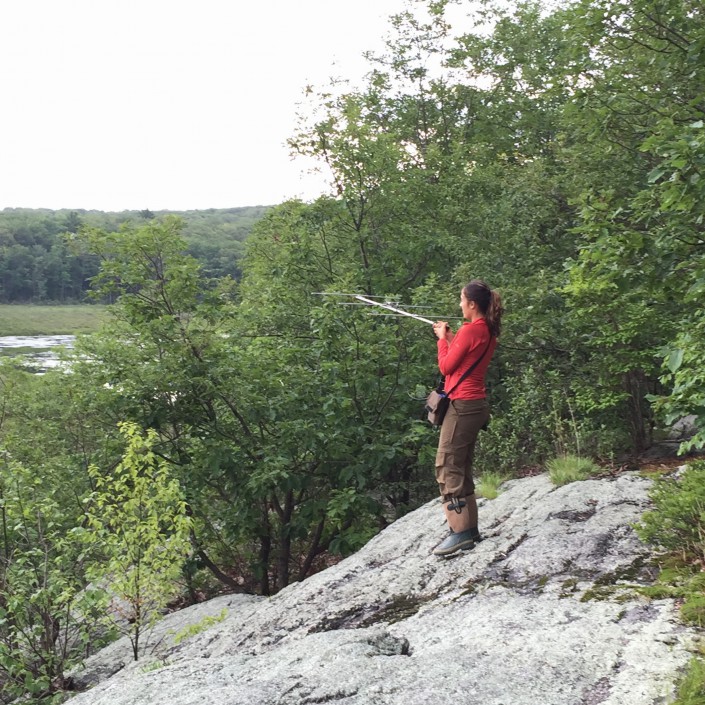
After a long night of netting (5pm-2am) the team would set out the next day to track the bat caught the night before. This, however, was not an easy task. The maximum distance the antenna can receive a signal from the transmitter is ¾ of a mile (in perfect conditions). Though tough, the team was able to track the bats to five different roost sites including under the cedar siding of two homes, a narrow four foot stump, a large standing dead pitch pine, and another pitch pine in a recently burned forested area.
The mist netting and tracking study allowed us to collect important data on Northern long-eared bat populations throughout New Jersey. The data collected on habitat requirements and roost locations will help guide our conservation decisions. Ultimately, the study will allow us to better protect the remaining population of Northern-long eared bats in the Garden State.
Amanda Bevan, Rutgers University graduate student, scans area with ATS scanning receiver and Yagi 3-element antenna for a signal from the transmitter (c) Stephanie Feigin
This work was made possible with the support from the Franklin Parker Conservation Grants, EarthColor, and the Conserve Wildlife Matching Grant Program. Thank you to our supporters!